








Deep Dive into Jiritsu: Former BlackRock Asset Management Executive Joins, Bringing Crypto-Native RWA Solution
TechFlow Selected TechFlow Selected
Deep Dive into Jiritsu: Former BlackRock Asset Management Executive Joins, Bringing Crypto-Native RWA Solution
Over the past six months, countless teams have flocked to pivot into RWA, but only a handful of projects have successfully seized the opportunity and shown initial results.
 Navigating Web3 tides with focused insights
Author: 0xFacai, BlockBeats
According to data from Dune Analytics, RWA has become the only crypto narrative—aside from memes—to show growth over the past three months. Amid a broadly stagnant market, this performance has drawn our attention. In fact, since June last year, discussions around RWA have been steadily rising, and were fully ignited after BlackRock launched its on-chain fund BUIDL.
While everyone can sense an emerging trend, few manage to truly "hit the right timing." Over the past six months, countless teams have pivoted toward RWA, yet only a handful have successfully seized the opportunity and shown early results. Whether transitioning or entering anew, clearly recognizing the opportunity is key for any team to secure a spot—and among the many contenders, a project called Jiritsu has caught our eye.
RWA’s Liquidity Fragmentation Problem
The greatest benefit of tokenizing real-world assets is enabling faster and more efficient trading and settlement processes—an undeniable reason why institutions are drawn to RWA. While logically sound, this idea faces numerous technical hurdles in practice, one of which is liquidity fragmentation post-tokenization.
When the process of onboarding and trading RWAs is inherently complex, fragmented markets only exacerbate the issue. A July report by Digital Asset Research emphasized that over 60% of current RWA institutions conduct transactions through their own dedicated tokenized asset markets. This means that even after enduring the difficult process of on-chain deployment, these assets can only attract a limited pool of fixed clients.
According to The Block's funding statistics, total financing in the RWA sector reversed its downward trend this year, rebounding to $300 million. This cyclical recovery has revealed new "narrative opportunities" to entrepreneurs, with RWA-themed projects visibly increasing in number. However, most funded projects tend to focus on very narrow verticals—such as natural resources, specific commodities, or art—and this is particularly evident in real estate-focused RWA initiatives.
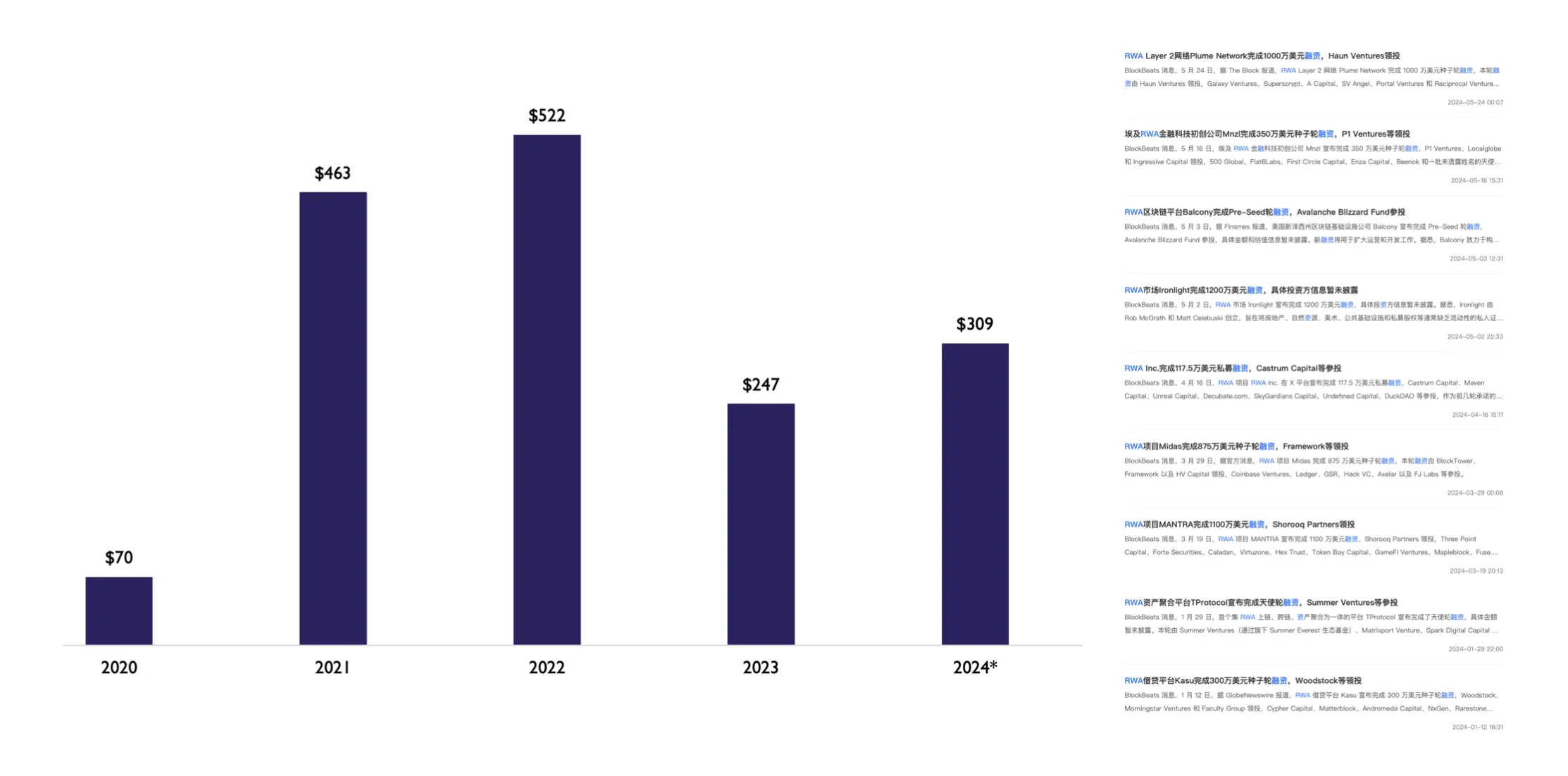
How granular can these verticals get? Platforms like Balcony and Mnzl offer tokenization specifically tailored to regional real estate resources. Typically, both the tokenized assets and the buyers and sellers using on-chain tools are local institutions or government bodies—essentially forming semi-closed asset markets.
Vertical and regional specialization in RWA projects is understandable, as many real-world assets carry strong geographical dependencies and often require specialized handling. Yet due to varying regulations across regions, nearly every RWA project builds its own onboarding and trading infrastructure from scratch. Additionally, differing choices in underlying blockchains and smart contract development tools further complicate interoperability between different RWA systems.
Recognizing this liquidity fragmentation, several platforms such as Midas and Plume have emerged during this period as RWA aggregators or launchpads. However, deeper analysis reveals they face a dilemma: achieving a unified market requires standardized tokens and contracts, which limits large-scale, multi-category aggregation. Conversely, prioritizing integration across diverse RWA protocols confines them to being mere "launch platforms," constrained by technical stack differences. Although they bring some liquidity to smaller projects, the underlying assets still face market fragmentation.
Even the most liquid segment—tokenized U.S. Treasuries—exhibits this pattern. Despite institutional momentum from BlackRock and Franklin Templeton solving scale issues within a single category, these assets remain scattered across multiple blockchains including Ethereum, Stellar, and Avalanche—offering future investors and partners more options but perpetuating fragmentation.
This presents a narrative opening for cross-chain interoperability protocols that have long struggled for visibility—such as Axelar, which began focusing on RWA early. Last year, it partnered with Centrifuge and Ondo to launch Centrifuge Everywhere and Ondo Bridge, optimizing protocol-level interoperability and liquidity for RWA tokenization products. In today’s highly fragmented environment, cross-chain interoperability may well be a viable remedy.
Jiritsu ZK-MPC: Trustless, Automated Off-Chain Asset Verification
The bottleneck preventing RWA from achieving scalability isn't hard to identify—it lacks automated processes or technologies akin to AMMs in DeFi. For RWA products, tokenization is merely the beginning; ensuring continuous asset updates and transparency afterward is what truly tests efficiency and cost-effectiveness. This typically includes the following aspects:
1. Financial Reporting: Asset managers must regularly publish financial and performance reports. For example, real estate managers should provide details on rental income payment dates and amounts, outstanding debts, or vacancy rates, allowing investors clearer insight into cash flow dynamics.
2. Debt Management: Products like RWA-based credit require regular updates on collateral status, repayments, interest rate adjustments, and refinancing activities so investors can assess health metrics—this forms the foundation of investor trust.
3. Ownership Changes: Any change in legal ownership of the underlying asset or its holding entity must be promptly disclosed.
4. Regulatory Compliance: When regulatory environments affecting the underlying asset shift, managers must report changes and make necessary adjustments to maintain compliance.
Beyond these, there are numerous other complexities—including insurance and risk management strategies, asset valuation and audits, and the legal structure of issuance—all requiring significant ongoing attention from asset managers throughout the investment lifecycle. In short, in today’s redundant infrastructure landscape, getting assets on-chain is no longer the hardest part of RWA development; rather, off-chain validation and regulatory oversight are the main factors slowing category expansion, limiting scale, and eroding the value of on-chain assets. And all of this assumes we set aside the risks associated with centralized off-chain auditing.
The scale and growth rate of RWA assets depend entirely on the capabilities of off-chain issuers and managers. This explains why U.S. Treasury RWA products saw rapid growth after BlackRock’s entry, while others—like real estate or commodities—have struggled to achieve scale due to lack of automation. Of course, this value erosion also represents a massive business opportunity, one currently captured primarily by firms like Securitize, which dominate asset issuance and management.
Is it possible to build an automated “asset oracle” system for RWA similar to how ChainLink serves DeFi? We found some answers in the project Jiritsu.
Jiritsu is a dedicated Avalanche subnet focused on off-chain asset verification, aiming to automate and decentralize the registration and validation of off-chain assets. By enhancing economic efficiency and transparency in RWA tokenization while reducing friction and costs, it leverages ZK proofs and MPC (Multi-Party Computation) to ensure secure and private automated verification of asset details, embedding regulatory compliance and asset integrity directly into tokenized products. Interestingly, the name “Jiritsu” comes from the Japanese word 「じりつ」, meaning self-reliance. In an RWA space heavily reliant on centralized human intervention, this embodies the very quality needed to strengthen crypto-native attributes and achieve scalability.
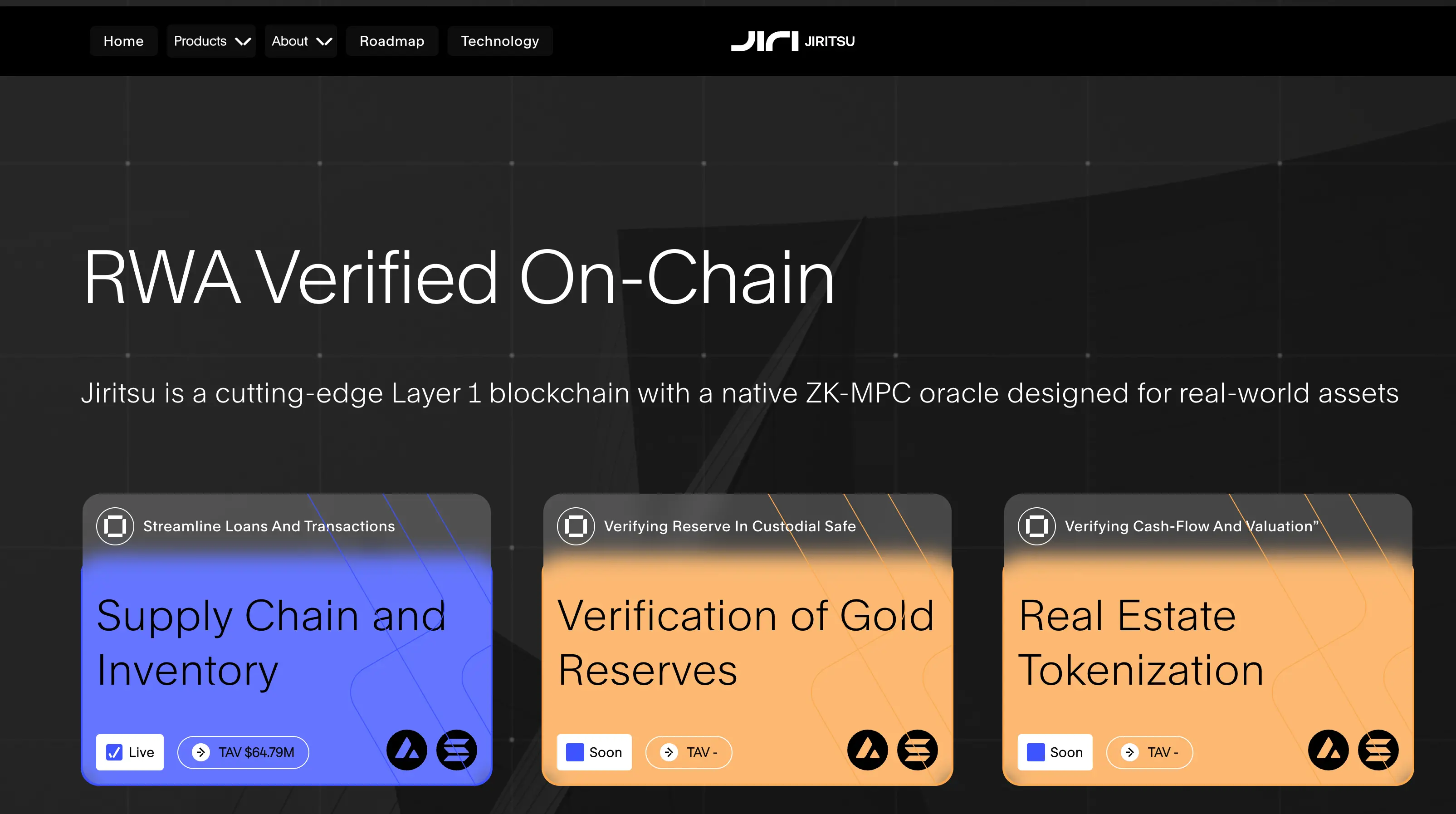
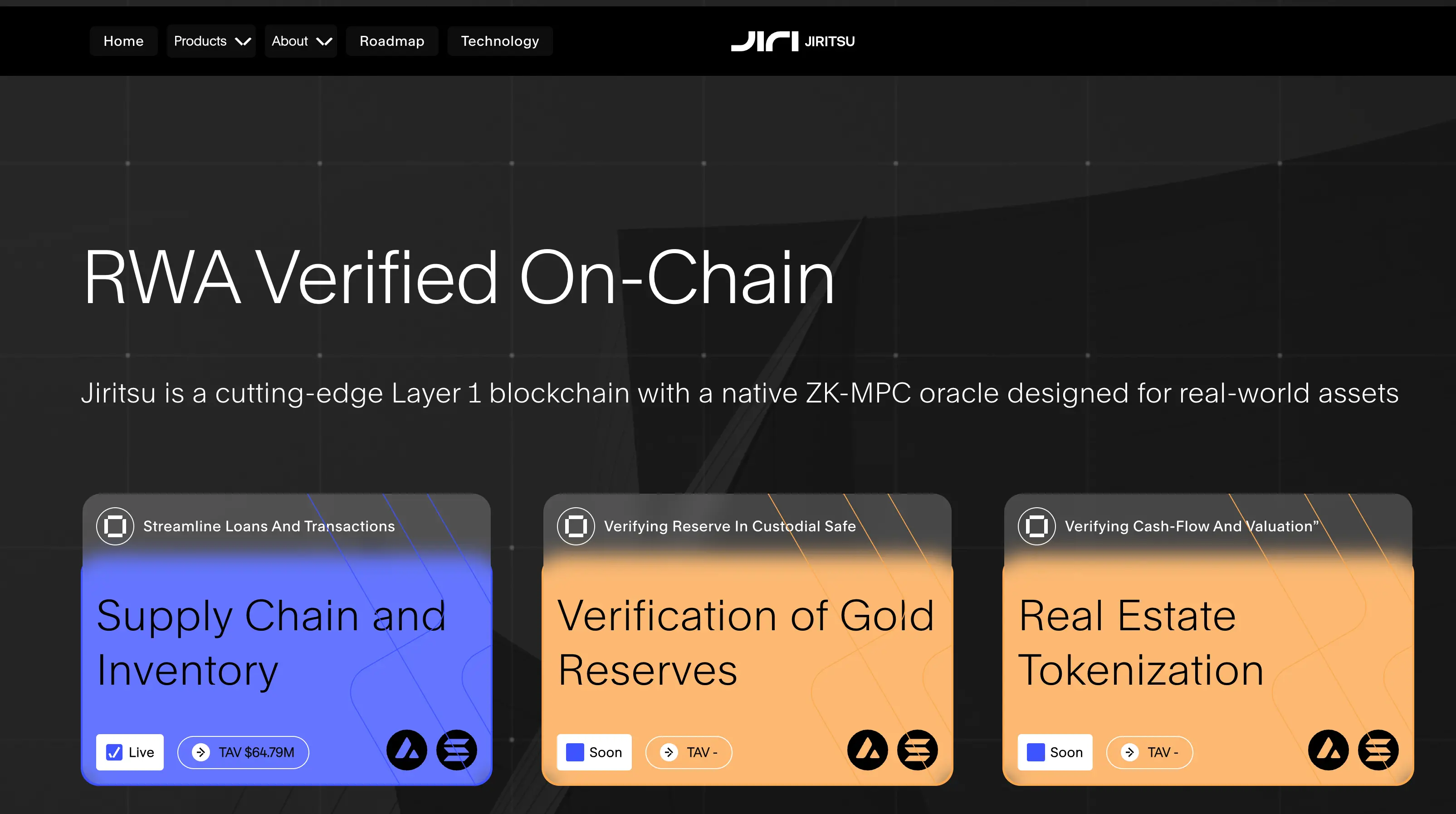
The Jiritsu ZK-MPC oracle aggregates data from multiple sources, validates relevant computations, and employs a versatile data retrieval mechanism to deepen integration across asset types. It features two primary mechanisms: “Push” and “Pull.” The former allows data providers (e.g., asset managers) to send information directly to the oracle, while the latter enables the oracle to fetch data via APIs from integrated systems such as supply chain software or banking platforms.
In terms of consensus, Jiritsu introduces Proof of Workflow (PoWF). Nodes in the network run an operating system driven by a computation engine and workflow manager, using generated ZK proofs to establish verifiable computation and smart contract execution consensus, integrating this mechanism directly into its MPC framework. Compared to existing oracles like ChainLink or Pyth, Jiritsu does not rely on cross-chain bridges for data transmission and goes beyond simple data feeds by adding analytical and validation capabilities.
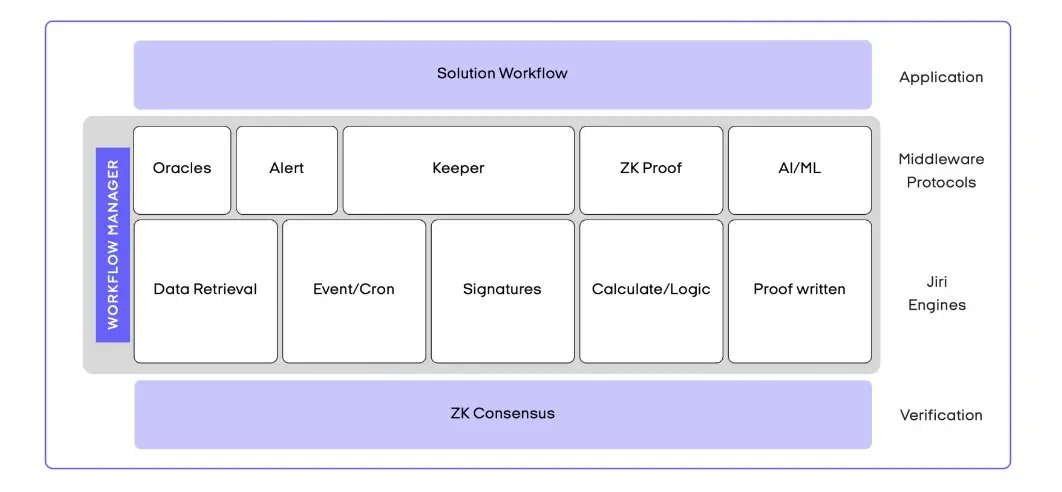
After users or asset managers register assets and their details on Jiritsu for tokenization, ZK-MPC validators analyze and confirm the asset’s value and compliance status. The analysis involves two validator types: one reviews business policies and regulatory compliance, while the other handles financial data, performing tasks like spot price lookup and fair market valuation. Once analysis and validation are complete, ZK-MPC generates a ZK proof and stores it on-chain. Users can then claim this proof and embed it into their smart contracts—completing the entire tokenization process.
Jiritsu demonstrated its full workflow using Paxos’ tokenized gold product PAXG as an example:
First, Paxos purchases gold through reputable exchanges and deposits it with custodians. Then, Jiritsu users can use a supported public chain’s Jiritsu dApp to create validators on ZK-MPC nodes within the Jiritsu network. After retrieving Paxos’ gold custody information, the validator generates corresponding ZK proofs.
During validation, ZK-MPC nodes perform off-chain verification calculations. Generated ZK proofs support tiered access and confidentiality: auditors may have full access, while asset managers see only role-specific information. This process supports scheduled or on-demand updates—far more efficient and reliable than Paxos’ current quarterly manual inventory audits.
Once the ZK proof is uploaded to the Jiritsu network, Paxos can proceed with tokenizing its custodied gold. Here, Jiritsu also implements “chain abstraction,” allowing issuers like Paxos to mint tokens on preferred target chains such as Solana, Avalanche, or BNB Chain.
After token creation, Paxos pays fees to nodes and validators via the Jiritsu dApp, with a portion distributed to the Jiritsu network. Investors purchasing PAXG tokens receive an underlying gold proof, enabling them to access gold custody status on the Jiritsu network, while Paxos passes the cost onto investors.

Jiritsu’s dApps are designed specifically to facilitate custom data programming, enabling users to create validators for any business logic, data readers, or smart contract integrations. This flexibility ensures Jiritsu can deliver customized solutions for diverse business needs. Moreover, under its ZK-MPC cloud service, Jiritsu Proof significantly expands the range of verifiable asset information. Beyond traditional financial data like bank records and corporate credit, it can verify real-world asset states such as factory equipment, inventory levels, transaction volumes, and revenue data. Recently, Jiritsu provided inventory verification for an Amazon supply chain company with over 100,000 SKUs and a total value of approximately $20 million.
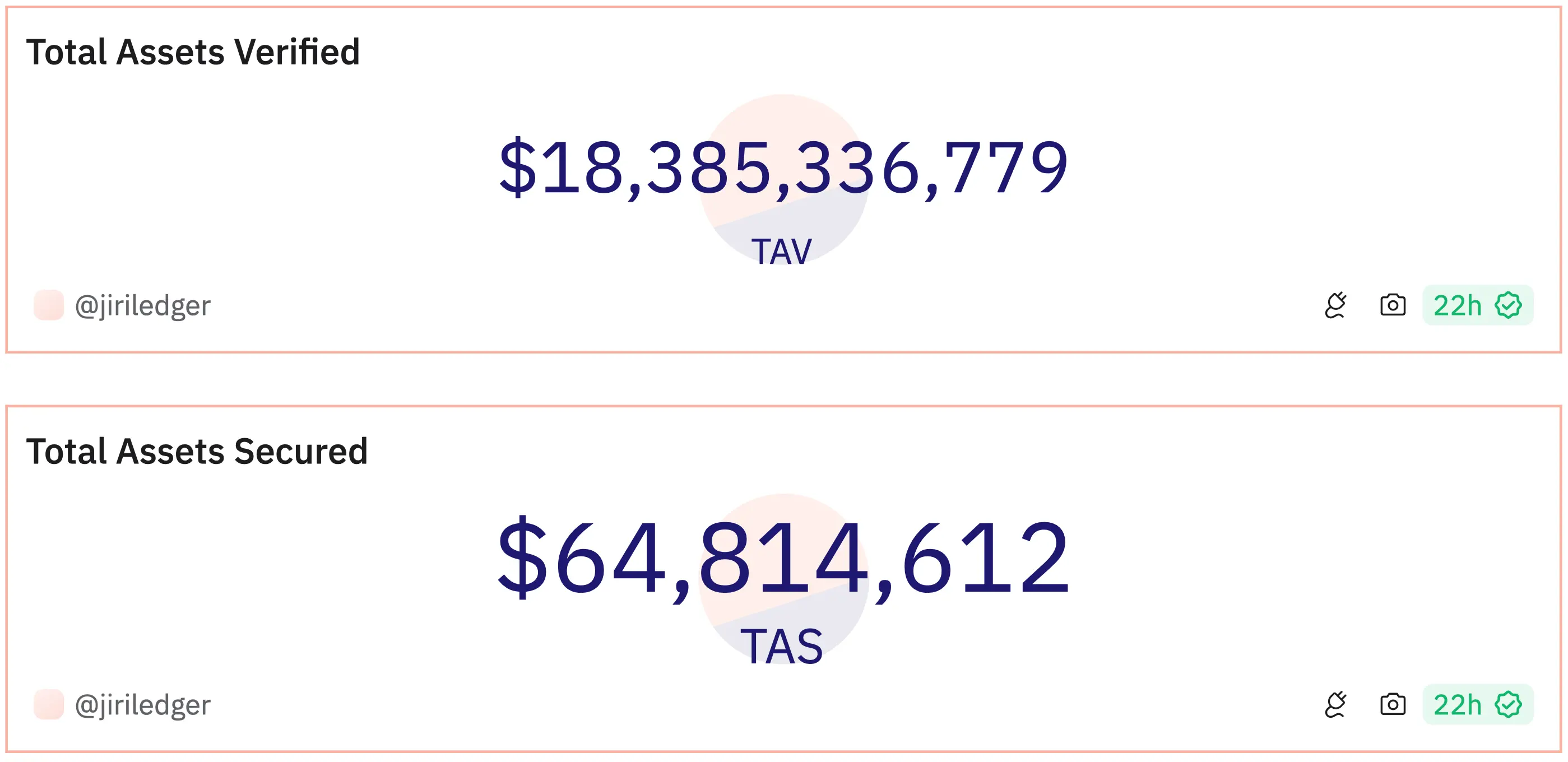
Building on this, Jiritsu measures its impact on real-world asset onboarding through two key metrics: “Total Asset Verified” (TAV) and “Total Asset Secured” (TAS), using these to provide DeFi protocols with more compatible and interoperable underlying asset building blocks. According to official Dune dashboard data, Jiritsu has already verified over $18 billion in assets, with more than $60 million ready for immediate use by various protocols.
Recently, Jiritsu integrated with BlackRock’s RWA ecosystem, providing automated on-chain proofs for reserve asset valuations and validations, compliance, and KYC platform information for its Bitcoin spot ETF and BUIDL fund—making it easier and faster for other protocols to leverage these already-on-chain assets. On the other hand, while iBIT and BUIDL have brought substantial capital inflows to the crypto and RWA markets, their asset validation still relies on self-reporting and annual audits. Jiritsu offers a more transparent and cost-effective alternative.
Jiritsu has also integrated with Republic, a major player in the RWA space, enabling any asset manager to directly implement and utilize similar solutions. This allows managers to offer diversified tokenized products while improving compliance and operational efficiency. Managers gain access to Republic’s mature infrastructure across tokenization, compliance, marketing, and customer service. By automating and decentralizing verification and auditing, Jiritsu moves functions previously handled by Moody’s, KPMG, and similar institutions onto the blockchain—a market where traditional players earn over $150 billion annually. Even capturing 10% of that would represent a highly scalable business opportunity.
Team Background
Jiritsu Network’s co-founders, Jacob Guedalia and David Guedalia, are both academically distinguished. Jacob holds a bachelor’s degree in Physics and Philosophy from New York University and a graduate degree in Applied Physics from Israel’s Weizmann Institute. David earned a master’s in Computational Geography from Bar-Ilan University and a Ph.D. in Neurocomputing from Hebrew University of Jerusalem. Additionally, Jacob is a successful serial entrepreneur who has founded and exited four companies. Together, the brothers hold over 100 U.S. patents.
Jiritsu has raised a total of $10.2 million across two funding rounds, led by gumi Cryptos Capital, with participation from Susquehanna Private Equity Investments, LLLP, Republic Capital, and other investors. Former BlackRock asset manager Michael Lustig has also joined the Jiritsu team. The company plans to use the new funds to “accelerate the development and adoption of the UVC platform and Tomei RWA.” Founded in 2020, Jiritsu developed technologies like Unlimited Verifiable Computation (UVC), aiming to provide an easy-to-program method applicable to any workflow, generating Proof of Workflow in the process.
Join TechFlow official community to stay tuned
Telegram:https://t.me/TechFlowDaily
X (Twitter):https://x.com/TechFlowPost
X (Twitter) EN:https://x.com/BlockFlow_News
 BlockBeats











