








Key Strategic Choice for TON's Official Ecosystem Development: Traffic-Driven Rather Than Asset-Driven
TechFlow Selected TechFlow Selected
Key Strategic Choice for TON's Official Ecosystem Development: Traffic-Driven Rather Than Asset-Driven
As long as there is traffic, official support can be obtained.
 Navigating Web3 tides with focused insights
Author: @Web3Mario
Summary: I've recently been diving deep into TON DApp development and thinking through product design logic. As interest in TON grows, there's been an increasing number of AMAs and roundtable discussions—some of which I've participated in—and I’ve noticed some interesting patterns worth sharing. To state the conclusion upfront: I’ve found that TON’s ecosystem-building strategy differs significantly from traditional layer-1 projects, or what we commonly refer to as public blockchains. It appears to have chosen a traffic-driven rather than asset-driven approach. This creates a new requirement for developers: if you want official endorsement—or more bluntly, to become a project favored by the TON team—your core operational metrics during cold-start must shift from asset-related KPIs like TVL, market cap, and token holder count, toward traffic-based metrics such as DAU, PV, and UV.
Asset-driven growth has long been the core of Web3 project development and operations
Historically, the key measure of a blockchain project's success has been how much value (i.e., digital assets) it can accumulate. We evaluate sustainability and competitive advantages based on the composition and distribution of these assets. In simple terms: how much TVL does a chain have? What’s the breakdown of that TVL? How much is in native assets versus blue-chip tokens or altcoins? What percentage consists of derivative or yield-bearing assets? How pronounced is the Matthew effect?
Let’s illustrate this with a few examples:
l If a chain’s total value is dominated by major cryptocurrencies like BTC and ETH, and the top 10% of users hold 80% of all assets, this suggests the chain is attractive—or even friendly—to large crypto whales. Often, such chains enjoy backing from centralized entities like CEXs.
l If a chain has a high proportion of native assets, relatively even distribution, and low standard deviation in user holdings, this indicates strong team execution, solid community resources, healthy community development, and active developer engagement. Such ecosystems are often driven by successful communities with broad grassroots support.
l If a chain holds mostly derivative or yield-bearing assets, caution is warranted. This typically signals early-stage development where the chain hasn’t yet attracted significant core assets. While the team may have connections to whale investors, partnerships might be loose or unconvincing, leading whales to hesitate before moving their core holdings onto the chain. Web3 projects on such chains are vulnerable to tidal whale harvesting.
Of course, interpretations vary depending on context, but one thing remains clear: assets are central to evaluation. This makes sense because the core value proposition of Web3 lies in digital ownership—a topic I explored thoroughly in my previous article titled “Runes’ Popularity Represents Technological Regression, Yet Best Embodies Web3’s Core Value”. Those interested are welcome to discuss further with me. For years, Web3 developers have prioritized creating and preserving asset value or effectively attracting capital when designing products, launching projects, and modeling token economies—the priority between these goals varying by project type.
However, TON seems to be deviating from this norm. Instead of following traditional Web3 practices, it’s adopting a model common in Web2 or conventional internet companies—traffic-driven growth—to guide and support product development and ecosystem expansion. There are two main reasons for this claim.
First, numerous analyses of TON’s DApp landscape already exist, so many readers likely understand its current state: the most active apps are mini-games like Notcoin. Looking at its technical architecture, Notcoin isn’t even a true DApp by conventional standards. Typically, Web3 games exhibit two key traits: on-chain assets and on-chain core algorithms—both leveraging blockchain’s trustless nature to reduce operational trust costs. Notcoin lacks both; it merely maps final reward points to an FT token on the TON chain and conducts an airdrop. You can find many similar examples. The fact that such applications thrive under TON’s support shows that, from the official perspective, traditional Web3 values matter less than user traffic. As long as you bring users, you don’t even need to be a real Web3 project to receive backing.
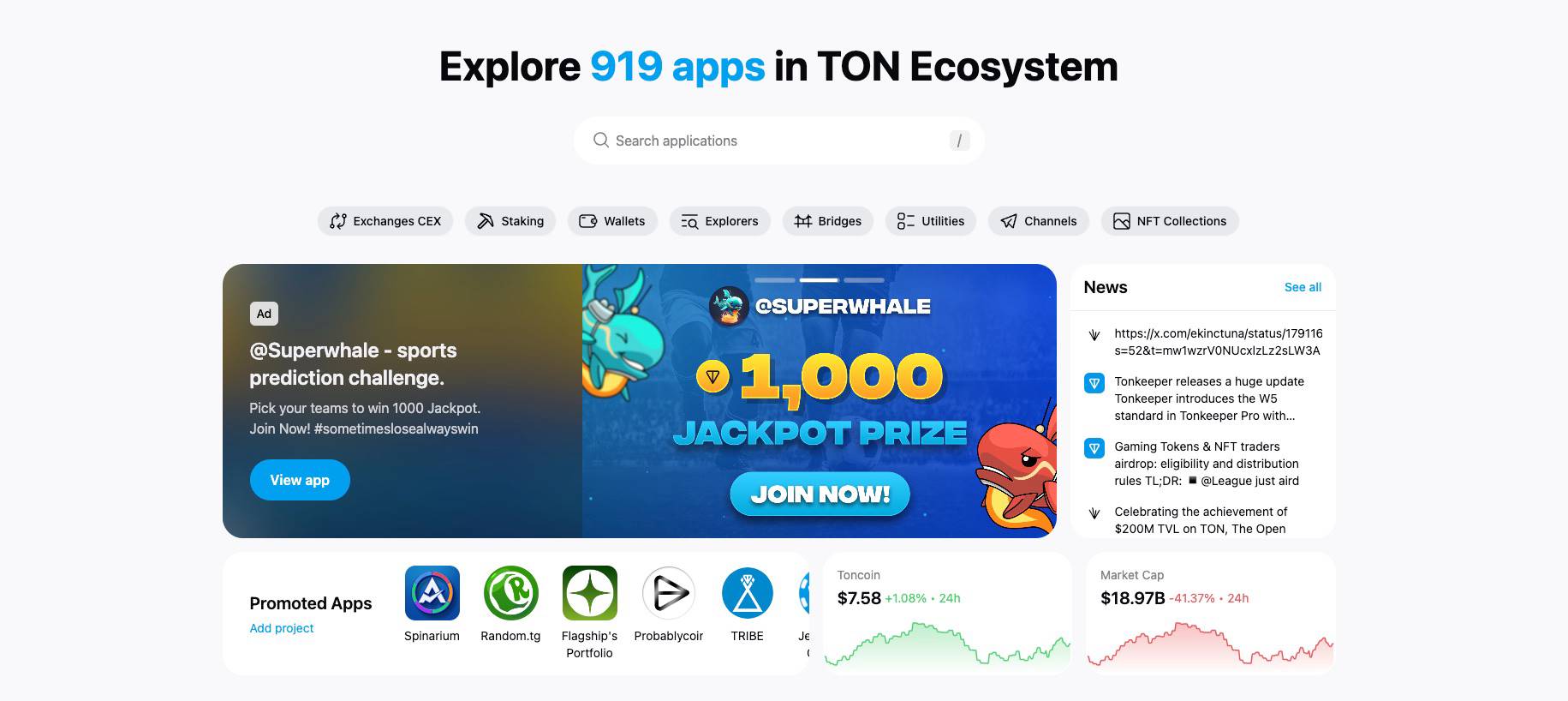
Second, during public events, TON representatives actively steer the community toward this direction. Last Friday, I joined a Twitter Space about the TON ecosystem featuring members of the TON Foundation and several Web3 VCs. I noticed a stark gap in perspectives: foundation staff seemed eager to compare TON’s ecosystem to WeChat Mini Programs, deliberately encouraging associations with that model and promoting traffic-centric products. Meanwhile, the VCs focused more on digital asset considerations. This highlights a fundamental divergence between TON’s ecosystem-building philosophy and traditional Web3 approaches.
Why would TON make such a strategic choice? This leads us to the core narrative driving TON’s ecosystem development: breakout potential, not asset accumulation capability.
The Core Narrative Behind TON’s Ecosystem Development: Breakout Potential Over Asset Accumulation
What does this mean? Most public blockchain narratives center around competing for digital assets—using technological improvements to increase throughput, lower costs, and enhance efficiency while maintaining core Web3 principles like decentralization. Their value proposition hinges on asset attraction: cheaper, faster chains naturally draw more digital assets, which in turn supports business models via increased demand for native tokens used as transaction fees—helping sustain the value of tokens held by the project team.
But TON’s intended narrative diverges. Its focus isn't on hoarding assets but on breakout potential. You’ll frequently encounter soft articles or opinions online stating: Telegram boasts the world’s largest user base among messaging apps—over 800 million users—and TON, backed by this massive audience, enjoys unparalleled potential to break into the mainstream. That’s the foundational story behind TON’s ecosystem strategy.
So why this difference? Two core issues explain it:
l TON’s core business logic;
l The relationship between TON and Telegram;
First, TON’s core business logic resembles that of other blockchain projects—maintaining the value of the TON token. However, TON has an additional lever unavailable to most others: integration with Telegram’s ad system. Since early this year, TON has served as the settlement currency for Telegram’s ad revenue-sharing program. Advertisers pay in TON for traffic acquisition, payouts go to channel owners as commissions, and Telegram takes a cut.
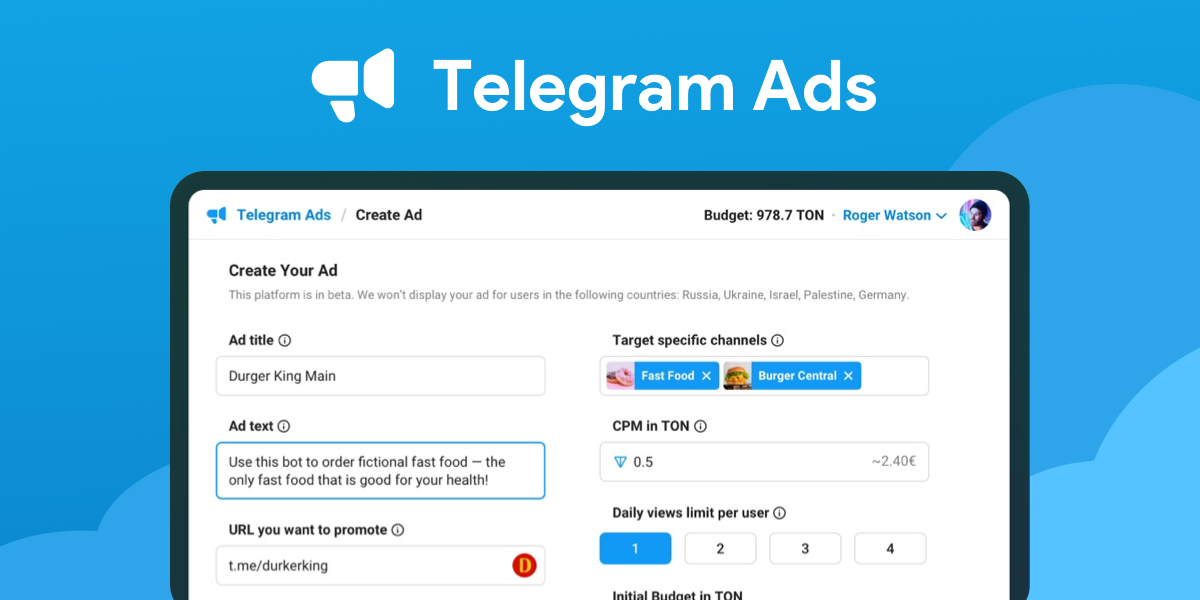
This means there’s now a second mechanism supporting TON’s value beyond gas fees: growing the size of Telegram’s advertising pie. This is essentially a classic Web2 traffic-driven model, except using cryptocurrency instead of fiat for settlements. To optimize Telegram’s ad system, two things are needed: creating more valuable ad spaces and better user tagging. TON has identified Mini Apps as an efficient vehicle for both. When Mini Apps see high usage, they naturally become premium ad placements once integrated into the revenue-sharing system.
Second, Telegram, being privacy-focused, faces difficulty and sensitivity in labeling users for targeted advertising—an essential feature for effective monetization. It cannot easily offer advertisers precise targeting (e.g., serving dessert ads specifically to Indian users who like sweets), limiting its commercial potential. But within Mini Apps, the primary actor isn’t Telegram itself but third-party apps, with Telegram acting only as a platform. This setup enables behavioral data collection: as users interact with Mini Apps, their preferences can be tagged smoothly and without triggering backlash, since the experience feels organic.
These two factors explain why TON prioritizes traffic over traditional Web3 values when selecting projects for support: any app that brings users stands a good chance of official backing.
Some may wonder: shouldn’t this development process be led by Telegram instead? As a blockchain aiming to build a cohesive community, shouldn’t TON still adhere to established Web3 principles? This brings us to the second point—the relationship between TON and Telegram. As I previously explained in another article, TON functions more like a subsidiary nurtured by Telegram. It operates with legal separation, allowing risky operations to be conducted through the subsidiary to insulate Telegram from regulatory exposure. Given Telegram’s massive global adoption and emphasis on privacy, it naturally attracts “special attention” from governments worldwide. In seeking a more stable and resilient monetization path, Telegram adopted cryptocurrency—specifically TON—as the settlement medium for ads. However, this introduces new risks in regions hostile to crypto. The current structural separation helps mitigate those risks. Understanding this dynamic reveals a master-subordinate relationship between the two entities. Therefore, for developers building applications, aligning with Telegram’s priorities—not just TON’s blockchain-centric vision—will improve chances of gaining official support.
To sum up: in the short term, TON has opted for a traffic-driven rather than asset-driven ecosystem development path. This sets a new expectation for developers: to gain official endorsement—or simply become a preferred project—the key performance indicators during cold-start should shift from asset-centric metrics like TVL, market cap, and token holder numbers, to traffic-centric ones like DAU, PV, and UV. For anyone interested in discussing this conclusion, TON application development challenges, or product ideas, feel free to reach out to me on my Twitter.
Join TechFlow official community to stay tuned
Telegram:https://t.me/TechFlowDaily
X (Twitter):https://x.com/TechFlowPost
X (Twitter) EN:https://x.com/BlockFlow_News
 @web3_mario






