








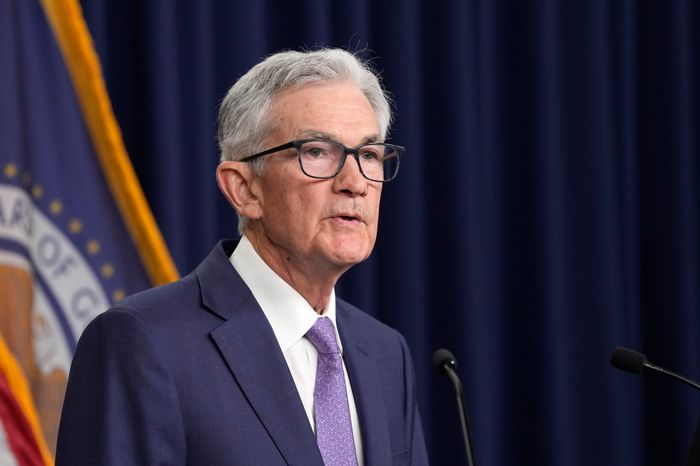
Powell tight-lipped on timing of rate cuts, employment data shakes market
TechFlow Selected TechFlow Selected
Powell tight-lipped on timing of rate cuts, employment data shakes market
The $65,000 level has become a resistance point for Bitcoin.
 Navigating Web3 tides with focused insights
By Mary Liu, TechFlow
On Tuesday, the cryptocurrency market remained in a narrow trading range. Bitcoin dipped after Federal Reserve Chair Powell's comments, falling from near $63,000 in early morning trading to a low of $61,730 in the afternoon. It later recovered slightly to $61,901 at the time of writing, reflecting a nearly 2% decline over 24 hours.
Most altcoins followed Bitcoin lower, with declines outnumbering gains among the top 200 cryptocurrencies by market capitalization.
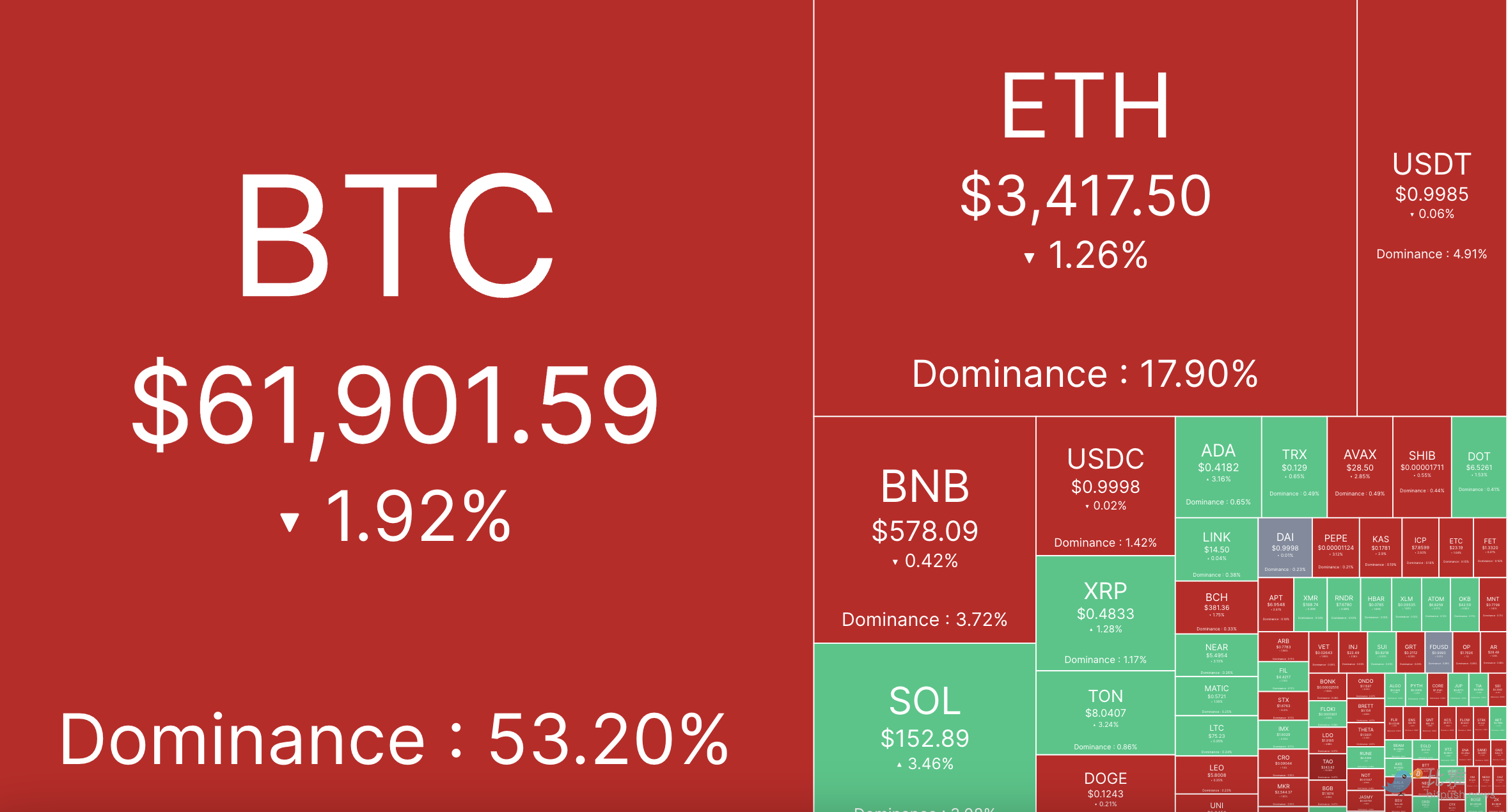
BinaryX (BNX) stood out with a 21.4% gain, trading at $0.9755, while Arcblock (ABT) rose 9.8% and Helium (HNT) gained 6.5%. Pendle (PENDLE) saw the largest drop, down 14.1%, followed by ether.fi (ETHFI), which fell 10.3%, and Aave (AAVE), down 8.3%.
The total cryptocurrency market cap currently stands at $2.29 trillion, with Bitcoin’s market dominance at 53.2%.
In U.S. equities, all major indices closed higher on Tuesday—S&P 500, Dow Jones, and Nasdaq rose 0.62%, 0.41%, and 0.84% respectively—with both the S&P and Nasdaq closing at record highs.
Fed Comments and Employment Data Drive Markets
The latest data from the U.S. Bureau of Labor Statistics showed that job openings in the U.S. rose to 8.14 million in May, up from 7.92 million in April. Market watchers are now awaiting Friday’s June employment report, hoping it will provide further evidence of a cooling labor market and support for rate cuts.
Earlier in the day, Powell stated that declining inflation had encouraged him, noting that two months of inflation data in April and May indicated “the Fed is moving onto a disinflationary path.” However, he declined to comment on the timing of the first rate cut, reiterating that more evidence of progress is needed before cutting rates.
“We’ve made substantial progress. We just want to understand whether the levels we’re seeing truly reflect the underlying reality of inflation,” Powell said.
André Dragosch, Head of Research at ETC Group, commented: “Since U.S. employment data typically includes lagging indicators—with only a few exceptions like initial jobless claims—we expect U.S. labor data to weaken over the coming months, following patterns seen in housing and other leading indicators. More importantly, growing evidence suggests that recent employment data should be treated with caution.”
He added: “Although May’s non-farm payrolls exceeded expectations, the details of the report reveal a clear weakening in the U.S. labor market.”
Dragosch highlighted several recent “unexpected negative readings” in the labor market and said they have led to a further repricing of global growth expectations, as market participants increasingly factor in the possibility of a U.S. recession.
Meanwhile, major U.S. equity indices hit record highs in June, but this occurred amid narrowing market breadth, as the bottom 490 stocks underperformed the top 10 large-cap stocks within the S&P 500. As such, the polarization in traditional stock markets also signals rising risks of recession and correction.
“The risk for Bitcoin and other crypto assets lies in two factors,” Dragosch said. “First, major equity indices like the S&P 500 still show relatively high correlation with major crypto assets. Second, global growth expectations remain a key macro driver for Bitcoin’s performance.”
He noted that both the S&P 500 and Bitcoin are currently driven primarily by global growth expectations, explaining their high correlation. He pointed to U.S. Treasury liquidity as “a potential systemic risk that could support Bitcoin and crypto assets,” adding that available liquidity is “currently worse than during the 2020 pandemic,” which may lead to increased Treasury volatility and potentially force the Fed to intervene in bond markets (i.e., quantitative easing), possibly requiring rate cuts similar to those in 2019.
Should the Fed restart a loose monetary cycle, a weaker dollar would benefit Bitcoin and other crypto assets. Major central banks around the world have already begun cutting rates this year, including the Bank of Canada, European Central Bank, and Swiss National Bank. Thus, liquidity conditions appear to be shifting.
“We believe that a potential U.S. recession, along with rising risks of dysfunction in the U.S. Treasury market, will be the main catalysts for a policy shift by the Fed this year,” Dragosch said. “Unless global risk appetite rises again, our base case remains short-term consolidation until the positive effects of the halving begin to materialize around August 2024. That said, due to recent corrections, valuations have become more attractive, and BTC is now approaching ‘fair value.’”
$65,000 Is a Resistance Level
Analysts at Blockware Intelligence said in their latest newsletter: “In the short term, we should expect resistance around $65,000, as short-term speculators may look to exit positions at breakeven levels. Last summer, when BTC lost the STH [short-term holder] realized price support, prices consolidated sideways for two months before breaking out again.”
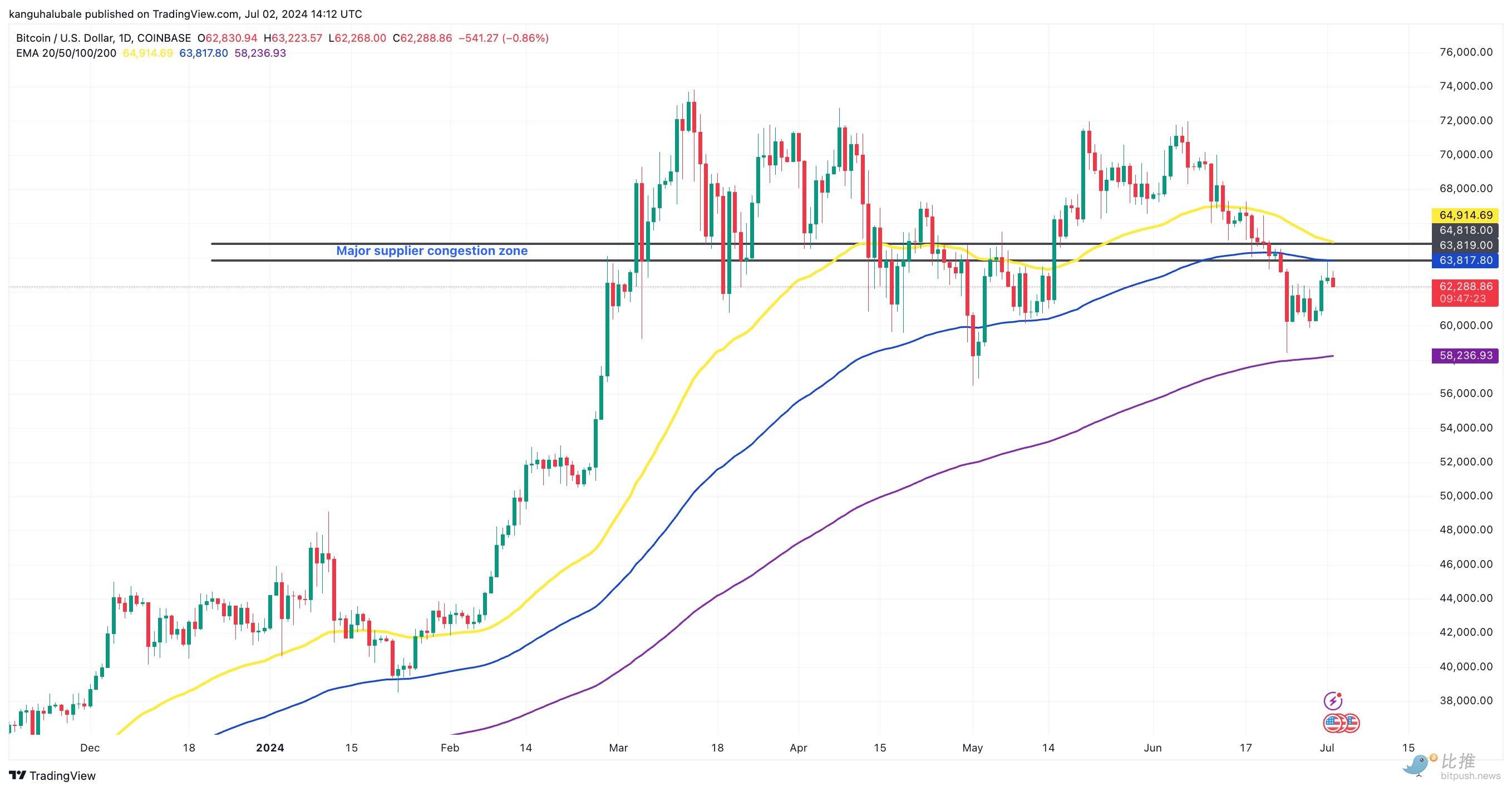
Independent analyst Ali Martinez also referenced this on X, stating that based on metrics comparing market value to real value, BTC may face resistance above $65,000.
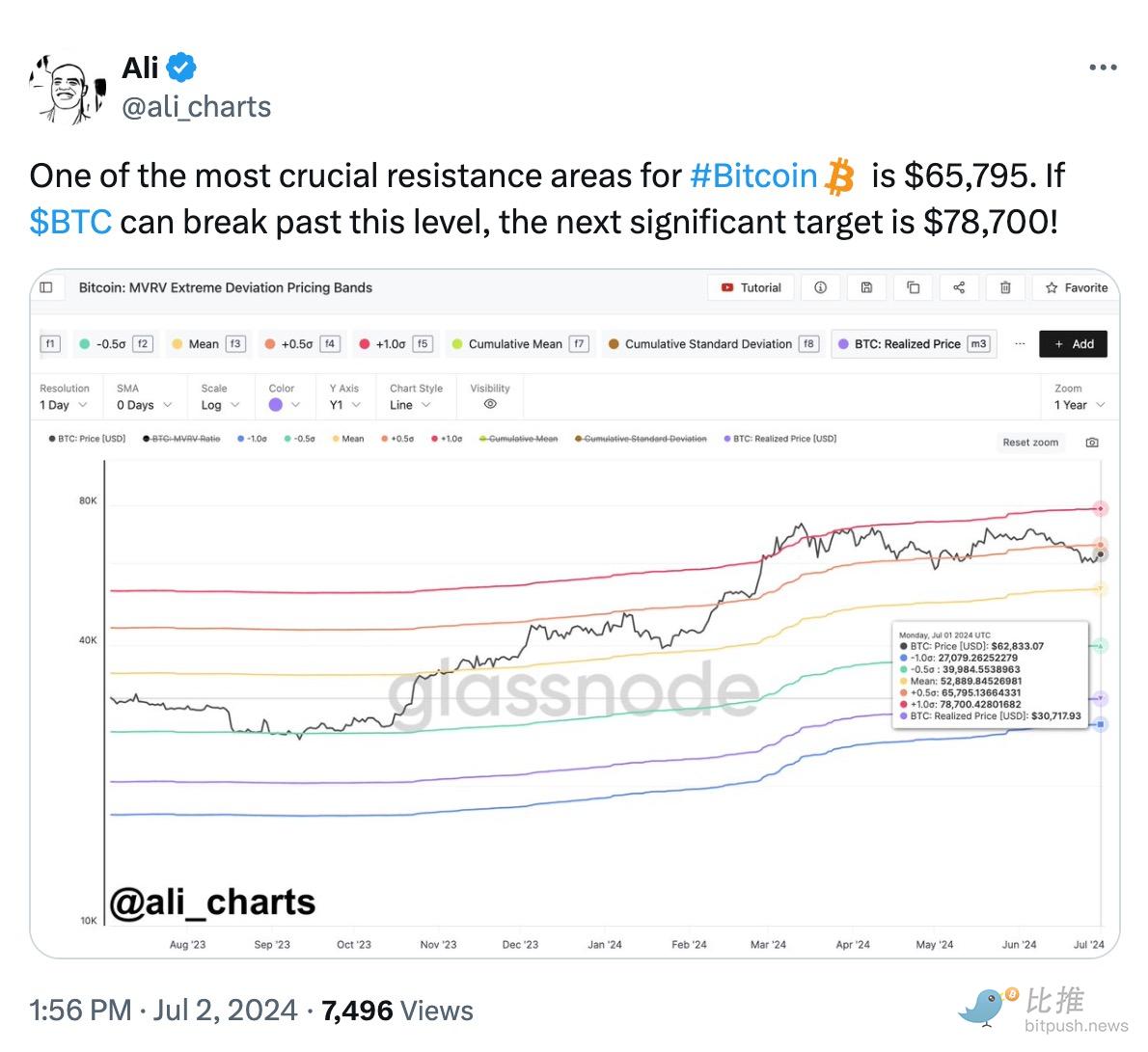
Martinez noted that a breakout beyond this level could pave the way for Bitcoin to rise toward $78,700.
Meanwhile, Thomas Fahrer, founder of crypto firm Apollo, expressed greater optimism about Bitcoin surpassing $65,000. In a post on X on July 2, he declared: “$940 million in Bitcoin short positions will be liquidated at $65,000. The first rule of Bitcoin is never short it—the money flows in, and shorts get punished.”
Join TechFlow official community to stay tuned
Telegram:https://t.me/TechFlowDaily
X (Twitter):https://x.com/TechFlowPost
X (Twitter) EN:https://x.com/BlockFlow_News
 比推 BitpushNews











