









Dell PC giant founder becomes new Bitcoin bull? Posts multiple tweets expressing optimism, previously supported BTC payments 10 years ago
TechFlow Selected TechFlow Selected
Dell PC giant founder becomes new Bitcoin bull? Posts multiple tweets expressing optimism, previously supported BTC payments 10 years ago
Although Dell and Michael Dell have not yet publicly made a major move into the crypto space, their high-profile statements highlight the growing mainstream attention surrounding Bitcoin. Their public endorsement of Bitcoin may also suggest they are quietly allocating resources to cryptocurrency assets.
 Navigating Web3 tides with focused insights
By Nancy, PANews
In the post-PC era, Dell has regained popularity by embracing AI. Now, Michael Dell, the veteran PC giant’s leader, appears to be turning his attention back to the crypto space after early adoption of Bitcoin.
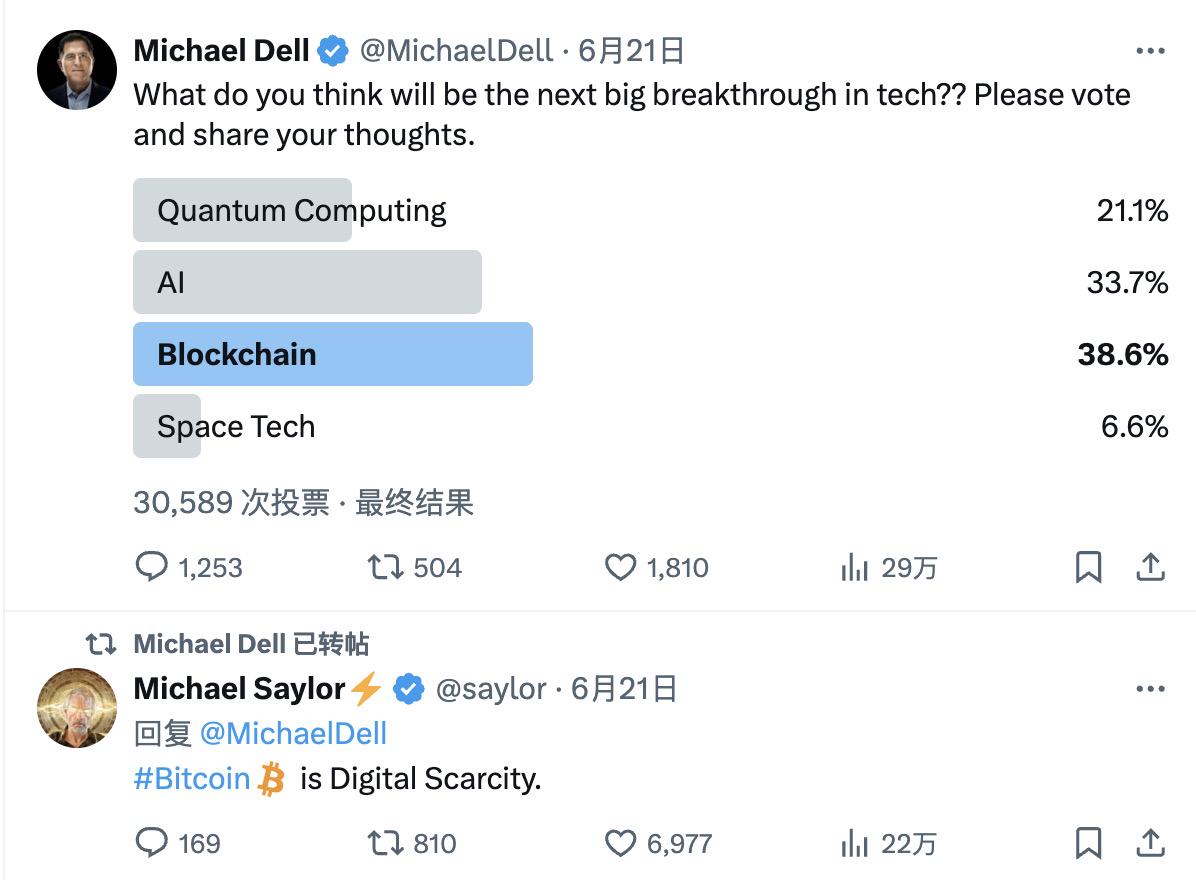
Several days ago, Michael Dell tweeted that “scarcity creates value,” catching the attention of MicroStrategy founder and prominent “Bitcoin bull” Michael Saylor, who replied, “Bitcoin represents digital scarcity.” Michael Dell then retweeted Saylor’s response, adding an image of the Cookie Monster devouring a Bitcoin-shaped cookie.

Moreover, Michael Dell launched a community poll asking, “What do you think will be the next big breakthrough in technology?” with options including quantum computing, artificial intelligence, blockchain, and space technology. Blockchain received the highest voting rate, surpassing AI.
As one of the world’s wealthiest tech billionaires, with a net worth of $120 billion, Michael Dell naturally draws public attention and speculation with every move—especially given that numerous billionaire investors already hold Bitcoin.
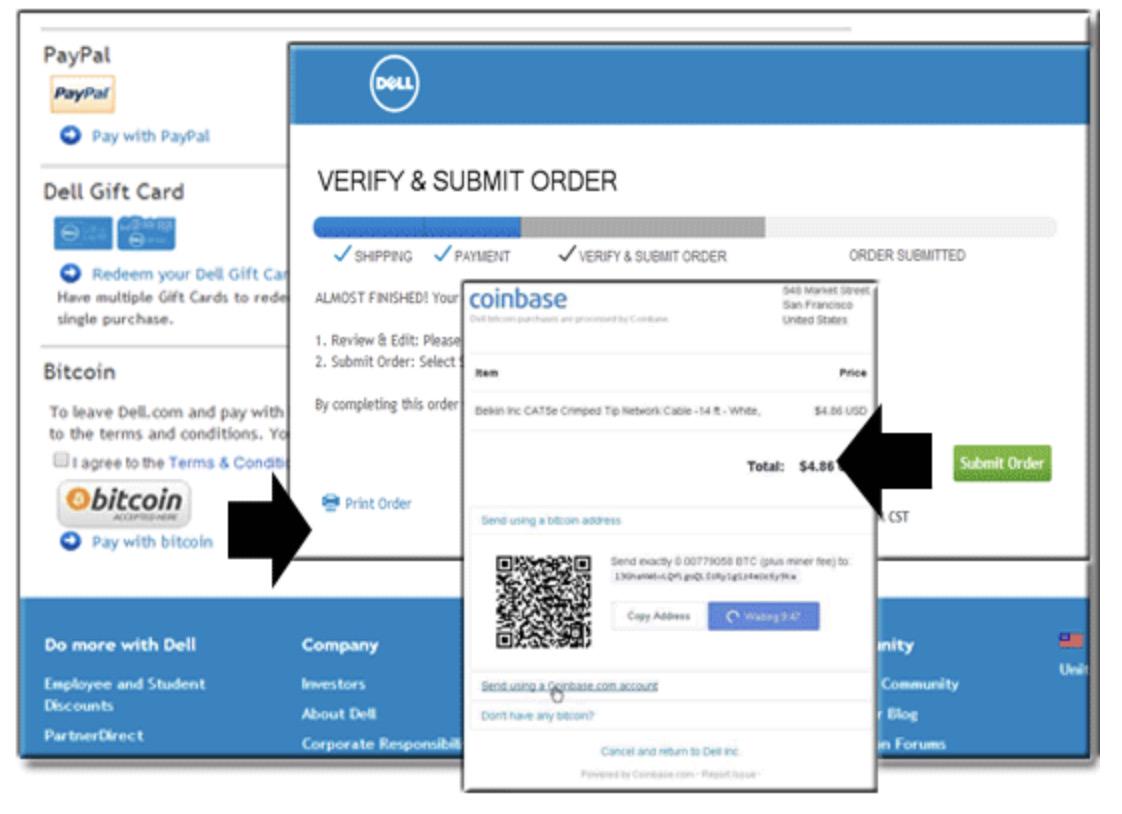
In fact, over a decade ago, Dell joined Microsoft and PayPal as an early adopter of Bitcoin, becoming one of the first e-commerce companies globally to accept Bitcoin payments. In July 2014, shortly after issuing multiple warnings about Bitcoin-related malware, Dell announced a partnership with Coinbase to accept Bitcoin as payment. To encourage adoption, Dell even offered a 10% discount for Bitcoin-paying customers. In its announcement, Dell highlighted Bitcoin’s advantages such as “effectively reducing payment processing costs” and enabling “seamless transactions from anywhere.” It emphasized direct Bitcoin payments: users simply selected Bitcoin at checkout, were redirected to Coinbase, and completed the payment via their Coinbase account or Bitcoin wallet—a process similar to today’s Alipay. At that time, most consumers still relied on Bitcoin gift cards through platforms like Gyft, eGifter, and iTradeBTC to make indirect purchases.
In addressing whether Dell had truly adopted Bitcoin, the announcement referenced a CoinDesk report stating: “While Dell may not be a brand beloved by crypto enthusiasts, it does offer a range of interesting products for different users—such as high-end large displays for designers and Alienware laptops and desktops for gamers.” Providing more flexible payment options seemed to be Dell’s key motivation for supporting Bitcoin at the time.
Within less than a month of launch, Dell received over 85 Bitcoins (worth around $50,000 at the time) in payments and later expanded the service to the UK and Canada. Three months later, Dell became a data center supplier for Bitcoin mining, reaching an agreement with a Seattle-based ASIC provider on server hosting, dedicating part of its server infrastructure to Bitcoin mining. Dell’s Chief Information Officer, Paul Walsh, stated that the company was quite familiar with Bitcoin mining.
However, due to weak market demand, Dell announced in October 2017 that it would cease accepting Bitcoin payments. Since then, Michael Dell rarely spoke publicly about Bitcoin. In a 2021 interview with The New York Times, he said he didn’t understand Bitcoin’s value but believed blockchain might be undervalued. When asked whether Bitcoin was overvalued or undervalued, Dell responded, “I don’t know.”
It should be noted that according to Dell’s latest financial report, the company holds $34.5 billion in current assets on its balance sheet, including $5.89 billion in cash and cash equivalents—but has not disclosed any Bitcoin holdings.
Nevertheless, Dell continues to appear frequently in the crypto space. For example, in 2019, Dell co-founded the data privacy project Alvarium with IOTA and Linux Foundation; in February 2023, Dell joined the Hedera Governing Council, committing to run its own Hedera node and develop applications for highly decentralized, mission-critical edge computing environments on the Hedera network; in January 2024, decentralized cloud storage provider OORT joined Dell’s global customer loyalty program, offering unique decentralized data storage services to Dell’s global customers. Additionally, Dell and investment vehicles associated with Michael Dell have invested in various crypto projects. In March 2022, sports merchandise giant Fanatics, which offers NFT marketplace services, raised $1.5 billion at a $27 billion valuation, backed by MSD Capital LP and others. In May 2024, distributed GPU cloud computing platform RunPod announced a $20 million seed round led by Dell Technologies Capital.
Although Dell and Michael Dell have not yet made a public, large-scale entry into the crypto space, these high-profile moves highlight the growing mainstream interest in Bitcoin. Michael Dell’s open endorsement may also suggest quiet allocation to crypto assets behind the scenes.
Join TechFlow official community to stay tuned
Telegram:https://t.me/TechFlowDaily
X (Twitter):https://x.com/TechFlowPost
X (Twitter) EN:https://x.com/BlockFlow_News
 PANews











