The crown of market capitalization changes hands: Nvidia takes the top spot, and Apple is restless once again
TechFlow Selected TechFlow Selected
The crown of market capitalization changes hands: Nvidia takes the top spot, and Apple is restless once again
Don't judge heroes by market cap fluctuations.
 Navigating Web3 tides with focused insights
By Eric
Edited by Manman Zhou, Zuri
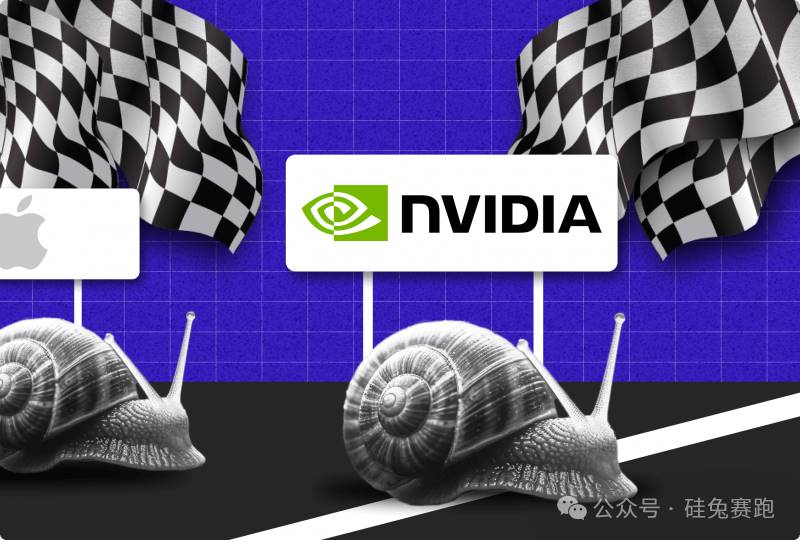
On Tuesday, NVIDIA's stock surged 3.6%, pushing its market capitalization to $3.34 trillion—surpassing Microsoft's $3.32 trillion and making it the world’s most valuable company.
Just a week earlier, Apple had briefly claimed the top spot after an impressive post-WWDC rally. Since then, Microsoft, Apple, and NVIDIA have been locked in a tight race, with rankings shifting daily.
Today marks the first time NVIDIA has taken the lead.
NVIDIA's stock has soared over 170% year-to-date, accelerating further after the company reported strong first-quarter earnings in May.
Since late 2022, NVIDIA’s share price has increased more than ninefold—a surge closely tied to the rise of generative AI technology.
NVIDIA commands about 80% of this market. As demand for processors from companies like OpenAI, Microsoft, Alphabet, and Amazon intensifies to train AI models and run large-scale workloads, NVIDIA's data center revenue jumped 427% year-on-year in the latest quarter to $22.6 billion, accounting for 86% of the company’s total sales.
Meanwhile, Apple’s shares dropped 1.1% on Tuesday, bringing its market cap down to $3.29 trillion, temporarily trailing both NVIDIA and Microsoft.
NVIDIA’s ascent reflects not only recognition of its technological strength but also signals the broader trajectory of artificial intelligence development.
As AI technologies continue advancing and expanding into new applications, NVIDIA appears positioned at the forefront of this revolution.
But don’t forget Apple is watching closely.
Apple and NVIDIA, both hardware powerhouses, share a complex history of cooperation and conflict.
Once partners, they are now quiet rivals. Unlike Microsoft or Google, Apple has chosen to invest heavily in developing its own chips rather than relying on NVIDIA’s GPUs.
Apple controls billions of consumer devices—the very platforms through which AI must ultimately reach the masses.
In many ways, one of the biggest stories in tech today is the race between Apple and NVIDIA.
01 The Old Grudges and New Rivalry Between Apple and NVIDIA
The rift between Apple and NVIDIA dates back to the "bumpgate" scandal between 2006 and 2009.
At the time, Apple used NVIDIA GPUs in Mac computers. However, these GPUs suffered from overheating and poor packaging design, leading to extremely high failure rates—exceeding 40% in some cases.
For a company built on quality like Apple, this was unacceptable. Worse still, NVIDIA refused to acknowledge any fault. The dispute eventually led to litigation, forcing NVIDIA to replace the faulty GPUs.
From that point on, Apple and NVIDIA went their separate ways, fully phasing out NVIDIA GPUs by 2016.
Apple adopted a dual strategy: switching to AMD and Intel GPUs—even though they were less powerful—while simultaneously launching its own chip development program, from the A-series to the M-series, which soon proved highly capable.
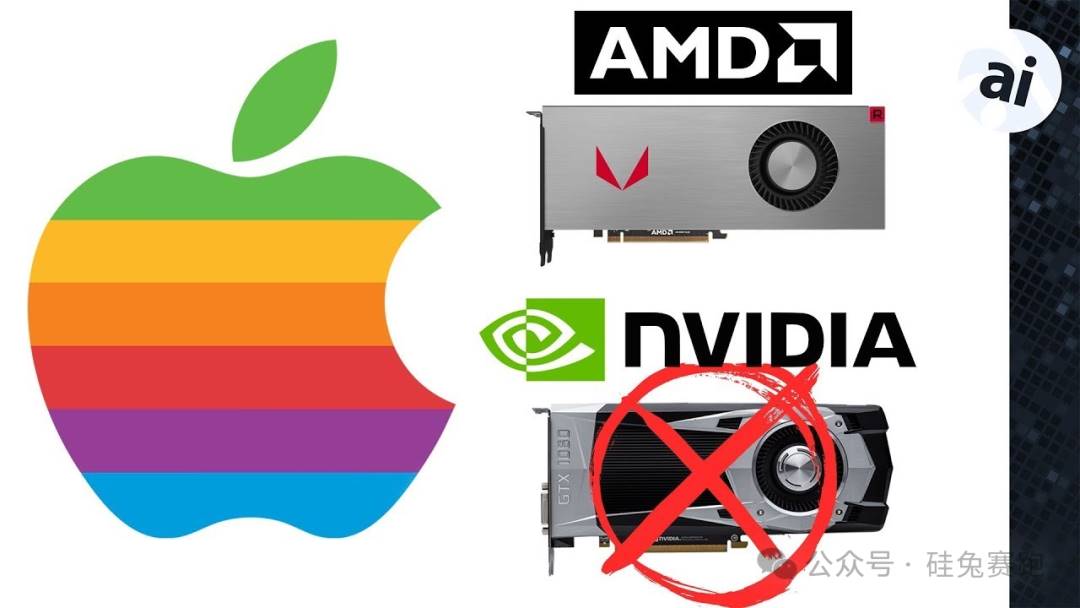
Image source: YouTube
In response to Apple’s move, NVIDIA struck back in 2019 by announcing it would discontinue support for Apple’s macOS in future versions of its CUDA software platform—effectively cutting off CUDA from Apple’s entire ecosystem.
The divide between the two companies deepened steadily.
Today, NVIDIA has risen to become a dominant chip giant, with global demand for its GPUs soaring. In May, NVIDIA founder Jensen Huang emphasized during the earnings call that demand is unprecedented—around 20,000 generative AI companies worldwide, including giants like Microsoft, are competing for NVIDIA’s chips.
The AI boom has brought enormous profits: NVIDIA posted $26 billion in revenue for its latest fiscal quarter, up 18% sequentially and a staggering 262% year-over-year.
Yet Apple has stayed largely on the sidelines of this buying frenzy. Its purchases of NVIDIA GPUs are minimal, not even placing it among NVIDIA’s top ten customers.
Even though NVIDIA’s GPUs outperform Apple’s own chip series, Apple shows little interest.
Let them be strong; let the breeze blow calmly over the mountain. Apple remains firmly committed to independence.
Does Apple not want better chips? Of course it does. But for Apple, maintaining tight control over core technologies and supply chains outweighs performance gains from external suppliers.
After Steve Jobs’ passing, Tim Cook, known for his aggressive integration of supply chains, took the helm. He maintains strict control over suppliers—if a vendor becomes too strategically important, Apple may invest in or acquire it to secure leverage.
Moreover, Apple follows a “don’t put all eggs in one basket” philosophy—disaggregating components across regions: displays from South Korea, camera modules from Japan, assembly from China.
NVIDIA’s past defiance made Apple wary, and now that NVIDIA stands as a peer competitor, Apple is even less inclined to depend on its chips.
02 The Real Battle: Competing for Dominance in the AI Era
Now, as the AI era accelerates, the tension between Apple and NVIDIA goes beyond hardware sourcing—it’s about who will define the next technological paradigm amid slowing growth in mobile internet.
Apple was central to the mobile internet revolution, but even giants face slowdowns.
Counterpoint Research reports that Apple’s global smartphone shipments declined 13% year-on-year in Q1. Additionally, Apple’s second-quarter fiscal 2024 results showed iPhone revenue fell to $46 billion, down 10% from the previous year.
With hardware sales stagnating, Apple must pivot early to the next wave. Earlier this year, Apple abruptly canceled its decade-long car project and redirected focus toward AI.
Turns out AI stands for this|Image source: WIRED
Apple’s push into AI is driven by two key considerations.
First, from a business standpoint, consumer upgrade cycles are lengthening. Apple needs AI features to reignite device replacement demand and boost revenues.
CITIC Securities analysts suggest Apple’s edge-side AI innovations could drive a new cycle of growth for its supply chain. With AI functionality starting on the iPhone 15 Pro series, older users may finally have reason to upgrade.
Second, strategically, Apple aims not just to enhance smartphones with AI—but to build an entire ecosystem around it.
During May’s earnings call, Cook stressed AI’s transformative potential and highlighted Apple’s unique advantages: seamless integration of hardware, software, and services; breakthrough silicon technology; and a strong commitment to user privacy.
Additionally, Apple has aggressively acquired AI startups to strengthen its ecosystem. According to research firm Stocklytics, Apple acquired 32 AI companies in 2023—more than any other major tech firm.
And despite its estrangement from NVIDIA, Apple isn’t entirely isolated—collaborations continue.
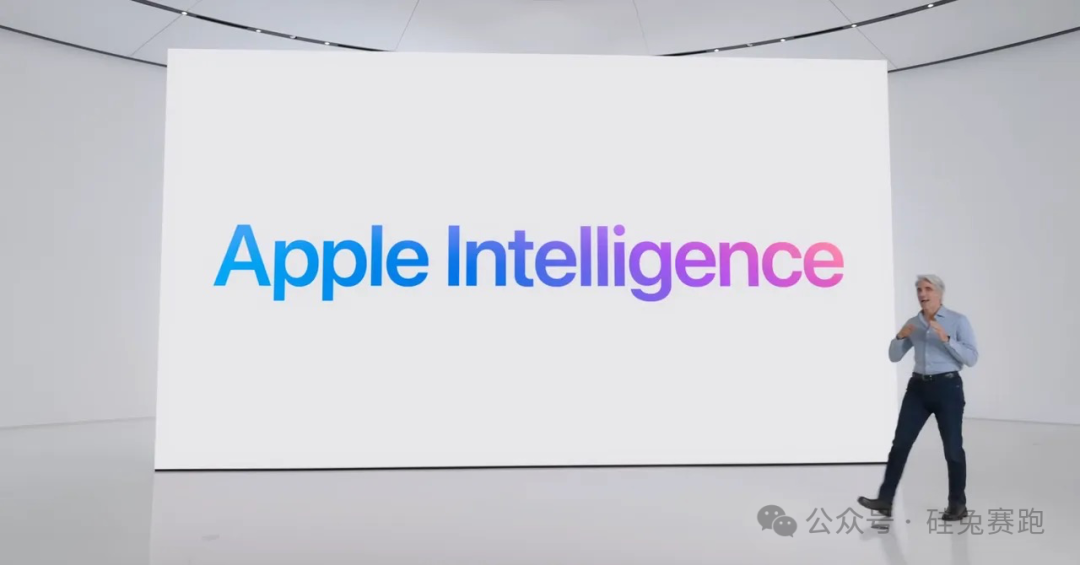
At this year’s WWDC, Apple announced a partnership with OpenAI to integrate ChatGPT directly into its operating system, allowing users to access advanced AI capabilities natively.
This collaboration drew fierce criticism from Tesla CEO Elon Musk, who warned of data privacy risks and threatened to ban Apple devices within his companies if the OS-level integration proceeds.
Musk has long opposed mainstream AI development—is his objection rooted in genuine concern for data security, or fear of the competitive threat posed by Apple and OpenAI joining forces? Only he knows for sure.
As Apple reveals ambitions to dominate the AI ecosystem, NVIDIA too shows grand aspirations—it won’t settle for being just an AI chip supplier.
Jensen Huang has stated that NVIDIA is building more than just GPUs—it’s creating full-stack "AI factories," encompassing CPUs, GPUs, memory, NVLink, InfiniBand, and Ethernet switches.
Given NVIDIA’s comprehensive positioning across the AI stack, it clearly aims to be central to the AI era—an ambition that inevitably puts it on a collision course with Apple.
03 Apple’s Strengths, NVIDIA’s Vulnerabilities
As the AI era approaches, who holds the upper hand—Apple or NVIDIA?
Many believe Apple has moved too slowly in AI, falling behind. Indeed, Apple started early but seems to have arrived late.
However, Apple still possesses immense competitive potential, thanks to its base of over one billion active iPhones, vast user network, and tightly integrated product ecosystem. Once infused with AI, demand on the application side could explode.
Furthermore, Apple’s robust on-device computing power enables it to forge a unique path in AI—one that doesn’t rely on NVIDIA’s chips.
Unlike cloud-heavy players such as Microsoft, Google, and Amazon, Apple has relatively weak cloud infrastructure—but it owns the most powerful endpoint computing platform in the industry.
As technology evolves, AI computation is gradually shifting from GPU-driven cloud servers to local devices. Apple can leverage this trend via on-device AI inference using its custom NPU (Neural Processing Unit). Unlike training, inference relies less on NVIDIA’s CUDA ecosystem.
In short, even if Apple lags in foundational AI, it can still leverage its strengths to gain momentum later.
For NVIDIA, market sentiment is increasingly polarized: some see massive upside potential, others warn of a colossal bubble poised to burst.
Ultimately, market cap fluctuations matter less than structural risk: if customers reduce reliance on NVIDIA’s chips, declining sales could trigger significant valuation swings.
Signs of this are already emerging. Competing alliances are forming.
Seeing NVIDIA’s dominance, several tech giants are investing in proprietary AI chips. In March, Qualcomm, Google, Intel, and others launched the “UXL” project, aiming to develop open-source standards enabling AI code to run across different chip architectures—challenging NVIDIA’s near-monopoly in AI computing.
Apple’s renewed emphasis on self-developed silicon at WWDC may spark a wider trend of “technological self-reliance” in the AI space.
Overall, Apple holds strong advantages in the consumer (C-end) market, while NVIDIA dominates enterprise (B-end) infrastructure. It remains unclear which will wield greater influence in the long-term AI landscape.
This contest is destined to be a marathon, not a sprint. Let the race unfold.
Join TechFlow official community to stay tuned
Telegram:https://t.me/TechFlowDaily
X (Twitter):https://x.com/TechFlowPost
X (Twitter) EN:https://x.com/BlockFlow_News