Full transcript of He Yi's community discussion: Addressing conflicts regarding listing high-FDV projects, criteria for delisting zombie tokens, and more
TechFlow Selected TechFlow Selected
Full transcript of He Yi's community discussion: Addressing conflicts regarding listing high-FDV projects, criteria for delisting zombie tokens, and more
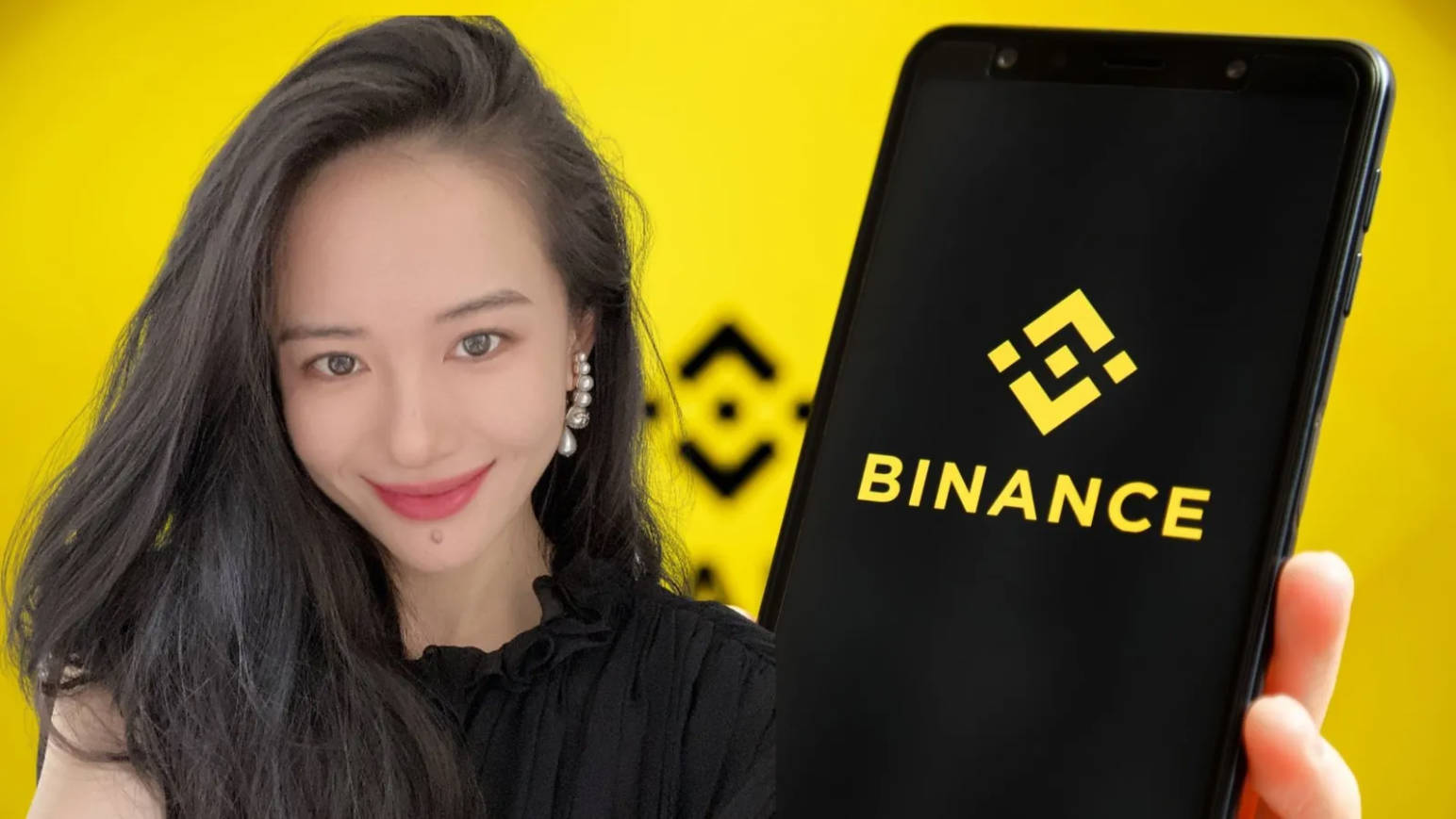
Recently, Binance reached over 200 million registered users and held an AMA to celebrate the milestone. Binance co-founder He Yi addressed questions regarding the wash trading and theft incident, contradictions in listing high-FDV projects, criteria for delisting zombie tokens, and other issues.
 Navigating Web3 tides with focused insights
Compiled by: Wu Shuo Blockchain
Recently, Binance announced it has surpassed 200 million registered users and held an AMA session. Binance co-founder He Yi addressed several pressing questions from the community, including recent wash-trading and theft incidents, tensions around listing large FDV projects, and criteria for delisting zombie tokens.
Additionally, He Yi shared that she sends daily emails to CZ and writes book notes; her daily routine mainly consists of fitness, phone calls (including meetings), and putting her child to sleep—describing her life as rather dull.
He Yi jokingly referred to the "bestie token" incident, noting that Binance is experimenting with bringing in more legitimate business models, even if it means enduring ridicule and failure along the way.
The audio transcription was assisted by GPT and may contain errors. You can listen to the full original audio on Xiaoyuzhou or YouTube.
Has Binance made any recent progress on user security?
He Yi: First, I want to emphasize that there’s no such thing as absolute security—we must remain vigilant at all times. This applies not only to exchanges but also to how we manage our personal assets, whether using hardware wallets or software wallets.
Binance learned hard lessons early on and has since made significant investments in security—an ongoing commitment. For example, after some users lost funds due to clicking on third-party plugins, we raised our risk control standards and detection levels.
Regarding wash trading, we now have a dual-layer risk management system. When abnormal price movements occur, our big data systems flag them for review, followed by manual verification. In one case, we detected unusual volatility, but because multiple trading pairs were involved and profits were dispersed across many accounts, our risk team initially assessed the situation as low-risk.
We understand users expect Binance to act as a safety net when they engage in risky behavior. As such, we’ve raised expectations for our security and risk teams and continue iterating on our protection mechanisms.
In cases where shared accounts led to theft, we were able to trace back through detailed user activity logs. We strongly advise against clicking or sharing suspicious links—especially those appearing in videos or live streams. If you must click a link, consider keeping your primary trading account on a separate, secure device, particularly if you hold substantial assets.
Always verify that apps are downloaded from official sources to avoid phishing versions. Recently, emotions have been high, and the community has seen various conspiracy theories, including claims that exchanges are stealing user funds. We believe reputable platforms would never do this—their business model depends on trust. Competitors like Coinbase operate successfully under similar principles. Spreading baseless rumors damages overall industry credibility. That’s my summary of the recent security issues.
How does Binance view high-FDV, low-circulation projects? Will Binance intervene in pricing or token distribution?
He Yi: Let me start by offering a personal framework—one based on my own observations, not official policy or rigid rules. The blockchain industry is currently entering a unique phase, much like the transition of technology from niche to mainstream adoption. Early technologies like VR and 3D printing generated excitement but failed to cross the chasm into mass use. Tesla succeeded by commercializing electric vehicle technology.
In blockchain, we may be building a more decentralized and efficient miniature financial system. Use cases like trading, asset ownership, and inflation hedging already have proven business models. However, the bigger challenge lies in driving real-world adoption beyond finance—so far, we’ve seen little success in areas like gaming or social applications.
I hope to see more projects with real business models built on blockchain, rather than just abstract concepts. The anti-VC sentiment and rise of memecoins reflect a lack of quality assets in the market. Many VCs fund projects at high valuations without delivering viable products. Airdrops often serve only to inflate metrics, while exchanges feel pressured to list due to demand—even though no one ends up satisfied, and everyone suffers.
Ideally, every project should show sustainable growth and solid fundamentals. But in practice, exchanges cannot control project teams or market makers. We offer guidance—such as encouraging broader airdrops to real users—but we don’t control pricing or execution. When recruiting projects, we look for teams with strong models at reasonable valuations, and we also work with market makers. But imposing too many conditions risks pushing liquidity elsewhere.
High FDVs leave most users and investors hurt, benefiting only a small group of insiders. This is still an emerging market where tokenomics are self-defined. Investors and users must do their research and vote with their feet. We continuously refine our standards for projects and market makers, but this process involves constant negotiation and adaptation.
We hope to attract more builders focused on real value creation, not just launching vaporware. True success must withstand human nature’s tests. I hope this wave of speculation eventually leaves behind genuinely valuable projects and assets.
Looking ahead, we aim to support more entrepreneurs who can turn blockchain assets into productive tools—not just lock users into farming airdrops or trading on exchanges. The entire industry needs to cross the chasm.
How do you maintain passion and energy?
He Yi: Personally, I came from humble beginnings and have seen both highs and lows of the world. Once you witness these contrasts, you begin asking: what do I want to do in this world, and what legacy do I want to leave? Some might say material legacy is your children—your DNA. But if you have a chance to truly change the world, why not try? Like Elon Musk or Amazon, leaving behind transformative impact. In truth, one person can only spend so much money—I’m not interested in luxury goods. My greater drive comes from rebuilding myself, breaking through personal ceilings, and seeing my own growth.
I focus heavily on self-improvement. Last night, I posted that I woke up after six hours of sleep to work out—and yes, my trainer absolutely crushed me. I break down personal discipline into three areas:
-
First, health: fitness isn’t just about appearance—it’s about well-being.
-
Second, iterative self-awareness: I recommended the book *Mindset* on Twitter—it pushes me to evolve. One of my strengths is quickly internalizing knowledge and connecting it with existing understanding.
-
Third, leaving something behind—if I can change the world, I want to try. This is why I’ve stayed consistently on the front lines for years.
Do I ever want to retire or take it easy? Of course. But I have a goal: to build a lasting company. That requires not just individual excellence, but organizational strength. If every Binance executive could embody my philosophy—while being more skilled in their domains, like our VIP managers in finance or engineers in tech—that would be ideal. My mission is to build a strong, healthy, and sustainably growing organization.
My role model is Duan Yongping, a quietly successful figure in Chinese entrepreneurship. He founded Xiaobawang and BBK, which later split into vivo, OPPO, and Little Genius watches. Beyond founding companies, he achieved massive success in investing—backing NetEase and Pinduoduo. Duan proves that success can be replicated. I hope to pass on my ability to succeed—to cultivate high-potential talent at Binance, spreading sound thinking, values, and culture.
This is what I’m striving toward today, and I welcome anyone with potential and interest in Binance to join us.
How do you select projects for Launchpool and MegaDrop?
He Yi: We don’t decide between Launchpool and MegaDrop first—we evaluate the project first, then determine which program fits better. We originally started with Launchpad, but due to regulatory concerns over token pre-sales in many regions, we shifted to airdrop-based models. We launched Launchpool first and found that many projects wanted genuine users, and Binance holders tend to be more authentic.
Binance’s Web3 wallet includes KYC, proving users are real. For example, the recent criticism of the ZK project stemmed from them penalizing many “cat-farming” bot accounts. Had they sourced users via Binance Web3 wallet initially, things would have been simpler. So, Launchpad, Launchpool, and MegaDrop are all solutions to help projects acquire real users while rewarding Binance users.
Sometimes we list projects simply because they offer larger airdrop allocations, but that decision isn’t always right. We constantly reflect and listen to user feedback.
For instance, high-FDV projects often see low circulation post-listing, spike briefly, then crash. There’s no universal rule—whether high circulation or deflationary models are better depends on context.
Our goal is to identify high-quality projects with long-term vision or strong potential, then assign them to Launchpool or MegaDrop accordingly. Lower allocation? Launchpool. Higher allocation? MegaDrop. Regardless of the name, the purpose remains: help projects gain real users and provide value to Binance users.
We adjust our selection criteria based on market feedback to ensure long-term ecosystem health.
Does Binance have delisting criteria for zombie tokens? How are they managed and removed?
He Yi: We conduct regular reviews of listed tokens—not just social media activity, but also product development progress, liquidity, and major negative news. We also assess compliance with regional regulations. Tokens flagged as higher risk receive monitoring tags and are observed closely over time.
Recently, our delisting frequency has decreased, partly because some projects have reactivated during the bull market. A dedicated team monitors listed projects for chain incidents, hacks, and user complaints. Before delisting, we perform thorough analysis—not removing tokens simply because performance is poor.
Delisting harms both project teams and token holders, so we strive to remain objective and strictly follow established listing/delisting standards. Don’t assume “shell” projects on Binance are safe investments—they could be delisted at any time. We strongly oppose shell trading and will shut down any project found engaging in it.
How do you view the market cap comparison with Coinbase? Where is BNB’s growth potential?
He Yi: First, Coinbase is fundamentally a stock, while BNB is a utility token—they’re in different categories. Coinbase shares can’t be used on Binance like BNB. BNB benefits from real utility within Binance, a continuous burn mechanism, and the backing of BNB Chain.
BNB is widely used across Binance services—often called the “golden shovel”—providing significant fee discounts. While BNB Chain may not yet match the user bases of top L2s, L1 ecosystems, or TON, it hosts more real Web3 users and builders compared to developer-focused chains like Ethereum or Solana.
A key direction for BNB Chain is bringing blockchain into everyday life, empowering more entrepreneurs and developers to push the industry forward. From this perspective, Coinbase and Binance are taking entirely different paths. Coinbase is an excellent exchange, profiting through partnerships like Circle, but Binance is pursuing a distinct trajectory in the blockchain space.
Throughout project launches, Binance continues to add value to BNB via rewards and airdrops. Short-term price fluctuations mean little—we focus on long-term goals and sustained effort. Building BNB Chain and its ecosystem requires collaboration among users, communities, founders, and developers.
Which sectors are you watching? Your thoughts on AI? And how do you spend your day?
He Yi: Let me start with AI. In a previous AMA, I shared my views: blockchain transforms labor relations and value distribution, while AI represents a massive leap in productivity. For example, many exchanges operate in multilingual environments—leveraging AI could drastically reduce translation costs and boost efficiency. In the future, AI-driven productivity gains will appear across design, marketing, and more—with lower costs and higher output.
AI can be broken into layers. At the application level, tools like OpenAI’s chatbot assist with drafting plans, designing, or video creation. Above that are large model teams—small in size but highly specialized. Then comes compute power—explaining NVIDIA’s strong stock performance. Their chip dominance creates a high barrier to entry. Technological advances make computing power increasingly powerful.
Energy and data are two critical pillars supporting AI. Global conflicts often revolve around energy, and future AI development will depend on it. Data is equally crucial—companies with vast user data have a clear advantage in AI innovation.
We at Binance are actively exploring strong AI solutions. For example, BNB Chain’s Greenfield product enables data usage through privacy-preserving networks—our attempt to merge blockchain and AI.
As a businessperson, I believe we should stay curious about emerging sectors. Any field that delivers real societal value with solid products and services can become a viable business.
My daily life is simple: gym three times a week, usually early morning. After working out, it’s meetings all day. My goal is to build leadership-capable teams and strengthen leadership across the industry. Beyond meetings, I spend time studying organizational structure and management, talking with HR leads. Recently, I’ve added writing daily emails to CZ—sharing work updates and personal reflections. My life is plain: work, fitness, family time, reading—that’s my day.
What are Binance’s considerations regarding stablecoins? How will they evolve?
He Yi: Our logic on stablecoins is straightforward. While we’re not open to every proposal, we see it as an ongoing competition. BUSD was previously a third-party partnership. Whether it’s TUSD, FDUSD, or future options, we welcome collaborations—provided partners meet our standards in capability and alignment. We’re bullish on the stablecoin space, but running one successfully requires timing, infrastructure, and teamwork—not just setting up an account and accepting deposits.
After surpassing 200 million users, where will Binance’s next user growth come from? Note: registered users ≠ active traders. Some may never deposit or trade. To scale further, we need more high-quality assets. Industry stagnation stems from a lack of compelling offerings—again, the “crossing the chasm” challenge. Our focus is on bridging that gap, making blockchain as accessible as the internet or AI. Once we cross it, scaling ten or twenty times becomes feasible.
I firmly believe that once crypto delivers tangible, high-value applications, the market could grow fivefold or more. Each cycle brings new apps and companies—those that persist and create real value become leaders. Just as Apple, Amazon, Facebook, and Google emerged from the dot-com era, we hope to see similarly enduring champions in blockchain.
After surpassing 200 million users, what strategies does Binance have to bring in more external participants?
He Yi: After reaching 200 million users, what are Binance’s plans to bring in more outsiders?
Actually, Binance has been trying for a while. Through marketing, Binance Academy, charity initiatives, and even project listings, we’ve experimented in various ways—sometimes receiving criticism. For example, we partnered with The Weeknd, and later signed Cristiano Ronaldo. With 600 million Instagram followers, his posts regularly get millions of likes. We aim to leverage such celebrity influence to raise awareness of Binance and crypto.
We also encourage users to learn about crypto before investing—even when investing in memecoins, one should understand their nature and cycles to avoid impulsive decisions. Our approach is: not every project listed on Binance is guaranteed high quality—some are listed due to user demand. We may first place uncertain projects in the futures market, allowing users to go long or short. If uncertain about long-term appeal, we let users choose 1x or 2x leverage.
We’ve made mistakes. For example, the Hook project was mocked as the “bestie token,” with critics claiming all users were fake, bought through referrals. Upon review, we found their users weren’t typical crypto natives—they were task-completers earning rewards like motorcycles or rice cookers, not genuine investors.
Recently, we collaborated with Web3 projects on cross-game campaigns, attracting 1.3 million users—but only 56 became active traders, as most were just chasing freebies. People question why we list such projects, but we’re searching for applications that can genuinely improve ordinary lives and create sustainable models.
Binance Academy and our philanthropy efforts also expand our industry impact. Results aren’t always immediate, but they increase visibility. Signing Ronaldo may not have driven massive sign-ups, but it put Binance in front of millions.
Crypto faces many biases and negative perceptions, but we remain committed to advancing the industry and drawing in outsiders. Even amid mockery and setbacks, as long as our goal is clear, we’ll keep moving forward.
In short, we’ll keep pushing to bring in new participants and foster healthy industry growth.
After the U.S. regulatory settlement, how does this affect Binance’s operations in Europe and other regions?
He Yi: The U.S. regulatory resolution has had some ripple effects on Binance’s expansion in Europe and elsewhere. You may have noticed one of our executives recently faced issues in Nigeria.
From a regulatory standpoint, traditional finance has over a century of history and established frameworks. When regulators encounter crypto—a disruptive force claiming to overturn legacy systems—they naturally treat it with suspicion. As a leading player, we face heightened scrutiny and challenges.
Some believe DeFi solves everything, but the internet went through a similar evolution. While information freedom matters, governments still monitor and regulate online spaces. Blockchain will face parallel challenges. If fully decentralized, regulators—especially in the U.S.—will crack down hard on DeFi. They won’t go easy on CeFi either. That’s why CZ is still in the U.S.
To serve 1 billion users and move the industry forward, we must reconcile with regulators, build consensus, earn trust, and find a sustainable path. Once the industry scales, we must demonstrate its positive contributions—how it complements traditional finance, improves efficiency, and enables peaceful coexistence. This is our guiding principle.
Along the way, we face hurdles—like restricted futures trading in certain regions. Compliance teams grow large, and many decisions require legal approval. But with a strong organization and sound strategy, these temporary obstacles won’t derail our long-term vision. Overall, we seek coexistence.
Coinbase also supports embracing regulation. We’re likely the first global exchange to proactively engage with regulators—especially in the U.S. Competitors like Coinbase, OKX, Huobi, Bybit, Bitget, and BitMEX have all survived multiple cycles—each offers valuable lessons. The industry is still early. We need to collaborate to grow the pie together.
Join TechFlow official community to stay tuned
Telegram:https://t.me/TechFlowDaily
X (Twitter):https://x.com/TechFlowPost
X (Twitter) EN:https://x.com/BlockFlow_News
 吴说区块链
吴说区块链