








How should Web3 project teams view "cutting the韭菜" (retail investors) in crypto market making?
TechFlow Selected TechFlow Selected
How should Web3 project teams view "cutting the韭菜" (retail investors) in crypto market making?
We need to acknowledge the important role market makers play in the crypto market, especially for early-listed projects.
 Navigating Web3 tides with focused insights
Author: Will Wang,Investment & Financing Lawyer, Digital Assets & Web3; Independent Researcher, Tokenization & RWA & Payments
Crypto market rags-to-riches stories happen every day. Most participants don't come here to double their money—they come to transform their fortunes. In this dark forest, crypto market makers, as top predators closest to the money, grow increasingly mysterious.
Price manipulation, pump-and-dump, and "harvesting韭菜" (a metaphor for exploiting retail investors) have become synonymous with crypto market makers. However, before slapping these “negative” labels on them, we must acknowledge the critical role they play in the crypto ecosystem—especially for early-stage token projects.
Against this backdrop, this article will explain from a Web3 project team’s perspective what market makers are, why we need them, the DWF incident, the main operating models of crypto market makers, and associated risks and regulatory issues.
We hope this article helps project development, and welcome discussion and feedback.
1. What is a Market Maker?
Global leading hedge fund Citadel Securities defines it this way: Market makers play a vital role in maintaining continuous market liquidity by simultaneously providing bid and ask quotes, thereby creating a liquid, deep market environment where investors can trade anytime—injecting confidence into the market.
Market makers are crucial in traditional financial markets. On NASDAQ, each stock has an average of about 14 market makers, with roughly 260 market makers across the entire market. Moreover, in markets less liquid than equities—such as bonds, commodities, and foreign exchange—most trading occurs through market makers.
A crypto market maker refers to institutions or individuals that help projects provide liquidity and bid/ask quotes on order books of centralized exchanges (CEXs) and decentralized exchange (DEX) pools. Their primary responsibility is to supply liquidity and market depth across one or more crypto markets, using algorithms and strategies to profit from market volatility and supply-demand imbalances.
Crypto market makers not only reduce trading costs and improve trading efficiency but also promote the growth and visibility of new projects.
2. Why Do We Need Market Makers?
The main goal of market making is to ensure sufficient market liquidity, depth, and price stability, thereby instilling market confidence and facilitating trades. This lowers the barrier to entry for investors and encourages real-time trading, which in turn brings more liquidity—a virtuous cycle that creates a trustworthy trading environment.
Crypto market makers are especially important for early-stage listing projects (IEOs), as these projects require adequate liquidity, trading volume, and market depth—both to maintain market热度 (heat/presence) and to facilitate price discovery.
2.1 Providing Liquidity
Liquidity refers to how quickly an asset can be converted into cash without loss in value, describing how easily, quickly, and cheaply buyers and sellers can transact in the market. High-liquidity markets reduce transaction costs and enable trades without causing significant price swings.
In essence, market makers promote faster, larger, and smoother buying and selling of tokens at any given time by providing high liquidity, preventing operations from being disrupted by large price fluctuations.
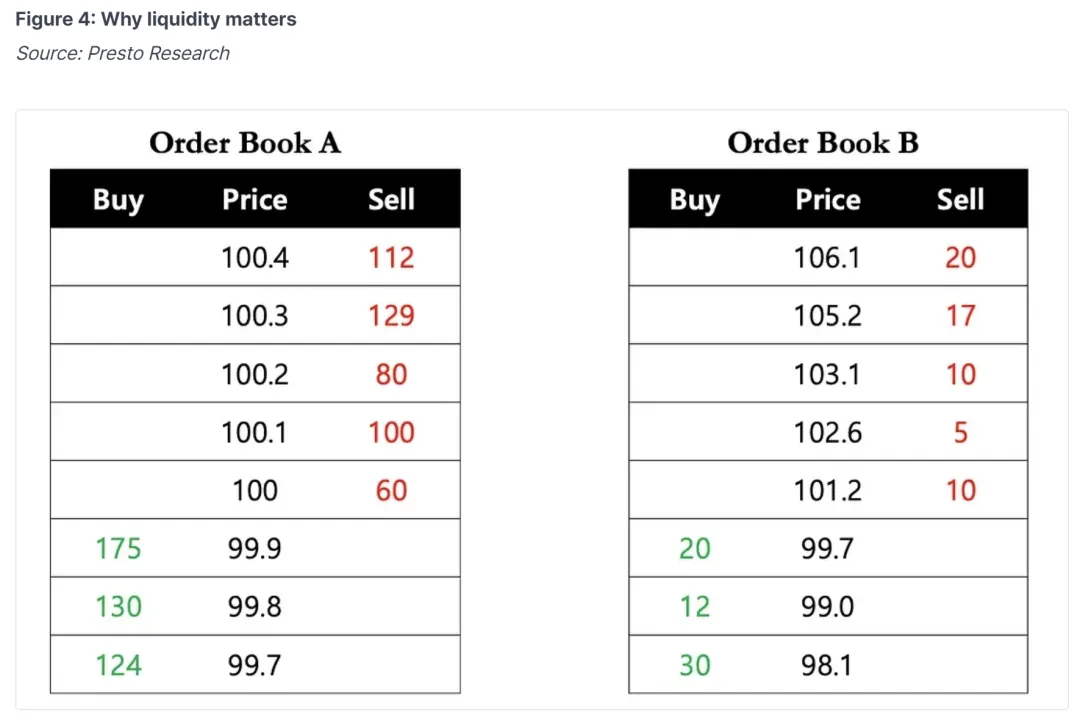
For example, suppose an investor needs to immediately buy 40 tokens. In a high-liquidity market (Order Book A), they can instantly purchase all 40 tokens at $100 each. But in a low-liquidity market (Order Book B), they face two choices: 1) Buy 10 at $101.2, 5 at $102.6, 10 at $103.1, and 15 at $105.2, resulting in an average price of $103.35; or 2) Wait a long time until the desired price becomes available.
Liquidity is critical for early-stage projects. Poor liquidity affects investor confidence and trading strategies, and may even indirectly lead to a project's death.
2.2 Providing Market Depth and Stabilizing Prices
In the crypto market, most assets suffer from low liquidity and shallow market depth—even small trades can cause significant price changes.
In the above scenario, after purchasing 40 tokens, the next available price in Order Book B jumps to $105.2, indicating a ~5% price swing from a single trade. This is particularly true during volatile periods when fewer participants can cause sharp price movements.
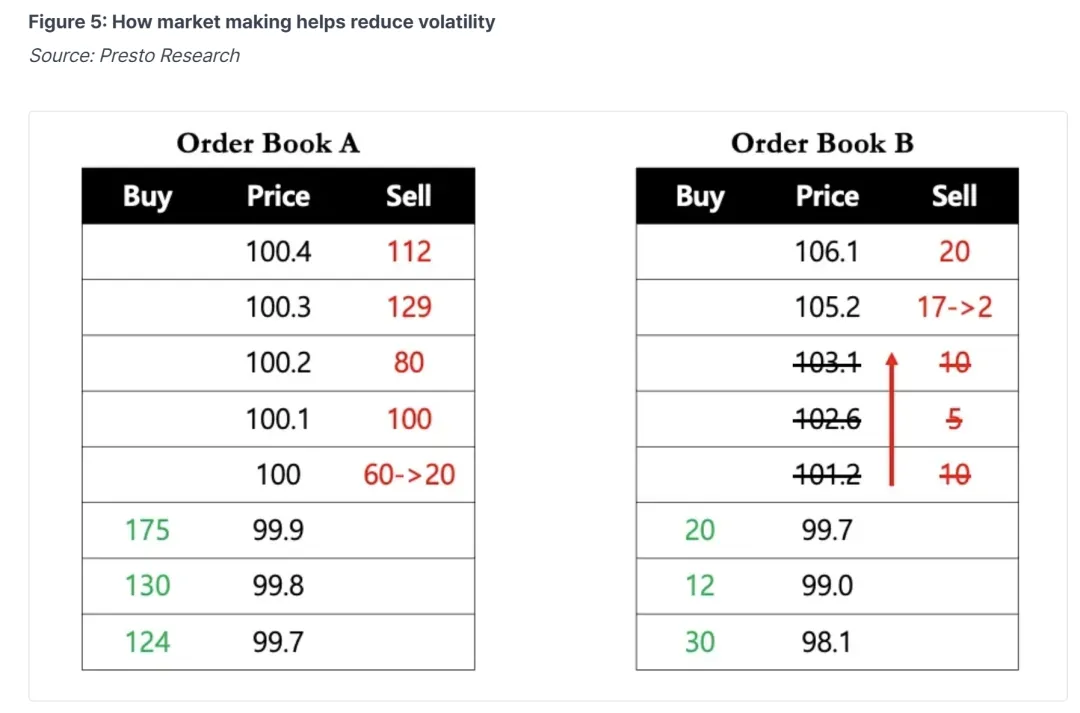
Market makers provide substantial liquidity, narrowing the bid-ask spread. A tight spread usually indicates solid market depth, helping stabilize token prices and mitigate volatility.
Market depth refers to the quantity of buy and sell orders available at different price levels in the order book at any given moment. It also measures an asset’s ability to absorb large orders without major price changes.
By bridging the supply-demand gap, market makers play a key role. Just imagine: Which market would you rather trade in?
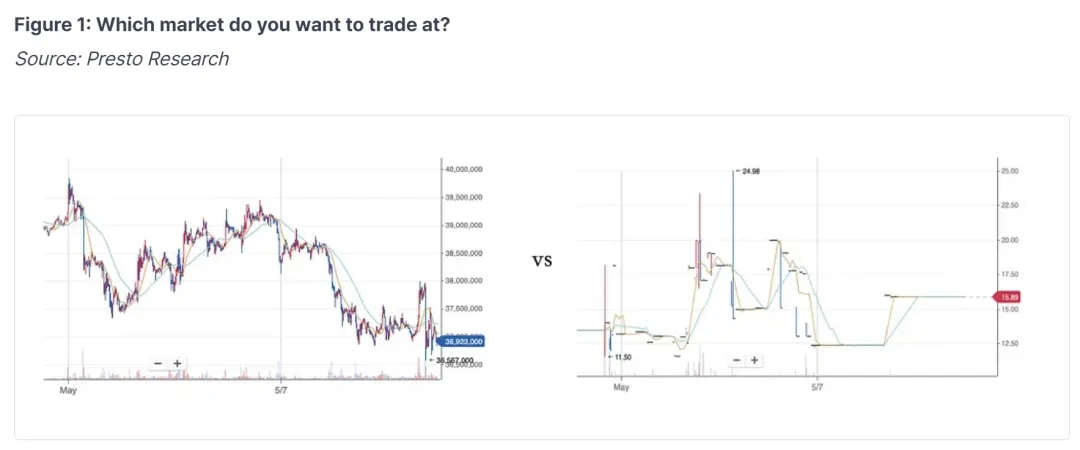
The roles of crypto market makers—1) providing abundant liquidity; 2) offering market depth to stabilize prices—ultimately boost investor confidence in the project. After all, every investor wants to buy and sell their holdings in real time at the lowest possible cost.
3. Who Are the Major Players Among Crypto Market Makers?
Market making could be considered one of the top-tier businesses in the food chain, as they control the lifeline of a project’s token post-launch. Market makers often collaborate with exchanges, easily forming monopolistic situations where market liquidity is dominated by a few large players.
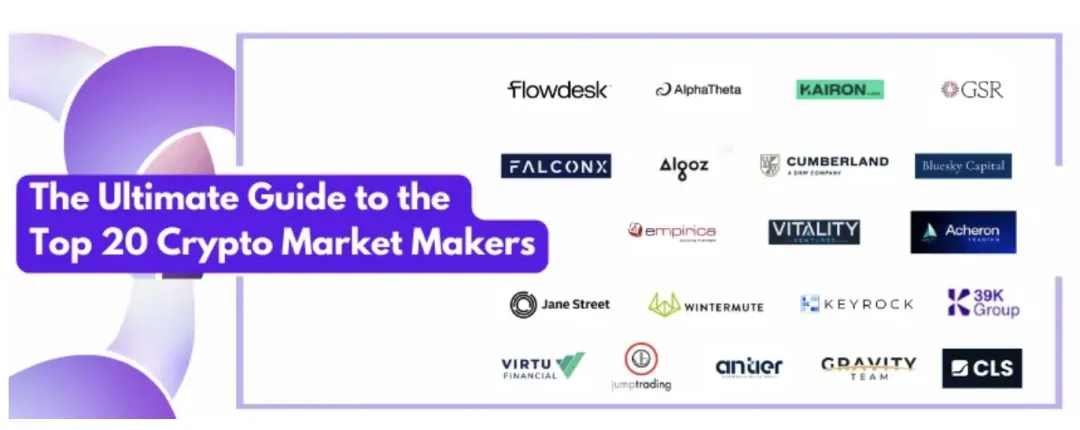
(Crypto Market Makers [2024 Updated])
In July 2023, Worldcoin—a crypto project co-created by OpenAI’s Sam Altman—signed agreements with five market makers, lending them a total of 100 million $WLD tokens to provide liquidity. The agreement required the market makers to either return the tokens after three months or buy them at a price between $2 and $3.12.
These five market makers include:
A. Wintermute, a UK-registered company. Notable investments: $WLD, $OP, $PYTH, $DYDX, $ENA, $CFG, among over 100 projects since 2020.
B. Amber Group, founded in 2017 and headquartered in Hong Kong, with board members including well-known Chinese firms like Distributed Capital. The team consists almost entirely of ethnic Chinese. Projects involved: $ZKM, $MERL, $IO, etc.
C. Flow Traders, founded in the Netherlands in 2004, is a global digital liquidity provider specializing in exchange-traded products (ETPs). It is one of the largest ETF traders in the EU and has launched crypto ETNs based on Bitcoin and Ethereum.
D. Auros Global, linked to the FTX collapse, filed for bankruptcy protection in the British Virgin Islands in 2023, with $20 million in assets frozen on FTX. There were reports of successful restructuring.
E. GSR Markets, established in the UK in 2013, is a global crypto market maker providing liquidity, risk management strategies, algorithmic execution, and structured products for mature global investors in the digital asset industry.
4. The DWF “Rashomon” Incident
DWF Labs is currently the hottest “influencer” market maker in the market. Russian partner Andrei Grachev founded DWF in Singapore in 2022. The firm now claims to have invested in 470 projects and partnered with approximately 35% of the top 1,000 market cap tokens within its short 16-month history.

(Binance Pledged to Thwart Suspicious Trading—Until It Involved a Lamborghini-Loving High Roller)
Let’s review this incident:
4.1 The Exposure
On May 9, The Wall Street Journal reported that an anonymous former Binance insider revealed Binance investigators discovered $300 million worth of fake trading activity by DWF Labs during 2023. A person familiar with Binance’s operations also stated that Binance previously did not require market makers to sign specific agreements governing their trading behavior—including prohibitions on market manipulation.
This meant Binance largely allowed market makers to trade as they wished.
4.2 DWF’s Marketing Strategy
According to a 2022 proposal sent to potential clients, DWF Labs did not follow price-neutral rules but instead proposed using active trading positions to push up token prices and create so-called “artificial trading volume” on exchanges including Binance to attract other traders.
In a report prepared for a token project client that year, DWF Labs explicitly wrote that it had successfully generated artificial trading volume equivalent to two-thirds of the token’s total volume and was working to create a “believable trading pattern.” Cooperation with DWF Labs could bring “bullish sentiment” to a project’s token.
4.3 Binance’s Response
A Binance spokesperson said all users on the platform must comply with general terms of use prohibiting market manipulation.
One week after submitting the DWF report, Binance fired the head of its monitoring team and laid off several investigators in the following months, which a Binance executive attributed to cost-cutting measures.
Binance co-founder He Yi stated: “Binance has always conducted strict market surveillance on market makers. There is fierce competition among market makers, and their tactics are quite dirty—they attack each other via PR.”
4.4 Possible Reasons
On Binance, DWF holds the highest “VIP 9” tier, meaning it contributes at least $4 billion in trading volume per month. The relationship between market makers and exchanges is symbiotic—Binance has no incentive to alienate one of its biggest clients over an internal investigator.
5. Main Operating Models of Crypto Market Makers
Like traditional market makers, crypto market makers primarily profit from the bid-ask spread. They set lower buy prices and higher sell prices, capturing the difference—commonly known as the “spread”—which forms the foundation of their profits.
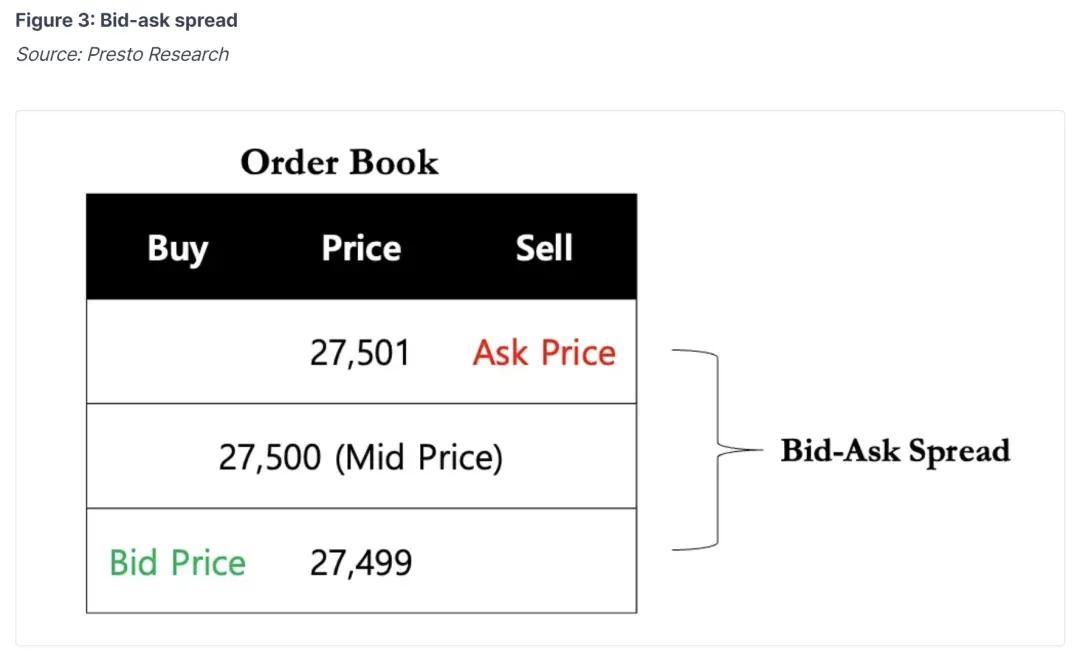
With this basic understanding, let’s examine the two main business models market makers offer to project teams.
5.1 Retainer + Performance Fee
Under this model, the project provides tokens and corresponding stablecoins to the market maker, who uses these assets to provide liquidity on CEX order books and DEX pools. The project sets KPIs based on its needs—for example, acceptable bid-ask spreads, required liquidity levels, and market depth.
A. The project may first pay the market maker a fixed setup fee to launch the market-making service.
B. Then, the project pays a fixed monthly or quarterly retainer fee. Basic retainers typically start at $2,000/month, but can go much higher depending on the scope—e.g., GSR Markets charges a $100,000 setup fee, $20,000/month retainer, plus loans of $1 million in BTC and ETH.
C. To further incentivize performance, some projects also offer KPI-based performance fees (bonuses paid when the market maker achieves certain targets).
Such KPIs may include trading volume (which may involve illegal wash trading), token price, bid-ask spread, and market depth.
This model is relatively clear and transparent, easier for projects to manage, and better suited for mature projects that already have liquidity pools established across markets and have clear goals.
5.2 Token Loan + Call Option
The most widely adopted model in today’s market is the Token Loan + Call Option model. This approach is particularly suitable for early-stage projects.
Early-stage projects often lack funds to pay market-making fees, and circulating supply is limited at launch. Lending early tokens to market makers means the latter assume risk.
In such cases, it makes more sense for market makers to set their own KPIs. To compensate them, projects often embed a call option in the contract to hedge against token price risk.
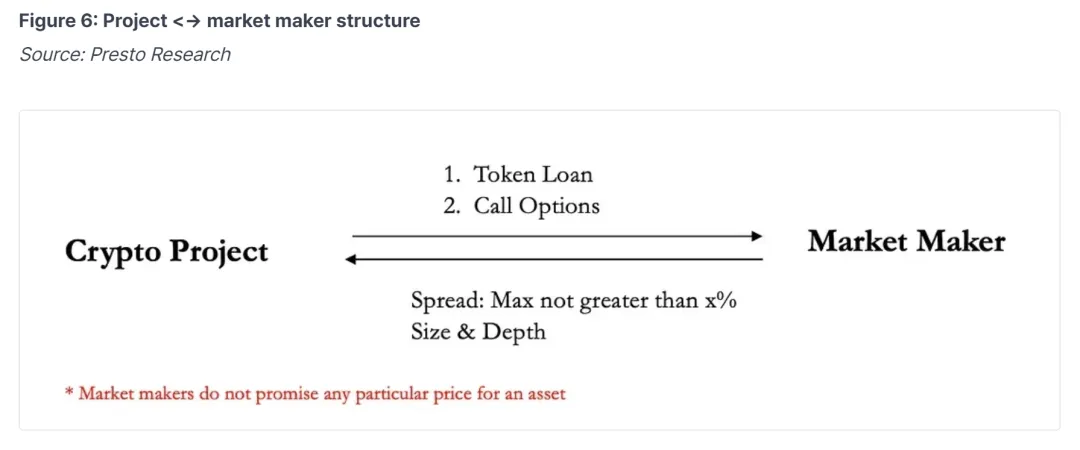
Under this model, the market maker borrows tokens from the project to inject into the market, ensuring liquidity and price stability, typically under a 1–2 year market-making term.
The call option grants the market maker the right—but not the obligation—to purchase the borrowed tokens from the project at a predetermined strike price before the contract expires.
This option’s value is directly tied to the token price, giving the market maker strong incentives to increase the token’s value. Let’s simulate a scenario:
Suppose the Mfers project partners with a market maker, signing a call option to borrow 100,000 tokens at a $1 strike price, with a one-year term. During this period, the market maker has two choices: 1) Return 100,000 Mfer tokens at maturity; or 2) Pay $100,000 to buy the tokens at the $1 strike price.
If the token price surges 100x to $100 (“Mfers to the Moon”), the market maker can exercise the option, buying $10 million worth of tokens for just $100,000—a 100x return. If the price drops 50% to $0.5, the market maker can choose not to exercise the option ($100,000) and instead buy 100,000 tokens on the open market for $50,000 to repay the loan—half the exercise cost.
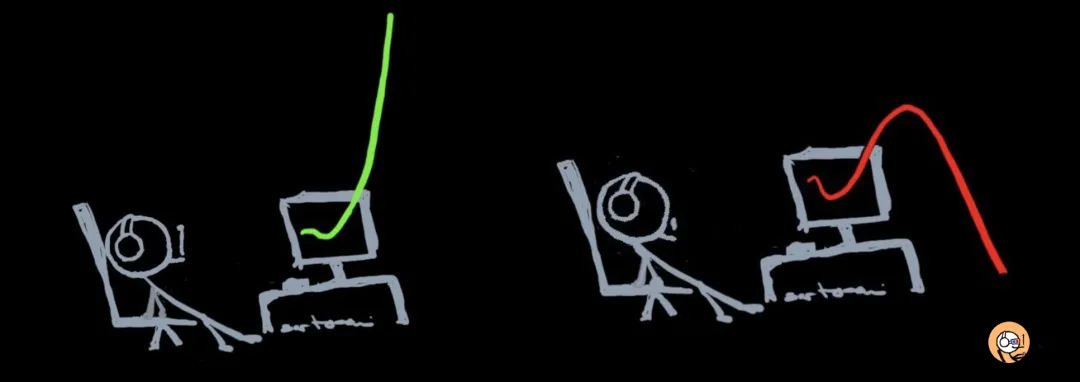
Because of the call option, market makers have strong incentives to pump the price and dump for profit—or to crash the price and buy back cheaply to repay the loan.
Therefore, under the Token Loan + Call Option model, project teams should treat market makers as counterparties rather than partners and carefully consider the following:
A. How many tokens are loaned and at what strike price—this determines the market maker’s profit margin and expectations;
B. The loan period, which defines the time horizon for market-making activities;
C. Termination clauses in the contract—risk mitigation plans in emergencies. Once tokens are loaned out, the project loses control over where they go.
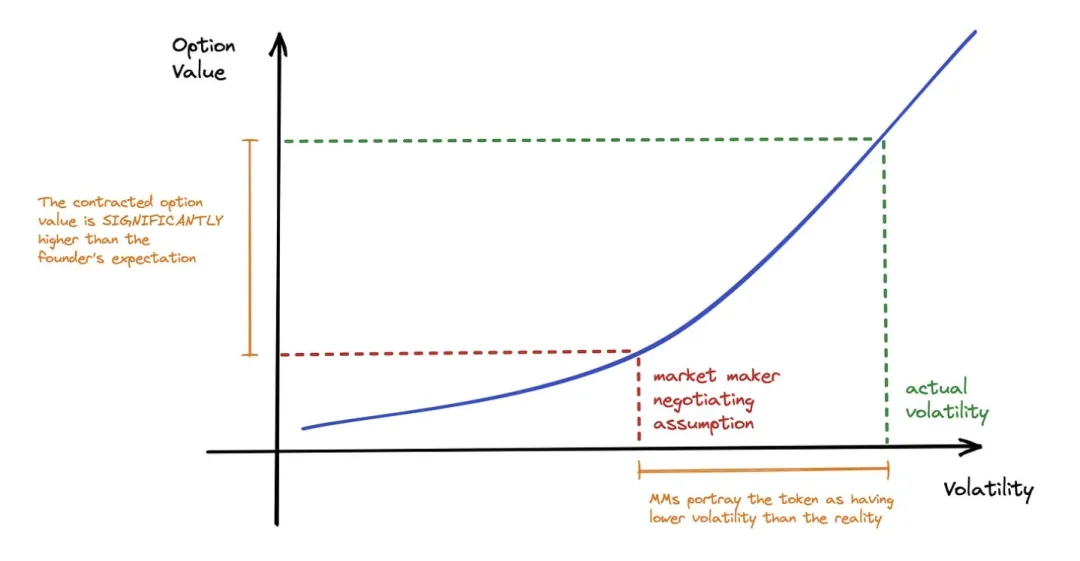
(Paperclip Partners, Founder’s Field Guide to Token Market Making)
5.3 Other Business Models
Many market makers also have dedicated investment arms that support projects through funding, incubation, marketing, and exchange listings. Holding equity in projects also helps market makers access potential clients (a form of “invest-and-lend linkage”?).
OTC trading works similarly—buying tokens cheaply from project teams or foundations and then boosting their value through market-making activities. This area involves even more gray zones.
6. Risks and Regulation
After understanding how crypto market makers operate, it becomes clear that beyond their positive contributions, they don’t just harvest retail investors—project teams themselves can also become victims. Therefore, project teams must be acutely aware of the risks and regulatory hurdles associated with partnering with crypto market makers.
6.1 Regulation
Historically, regulation focused on securities market makers. With crypto assets still lacking clear definitions, there remains a relative regulatory vacuum regarding crypto market makers and their activities.
Thus, the current environment allows crypto market makers near-total freedom, with extremely low costs for misconduct—explaining why price manipulation, pump-and-dumps, and “harvesting韭菜” have become their trademarks.
We see regulators stepping up: The U.S. SEC is clarifying definitions of Brokers & Dealers through enforcement actions; the EU’s MiCA framework brings market-making under supervision. Compliant market makers are proactively seeking licenses—e.g., GSR Markets applied to the Monetary Authority of Singapore for a Major Payment Institution license (allowing OTC and market-making under Singapore’s regulatory framework); Flowdesk, which raised $50 million earlier this year, obtained licensing approval from French regulators.
However, major jurisdictions’ regulations do not stop offshore operations, as many crypto market makers are essentially large accounts within exchanges with little or no onshore presence.
Fortunately, due to the FTX collapse and increasing regulatory scrutiny of major exchanges like Binance and Coinbase, crypto market makers—being symbiotically tied to exchanges—are also being constrained by exchange-level compliance controls, pushing the industry toward greater standardization.
We certainly need regulation to curb unethical and illegal behaviors. But before full-scale industry maturation, we may first need the industry to embrace the bubble.
6.2 Risks
Due to regulatory gaps, crypto market makers have incentives to engage in unethical trading and market manipulation for maximum profit—not to foster healthy markets. This is why they are notorious, and it introduces multiple risks.
A. Market Risk for Market Makers
Market makers face market and liquidity risks, especially during extreme conditions. The Terra/Luna collapse and the FTX implosion triggered chain reactions that devastated market makers, collapsing leverage and drying up liquidity—Alameda Research being a prime example.
B. Project Teams Lose Control Over Loaned Tokens
Under the token loan model, project teams lose control over the tokens they lend and have no idea what the market maker might do with them—literally anything.
Thus, when lending tokens, project teams should treat market makers as counterparties, not partners, and plan for various price-impacting scenarios. Market makers can manipulate prices for various purposes—for example, deliberately depressing prices to negotiate better future contracts, or using anonymous voting to pass favorable proposals.
C. Unethical Behavior by Market Makers
Unethical market makers manipulate token prices, inflate volumes via wash trading, and conduct pump-and-dump schemes.
Many crypto projects hire market makers to use strategies like wash trading to boost performance metrics. Wash trading involves repeatedly trading the same asset back and forth to fabricate trading volume. In traditional markets, this is illegal market manipulation that misleads investors about real demand.
Bitwise famously reported in 2019 that 95% of trading volume on unregulated exchanges was fake. A December 2022 study by the National Bureau of Economic Research (NBER) found this number had dropped to around 70%.
D. Projects End Up Taking the Blame
Since project teams lack control over loaned tokens and struggle to constrain or even detect unethical behavior by market makers, once such actions come under regulatory scrutiny, the actual project operators often bear the consequences. Therefore, project teams must carefully draft contractual terms and emergency protocols.
7. Final Thoughts
Through this article, we aim to help project teams recognize the immense contributions of crypto market makers: by providing liquidity, they enable efficient trade execution, strengthen investor confidence, smooth market operations, stabilize prices, and reduce trading costs.
At the same time, by revealing the operational models of crypto market makers, we highlight the numerous risks involved in collaborating with them—risks that project teams must carefully consider during negotiations and implementation.
Join TechFlow official community to stay tuned
Telegram:https://t.me/TechFlowDaily
X (Twitter):https://x.com/TechFlowPost
X (Twitter) EN:https://x.com/BlockFlow_News
 0xWillmfer











