








How Will Ethereum ETFs Be Approved? What the Market Should Really Focus On...
TechFlow Selected TechFlow Selected
How Will Ethereum ETFs Be Approved? What the Market Should Really Focus On...
The approval of Ethereum ETFs lies in the U.S. SEC and Wall Street finding a balance point.
 Navigating Web3 tides with focused insights
Author: Asher Zhang, TechFlow
On May 24, SEC filings revealed that the U.S. Securities and Exchange Commission (SEC) approved the Form 19b-4 for multiple spot Ethereum ETF issuers, including BlackRock, Fidelity, and Grayscale. Former SEC Chairman Jay Clayton commented that the approval of Ethereum ETFs is a two-step process (note: the SEC still needs to approve the S-1 form). While listing approval has been granted, product-level approval remains pending. Despite some unresolved issues, such approvals are now considered inevitable.
In a sense, spot Ethereum ETFs have effectively been approved. This view was accurately predicted in our earlier article "Is a Spot Ethereum ETF Imminent? Watching Wall Street vs. the SEC," where we conducted an in-depth analysis of the underlying reasons. However, many in the market remain puzzled about the approval and have become overly focused on the ETF approval itself, overlooking a more significant development. This article will further unpack the complex dynamics behind this decision and explore its implications for Ethereum’s future price trajectory.

The Fundamental Reasons Behind Ethereum ETF Approval
A major event critical to the crypto industry has been somewhat overshadowed by the Ethereum ETF approval. Many remain confused about why Ethereum was approved, unaware that this confusion stems precisely from overlooking that pivotal event. So let's start with the root causes of Ethereum’s approval.
In our previous article, we identified two key reasons why we believed Ethereum ETFs would be approved: 1) The SEC and Wall Street reached a "compromise" — specifically, the approved Ethereum ETFs do not include staking provisions; 2) However, this compromise alone isn't sufficient — political pressures ultimately pushed the SEC to accept this arrangement.
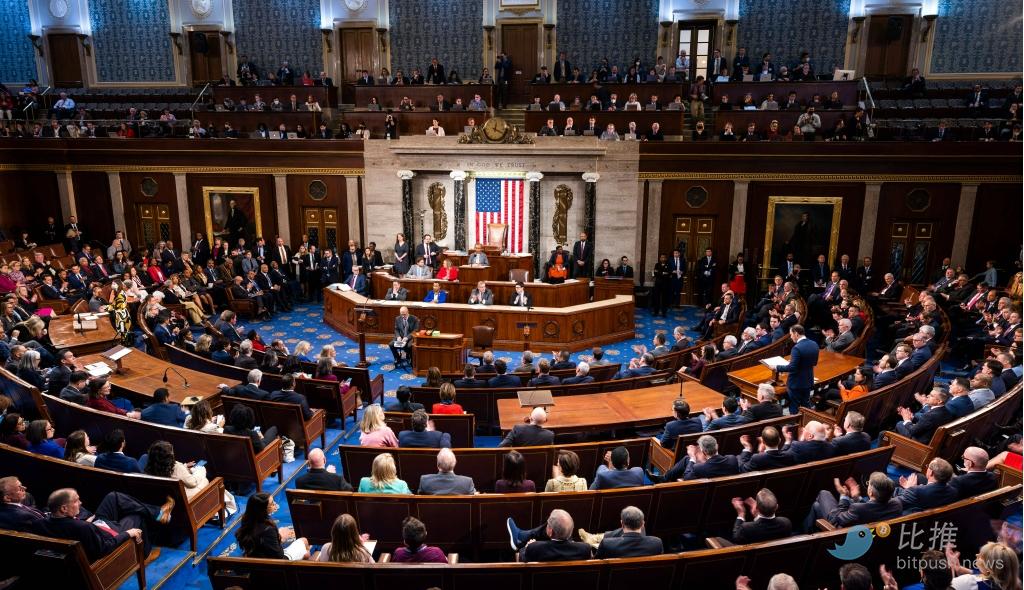
FIT21, formally known as the Financial Innovation and Technology for the 21st Century Act, passed the U.S. House of Representatives on May 23 with a vote of 279 in favor and 136 opposed, supported strongly by Democratic lawmakers. FIT21 is the result of joint efforts by the House Committee on Financial Services (which oversees the SEC) and the House Committee on Agriculture (which oversees the CFTC). This bill aims to establish a clear regulatory framework for digital assets in the United States — a crucial development that we’ll explain in more detail below.
FIT21 covers numerous aspects, but we’ll focus on one directly relevant to our discussion: the delineation of regulatory authority over cryptocurrencies. In the U.S., the jurisdictional boundary between the SEC and the Commodity Futures Trading Commission (CFTC) has long been unclear, particularly regarding Ethereum. The CFTC has consistently classified both Bitcoin and Ethereum as commodities, which is why Bitcoin and Ethereum futures have been available for years. While the SEC has raised concerns about potential market manipulation, it generally accepts Bitcoin’s status as a non-security asset — though this skepticism delayed spot Bitcoin ETF approvals. In contrast, for years, SEC officials maintained that Ethereum became a security after transitioning to Proof-of-Stake (PoS), which was the primary reason for blocking spot Ethereum ETFs.
However, FIT21 / HR 4763 clearly defines which digital assets fall under CFTC jurisdiction and which are subject to SEC oversight. Under the bill, the CFTC will regulate digital assets as commodities “if the blockchain or digital ledger on which it operates is functional and decentralized.” The SEC will regulate digital assets as securities “if the associated blockchain is functional but not decentralized.” The bill defines decentralization as a state where, among other criteria, “no single person has unilateral control over the blockchain or its use, and no issuer or affiliate controls 20% or more of the digital asset or its voting rights.” By this definition, Ethereum qualifies as a commodity, undermining the SEC’s prior argument that it is a security. FIT21 passed the House on May 23; spot Ethereum ETFs were approved on May 24. The causal link is unmistakable.
The Far-Reaching Implications of Ethereum ETF Approval
The approval of spot Ethereum ETFs will not only impact Ethereum’s development but also reshape the broader crypto industry. Let’s first examine the implicit compromise between the SEC and Wall Street.
In February, VanEck submitted a revised S-1A filing excluding staking provisions. More recently, Fidelity and Grayscale removed staking-related clauses from their S-1 registration statements and resubmitted them to the SEC. We infer that the compromise reached is: if the ETH held in ETFs is not staked, then Ethereum will not be treated as a security. Conversely, staked ETH may still be deemed a security. Based on this logic, many speculate that other major cryptocurrencies could also qualify for spot ETFs — with Solana (SOL) being the most anticipated candidate. After all, if Ethereum qualifies despite being PoS, why not others?
This argument sounds plausible at first glance, but the SEC has ample grounds to distinguish Ethereum from others — citing risks like market manipulation or insufficient decentralization. Ethereum’s long-standing network maturity and high degree of decentralization set it apart. Therefore, extrapolating from Ethereum’s approval to expect swift ETF approvals for other major cryptos may be premature. In the short term, other major assets likely won’t see rapid ETF approvals.
Nevertheless, this article maintains a relatively optimistic outlook — primarily due to FIT21. This legislation, not the ETF approval itself, is the true catalyst shaping the future of mainstream crypto assets. FIT21 passed the House with strong Democratic support. If Democrats win the upcoming U.S. elections, the next SEC chair is likely to be a Democrat who may actively promote crypto innovation. Moreover, the U.S. holds a clear advantage in AI — led by companies like OpenAI, Google, and NVIDIA — reinforcing a national policy environment that embraces technological innovation. This openness naturally benefits cutting-edge sectors like blockchain and crypto.
How Will Ethereum’s Price Perform Going Forward?
On May 24, prominent crypto figure Shen Yu analyzed the likely timeline for ETH ETFs based on BTC ETF experience and public data: May 23 — Unexpected approval of ETH 19b-4; market makers begin accumulating ETH spot holdings to prepare for liquidity provision. Early June — Possible S-1 approval. Following BTC ETF precedent, this could take as little as two weeks, but typically takes around three months. Mid-June — Trading could commence immediately or within days after S-1 approval. June–December — Initial inflows will likely come mostly from retail investors, accounting for 80–90% of total capital. Institutional participation will be limited. Given products like ETHE (similar to GBTC), some profit-taking and selling pressure may emerge — whether the market can absorb this remains to be seen. Beyond December — Institutional investors are expected to gradually enter the market.
We believe Ethereum’s price momentum post-ETF approval is undeniable, driven primarily by increased demand. However, its path won’t simply mirror Bitcoin’s post-ETF approval rally, mainly due to differing macroeconomic conditions. When spot Bitcoin ETFs were approved early this year, markets widely expected the Fed to begin rate cuts by June, coupled with strong bullish sentiment following the Bitcoin halving — both of which significantly boosted Bitcoin’s price. Although Ethereum hasn’t outperformed this year, its gains have already been substantial. Going forward, Ethereum will likely continue to follow Bitcoin’s trend, which in turn depends heavily on shifts in Federal Reserve policy.
Nonetheless, overall market sentiment toward Ethereum remains positive. Geoff Kendrick, Head of FX and Digital Asset Research at Standard Chartered, forecasts that within the first 12 months of spot Ethereum ETF approval, 2.39 to 9.15 million ETH could flow into ETFs — equivalent to $15–45 billion. He sets a year-end Ethereum price target of $8,000 and expects it to reach $14,000 by the end of 2025.
Bernstein analysts estimate that spot Ethereum ETF approval could drive ETH’s price up by 75% to $6,600. The SEC’s January approval of spot Bitcoin ETFs triggered a 75% surge in Bitcoin over the following weeks, and a similar pattern may unfold for ETH. Nick Forster, founder of Lyra and former Wall Street options trader, noted: “According to signals from the Lyra options market, there’s approximately a 20% probability that Ethereum will reach $5,000 by June 28, and a 20% chance it will exceed $5,500 by July 26.”
Conclusion
In summary, the approval of spot Ethereum ETFs results from a compromise between the SEC and Wall Street — a compromise made possible by a shift in U.S. policy direction, most notably through the FIT21 Act. While FIT21’s passage was largely driven by Democrats, we believe it reflects a broader strategic pivot in U.S. technology policy. As American leaders like OpenAI, Google, and NVIDIA maintain dominance in AI, the U.S. economy remains resilient — delaying Fed rate cuts, yet simultaneously encouraging policymakers to embrace innovation in frontier technologies like blockchain. This growing openness and support for innovation will accelerate the development of the blockchain sector, potentially ushering in a new era of growth and prosperity for the entire crypto industry.
Join TechFlow official community to stay tuned
Telegram:https://t.me/TechFlowDaily
X (Twitter):https://x.com/TechFlowPost
X (Twitter) EN:https://x.com/BlockFlow_News
 比推 BitpushNews











