








TON Ecosystem's Mini-Game Boom? Two New TON-Based Games Hit 10 Million+ Users After Notcoin
TechFlow Selected TechFlow Selected
TON Ecosystem's Mini-Game Boom? Two New TON-Based Games Hit 10 Million+ Users After Notcoin
The emergence of Notcoin doesn't seem to be an isolated phenomenon, as similar products continue to sprout up like mushrooms on the TON ecosystem.
 Navigating Web3 tides with focused insights
Author: Frank, PANews
Notcoin's strong start has forced the crypto world to reevaluate the power of the Telegram ecosystem. Over 35 million users, a Binance mining campaign launch, and an $850 million market cap before listing—especially the user base of 35 million and 5 million daily active users—are heights most crypto products can hardly reach.
However, Notcoin does not appear to be an isolated phenomenon. Similar projects on the TON ecosystem are sprouting up like mushrooms after rain. In terms of user numbers, two projects—Hamster Kombat and Tapswap—are now replicating Notcoin’s legend.
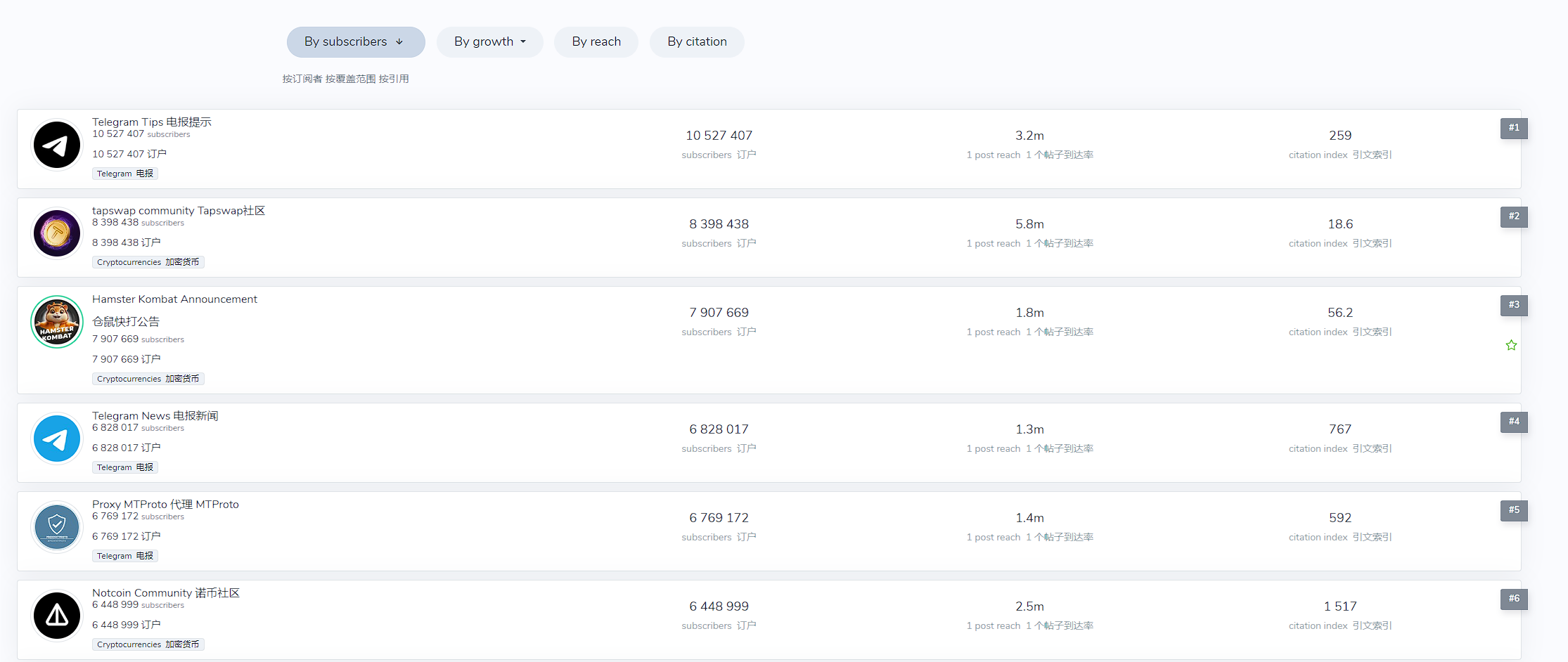
Tapswap claims to have surpassed 20 million users. According to TGstats, the Tapswap community has become the second-largest Telegram channel globally, with over 8.4 million subscribers. Another mini-game, Hamster Kombat, claims more than 15 million users, with its community channel reaching around 7.9 million subscribers, ranking third globally. Both projects have now surpassed the previously popular Notcoin, whose channel has 6.4 million subscribers and ranks fifth worldwide.
Has the "Massage Gun Mini-Game" Become the TON Gaming Template?
The gameplay of Hamster Kombat and Tapswap is similar to Notcoin’s—both involve tapping the screen to earn in-game coins. Due to the high frequency of taps required, many users resort to using massage guns or similar tools to automate the task. These mindless tap-based games have thus been nicknamed “massage gun mini-games.”
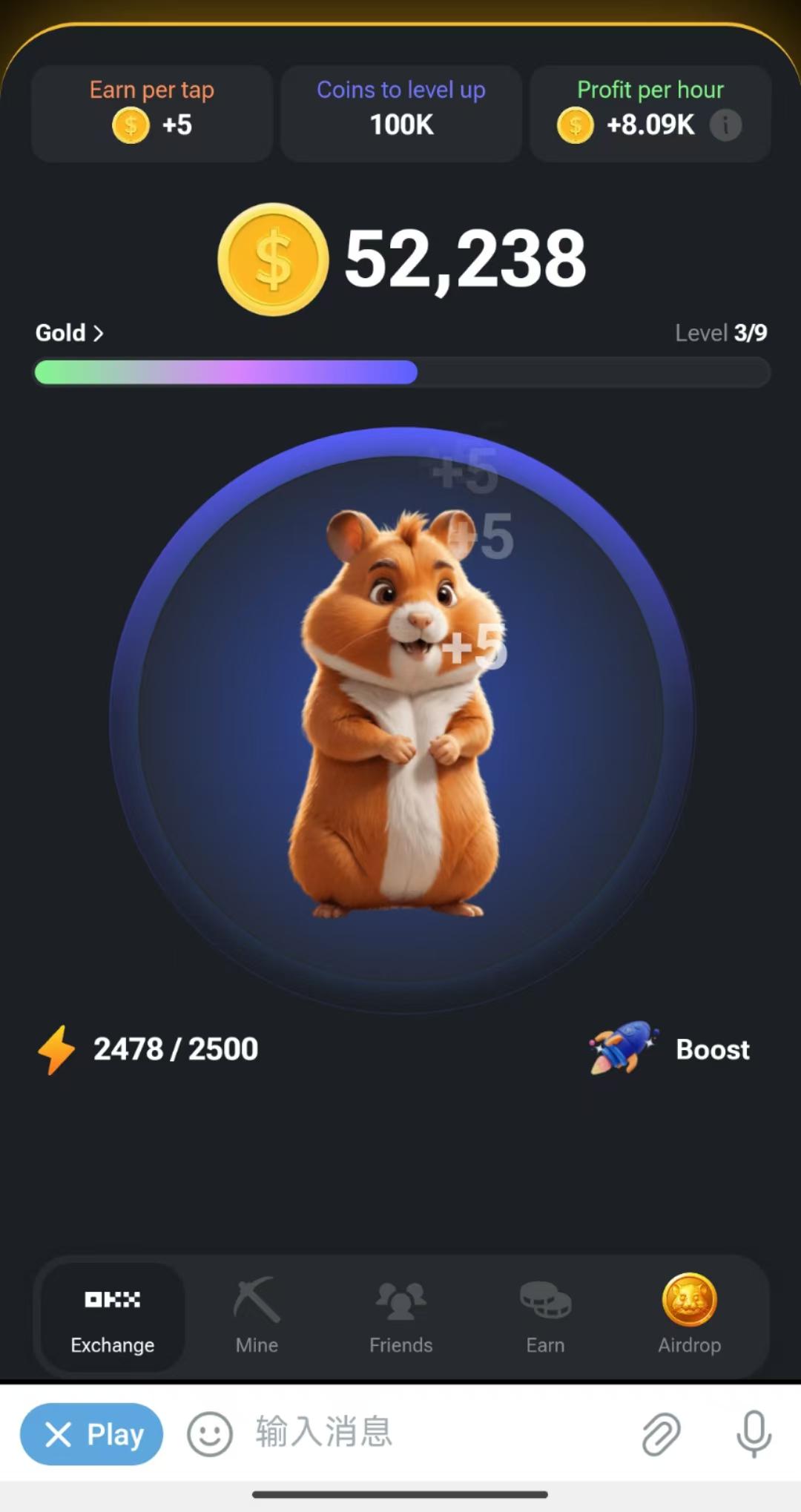
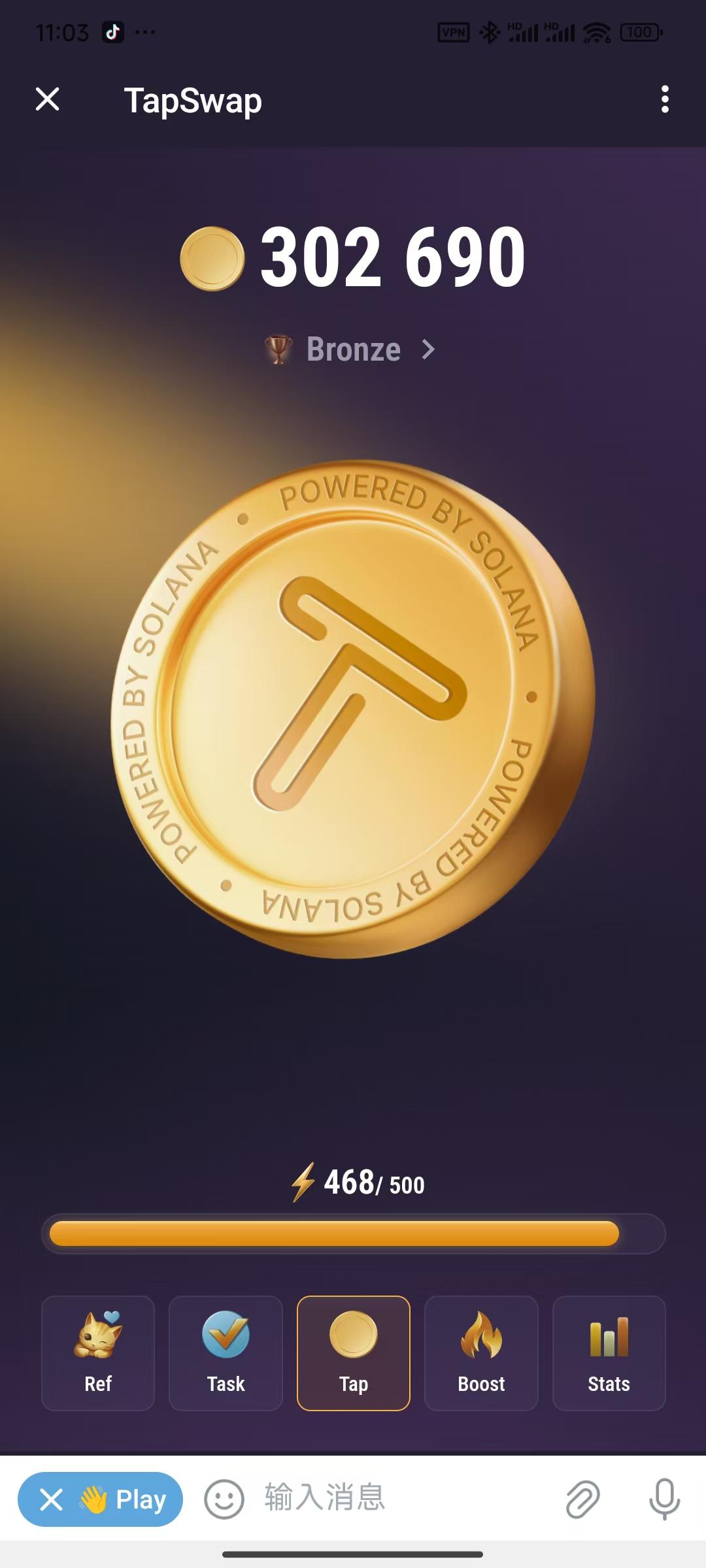
The “massage gun mini-game” itself isn’t innovative—this model has long been widely adopted by H5 games in the Web2 world. However, Notcoin achieved new success by combining token mining with screen tapping. Perhaps because Notcoin open-sourced its game code, this model has now become a simple, easily replicable paradigm for crypto games on TON.
But the TON ecosystem isn't limited to “massage gun mini-games.” Another recently active mini-game platform on TON, Catizen, features cartoon cats and gameplay similar to match-3 puzzles. Catizen claims to have attracted over 7 million users, with more than 1 million daily active users.
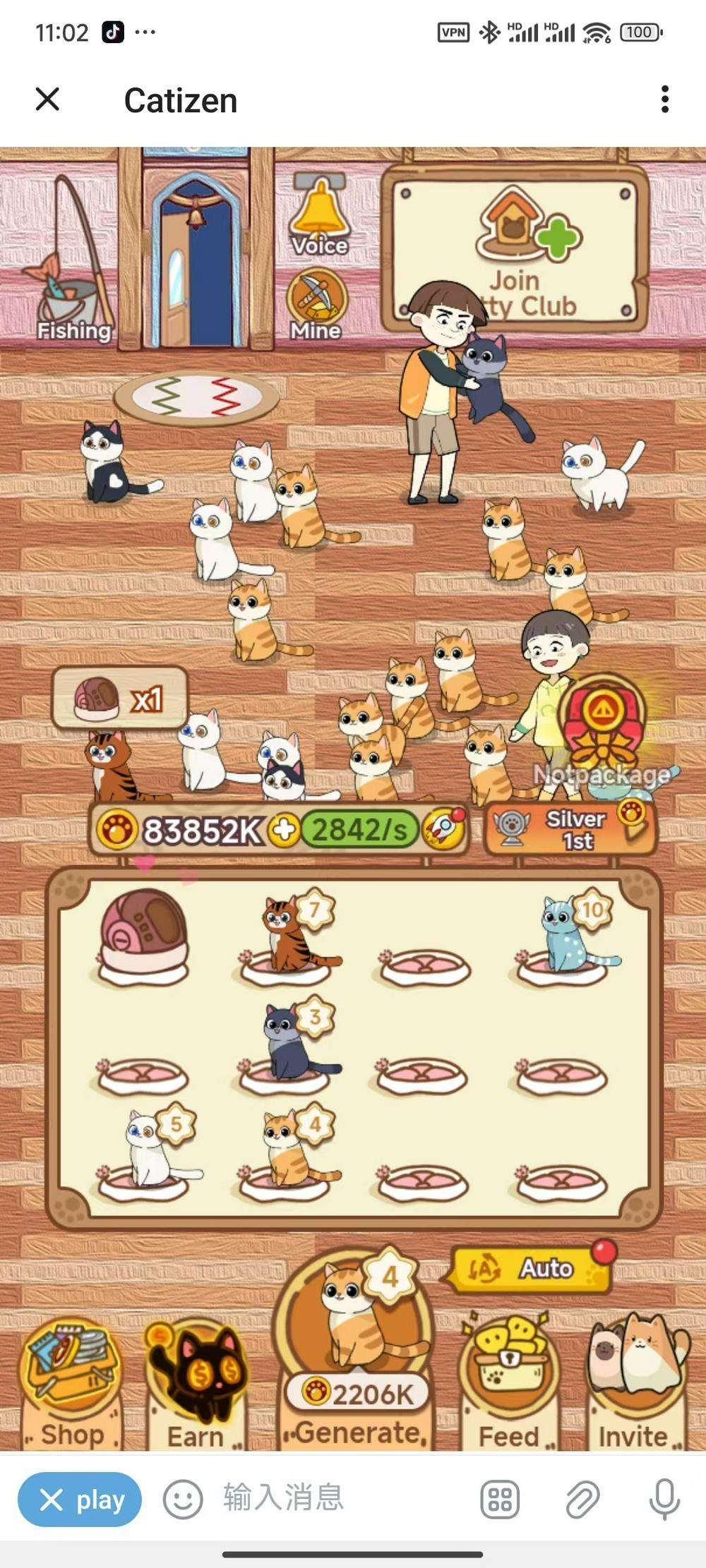
Based on PANews’ experience testing several popular games, even simple mini-games are already evolving beyond Notcoin’s basic model. For example, Hamster Kombat has added items and investment cards, allowing players to earn coins through more than just tapping. Catizen offers greater playability—the combination of its UI design, cat café-themed storyline, and puzzle mechanics makes it more engaging.
Are H5 Mini-Games Plus Airdrops the True Future of Blockchain Gaming?
Blockchain gaming has always struggled to balance playability and economic incentives. During the last bull market, P2E games like Axie Infinity ignited the sector. However, past blockchain games primarily focused on in-game tokenomics. Once these economies became unbalanced, massive user attrition often followed.
On the other hand, the need to interact with wallets has traditionally posed a barrier for many Web2 users entering blockchain games. The mini-games emerging on the TON ecosystem, however, have managed to attract large user bases quickly—likely because they solve both of these issues:
1. The gameplay experience is indistinguishable from Web2 games—no wallet connection is required, and no user education is needed, making them easy to pick up.
2. There is an airdrop incentive. While these games may not be particularly fun, unlike traditional Web2 games, the in-game tokens could potentially become official project tokens. This means user interactions could translate into real monetary value.
3. Tokens are distributed via airdrops, avoiding complex in-game economic modeling. Unlike traditional blockchain games, these mini-games typically distribute tokens as airdrops after a certain activity phase ends. As a result, users don’t know the exact value of their earned tokens during gameplay, reducing profit-driven behavior and preventing bot farms from destabilizing the game economy.
How Much Can You Earn Playing These Mini-Games?
Among the top five most-subscribed Telegram channels globally, three now belong to TON ecosystem projects.
Currently, Notcoin is the most breakout project on TON. Taking Notcoin as an example, the token was issued at a 1000:1 exchange rate between in-game coins and NOT tokens. 78% of the NOT supply was allocated to 35 million users, averaging about 2,291 tokens per user. Based on NOT’s initial listing price of $0.0085, this amounts to roughly $19 per user. Of course, this assumes a user had accumulated approximately 2.29 million in-game coins. As PANews discovered through testing similar games, earning such a quantity of in-game coins requires consistent interaction over several days—not just a few taps.
Still, given current momentum, games like Hamster Kombat, Tapswap, and Catizen may surpass Notcoin in key metrics. Hamster Kombat and Tapswap have already become the top three Telegram channels globally, exceeding Notcoin in subscriber count. As for their claimed user bases of 15 million and 20 million respectively, there remains no publicly verifiable data to confirm these figures.
From this perspective, unless Hamster Kombat and Tapswap achieve significantly larger user breakthroughs, their follow-up impact and economic returns may not be as compelling as Notcoin’s, especially in terms of background and available resources.
Join TechFlow official community to stay tuned
Telegram:https://t.me/TechFlowDaily
X (Twitter):https://x.com/TechFlowPost
X (Twitter) EN:https://x.com/BlockFlow_News
 PANews






