Clay effects fuel AI photo editing, but Meitu still lags behind Remini by a "step"
TechFlow Selected TechFlow Selected
Clay effects fuel AI photo editing, but Meitu still lags behind Remini by a "step"
Why are large models always bad at drawing hands?
 Navigating Web3 tides with focused insights
By Mu Mu
Upload an image, apply the clay effect, and you'll get a brand-new cartoon-style portrait in the style of "Shaun the Sheep." Every detail—people, objects, scenery—in the picture appears three-dimensional, as if sculpted from clay.
The clay effect has become wildly popular on social platforms, propelling the AI photo-editing app Remini to a surge in downloads. As countless clay-style images flood the internet, reactions are mixed: some find them ugly, questioning their popularity; others embrace this "ugly-cute" aesthetic; some even share guides for generating "both clay-like and visually appealing" results, while others offer paid generation services on Xiaohongshu and Xianyu.
With strong visual appeal and viral momentum, the clay effect has boosted Remini. Meanwhile, veteran photo editor Meitu has also rolled out its own clay effect feature, aiming to deliver "beautiful clay portraits" that are free to use and fast to generate.
Underlying all AI photo-editing apps is the technical capability of large generative models. The clay effect transforms 2D images into 3D-like visuals, demanding advanced modeling skills—especially in rendering hands. Judging by the results, there's still a noticeable gap between Meitu and Remini when it comes to handling hands.
Remini’s Clay Effect Revival: A Domestic App That Went Global and Came Back
Who hasn’t seen a “Shaun the Sheep Style” photo lately? Recently, the clay effect has captured a wave of attention on social platforms like Weibo and Xiaohongshu. These clay-textured, three-dimensional cartoon images have become especially popular among young users, making Remini—the AI photo-editing app behind the trend—a sudden hit.
The "clay effect" transforms 2D photos into 3D cartoonish renderings that resemble stop-motion animation, much like the beloved series *Shaun the Sheep*. Under posts showcasing these effects, comments frequently ask, “Which app did you use?” Both Remini and Meitu appear in responses, but Remini generally receives higher praise.
What makes Remini’s clay effect so compelling?
Upon testing, Remini excels at handling complex scenes. Whether it's outdoor sports or natural landscapes, Remini effectively converts every element into a cohesive clay-like texture.
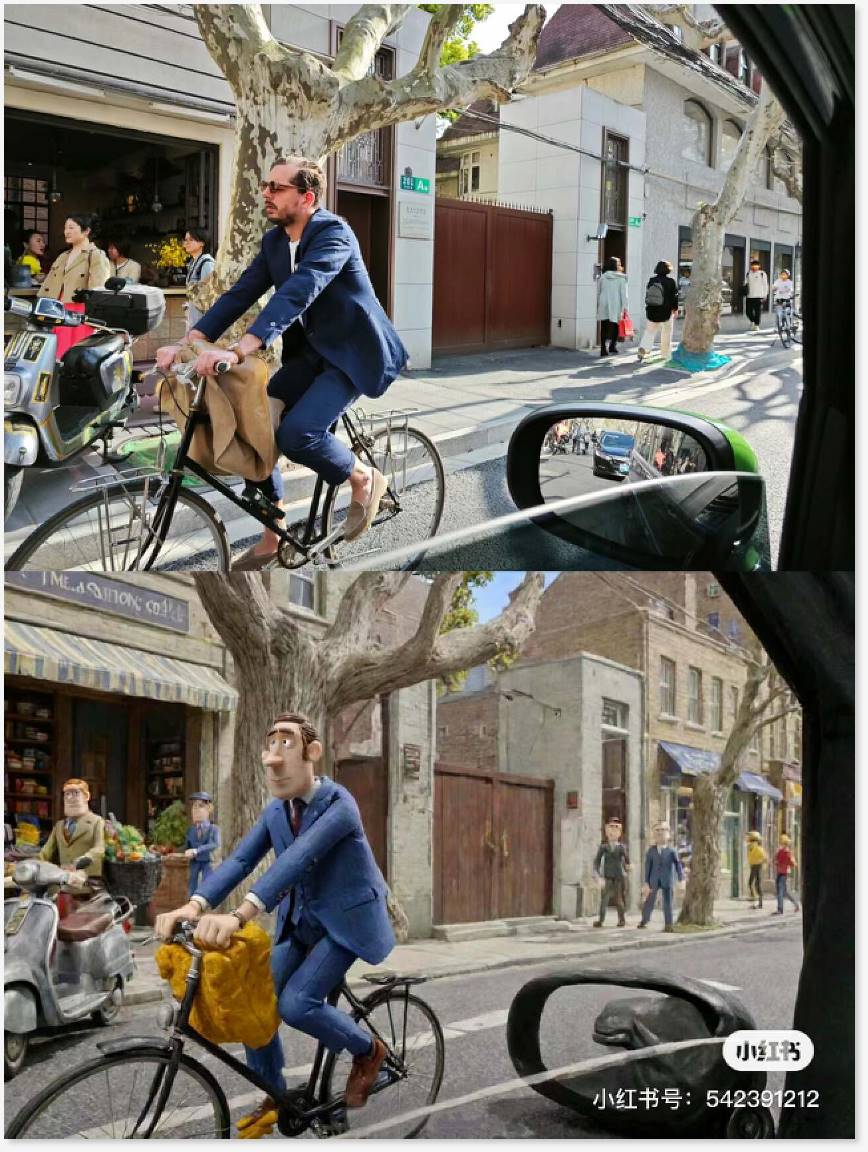
Remini’s clay effect performance on complex scenes
The “ugly-cute” charm of the generated images is precisely what many users love. Some comment: “It’s ugly, but fun.” Generating clay photos with Remini feels like opening a blind box—one photo can yield wildly different surprises. On Xiaohongshu, users have even organized contests celebrating the weirdest, most bizarre clay portraits.
Since most of the app’s effect templates are named in English, many users assume Remini is developed entirely by an overseas team. In fact, the app was originally created by Beijing-based DaGong Technology. The company launched a photo filter app called “Nǐ Wǒ Dāngnián” (You & I Back Then) in 2019, focused on photo restoration, while Remini was developed specifically for international markets.
Later, Remini was acquired by Italian company Bending Spoons, which quickly capitalized on the AI image-generation boom.
The clay effect is just one of several AI filters in Remini. The app also features “Photo Enhance” for beautification, “AI Photos” for artistic styles, and image-to-video generation. Both iOS and Android versions are now available.
Remini isn’t fully free—users must subscribe weekly or annually to unlock full functionality. The Lite version costs 38 RMB per week or 228 RMB per year, while the Pro version is priced at 68 RMB per week or 548 RMB annually. Despite the high price, Remini offers a one-week free trial or ad-supported access to certain features to attract potential paying users.
Yet, pricing doesn’t seem to hinder its popularity—the clay effect has clearly become the breakthrough feature. According to official data, Remini now boasts 40 million monthly active users, 15 million monthly downloads, and over 5 billion enhanced photos and videos.
Currently, Remini’s Android version is only available on Google Play, making it inaccessible to many Chinese users. As a result, under posts sharing clay-effect images, numerous Android users post their photos requesting others to generate clay-style versions for them. On Xiaohongshu and Xianyu, paid proxy generation services have already emerged.
AI Struggles with Drawing Hands: Exposing the Weaknesses of Large Generative Models
Following the rise of the clay effect, many photo-editing apps have added similar features. Naturally, China’s go-to photo editor Meitu has joined in, introducing the clay effect within its “Meitu Formulas” section, many of which are free to try.
Unlike Remini, Meitu retains the clay texture while adding extra beautification filters, softening the “ugliness.” When users tested the same photo on both apps, Meitu produced gentler facial features and brighter, fresher colors.
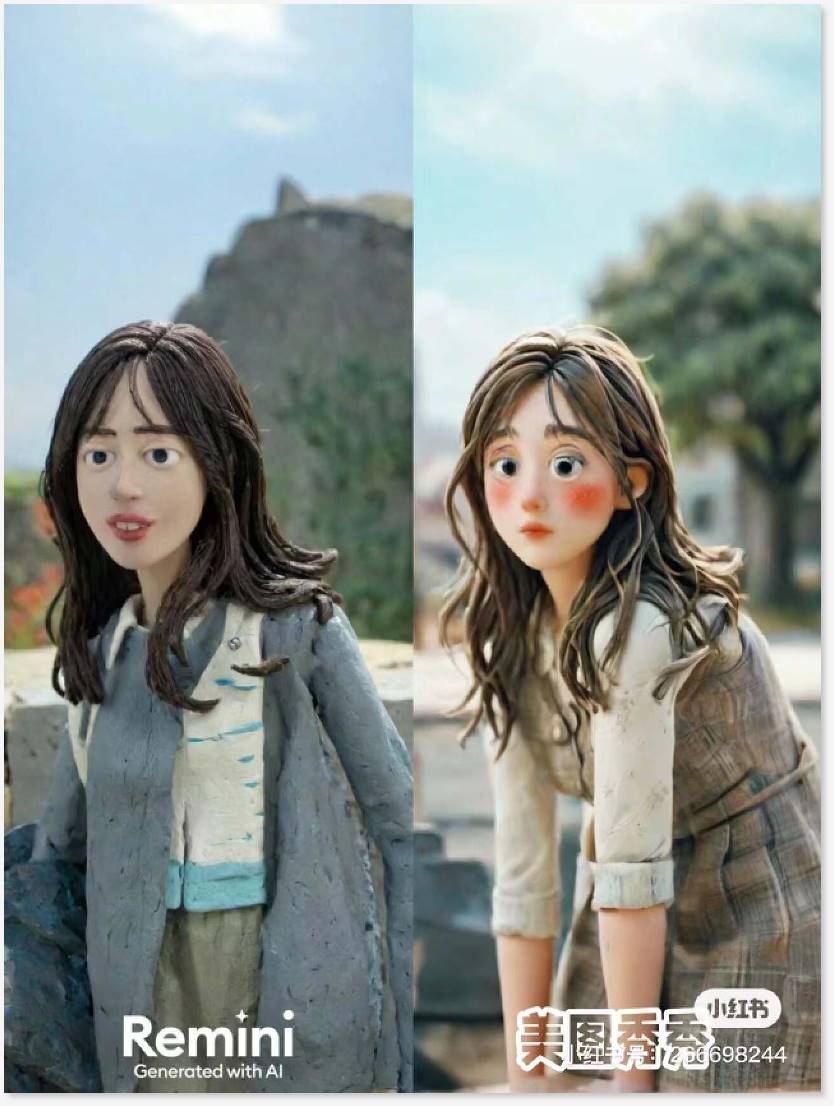
Meitu’s clay effect produces more “aesthetically pleasing” results
Adding beauty filters to the clay effect has sparked debate. Some argue, “If it’s not ugly, it has no soul,” while others prefer Meitu’s version because “only non-ugly photos feel shareable on social media.”
While aesthetics remain subjective, technical quality can be objectively evaluated. After repeatedly testing both apps’ clay effects on human figures, one glaring difference stands out—hands.
In images featuring hands, Meitu’s clay effect falls short compared to Remini. It often produces errors such as fused fingers, extra fingers, or missing digits.
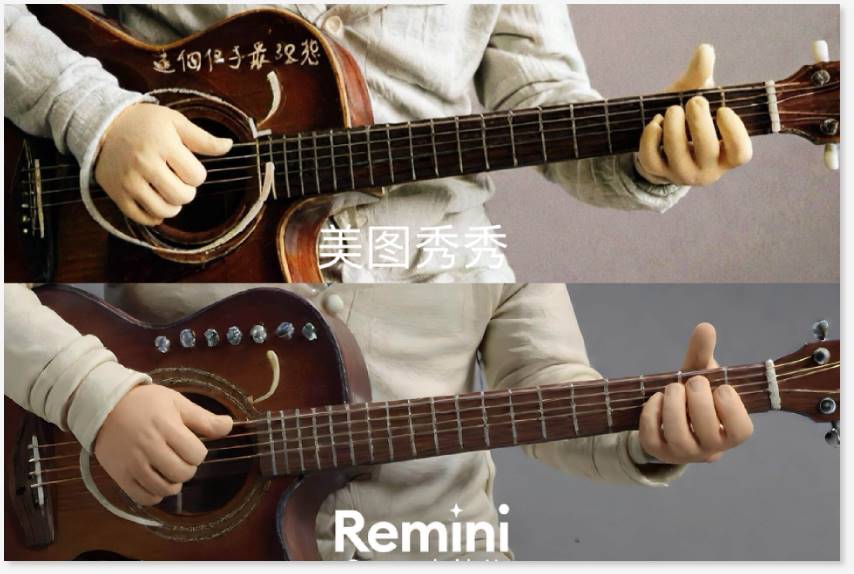
Comparison of hand rendering between Meitu and Remini
When applying the clay effect to a photo of someone playing guitar, Remini renders muscles and fingernails with clear, three-dimensional definition. Meitu’s version uses brighter colors, but the hands appear blurry, with some fingers visibly deformed upon closer inspection.
Further tests reveal that Meitu frequently misrenders hands—fingers sometimes turn into cigarettes, or merge together indistinguishably. Clearly, the large model powering Meitu needs further training on hand anatomy.
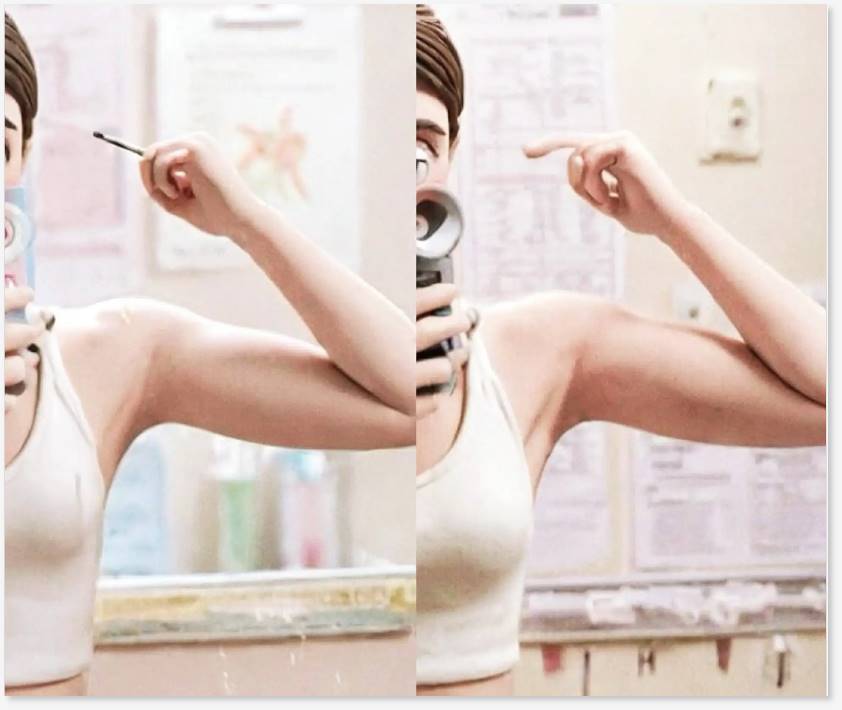
Meitu’s clay effect frequently generates incorrect hand structures
Testing AI-generated hands has become a standard benchmark for evaluating image-generation models. After all, even human art students spend years mastering hand drawing. So when AI art emerged, people naturally began testing whether machines could draw hands better than humans.
Even leading AI image generator Midjourney struggled early on with producing “six-fingered monsters.” This is because large models are primarily trained on two-dimensional facial data. Facial features, despite variations, maintain fixed positions, and there is abundant training data available.
Hands, however, present a greater challenge. They are far more flexible and varied in pose, requiring stronger 3D understanding. With significantly less training data available compared to faces, teaching AI to accurately render diverse hand shapes is inherently more difficult.
The 3D nature of the clay effect thus becomes a litmus test for the underlying capabilities of AI image-generation models. As these models integrate into mobile applications, such real-world tests will increasingly reveal the robustness of their foundational architectures. We look forward to continued advancements that push these models toward greater excellence.
Join TechFlow official community to stay tuned
Telegram:https://t.me/TechFlowDaily
X (Twitter):https://x.com/TechFlowPost
X (Twitter) EN:https://x.com/BlockFlow_News