









What does the Tornado Cash ruling mean for DeFi regulation?
TechFlow Selected TechFlow Selected
What does the Tornado Cash ruling mean for DeFi regulation?
Tornado Cash co-founder Alexey Pertsev sentenced to 64 months in prison.
 Navigating Web3 tides with focused insights
By: Lüdong
A Dutch judge at the 's-Hertogenbosch court has ruled that Alexey Pertsev, a core developer and one of the founders of Tornado Cash, is guilty of money laundering. The court sentenced Pertsev to 64 months in prison. Over the past year, regulatory scrutiny around DeFi triggered by Tornado Cash has drawn significant industry attention. This year, despite repeated emphasis on compliance, Uniswap—the so-called "big brother" of the DeFi space—was still sued by the SEC. Today, what implications does the conviction of a Tornado Cash co-founder have for future DeFi startups? How can DeFi coexist with regulation moving forward?
Can Separation Between Team and Protocol Shield Against DeFi Regulation?
The trial of the Tornado Cash case continues to serve as a warning to other cryptocurrency service providers.
In April 2023, the U.S. Department of the Treasury released an assessment report on illicit financial activities in DeFi, highlighting potential risks within DeFi services and analyzing how bad actors exploit these platforms for criminal purposes. Three months later, four U.S. senators introduced the Cryptocurrency Anti-Money Laundering Act, aiming to strengthen oversight over KYC, AML, and the DeFi sector.
The Cryptocurrency Anti-Money Laundering Act proposes a new regulatory framework for DeFi, asserting that DeFi should be regulated similarly to other crypto entities. It stipulates that any individual who controls a project must be held accountable. If no single person controls the DeFi service, then any investor contributing more than $250,000 should bear responsibility for the project.
Echoing current regulatory debates, the focus of Pertsev’s trial centers on whether anti-money laundering laws can adapt to blockchain-based financial innovation and values such as anonymous transactions.
During a hearing in March, prosecutors argued that protocol developers did not do enough to prevent criminals from using Tornado Cash. Pertsev's defense countered that prosecutors should consider the open-source and automated nature of Tornado Cash’s core smart contracts. “It is wrong to hold Pertsev responsible for Tornado Cash users, since those users are designed to be anonymous and independent,” they stated.
Pertsev’s lawyer, Keith Cheng, emphasized that project teams cannot stop users from using open-source smart contract code however they wish. Contributors to the protocol form a decentralized organization without a single central authority like a traditional company.
However, prosecutors rejected this argument, asserting that legal obligations to prevent platforms from aiding criminals and sanctioned entities (such as the North Korean hacking group Lazarus Group) outweigh technological merits. Prosecutor Martine Boerlage stated, “Tornado Cash is not just smart contracts—it operates like a company.”
Perhaps due to the controversial nature of the case, Pertsev’s trial in the Netherlands was highly opaque. Prosecutors only disclosed his indictment one week before the trial began, and prior hearings were conducted in Dutch.
Nonetheless, Pertsev received widespread support, including petitions, legal fundraising campaigns, and statements from hacked protocols declaring his innocence. The crypto community, especially developers, strongly protested his arrest, fearing that prosecuting Pertsev could set a dangerous precedent for holding software developers criminally liable.
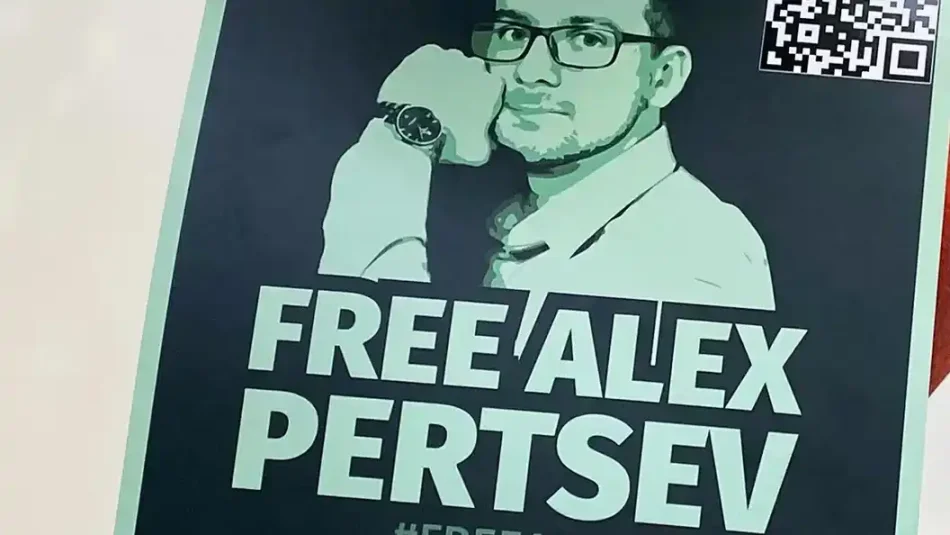
Support posters for Alexey Pertsev outside a Dutch courthouse earlier
Previously, the U.S. Department of Justice (DOJ) filed criminal charges against Tornado Cash founders Roman Storm and Roman Semenov, accusing them of conspiring to launder money, violating sanctions, and operating an unlicensed money transmitting business during Tornado Cash’s operation. Both face a minimum of 20 years in prison.
Storm was arrested last year and will stand trial in September this year; Semenov remains at large. The outcome of Pertsev’s case may heavily influence the future trials of these two Tornado Cash founders.
After Tornado, Uniswap Case Takes Center Stage
In fact, following Tornado Cash, several other crypto protocols have faced allegations due to illicit activities occurring on their platforms. For example, Uniswap was previously accused of allowing scam tokens to be issued and traded on its platform—a lawsuit ultimately dismissed by the court in 2023.
At the end of last year, a16z submitted a comment letter to the Financial Stability Board’s (FSB) thematic event on “International Regulation of Crypto-Asset Activities,” emphasizing the need to clearly distinguish between DeFi and CeFi, and advocating for regulatory frameworks that oversee Web3 applications—not Web3 protocols themselves (i.e., regulate businesses, not software). The debate over where DeFi protocols and applications fit within regulatory boundaries continues. Nevertheless, most legal experts agree that any DeFi frontend with ties (broadly defined) to the United States must comply with U.S. sanctions laws.
On April 11 this year, the U.S. Securities and Exchange Commission (SEC) issued a Wells Notice to Uniswap Labs, signaling its intent to take enforcement action. A Wells Notice is typically sent by the SEC before initiating formal litigation, giving the recipient a final opportunity to respond to potential charges. The specific nature of the SEC’s allegations against Uniswap Labs remains unclear.
Markets reacted sharply to the news. According to market data, UNI’s price plummeted from $14 to $9.58 amid the announcement, dropping over 14% in 24 hours. During this period, on-chain trading volume for UNI surged dramatically, even topping Dexscreener’s Ethereum token popularity chart.
Uniswap responded promptly. Founder Hayden Adams confirmed on social media that Uniswap Labs had received the SEC warning and published an open letter in response. In it, he asserted the team’s belief in the legality of their products and criticized the SEC for failing to establish clear, informed rules while instead targeting reputable players like Uniswap and Coinbase, allowing bad actors like FTX to escape accountability.
Additionally, Hayden specifically highlighted Uniswap’s status as a U.S.-based internet company to demonstrate its long-standing commitment to compliance. He also noted that the battle with the SEC could last years and that the team is prepared to appeal all the way to the Supreme Court if necessary.
Still the Largest Crypto Mixer Despite Sanctions
Tornado Cash is a privacy-preserving protocol that enables coin mixing for 10 cryptocurrencies, with ETH on the Ethereum mainnet being the most frequently mixed asset. At its peak in July 2021, Tornado Cash pool contracts held over $700 million worth of ETH.
One week before Pertsev’s trial, a prosecution document shared by the court alleged that between July 9, 2019, and August 10, 2022, “Pertsev, together with one or more others, engaged in habitual money laundering in countries including the Netherlands, Russia, the United States, or Dubai.” The court believes Pertsev should have at least suspected the criminal origins of illegal transactions on the Tornado Cash platform.
The indictment listed nearly 40 transactions processed through Tornado Cash originating from various crypto platforms, totaling 535,809 ETH, including funds from KuCoin and Liquid (an exchange acquired by FTX before its 2022 collapse). The largest single transaction involved 175,100 ETH (approximately $585 million) linked to the Axie Infinity Ronin network breach—the largest theft in cryptocurrency history at the time. The attackers were the notorious North Korean hacking group Lazarus.
In August 2022, Tornado Cash and associated Ethereum addresses were added to the U.S. Treasury’s Office of Foreign Assets Control (OFAC) Specially Designated Nationals (SDN) list. At the time, the U.S. Treasury claimed Tornado Cash was a key tool used by the Lazarus Group, which orchestrated the $625 million Axie Infinity hack and other major cryptocurrency thefts.
Analyses show that by early May 2022, the Lazarus Group had already transferred 37,000 ETH—worth about $100 million—into Tornado Cash. Experts estimate that funds from “state-sponsored hackers” accounted for approximately 20% of the balances held in Tornado Cash’s smart contracts.
Tornado Cash responded to these accusations by stating that despite multiple efforts, it could not prevent Lazarus Group from depositing illicit funds, given the protocol’s fundamental purpose of obscuring users’ on-chain transaction histories.
The crypto community argues that prosecuting developers merely for writing code turns them into political prisoners of the U.S. government—an attack extending beyond cryptocurrency itself. Nonetheless, the sanctions have not significantly disrupted Tornado Cash’s operations. In the month following the sanctions, $77.35 million in assets were still transferred via Tornado Cash on the Ethereum mainnet.
Join TechFlow official community to stay tuned
Telegram:https://t.me/TechFlowDaily
X (Twitter):https://x.com/TechFlowPost
X (Twitter) EN:https://x.com/BlockFlow_News
 BlockBeats











