









Bloomberg: VCs pivot back to "professor coins"—does Web3 need academic credentials?
TechFlow Selected TechFlow Selected
Bloomberg: VCs pivot back to "professor coins"—does Web3 need academic credentials?
They're playing the game of technological innovation, not product-market fit.
 Navigating Web3 tides with focused insights
By Hannah Miller, Muyao Shen
Translated by Luffy, Foresight News
As fundraising in the cryptocurrency industry takes off again, venture capitalists are turning back to crypto startups founded by professors.
Companies such as Sahara, CheckSig, and NEBRA—founded by academics—have raised fresh funding over the past two months. Among a wave of projects dubbed "professor coins" by the industry, two stand out. EigenLayer, founded by former University of Washington associate professor Sreeram Kannan, raised $100 million from Andreessen Horowitz in February, while Babylon, launched by Stanford University professor David Tse, secured $18 million in December last year. Both projects focus on an emerging area within cryptocurrency known as “restaking,” which allows new projects and blockchains to gain a head start by borrowing security infrastructure and resources from Ethereum or Bitcoin.
Riad Wahby, a professor of engineering at Carnegie Mellon University and CEO of cryptocurrency startup Cubist, said some techniques used during crypto cycles to generate yield “come from research by David and Sreeram.” “They’ve researched a lot of these restaking technologies. I mean, it’s kind of their brainchild. I think more and more of this technology will come from academia,” he said.
According to his personal profile on the University of Washington’s Information Theory Lab website, Kannan spent two years as a postdoctoral researcher at UC Berkeley and Stanford University, where he worked with Tse. The computer science bibliography site DBLP shows that the two co-authored 23 academic papers between 2015 and 2023, publishing extensively on blockchain and concepts underpinning their respective startups. Neither Kannan nor Tse responded to requests for comment.
Restaking Gains Investor Favor
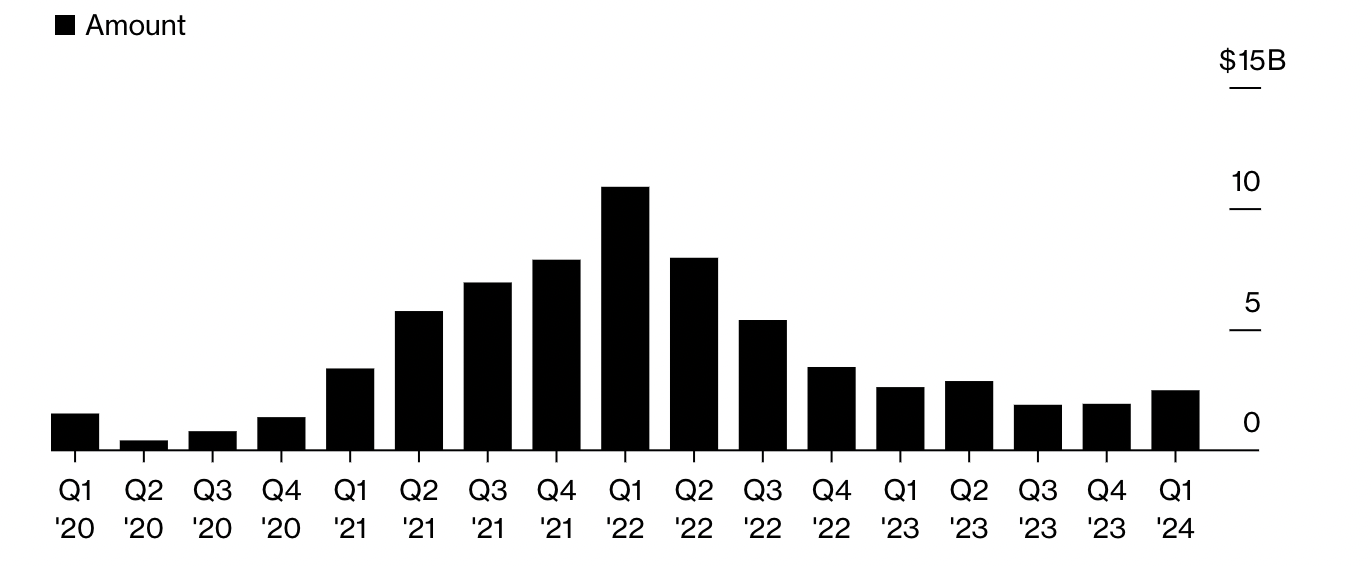
Global venture capital activity in cryptocurrency startups, source: PitchBook
Kate Laurence, CEO of Bloccelerate VC, said her firm often views academic backgrounds as a disadvantage when deciding which founders to support. “Professors tend to focus on theory and academia rather than practice and commercial applications,” she said.
But Kannan’s work on restaking—and his close collaboration with Tse—prompted Bloccelerate to first invest in EigenLayer and later in Babylon. “They’re tackling similar problems, but EigenLayer addresses a different market,” she said.
The process of “restaking” draws inspiration from how Ethereum operates. In Ethereum, tokens are “staked” into the network to help validate transactions on the blockchain. For new projects and blockchains using the same mechanism, building their own staking system can be too slow and costly due to lack of user activity and capital. Restaking allows newcomers to borrow Ethereum’s staking power to get a head start.
Babylon adopts a similar approach but focuses on Bitcoin. This task is more complex because Bitcoin uses a different mechanism—proof-of-work—to validate transactions. If successful, the Babylon platform would also solve a long-standing issue for Bitcoin holders: the lack of yield.
Vance Spencer of Framework Ventures, which also invested in Babylon, said it makes sense that such advanced technological developments emerge from universities. “There are so few people who can build blockchains,” he said. “They’re likely to come from these research institutions.”
What Are the Controversies?
Emin Gun Sirer, CEO of Ava Labs—which developed the Avalanche blockchain—and former associate professor of computer science at Cornell University, said the path forward for professor-led crypto projects is rarely smooth, with most ultimately failing.
“They’re playing the game of technological innovation,” Sirer said, “not product-market fit.”
DefiLlama reported that although the EigenLayer platform has attracted over $15 billion in crypto assets, it has also faced setbacks, with critics arguing there is a misunderstanding about broader crypto market dynamics.
Although Kannan told Bloomberg in February that they had no plans to issue a token, EigenLayer announced its plan to launch the Eigen token in April and began distributing it on Friday. With a total supply of approximately 1.67 billion tokens, more than half were allocated to investors and early contributors—a move that sparked strong backlash from the community. This distribution model drew criticism accusing the EigenLayer team and initial backers of self-dealing, while users expressed concerns about potential sell-off pressure. The decision to make tokens non-transferable upon issuance also disappointed some early users who had committed significant funds to EigenLayer.
The Eigen Foundation, responsible for the token plan, said in a blog post that restricting token transfers would allow more time to improve decentralization and enhance key features related to the token.
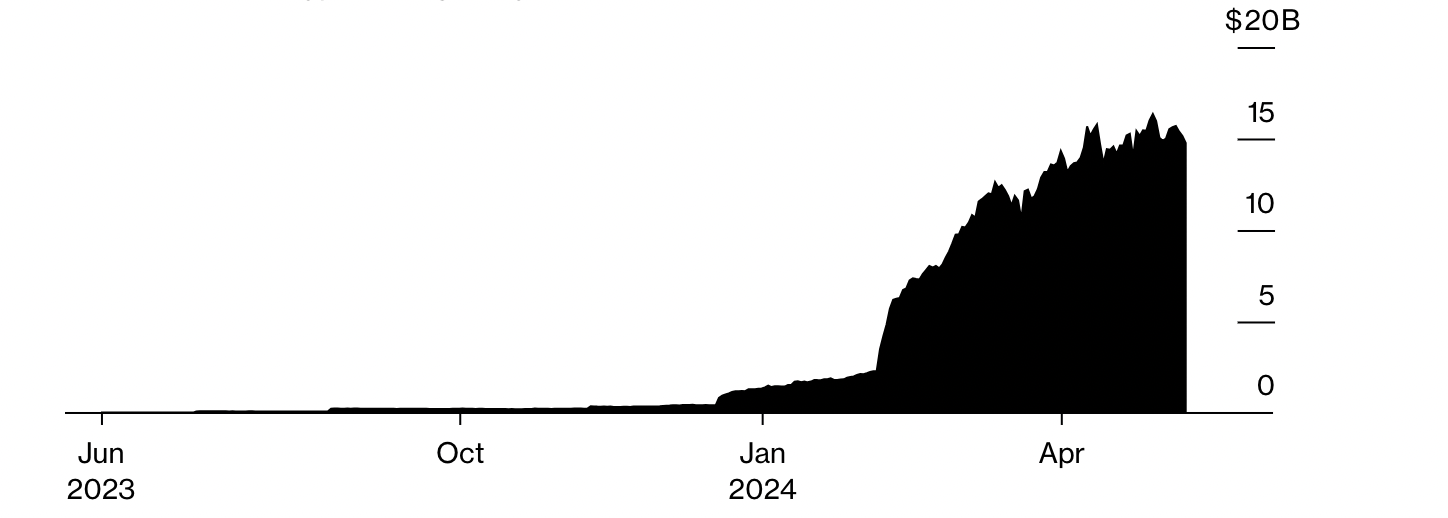
Total value of cryptocurrencies on EigenLayer exceeds $15 billion, source: DefiLlama
Ayesha Kiani, COO of cryptocurrency hedge fund MNNC Group and adjunct professor at New York University, pushed back against criticisms of EigenLayer, saying the startup is not just another “get-rich-quick scam.” She believes Kannan and Tse are working to improve the crypto industry.
“The industry criticizes them for lacking decentralization or being merely a money-making scheme,” she said. “In this industry, we’ve now grown accustomed to free incentives—if things don’t go well, we basically abandon the project.”
Join TechFlow official community to stay tuned
Telegram:https://t.me/TechFlowDaily
X (Twitter):https://x.com/TechFlowPost
X (Twitter) EN:https://x.com/BlockFlow_News
 @Bloomberg











