









Bitcoin bull market logic quietly shifts, yet many still fail to make money
TechFlow Selected TechFlow Selected
Bitcoin bull market logic quietly shifts, yet many still fail to make money
Whether this bull market is still ongoing depends crucially on the external and internal factors influencing it in the coming period.
 Navigating Web3 tides with focused insights
Author: Mu Mu
This year marks another Bitcoin halving within the four-year crypto market cycle. Yet most people don’t seem particularly excited—some may even be sitting on losses. Those accustomed to "carving the boat to seek the sword" find this bull market clearly "defying expectations." With volatile and even sluggish price movements, some investors are developing a passive, "waiting by the stump for a rabbit" sense of frustration, anxiously wondering whether the bull market is still alive.
Why This Bull Market Is So Different
Over the past decade in the crypto market, including the current cycle, there have been four full bull-bear cycles. This current bull run appears vastly different from previous ones. Anyone who has experienced the prior three cycles can likely spot the nuances:
1) Similarities and differences across the first three cycles
a. Commonalities
Bitcoin consistently maintains its narrative and consensus as “digital gold”;
The Bitcoin halving remains a key catalyst and trigger for major market moves, closely aligning with bull-bear cycles;
During major bull runs, broad-based sector rotation lifts nearly all projects, resulting in widespread profits.
b. Differences
Each cycle features distinct dominant narratives: digital gold, smart contracts, DeFi, GameFi, and other decentralized application breakthroughs;
Over time, new narratives have emerged, institutional participation has increased, and infrastructure has progressively improved;
The scale of crypto assets continues to grow, and Bitcoin’s volatility has gradually decreased.
2) Notable anomalies in this bull market
Beyond the expected maturation effects—more narratives, more institutions, better infrastructure—we’re seeing clear anomalies: “no mutual bagholding,” almost no sector rotation, and an explosion of Meme coins. Even Ethereum, once the star of past bull markets, now seems to be “failing”...
In reality, these puzzling shifts—lack of mutual support among sectors, minimal rotation, rampant Meme mania—are driven by significantly increased institutional capital that has transformed the grassroots culture of crypto. As capital plays a larger role, especially with the launch of Bitcoin spot ETFs accelerating inflows, veteran retail investors feel disoriented. Uncertain about which projects institutions will back, many opt instead to play fairer Meme games. Meanwhile, institutional capital tends to be more rational and favors Bitcoin alongside emerging narratives like AI and DePIN, leaving older, overlooked narratives and legacy projects completely ignored.
Institutions wield growing influence, making it harder for retail investors to move markets. With so many narratives, institutions themselves often fail to reach consensus—sometimes even forming factions. Chinese-speaking communities focus on Bitcoin ecosystems, while Western players prioritize AI and DePIN.
As for Ethereum, it was undoubtedly the brightest star after Bitcoin in the last two bull cycles. Now, it feels lukewarm. This stems partly from new narratives diverting attention away from Ethereum, and partly from fresh capital favoring Bitcoin, contributing to Ethereum’s current struggles. Of course, under these unique conditions, Ethereum may now be undervalued. For further reading, see our previous article “Is Ethereum Undervalued?”. Whether value recognition will follow remains to be seen.
In fact, the impact of Bitcoin’s quadrennialhalving on the crypto market is diminishing in a stepwise fashion. Moreover, each bull market is primarily triggered by external factors and new narratives—not merely by repeating history. So whether this bull market is still ongoing depends crucially on the external and internal drivers ahead…
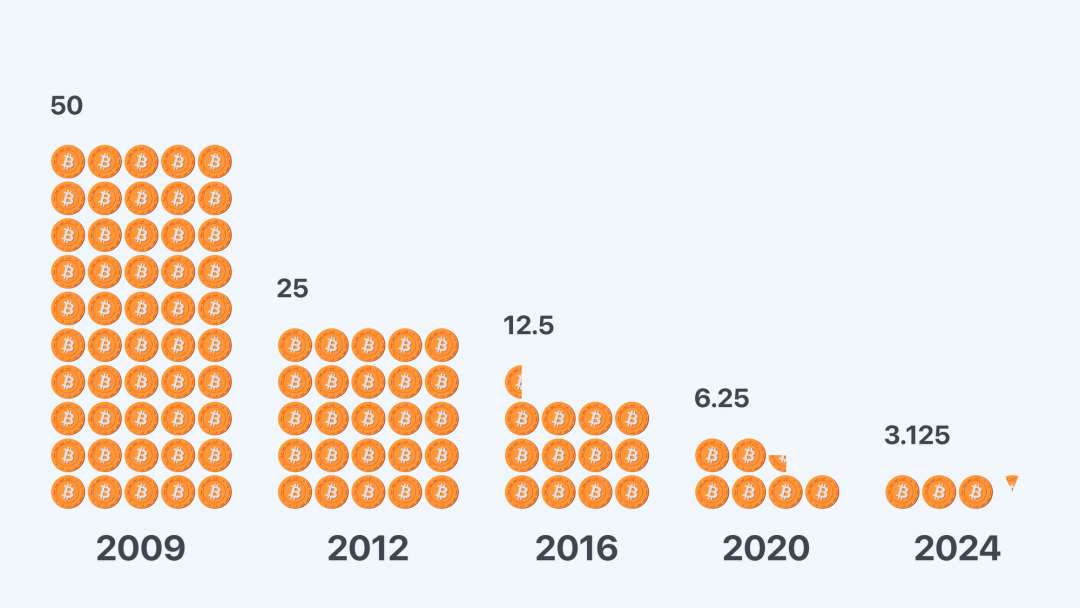
The External and Internal Drivers That Will Shape This Bull Market
1) External factor: Mainstreamed crypto assets follow broader macro trends
In recent years, it's become evident that Bitcoin and crypto assets are increasingly influenced by external macroeconomic conditions. The most significant driver is Federal Reserve policy—nearly every rally or correction traces back to such macro-level external forces.
Fed rate hikes cause global capital to flow back into the U.S., strengthening the dollar and driving down prices of dollar-denominated commodities, precious metals, and foreign exchange markets. Conversely, Fed rate cuts weaken the dollar, supporting higher commodity prices. After rate hikes end, declining interest and exchange rates restore dollar liquidity, fueling market rebounds. Given the dollar’s global dominance, these shifts ripple through the entire world economy.
Bitcoin, priced in dollars, has transitioned from a niche asset driven by enthusiasts in crypto circles to a mainstream financial instrument. Today’s increasingly institutionalized Bitcoin is shaped far more by macro rhythms—like Fed rate hikes and cuts—than by community sentiment alone.

2) Internal factor: New narratives are the true engines of bull markets
The reason each bull market coincides with the halving is that the halving serves as a powerful psychological and structural catalyst. In the lead-up to and aftermath of halvings, heightened anticipation drives intense activity in the crypto community. Institutions and innovative developers strategically align their initiatives with this cycle, creating powerful synergies.
At the same time, a vibrant crypto ecosystem combined with rising asset prices attracts more builders during these periods. In truth, what enables large-scale social experiments like Bitcoin is consensus—and consensus requires a compelling core narrative, such as “digital gold.” Just like past bull markets, each cycle has been powered by a new overarching narrative.
Behind each new narrative are discoveries and innovations by KOLs, entrepreneurs, and developers uncovering new "bright spots" in blockchain and Web3—offering increasingly effective solutions. These not only resolve longstanding issues like high fees and low efficiency in blockchains but also enable real-world adoption of DeFi and GameFi applications, bringing fresh capital and continuous user growth to the entire industry. Innovation never stops. The emergence of new narratives continues to empower the crypto space with stronger momentum, serving as the source of intrinsic value and driving market gains.
Is the Bull Market Still Alive?
First, we must adjust our mindset. Whether the bull market is still here isn't actually that important—because both bull and bear markets include losers. In bull markets, fueled by hype-driven slogans and emotionally charged narratives, people often rush in impulsively, only to get trapped at the top with devastating losses. For many, the bull market is where the real losing begins.
Additionally, “stopping predictions” is indeed a mature investment attitude. Mature investors typically focus on fundamental analysis, asset allocation, risk management, and long-term planning, rather than chasing short-term gains amid market fluctuations. They understand market uncertainty and volatility, accepting them as inherent features, and thus prefer stable, long-term investment strategies.
Both the internal and external drivers suggest this cycle likely still has room to run. Currently, central banks worldwide show no sign of stopping their monetary expansion. As long as printing presses keep turning, Bitcoin and other crypto assets will remain a critical component of diversified portfolios. In the future of AI, Web3, and the metaverse, crypto will undoubtedly take center stage.

Conclusion
The crypto industry evolves daily—we must view it through a dynamic lens. Future market movements are inherently unpredictable due to short-term macro uncertainties, so obsessing over “predictions” is futile. Instead, we should stay attentive to emerging trends and identify new opportunities aligned with industry development. Temporary volatility may bring confusion and anxiety, but viewed over a longer horizon, the future of crypto remains clear and promising.
Join TechFlow official community to stay tuned
Telegram:https://t.me/TechFlowDaily
X (Twitter):https://x.com/TechFlowPost
X (Twitter) EN:https://x.com/BlockFlow_News
 白话区块链
白话区块链











