









Highly Anticipated but Deeply Disappointing? EigenLayer Airdrop Controversies盘点
TechFlow Selected TechFlow Selected
Highly Anticipated but Deeply Disappointing? EigenLayer Airdrop Controversies盘点
EigenLayer has launched its token, but it seems like it might have been better off not doing so.
 Navigating Web3 tides with focused insights
Author: Alex Liu, Foresight News
EigenLayer announced the launch of its token EIGEN last night and initiated a "Stakedrop" airdrop. Currently, EIGEN is trading at 9.94 USDT on AEVO, implying a fully diluted valuation (FDV) of nearly $16 billion. Users who directly participated in restaking via EigenLayer and holders of liquid restaking tokens (LRTs) can now check their airdrop allocations on the official claims website, while participants in DeFi protocols such as Pendle will have to wait until the second phase.
The long-awaited EigenLayer airdrop has finally arrived—but it’s sparking unexpected controversy.

Community poll on who received the worst airdrop
Project Under Intense Spotlight
If one were to ask which project has attracted the most attention this year, EigenLayer—the pioneer that single-handedly ignited the restaking movement—would be the undisputed answer for many. While alt-L1 chains like Solana continue to surge and meme coins dominate headlines, it was EigenLayer-based LRTfi that helped stabilize the Ethereum ecosystem, absorb substantial TVL, maintain user confidence in future excess returns, and keep capital anchored within Ethereum.

According to DeFiLlama, EigenLayer holds nearly $16 billion in TVL, ranking second across all chains.
Many believed “EigenLayer would be the largest airdrop of the year, or even in history.”
However, during the rollout last night—when the Eigen Foundation X account, domain names, airdrop claims site, Eigen token whitepaper, and eligibility checker were successively revealed—many users grew increasingly disappointed, even angry. What went wrong?
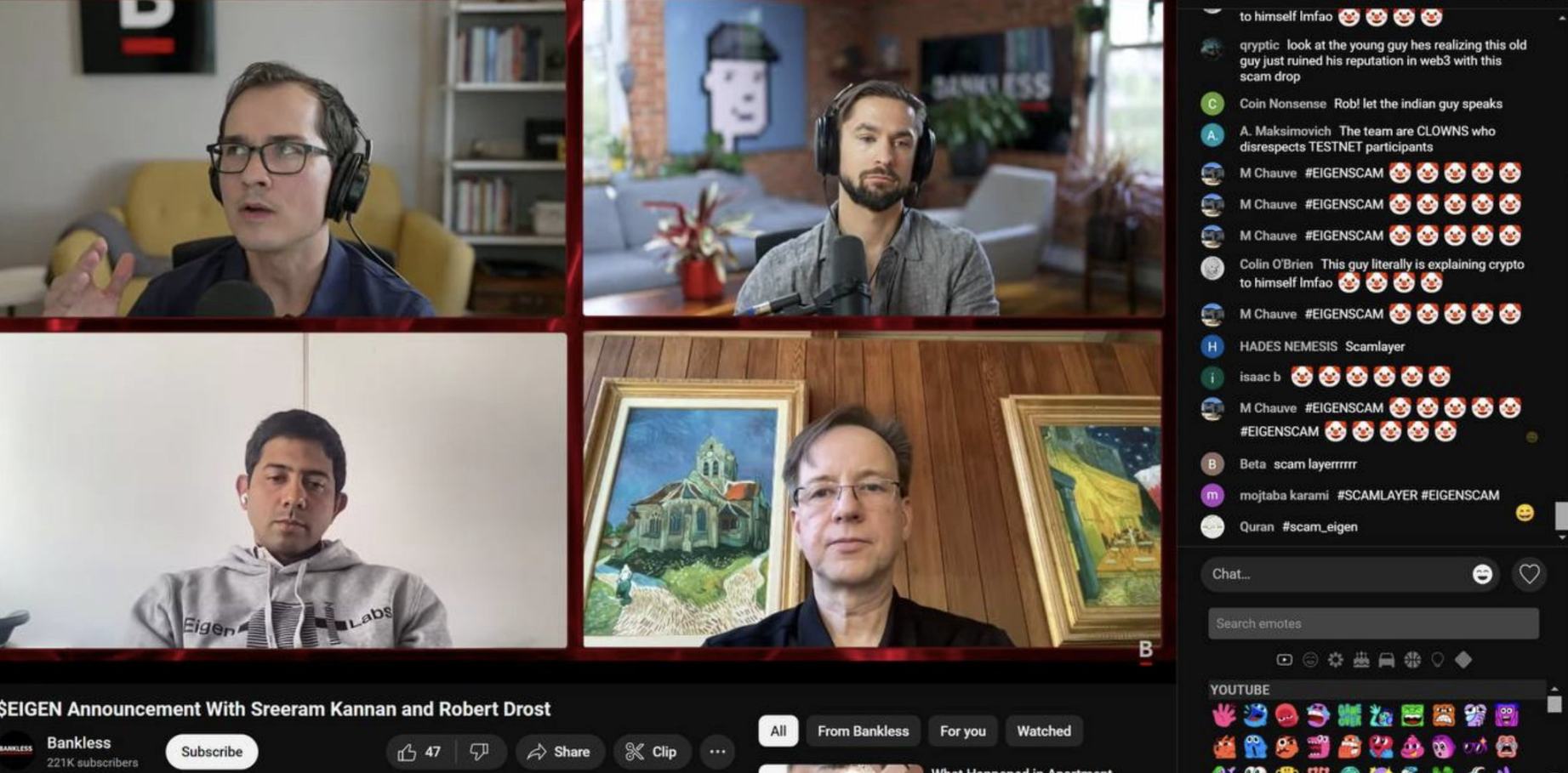
Due to ongoing abuse from disgruntled users, Bankless disabled comments during a live stream with EigenLayer's founder.
Disappointing Outcome
Distribution: High VC and Team Allocation, Low User Share
From June last year when deposits first opened to the snapshot date on March 15 this year, all restakers who contributed nearly $16 billion to EigenLayer over this nearly one-year period will collectively share 5% of the total token supply in the first season of the "Stakedrop." Meanwhile, early contributors and investors (i.e., VCs and the team) are allocated a combined 55%.
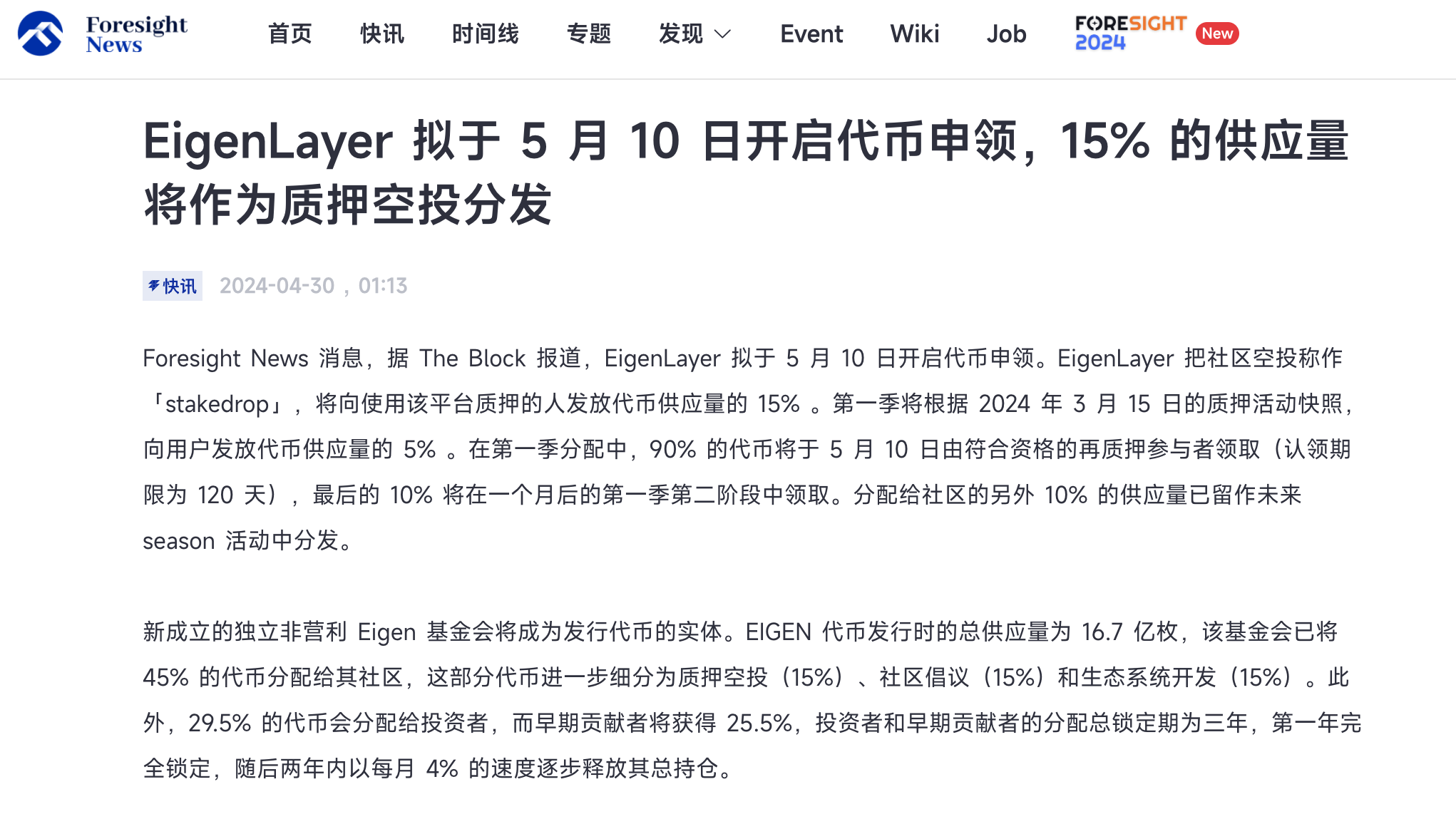
Breaking news post detailing token distribution
Presenting such tokenomics in a 40+ page whitepaper—with a first-season airdrop share lower than some users’ expectations and even below market pricing (LRT-related YT tokens on Pendle plummeted immediately after the announcement)—has left the community largely unimpressed. Many users reported receiving only around 10 EIGEN tokens as a baseline reward, with the majority expressing dissatisfaction over the low allocation.
Non-Transferable Tokens
Yes, it's confirmed: 90% of the first-season "Stakedrop" tokens can be claimed by direct EigenLayer stakers and LRT holders starting May 10. But what good is that if you can’t do anything with them? The tokens cannot be transferred upon claiming, meaning they cannot be sold. According to the documentation: “Tokens will remain non-transferable to allow sufficient time for decentralization.”

Relevant section from the document
Beyond fueling further community frustration, Ethena—which previously conducted a large-scale airdrop—published a post stating: “Our tokens are transferable. We love you.” This appears to be a thinly veiled jab at EigenLayer’s decision.

Post from Ethena Labs
It should be noted that some have defended EigenLayer, arguing that temporary non-transferability allows time to finalize Q1 DeFi user allocations before full token launch in phase two. Thus, criticism on this point may be premature.
Did These People Know the Snapshot Time?
Whenever a project conducts an airdrop, speculation about insider knowledge and so-called “rat warehouses” inevitably arises. After all, fairness and transparency are the most critical criteria for any airdrop. And this time, there appear to be some suspicious “coincidences.”
The first-season airdrop snapshot date was March 15. Just one day later, on March 16, GSR—a “legendary trader” who had gone silent during recent market downturns—withdrew wBETH worth $7 million.

Snapshot date

GSR’s withdrawal record
This isn’t an isolated case. On January 2, a wallet recently funded by Binance deposited approximately 4,000 wBETH (~$13 million) into EigenLayer. Over the next three months, it accumulated nearly 3.5 million Eigen points. Then, on March 16—one day after the snapshot—it withdrew everything.
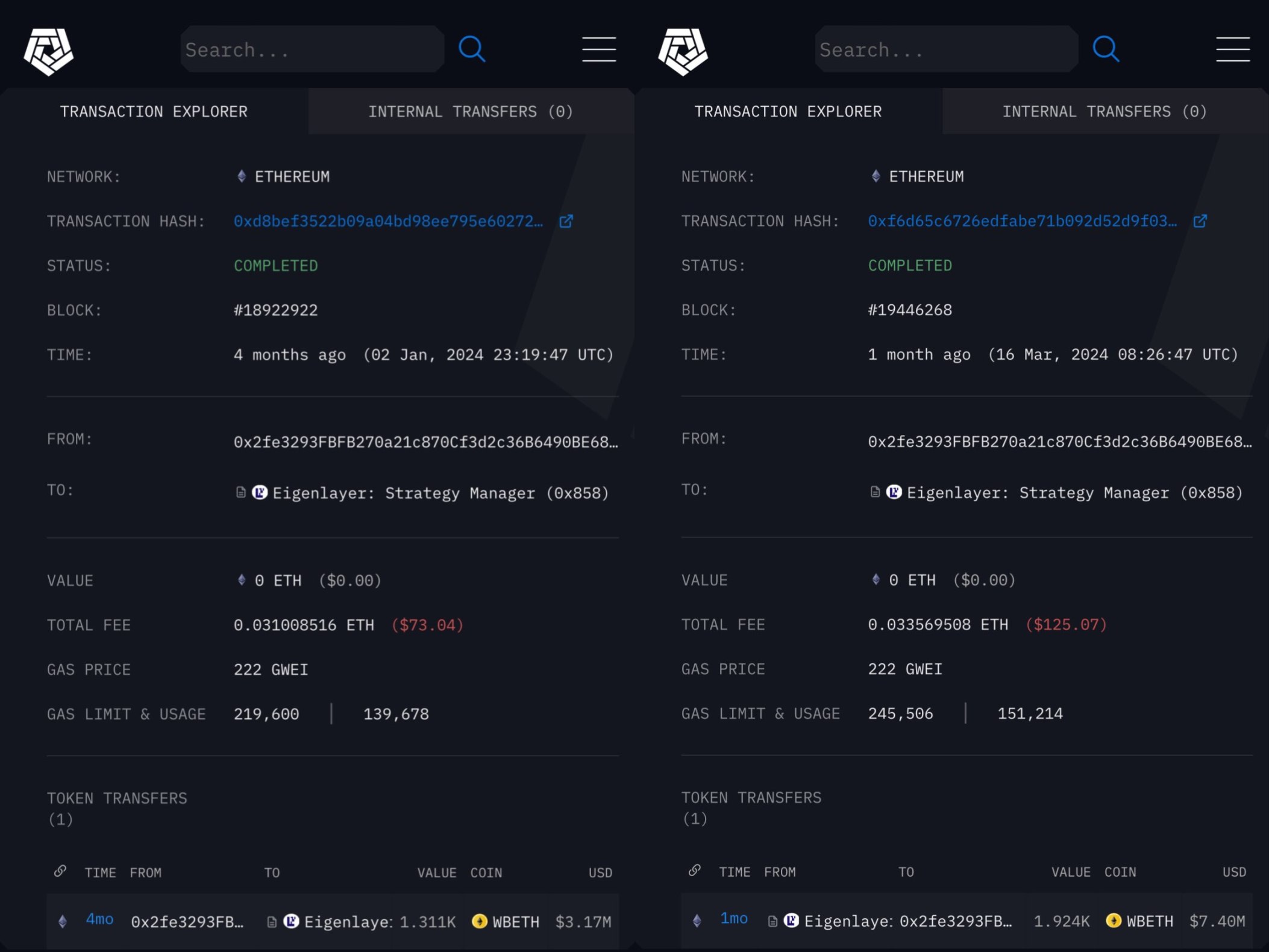
Deposit and withdrawal history of the wallet
Are these individuals insiders with privileged information? Some in the community believe so—and they’re furious.
Strict Geographic Restrictions
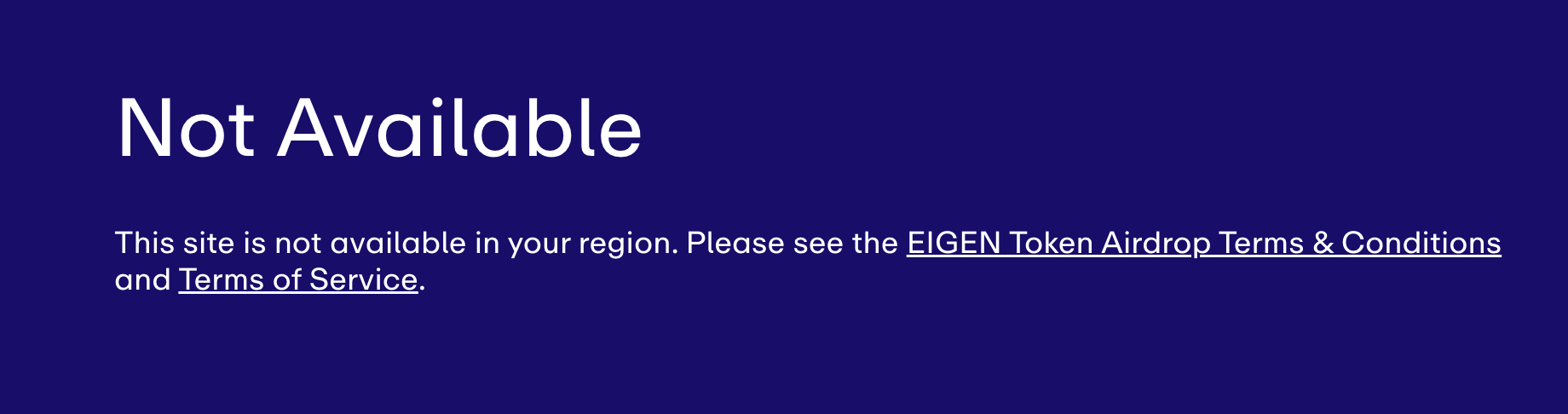
Geographic restriction blocking access to the airdrop page
Geographic restrictions on airdrop eligibility are not uncommon, typically limited to the United States, its territories, and a few sanctioned countries. However, EigenLayer’s restricted country list is notably long—and the very first country listed is China.
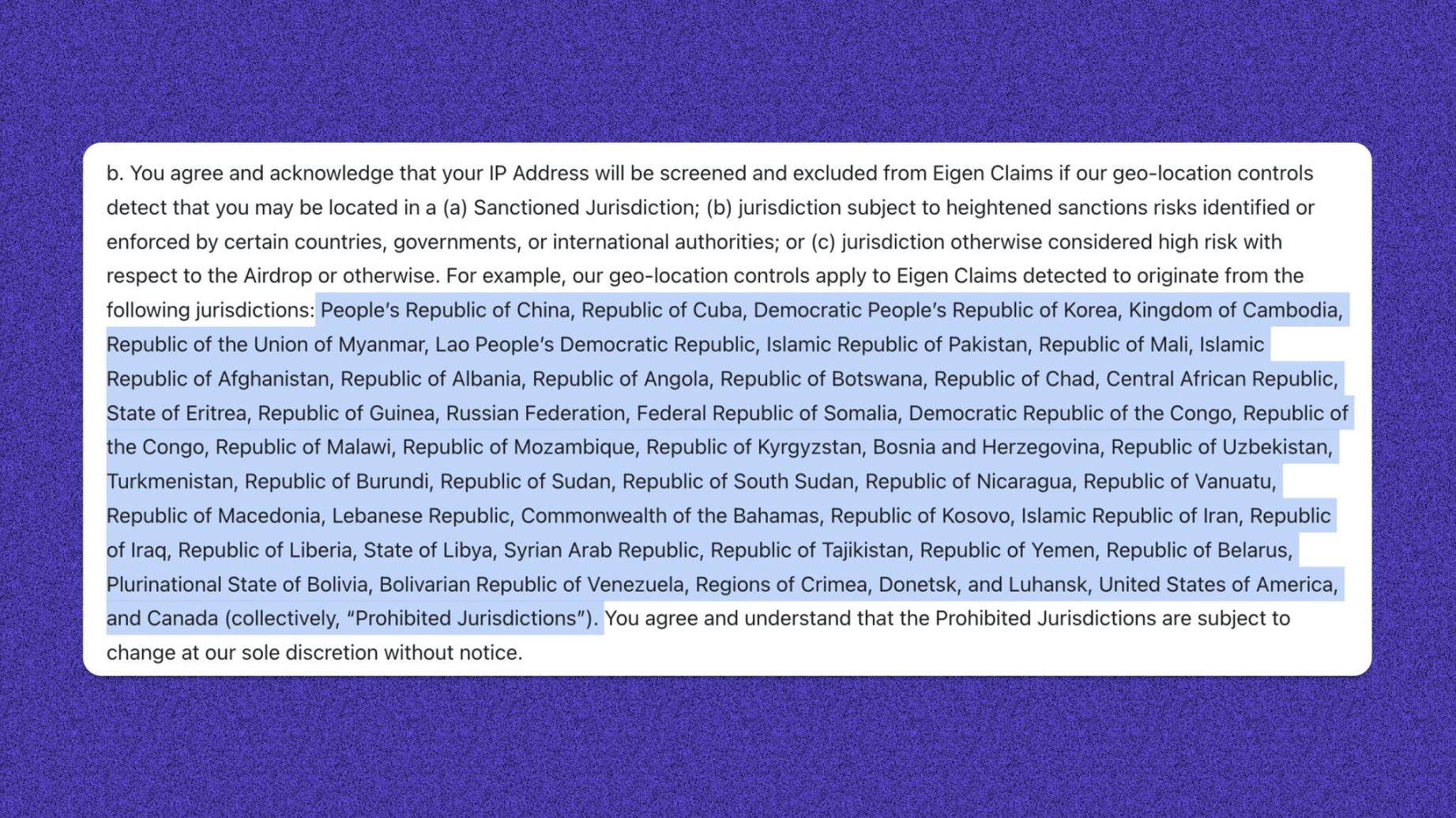
Extensive list of countries prohibited from claiming the airdrop

Highlighted regions are those blocked by Eigen
Moreover, past geographic blocks were often superficial—users could usually bypass them using a VPN from an allowed country. But EigenLayer is different. It’s enforcing the restrictions seriously. In my own experience, a proxy that had always worked before was detected and blocked—an unprecedented failure. It took considerable effort to circumvent the geo-block and check my allocation. (Tutorial provided below.)
Another point of contention in the community: Given EigenLayer’s demonstrated capability to detect and enforce geographic restrictions, why wasn’t this system active during the deposit phase? Why only during reward claims? Is it personal?
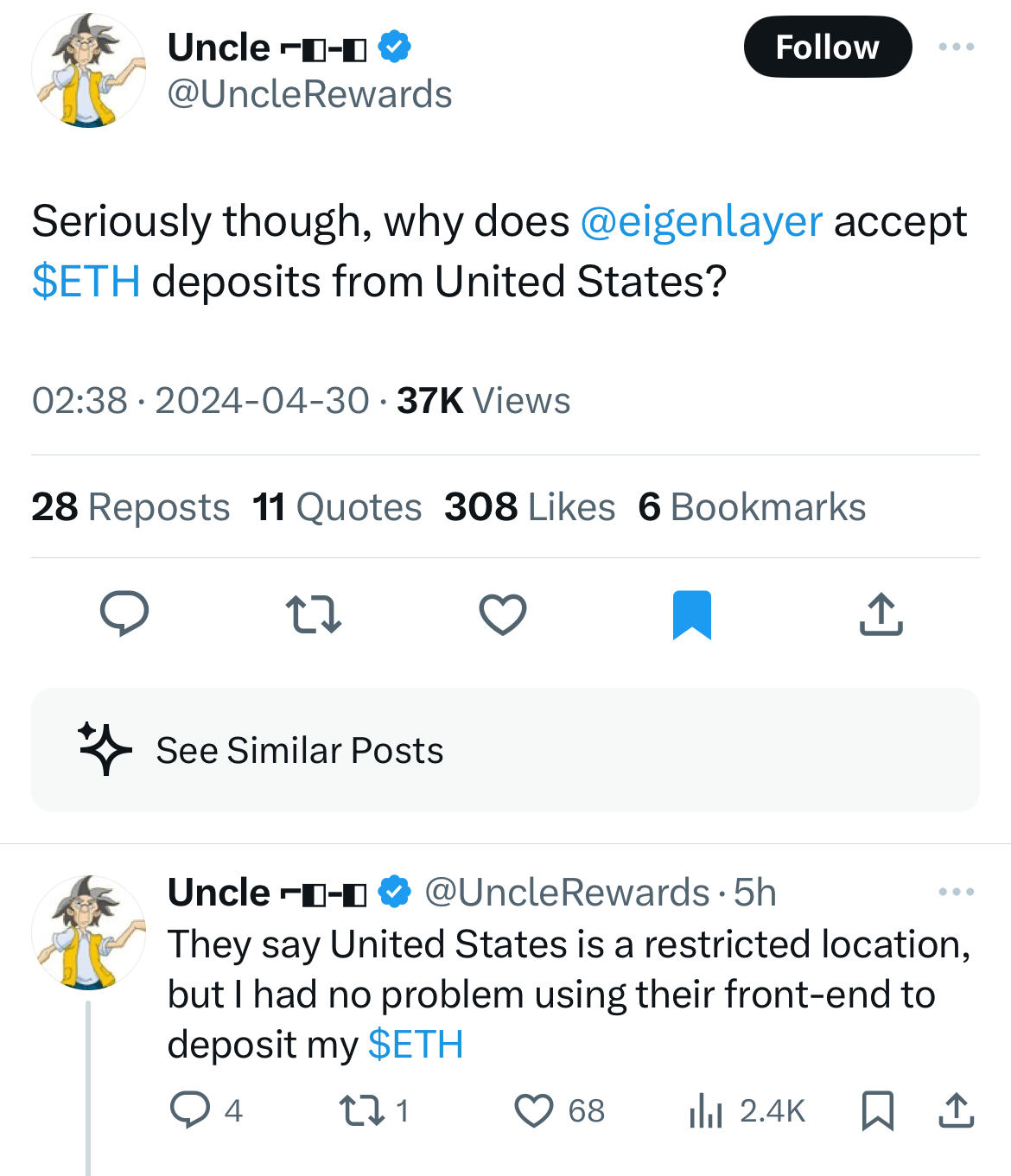
Users complain that the U.S. was not a “restricted location” when depositing funds
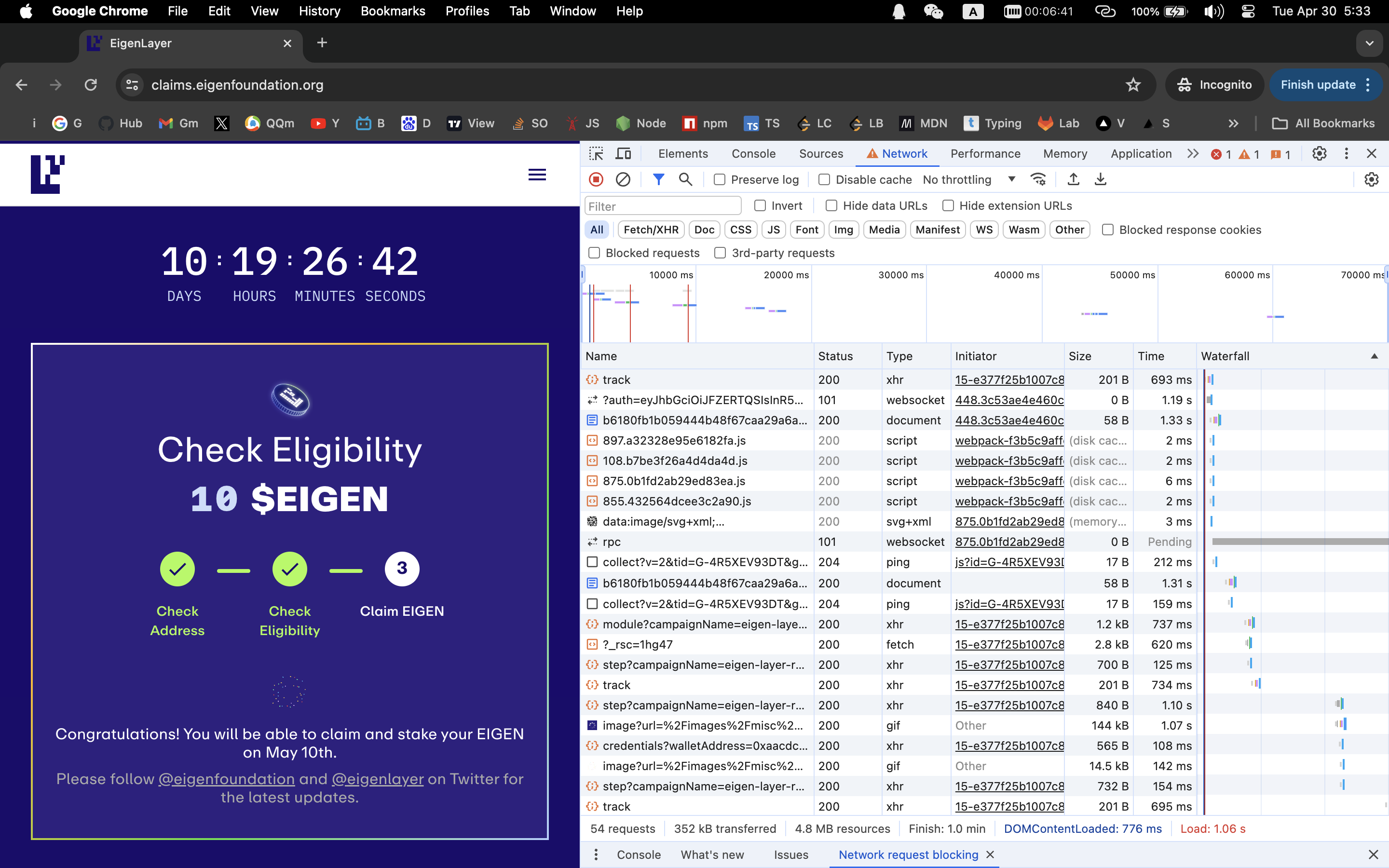
Tutorial: How to Bypass Geo-Restrictions to Check Airdrop Eligibility
-
Open an Incognito tab in your browser, go to the website, right-click and select “Inspect” or press F12 to open developer tools.
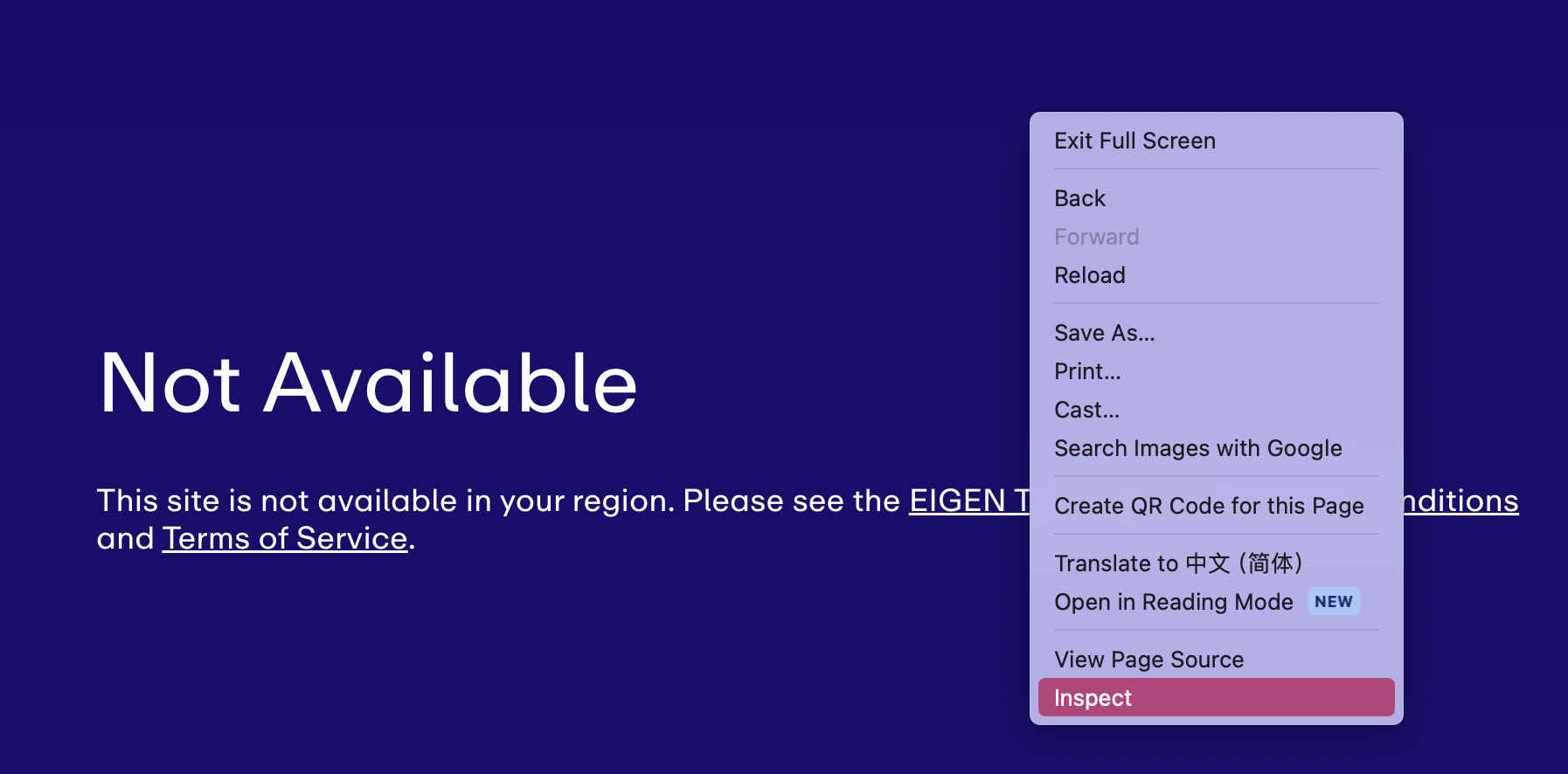
-
Remove /restricted from the URL and refresh. In the Network tab, locate the request named is-blocked.

-
Right-click the request and select “Block request URL.”
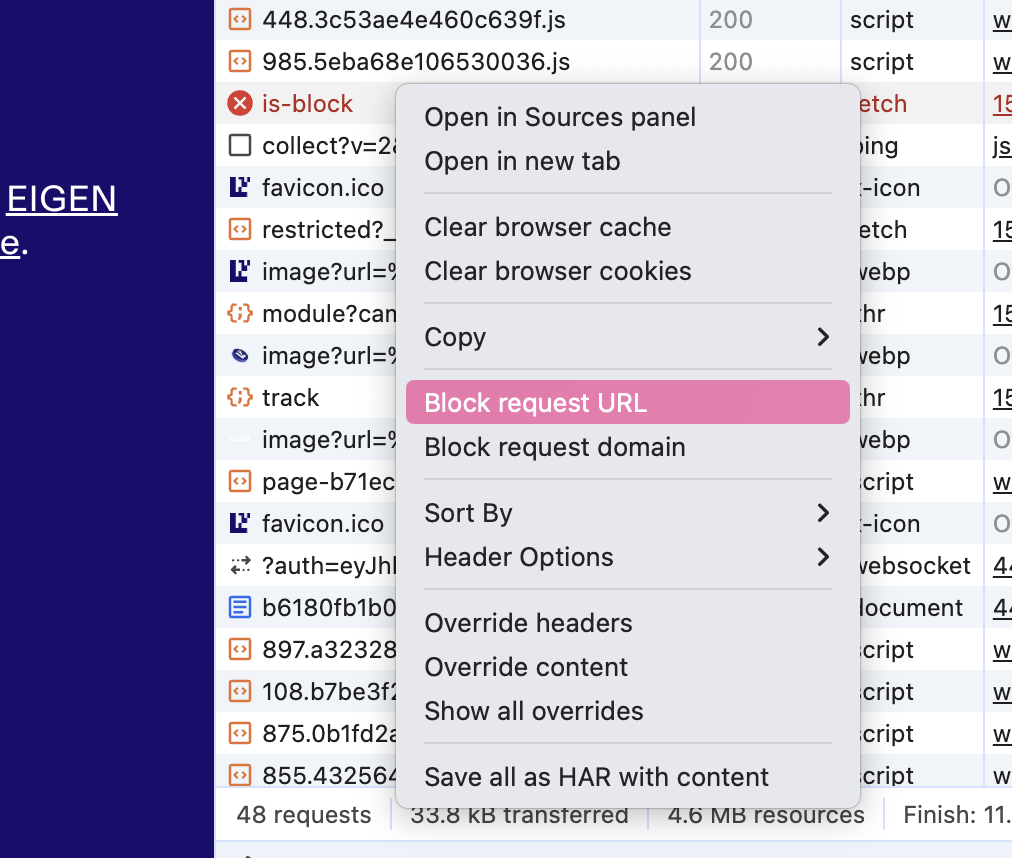
-
Remove /restricted from the URL again, refresh, and you’ll gain access. Proceed with checking your allocation as prompted.
[Disclaimer] Markets involve risk. Invest with caution. This article does not constitute investment advice. Readers should consider whether any opinions, views, or conclusions expressed herein are suitable for their individual circumstances. Investment decisions based on this content are made at the reader’s own risk.
Join TechFlow official community to stay tuned
Telegram:https://t.me/TechFlowDaily
X (Twitter):https://x.com/TechFlowPost
X (Twitter) EN:https://x.com/BlockFlow_News
 Foresight News






