Interview with Aperture Finance CEO: How to Build a New Paradigm Driven by Intent, Powered by AI?
TechFlow Selected TechFlow Selected
Interview with Aperture Finance CEO: How to Build a New Paradigm Driven by Intent, Powered by AI?
The Intent architecture resembles Doraemon's magic pocket, always having just the right tool (solver) to meet users' on-chain needs.
 Navigating Web3 tides with focused insights
Questioner: Mia, ChainCatcher
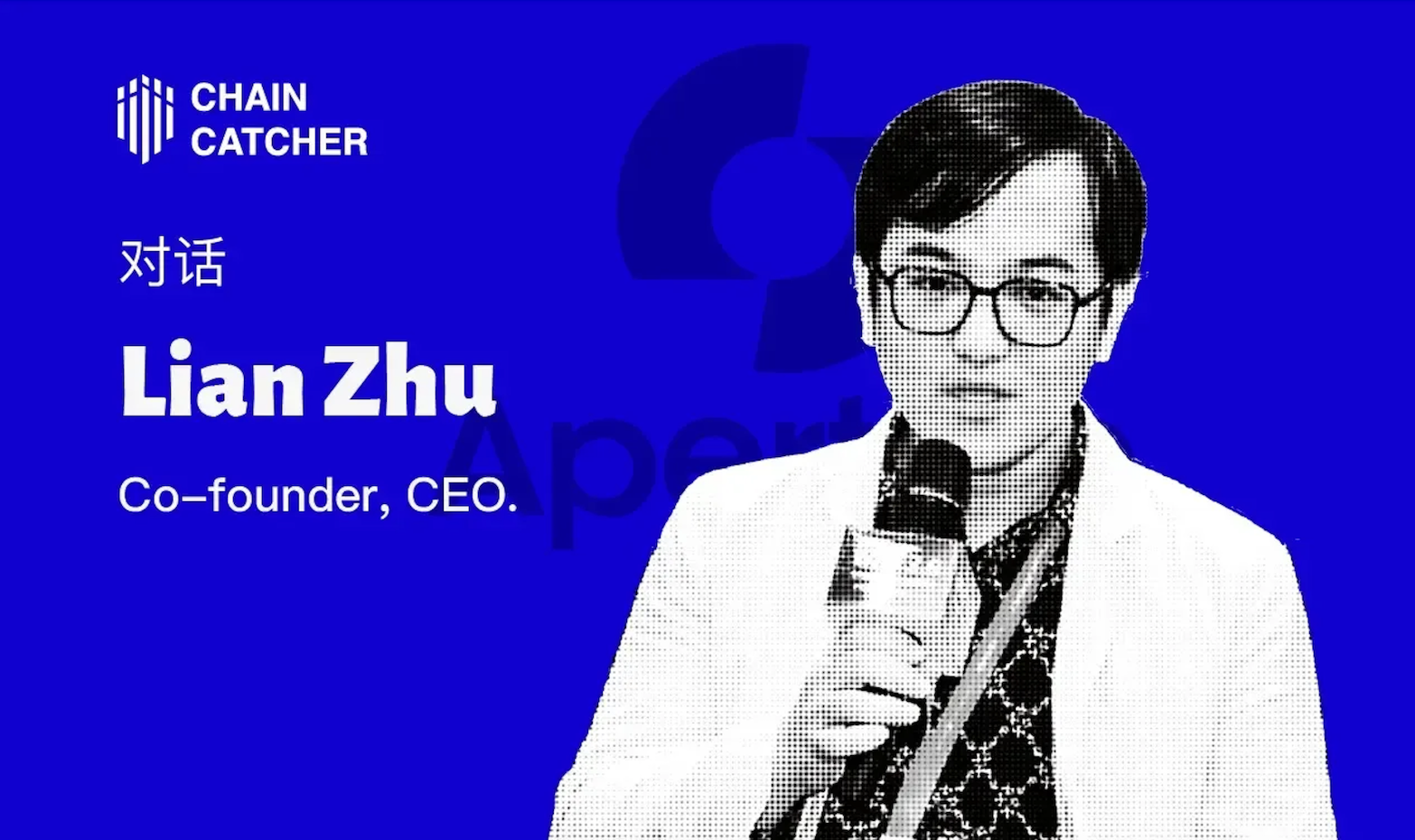
Respondent: Julian Zhu, Co-founder and CEO of Aperture Finance
With the total transaction volume on Aperture Finance's intent platform surging to $2.3 billion and user count surpassing 240,000, it is gradually emerging as a focal point in the crypto industry’s intent-based ecosystem.
On April 13, Aperture Finance announced that it had helped users rebalance $66 million in liquidity positions in a single day—over $38 million of which occurred on the Base network—all setting new historical records. To date, Aperture Finance has assisted users in rebalancing $1.8 billion in liquidity positions.
Aperture Finance stated that it will combine AI with Intent to launch a new chatbot built upon foundational intent infrastructure. This bot allows users to "declare their goals" using natural language and enables more efficient execution and pricing through a solver network.
Recently, ChainCatcher conducted an exclusive interview with Julian Zhu, CEO and Co-founder of Aperture Finance. Julian previously held senior product management roles at Amazon Kindle, Netflix, and AWS. He holds a Master’s degree in Conference Interpretation from the Middlebury Institute of International Studies and an EMBA from UC Berkeley's Haas School of Business, where he also serves as Vice President for the Asia-Pacific region of the Berkeley Haas Blockchain Association. Beyond entrepreneurship, Julian is a member of the North American Writers’ Association and the American Translators Association (ATA), with translations including *Revival* ([American author] Stephen King) and over thirty titles in the *Diary of a Wimpy Kid* series.
Perhaps due to his background in writing and translation, during the interview Julian consistently used analogies and examples to explain the novel concept of intent-based systems in an accessible and easy-to-understand manner.
Julian likened the intent framework to Doraemon: The intent architecture can be seen as a flexible and open system that automatically selects and executes corresponding solutions based on user needs. This concept mirrors scenes from *Doraemon*, where Nobita has various needs, and Doraemon always pulls out the perfect gadget from his pocket to meet them. In this analogy, Doraemon’s pocket represents the intent architecture, while the gadgets correspond to solvers within the system.
From Translator to Web3 Entrepreneur
ChainCatcher: Your background differs significantly from many other founders. Why did you join the wave of Web3 startups?
Julian Zhu: My journey could best be described as drifting through life. Transitioning from humanities to tech entrepreneurship exemplifies how Web3 lowers barriers to entry. I originally studied conference interpretation and joined Amazon in 2012 after interning at a UN-affiliated organization, leading localization efforts for Kindle in China. I spent three years there—relatively relaxed times—and worked on side translation projects, including the best-selling *Diary of a Wimpy Kid* series and Stephen King’s horror novel *Revival*. Faced with growing pressure from outsourced and machine translation, I began learning programming and pivoted toward product management. Back then, computer-assisted translation (CAT) was mainstream—machine output served only as reference, with humans doing the primary work. Machines and translators coexisted peacefully. Today’s ChatGPT, however, is genuinely taking jobs away from translators.
Later, when Netflix prepared to enter China, I moved to Netflix as Language Manager for Greater China, overseeing localization and participating in licensing content like *House of Cards* and *Day and Night* to iQiyi. In 2018, as Netflix withdrew from mainland China, I decided to leave.
ChainCatcher: Did you then transition directly from Web2 to Web3?
Julian Zhu: Strictly speaking, that phase was actually a step back from Web2 to Web1. By the end of 2018, we faced GPU failures and rising electricity costs, so we wrote scripts for automated troubleshooting and dynamic adjustment of mining strategies. We experimented with ASIC miners and FPGAs too. However, plummeting coin prices and high electricity rates in California made mining unsustainable. Later, by chance, I teamed up with a friend to run a Chia (XCH) farm, but eventually that became unviable as well.
Afterward, I joined AWS as a product manager, responsible for bringing U.S. training videos to China. But slow internal processes drained my motivation. In contrast, in Web3 startup speed, two and a half years is enough time to fund, build, and exit two projects. Eventually, after securing funding from a U.S.-based VC, I left AWS.
After leaving, my co-founders and I discovered a consistently profitable algorithmic strategy and raised capital during the pandemic to launch a private fund. But as fund size grew, compliance risks emerged, prompting us to dissolve the fund and shift focus to decentralized finance (DeFi). We founded Aperture Finance, focusing on volatility hedging strategies. Although our original goal was to democratize access to crypto gains, regulatory constraints and user onboarding hurdles forced us to operate largely within existing crypto norms.
ChainCatcher: Once Aperture Finance was established, fundraising must have been a major challenge?
Julian Zhu: For any startup, securing funding is a critical milestone. Our three co-founders were all elite professionals from top tech firms—senior engineers from Google, with master’s degrees in computer science from Stanford and Cornell—but fundraising was still tough. Going full-time into entrepreneurship was not an easy decision. In 2021, we were stable in big tech roles, yet torn by the opportunity cost of starting up. While our DeFi investment strategy delivered strong returns, entrepreneurial risk remained high. So we set a clear condition: if we could raise $2 million before Thanksgiving, we would go all-in. Fortunately, we succeeded—and that’s how we一步步 walked the path to today’s Aperture.
Entering the Intent Space
ChainCatcher: From founding in 2021 through the turmoil of 2022, what was that experience like?
Julian Zhu: It was quite a rollercoaster. We were the first globally to propose a volatility hedging strategy, successfully implementing it on Terra, where our product surpassed $120 million in TVL within just three weeks. At the time, Terra was booming, and our product gained rapid traction. Sequoia Capital and Tiger Global jointly offered to invest $10 million at a $150 million valuation. Just as legal procedures neared completion, the Terra chain collapsed—we lost the deal. As Professor Wang Defeng once said, “If you don’t believe in fate by age 40, your insight is poor.” Maybe this was simply destined.
And misfortunes never come singly—3AC and FTX collapsing added tragic chapters to 2022, marking a definitive turn from bull to bear market. Around the same time, peers operating similar strategies, such as Friktion.fi and RoboVault, declared bankruptcy. The landscape turned bleak.
ChainCatcher: Did you consider shutting down the company?
Julian Zhu: Even when facing difficulties, we never formally discussed closing the company because our initial capital hadn’t been fully spent—we still wanted to try. After analyzing the industry, we realized we could shut down the old project and launch a new one to deliver value back to investors. In June 2022, we took our DeFi product offline due to its lack of fit, then pivoted to building infrastructure providing automation services for strategies—aiming to survive across market cycles.
ChainCatcher: Was this the prototype of the intent architecture (Intent-based Infra)?
Julian Zhu: There was no term “intent” back then. We coined our own concept called “Composable Automation,” which might be loosely translated as “modular automation.” The core idea aligns with intent—automatically building and executing solutions based on user needs.
Whether users wanted to create staking strategies or liquidity mining setups, our platform could quickly provide ready-made modules. Initially, this concept seemed ahead of its time. Not until June 2023 did “intent architecture” gain broad market recognition. Thanks to Paradigm’s advocacy, we rapidly embraced the term, and having started development a year earlier, we became the first intent network with a fully formed product.
Merging AI with Intent Architecture
ChainCatcher: To clarify, what exactly does “intent architecture” mean?
Julian Zhu: Intent architecture can be viewed as a flexible and open system that automatically selects and executes appropriate solutions based on user needs.
This concept resembles episodes of *Doraemon*, where Nobita has various needs, and Doraemon always pulls out the right gadget from his pocket. In this metaphor, Doraemon’s pocket represents the intent architecture, and each gadget corresponds to a solver within the system.
When users express their needs via platform interaction, the intent architecture analyzes these requests and automatically selects the most suitable one or more solvers from available options. Like Doraemon’s gadgets, each solver has a specific function designed to solve particular problems. Users don’t need to understand the inner workings or technical details of solvers—just state their needs and let the architecture handle the rest.
Openness is one of the key features of intent architecture. New solvers can continuously be added to expand its functional scope. As more solvers are integrated, the architecture can satisfy increasingly diverse user demands—enabling a transition from reality to something almost “magical.”
In practice, intent architecture may involve complex algorithms and data processing techniques to accurately interpret user intent and select optimal solutions. Additionally, its design must account for usability, security, and scalability.
ChainCatcher: Are there any widely recognized examples of intent in use today?
Julian Zhu: Strictly speaking, intent isn’t entirely new—it’s more about viewing familiar concepts through a fresh lens. For example, when swapping tokens on Uniswap, you often see a reasonable exchange rate and confirm immediately. You trust that it provides the best swap method, and indeed it does. If you check the details, you’ll find your transaction may be split into multiple smaller ones—that’s optimization based on the user’s implicit intent (finding the optimal path for the best rate).
That’s intent at the token swap level. Many intent-focused projects extend this further. But these remain application-layer innovations. The greatest potential of intent architecture lies at the infrastructure layer—not just swaps, but fulfilling diverse user intents across functions. For the same vision, Anoma aims to build a new blockchain—a new world inviting everyone to rebuild. We take a more conservative approach, prioritizing efficiency by re-integrating existing protocols within the current ecosystem via intent architecture.
ChainCatcher: Aperture emphasizes “AI-powered intent architecture.” How is this applied in practice?
Julian Zhu: AI profoundly impacts our product in two dimensions.
First, at the user interface level. Take token swapping again—almost no one runs full analysis comparing all possible routes, including cross-chain options, to find the optimal cost and time solution for a single swap. Yet this is precisely where intent architecture excels. A user only needs to say, “I want to swap 1,000 USDT to ETH at the best rate,” and our solvers will compare all available paths.
The most direct way to express intent is natural language—text-based conversation. We’ve built a dedicated IntentsGPT powered by ChatGPT technology, underpinned by robust AI capabilities.
The second AI application is in solver selection. When multiple solvers within our intent network can fulfill the same intent, AI helps choose the optimal one. Just like when Nobita wants to travel, Doraemon has both the Anywhere Door and the Bamboo Copter—which should he pick? That decision can be entrusted to AI.
ChainCatcher: What will the ultimate user experience be with Aperture’s intent architecture?
Julian Zhu: For average users, claiming airdrops often involves missing deadlines, phishing risks, or website congestion. On our platform, users simply connect their wallet and tell IntentsGPT: “Please find and claim all eligible airdrops on my address, ensuring optimal fees.” Our system automatically completes every step.
For strategy-savvy users, they can simply instruct IntentsGPT: “Analyze and open a liquidity position for today’s highest-yielding trading pair.” Our system delivers end-to-end service—from calculation to execution. Through natural language, users can effortlessly complete various tasks on our platform while enjoying better rates than manual operations.
Currently, IntentsGPT and the intent architecture are officially live—we’re close to realizing this seamless vision.
ChainCatcher: You mentioned earlier that Aperture is currently the only intent-focused project with a live product. How are users responding, and what are your future plans?
Julian Zhu: Aperture’s intent tools are now live across nine EVM-compatible chains. To date, total intent-driven transaction volume has reached $2 billion. We have 200,000 unique users, with over 8,000 daily active users—clear validation from the DeFi community.
Each intent network resembles an independent e-commerce platform, each with slight variations but fundamentally similar. Ultimately, competition among platforms comes down to the brands and quality available. Once the platform exists, it becomes a race to scale faster and attract better partners.
Intent architecture works similarly. Being inherently open, adding one more solver adds one more capability. Our early launch gives us a first-mover advantage, but maintaining it requires continuous addition of new solvers. Relying solely on internal development is too slow, so we partner with projects like Propeller Heads and Enso Finance to develop solvers for us. We also open the system to the community, enabling developers to build their own solvers.
ChainCatcher: The e-commerce analogy is insightful. But on e-commerce platforms, if brands onboard too fast, quality control may suffer. Do you have similar concerns when adding solvers?
Julian Zhu: The complexity and interconnectedness of intent architecture inevitably impact security.
We categorize solvers into three types. First are official solvers—developed directly by Aperture. We have the highest confidence in their security.
Second are second-party solvers—provided by partners. We audit these and grant them whitelist access.
Third are third-party solvers—developed by community members. Here, our token plays a central role. Third-party developers must stake a certain amount of Aperture tokens to deploy a solver. For example, if Zhang San deploys a trading-type solver and stakes $5,000 worth of Aperture tokens, his order limit would be $50,000. We apply different multipliers depending on the use case—based on potential maximum loss. If an order fails or malicious behavior is detected, staked funds are slashed as penalty and compensation to users. Conversely, if a solver successfully completes transactions, it earns transaction fees—creating incentives to optimize algorithms.
ChainCatcher: Besides requiring staking for solver deployment, what other functions does the Aperture token serve?
Julian Zhu: The token-based accountability mechanism centers on solver deployment and staking. Additionally, our token has multiple utilities: it can be used to pay or discount fees, unlock premium features, and participate in governance voting.
Intent architecture aims to deliver convenience and superior user experience, so we charge minimal fees based on transaction value. Users who pay with or stake our token receive fee discounts. For resource-intensive advanced features, we impose token usage thresholds.
In development decisions, beyond following our internal roadmap, we place strong emphasis on community involvement. Members can submit proposals and vote on how tokens should incentivize developers—for instance, integrating new projects or building new functionalities—jointly accelerating platform growth.
Join TechFlow official community to stay tuned
Telegram:https://t.me/TechFlowDaily
X (Twitter):https://x.com/TechFlowPost
X (Twitter) EN:https://x.com/BlockFlow_News
 ChainCatcher 链捕手