








Dubai Token2049 Highlights: Rainstorms, Cultural Clashes, and the Rise of DePIN and AI
TechFlow Selected TechFlow Selected
Dubai Token2049 Highlights: Rainstorms, Cultural Clashes, and the Rise of DePIN and AI
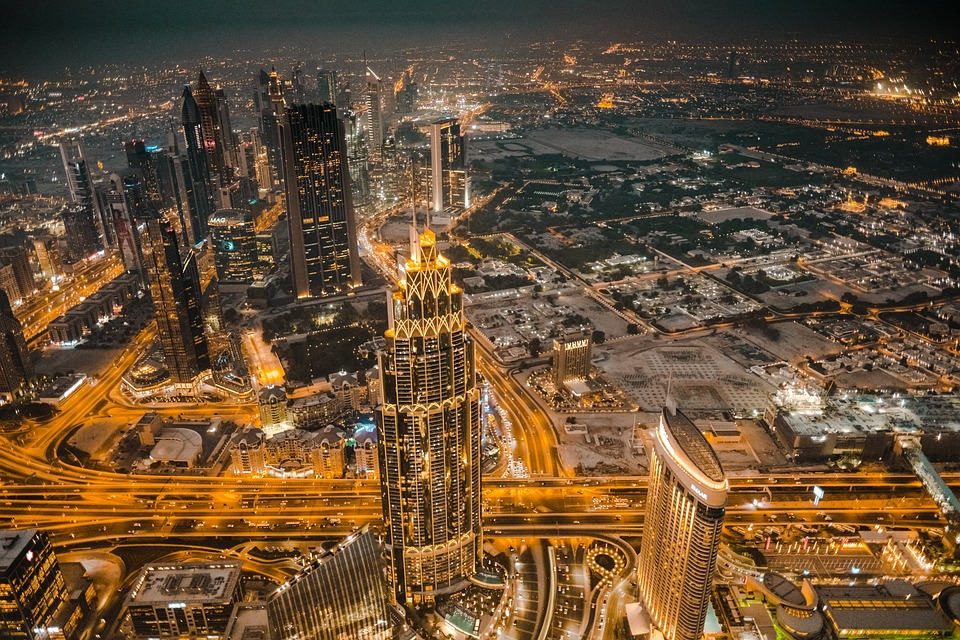
Dubai Token2049 in the rainstorm.
 Navigating Web3 tides with focused insights
Author: Tuoluo Finance
Web3 events in April are still ongoing.
Shortly after the Hong Kong Carnival concluded, from April 18 to 19, 10,000 attendees from over 4,000 companies and more than 100 countries gathered for the annual industry flagship event Token2049.
This year, instead of pitting Singapore against Hong Kong, Token2049 chose Dubai as its host city—a selection that subtly reflects the evolving competitive landscape among Web3 hubs globally. Looking at the global Web3 ecosystem, aside from the United States standing alone at the forefront, regional clusters continue to compete. Southeast Asia anchored by Singapore, the Middle East accessed through Dubai, and Hong Kong leveraging its proximity to mainland China are pursuing differentiated strategies. At this stage, it's too early to declare a winner—some regions have strong technology but weak markets, others possess large markets but face stringent regulations, while some boast capital yet lack ecosystems. Clear boundaries remain between insiders and outsiders.
Dubai’s advantages are evident. Compared to Southeast Asia with relatively lower per capita wealth and Europe with overly detailed and strict regulations, the Middle East offers concentrated capital flows, high regional affluence, and greater inclusivity—laying a relatively solid foundation for Dubai’s crypto industry development. Specifically, regulatory openness has attracted exchanges to follow opportunities wherever they arise. Over ten well-known exchanges including OKX, Bybit, and HTX have established offices in Dubai. Recently, Binance also revealed plans to obtain Virtual Asset Service Provider (VASP) status in Dubai. However, drawbacks are equally apparent. Beyond the usual challenges—underdeveloped internet infrastructure, mismatched talent structures, and high living costs—Dubai’s geopolitical strengths also bring constraints. First, ongoing conflicts near Gulf states like Iran and Israel impact regional stability; second, cultural clashes and market fragmentation stem from the fusion of theocratic governance and an immigrant society. Perhaps due to these reasons, most crypto enterprises in Dubai operate via lean, minimal presence teams.
Turning to this year’s conference, unlike Hong Kong which leans more toward Chinese-speaking communities, Token2049 maintained its tradition of engaging broader international audiences, emphasizing global dialogue and highlighting the diversity within the crypto industry. Thematically, Dubai focused on topics popular in Western circles—compared to Hong Kong’s intense focus on Bitcoin ecosystems, DePIN and AI featured far more prominently here.
Interestingly, Token2049 did not start smoothly. Two days before the event, on April 16, Dubai experienced its heaviest thunderstorm since 1949—rainfall equivalent to one-and-a-half to two years’ average fell in just one day. Transportation ground to a halt: luxury cars waded through floods, travelers were stranded, taxi fares skyrocketed. X was flooded with memes, and some jokingly dubbed the event “Web3 Jiongdi.” Despite flight delays and some attendees forced to turn back, the downpour failed to dampen industry enthusiasm. Instead, amid the rain, participants gained deeper insight into how this opulent Middle Eastern city reveals its raw reality during moments of crisis. Many attendees later reflected on the storm, describing it as a revealing experience that showcased Dubai’s unconventional charm.
Additionally, compared to last year’s Singapore edition where gossip about influencers dominated, this year’s Dubai event was notably more subdued. While the storm may have distracted people from off-topic chatter, the primary reason likely lies in improved market conditions—bringing positive signals, richer discussions, and more valuable networking opportunities.
For those who actually attended, Dubai and crypto left particularly vivid impressions. Below, Tuoluo Finance curates select posts from X platform users who participated in Token2049 Dubai, offering readers a glimpse into the heat—and humidity—of Dubai.
Dacong Fred @Dacongfred
X Link: https://twitter.com/Dacongfred
One-sentence summary of my Token2049 Dubai experience: Below expectations, quite disappointing
1. Nothing new: Almost identical hot topics as Hong Kong
If you've already attended events in Hong Kong, attending Dubai offers limited additional value. Overall, Token2049 Dubai felt like a racially diverse version of Hong Kong Web3 Festival. The hottest topics remained AI/DePIN + BTC ecosystem, while Ethereum had almost no visibility:
-
AI/DePIN sessions drew large crowds—multiple events were packed, DePIN projects emerged endlessly, and VCs were actively tracking this space.
-
BTC ecosystem events were numerous, clearly dominated by Chinese speakers—one-third to half of attendees were from Greater China (including mainland China, Singapore, Taiwan, Hong Kong, Malaysia).
-
SOL had a booth at the main venue; Western builders generally expressed bullish sentiment toward SOL’s ecosystem.
-
The most active players were still centralized exchanges—Binance hosted consecutive Clubhouse events, Bitget, HTX, Gate showcased aggressively. CoinW, Kucoin, BingX were also visible at the main venue.
2. Missing America: Dominated by European and Asian projects
Most projects encountered were from Asia and Europe—especially Italy and Russia in Europe, and Southeast Asia, China, and local Dubai teams in Asia.
Few American projects were present. I hoped to connect with Base and Blast teams and their ecosystem projects but only randomly met a DEX team from Blast (and heard plenty of insider stories about Blast—will share later). Few Coinbase representatives were spotted, and their activities in Dubai were minimal compared to their U.S. presence.
3. Random thoughts: Rain and culture
The heavy rain caught many off guard—numerous side events were canceled. Informal “Token2049 satellite venues” popped up in Doha, Oman, Abu Dhabi. Being stuck in Doha for two days created unforgettable bonds with fellow travelers in airport support groups—revealing how fragile a modern city built rapidly on money can be when hit by rain.
Also, Dubai’s dry climate wasn’t kind to someone like me from a humid southern region—my throat hurt from day one. Drivers provided excellent service and were very friendly to Chinese visitors—almost every driver said “Oh, Chinese are my friends” upon learning I’m from China.
The city feels just like Shanghai—diverse population, doubled prices, drier air.
Another observation: people seemed more willing to show their faces abroad than in Hong Kong. I recognized many familiar figures—He Yi at Binance Clubhouse, Sun Yuchen at the main venue, and Professor Kong on my return flight. We discussed our impressions of Dubai and shared reflections on the event’s racial diversity.
I also felt the warmth of online connections offline—during side events, several people approached saying, “Oh you’re Dacong, I’ve been following your Twitter.” In a foreign land, it instantly felt like meeting long-lost family—proof that consistent content creation and sharing often bring unexpected rewards.
DeFi Teddy @DeFiTeddy2020
X Link: https://twitter.com/DeFiTeddy2020
My Token2049 Dubai notes
About the crypto industry
-
Top three narratives: restaking (EigenLayer), parallel L1s (Monad), DePIN+AI (@ionet)—Fundraising: many projects plan token launches in Q3/Q4; some VCs say the window for Series A investments will close in 2–3 months;
-
AI + Web3: Many crypto projects are pivoting toward AI, while mainstream AI projects remain reluctant to embrace Web3 branding;
-
Chinese market: Top-tier Western projects are now focusing on promoting to Chinese audiences, recognizing the importance of Chinese capital for token distribution.
About Dubai
-
Heavy rain severely impacted the experience—I slept overnight on chairs in the hotel lobby;
-
Many Chinese projects and funds are based in Dubai; regulation is more open than in Hong Kong or Singapore; the Golden Visa program attracts Web3 talent to settle here;
-
Affordable rent—property prices comparable to tier-3 or tier-4 cities in China;
-
Many taxi drivers are from Pakistan; Indian project teams are abundant at the venue—India has strict crypto regulations, so many Indian projects base themselves in Dubai.
LiamWang @LiamWang88
X Link: https://twitter.com/LiamWang88
This was my first time attending Token2049. As a Web3 learner (yes, I believe this identity suits me best), I had two goals:
1. To experience the atmosphere of Web3 up close. In Web3, “vibe” is intangible yet highly emphasized.
2. To understand current frontier topics and narratives—an essential skill in a fast-changing industry.
The main Token2049 conference took place on April 18–19, but side events, small gatherings, and parties began as early as April 15. Coming from a background in Web2 tech companies, the vibe here felt entirely different. Overall, Web3 events are conferences—but feel more like social gatherings among friends. You can listen to speakers at panels or casually chat with people from around the world over drinks. And if you’re free at night, various organizers host parties—you just grab a beer and make new friends. Casualness and freedom permeate the entire Web3 event culture.
Beyond casualness and freedom, here are several keywords summarizing my impressions of Dubai and the discussions at Token2049:
Keyword One: Rainstorm
If you’re in this industry, you’ve probably seen news of Dubai’s rare rainstorm across social media or朋友圈. On April 16, Dubai saw its heaviest single-day rainfall since 1949—luxury cars submerged, public transit paralyzed.
Known for luxury and glamour, Dubai remained partially or fully dysfunctional until April 18. The storm tested the drainage systems of this affluent city and exposed the fragility beneath wealth.
Extending this to Web3, the storm carries profound lessons:
1. A robust system must prepare for even low-probability risks. For example, when building a DeFi project—are we ignoring extremely rare risks simply because they seem unlikely?
2. A robust system must always prepare for black swan events. We’re in a bull market now, and overall sentiment is optimistic—but vigilance is crucial. In this industry, we never know when or how a black swan might strike. Cautious optimism beats blind optimism.
Keyword Two: Regulation & Compliance
Regulation and compliance were the most frequently mentioned terms I heard in Dubai. The first panel at the main venue on April 18 focused precisely on this topic—Binance CEO Richard Teng and Bloq co-founder Matthew Roszak discussed their views on global crypto regulation. In conversations with various project teams, there was a shared emphasis on regulatory considerations. Common concerns included: ① Which countries/regions offer favorable regulatory environments? ② How to obtain compliant licenses there?
My takeaway: There’s consensus that regulation is needed—the debate lies in methods and pace, given differing policies across jurisdictions.
This also led me to wonder: Is there a conflict between achieving high returns and increasing industry compliance? In blockchain’s early days, delayed regulation allowed many projects and individuals to reap massive gains. As the industry matures and becomes more regulated, will we still see such rapid wealth creation stories?
Keyword Three: AI
Besides regulation, AI was another hot topic at Token2049. At main-stage panels, guests including Near Protocol co-founder Illia Polosukhin and io.net founder Ahmad Shadid discussed combining AI with decentralized intelligence. Outside the venue and at parties, about half the projects I spoke with were AI-related—covering distributed AI storage and computing, decentralized GPUs, intent-based AI apps, AI-powered social platforms, and creator economies. The热度 of the AI+Web3 narrative is undeniable.
An interesting observation: When discussing Web3 mass adoption in the past, hopes were usually pinned on GameFi and SocialFi. This time, however, the sense is that AI holds greater potential for driving widespread adoption.
Keyword Four: Chinese Influence
Token2049 coincided closely with Hong Kong Web3 Festival. Comparing the two became an interesting topic. From conversations with fellow Chinese professionals, two common observations emerged: ① The concentration of Chinese attendees at Token2049 was lower than at Hong Kong Carnival (understandable given Dubai’s distance from Greater China); ② Topic emphases differed. For instance, Bitcoin ecosystem discussions were highly popular in Hong Kong but less prominent in Dubai.
People wondered—do these feel like two separate worlds?
It’s hard to answer definitively. My view:
Practically speaking, Chinese participants will inevitably shape their own discourse within Web3.
On one hand, many Chinese founders and investors today have strong backgrounds—fluent English, international education and work experience, global mindsets—and the inherent “pioneer spirit” means I believe more Chinese individuals will rise on the global tech stage in the next decade.
On the other hand, many Chinese entrepreneurs are deeply involved in the Bitcoin ecosystem—this itself demonstrates efforts to build influence and narrative control.
From an aspirational perspective, I believe Web3 should transcend nationalities, skin colors, or backgrounds. This industry thrives on consensus—when aligned, we become allies regardless of origin, race, or credentials. In that sense, whether Chinese or non-Chinese, we should downplay identity differences. After all, innovations like Bitcoin exist precisely to break down traditional national boundaries.
These keywords capture my strongest impressions from attending Token2049. These are personal views and inherently subjective—so they don’t represent every attendee. Also, many other topics sparked lively debates at the event—DePIN, RWA, Bitcoin ETFs, restaking—my reflections cannot cover them all. But overall, events like Token2049 serve as barometers of current Web3 trends. Regardless of individual opinions, attending helps form shared understanding of key narratives and emerging sectors.
Join TechFlow official community to stay tuned
Telegram:https://t.me/TechFlowDaily
X (Twitter):https://x.com/TechFlowPost
X (Twitter) EN:https://x.com/BlockFlow_News












