








Analyzing BlackRock's Tokenized Fund BUIDL, Opening a Brave New World for RWA Assets to Enter DeFi
TechFlow Selected TechFlow Selected
Analyzing BlackRock's Tokenized Fund BUIDL, Opening a Brave New World for RWA Assets to Enter DeFi
"Tokenization of financial assets will be the next trend, meaning every stock and bond will be recorded on a single ledger."
 Navigating Web3 tides with focused insights
Author: Will Wang
Following BlackRock's successful push for the approval of a Bitcoin spot ETF earlier this year—marking the introduction of crypto assets into traditional finance—on March 21, 2024, just two months later, BlackRock partnered with Securitize to launch its first tokenized fund, BUIDL ("BlackRock USD Institutional Digital Liquidity Fund"), on a public blockchain—Ethereum—effectively bringing traditional finance into the crypto market.
The launch of the BUIDL fund marks a significant milestone in the tokenization of real-world assets (RWA). As the world’s largest asset manager, BlackRock is demonstrating how blockchain technology can reshape the financial system through BUIDL, enabling seamless integration between crypto assets and real-world assets.
In our previous research last year, we analyzed the critical role that tokenized funds play in bridging TradFi and DeFi. Funds, as an asset class, are ideal carriers for RWAs due to (1) their regulated nature and (2) their relatively standardized digital representation. See reference: RWA Deep Dive: The Value, Exploration, and Practice of Fund Tokenization.
This article will provide an in-depth analysis of BlackRock’s tokenized fund BUIDL—how it operates, and how it leverages USDC to connect with DeFi, opening the gateway from traditional finance to the crypto world.
1. How the BUIDL Fund Works
If you deposit $1,000 into the stablecoin USDC, Circle—the issuer of USDC—will invest those funds in assets like U.S. Treasuries, but the returns go to Circle. However, if you deposit $1,000 into BlackRock’s BUIDL fund, the fund not only promises each token a stable value of $1 but also generates investment returns for you.
This is BUIDL—a stablecoin-like instrument, but in reality, it is a “security.”
We’ll first discuss BUIDL’s “security” characteristics, then explore its potential as a liquid stablecoin.
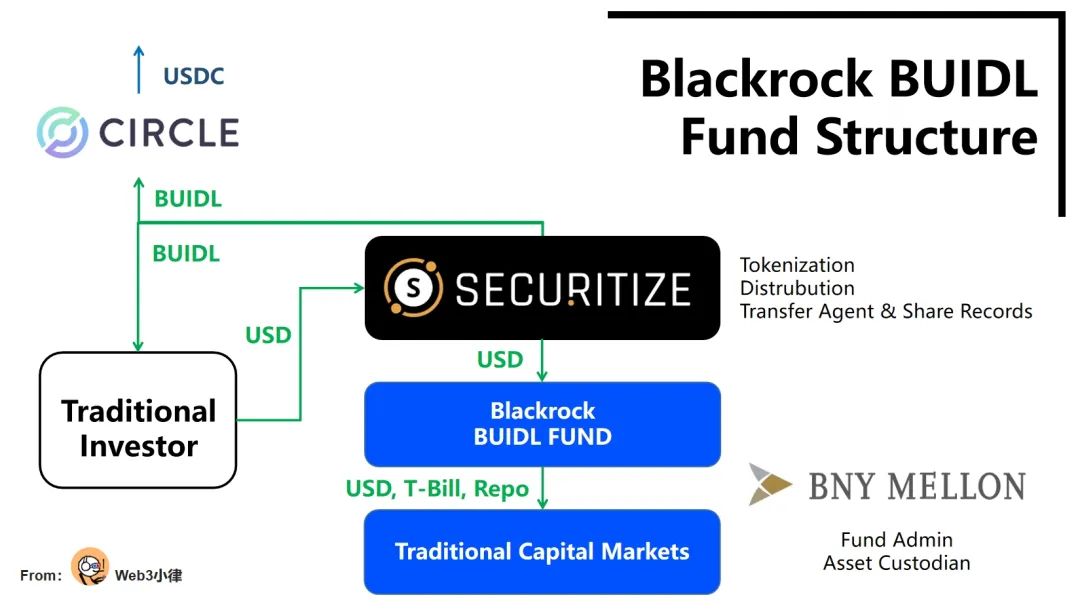
A. Fund Entity
The BUIDL fund is a new SPV established by BlackRock in the British Virgin Islands (BVI). It has applied for a securities exemption under Regulation D of the U.S. Securities Act and Investment Company Act and is available exclusively to accredited investors.
B. Tokenization and On-Chain Logic
Securitize LLC serves as the tokenization platform for the BUIDL fund, managing its on-chain logic and converting on-chain data into regulatory-compliant reporting formats;
Additionally, Securitize LLC acts as the fund’s transfer agent, managing tokenized shares and reporting subscriptions, redemptions, and distributions;
Securitize Markets—an Alternative Trading System licensed by FINRA and registered as a Broker-Dealer—acts as the fund’s distribution agent, offering the product to qualified investors;
Investors have flexible custody options via Anchorage Digital Bank, BitGo, Coinbase, and Fireblocks.
C. Underlying Asset Operations
BlackRock Financial acts as the fund manager responsible for investments;
Bank of New York Mellon serves as custodian and administrator of the fund’s underlying assets;
PwC has been appointed as the fund’s auditor.
D. Fund Management
100% of the BUIDL fund’s total assets are invested in cash-like dollar-denominated instruments (such as cash, short-term U.S. Treasuries, and overnight repurchase agreements), ensuring each BUIDL token maintains a stable value of $1.
BUIDL tokens distribute interest monthly via a rebase mechanism—daily accrued dividends are directly airdropped to investors’ wallet accounts as newly minted tokens.
E. 24/7/365 Instant Subscription/Redemption
Securitize enables 24/7/365 fiat USD subscription and redemption (Issuance & Redemption Process) for investors. This instant settlement and real-time redemption capability is highly desirable among traditional financial institutions.
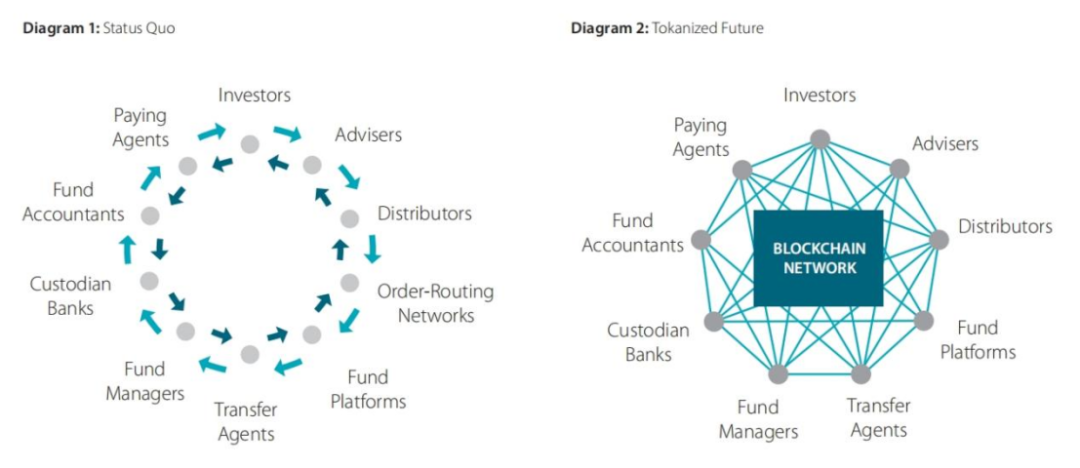
(SS&C, Tokenization of Funds - Mapping a Way Forward)
In contrast, traditional fund operations are inefficient, with multiple parties maintaining separate ledgers (e.g., securities vs. banking ledgers), resulting in T+3+5+N day delays during subscription/redemption processes.
By comparison, fund tokenization enables real-time settlement on a unified ledger, significantly reducing transaction costs and improving capital efficiency—an innovative leap for the financial industry.
Other advantages include:
All participants can access and view data on the blockchain, eliminating the need for multi-party reporting and reconciliation, greatly simplifying registration and recordkeeping;
Subscription and redemption settlements are directly processed into investor wallets with finality, eliminating market and counterparty risks;
Moreover, atomic settlement on blockchain enables 24/7 real-time pricing and settlement.
2. Who Is the BUIDL Token For? Understanding Its “Security” Nature
2.1 A Permissioned ERC-20 Token
Although the BUIDL token is an ERC-20 token issued on Ethereum, its classification as a “security,” along with KYC/AML/CTF compliance requirements and a minimum investment threshold of $5 million, means that BUIDL tokens can only circulate among verified “whitelisted” investors—making it a permissioned ERC-20 token.
According to Steakhouse’s research report, most U.S. Treasury-based RWA projects choose to issue permissioned tokens on public blockchains due to regulatory compliance considerations.
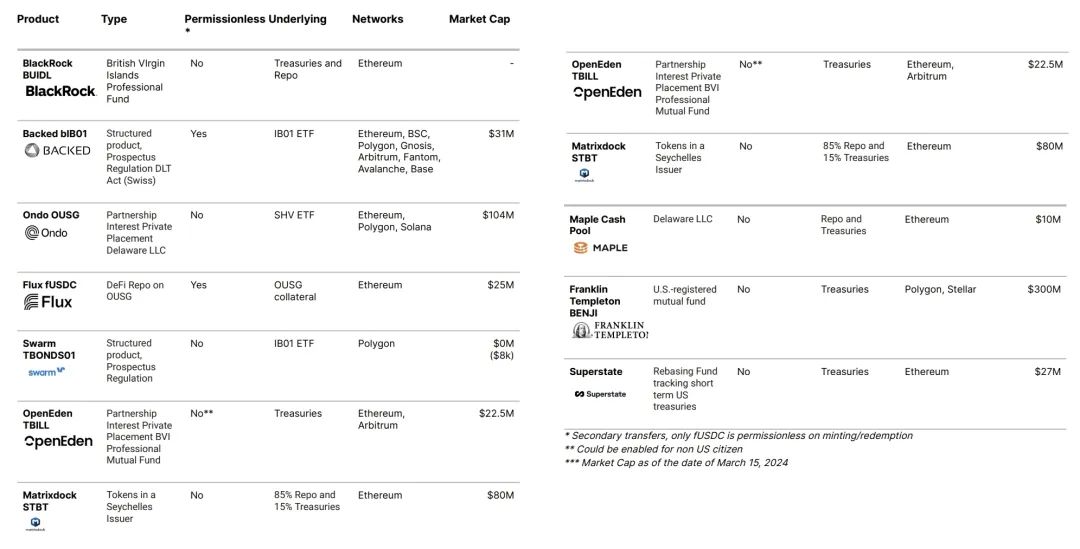
(Overview of BUIDL, BlackRock USD Institutional Digital Liquidity Fund, Ltd)
2.2 Who Is BUIDL Suitable For?
With its strong compliance framework as a “security” and its status as a permissioned ERC-20 token, BUIDL ensures high levels of asset security:
(1) Security of underlying assets: Only one counterparty risk (BlackRock); bankruptcy-remote SPV structure; bank-grade compliant custody of underlying assets.
(2) On-chain asset security: Strict KYC-based access controls; SEC-compliant trading venue access; partnerships with institutional-grade crypto custodians.
Setting aside traditional finance use cases, under such a robust compliance setup, BUIDL establishes an institutional-grade collateral layer (Collateral Layer) for crypto assets—including treasuries of stablecoin issuers, DeFi protocols, L2s, etc.—delivering secure and steady yield generation.
For example, if Tether—the issuer of USDT—were to deploy most of its treasury into the BUIDL fund, it could resolve its biggest compliance challenge: lack of transparency in underlying assets. If Circle’s reserves were also managed by BlackRock, that would be far more credible than Tether issuing periodic audit reports.
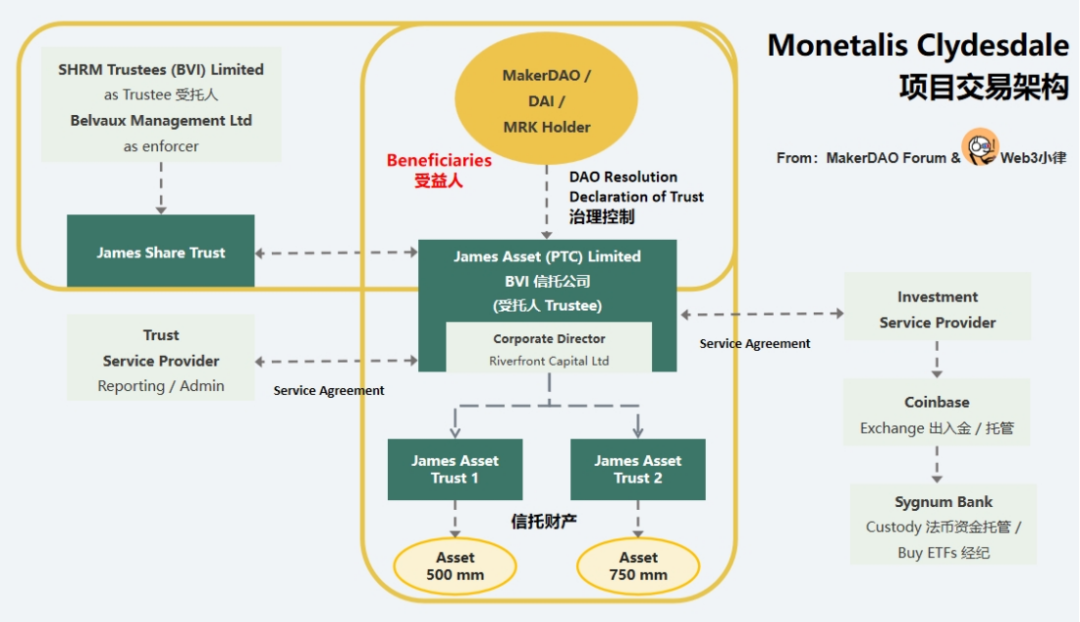
Similarly, MakerDAO previously spent over $1 million building a complex procurement path for BlackRock’s Treasury ETFs. Now, all MakerDAO needs to do is open a qualified investor account with Securitize—achieving safe, convenient, and risk-free access.
3. USDC Liquidity for Tokenized Funds
3.1 Achieving BUIDL Liquidity via USDC
As mentioned earlier, due to securities regulations, BUIDL tokens are restricted to transfers among “whitelisted” investors, making 24/7/365 subscription/redemption insufficient for broader liquidity.
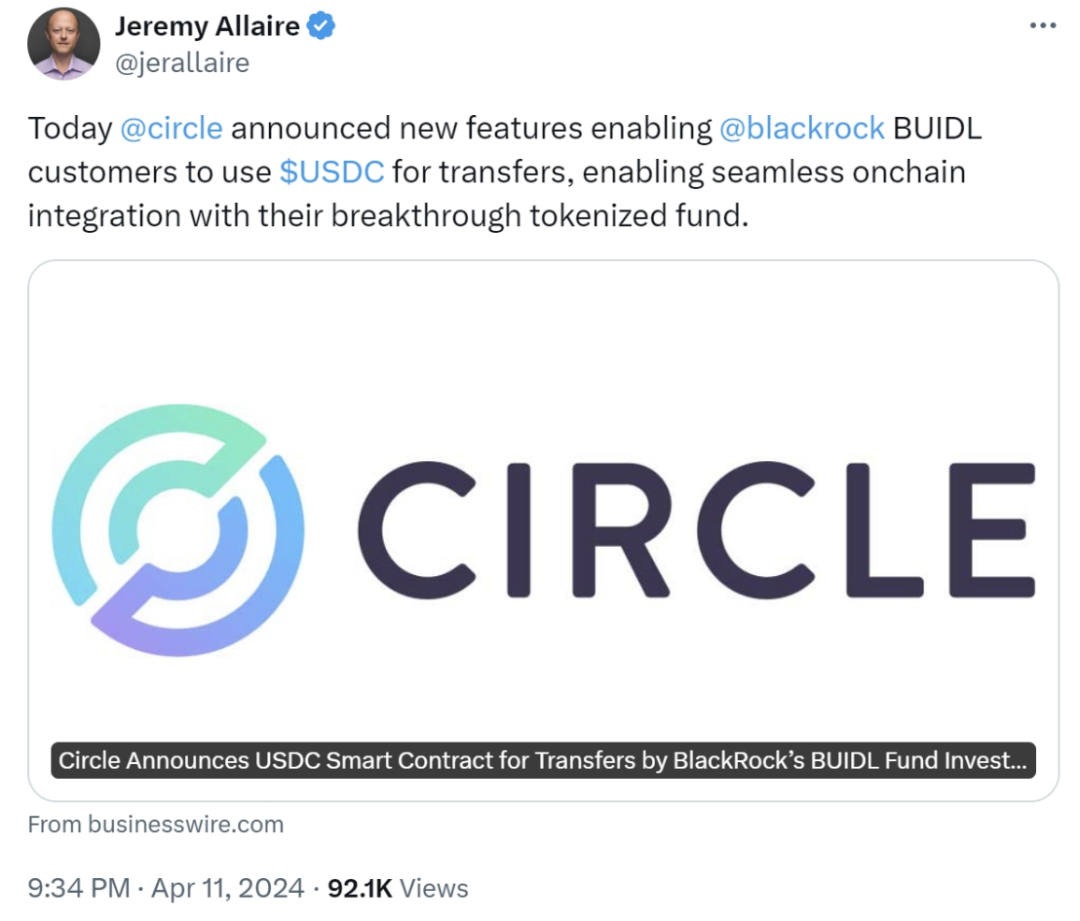
To address this, BlackRock and Circle have collaborated to establish a smart contract-controlled USDC liquidity pool, enabling 24/7/365 real-time 1:1 exchange between BUIDL and USDC.
 (twitter.com/jerallaire/status/1778416442691428778)
Jeremy Allaire, co-founder and CEO of Circle, stated on April 11: "Tokenization of real-world assets is a rapidly emerging product category that addresses investor pain points. USDC enables fast transfer of tokenized assets, reducing costs and friction. We’re excited to offer this functionality to BUIDL investors and demonstrate the core benefits of blockchain transactions—speed, transparency, and efficiency."
This is a landmark move that opens a new pathway for RWA assets into DeFi.
3.2 ONDO Finance’s Attempt at BUIDL Liquidity
ONDO Finance, the leading RWA Treasury project, added $95 million worth of BUIDL tokens to its tokenized fund OUSG on March 27. Combined with Circle’s USDC liquidity pool for BUIDL, this move solves its users’ biggest pain point—T+2 redemption delays—enabling 24/7/365 real-time subscription and redemption for Ondo OUSG shares.
This marks the first large-scale adoption of BUIDL by a DeFi protocol.
(Introducing Instant, 24/7/365 Subscriptions and Redemptions; Shifting OUSG Funds into BlackRock’s BUIDL)
3.3 The Future of BUIDL
After Circle opened the door from BUIDL to DeFi, it clearly presents a crucial capital management option for participants in the crypto market.
In an interview with Bankless, Securitize CEO Carlos Domingo noted that the BUIDL fund is particularly suitable for institutional-level market participants, such as:
(1) Web3 projects that have raised substantial funding. These projects often hold large amounts of off-chain capital and can achieve seamless on-chain/off-chain integration via BUIDL—representing a multi-billion-dollar opportunity;
(2) Stablecoin issuers. They inherently require asset allocation solutions. For instance, Circle’s reserves are already managed by BlackRock. Similarly, ONDO Finance allocates OUSG funds into BUIDL, and Mountain Protocol plans to do the same—creating a hundred-billion-dollar-scale opportunity;
(3) Stablecoins themselves. Current stablecoins like USDC and USDT do not earn yield. Replacing non-yielding stablecoins with yield-bearing alternatives that remain tradable after wrapping opens vast possibilities—given the stablecoin market itself is worth hundreds of billions of dollars.
For example, ONDO Finance’s USDY stablecoin is already pursuing this model, with deployments on Aptos and Solana, delivering safety, yield, and liquidity simultaneously.
4. The Vast Potential of RWA Tokenization
In an interview with Bloomberg, BlackRock CEO Larry Fink explicitly stated that asset tokenization will be the company’s next strategic direction: "We believe tokenization of financial assets is the next trend—meaning every stock and bond will be recorded on a single ledger."
While Franklin Templeton has already launched tokenized funds on public blockchains, BlackRock’s entry truly opens the floodgates from traditional finance into the RWA ecosystem. Especially after Circle provided a USDC liquidity pool for BUIDL, the door to DeFi composability has been unlocked.
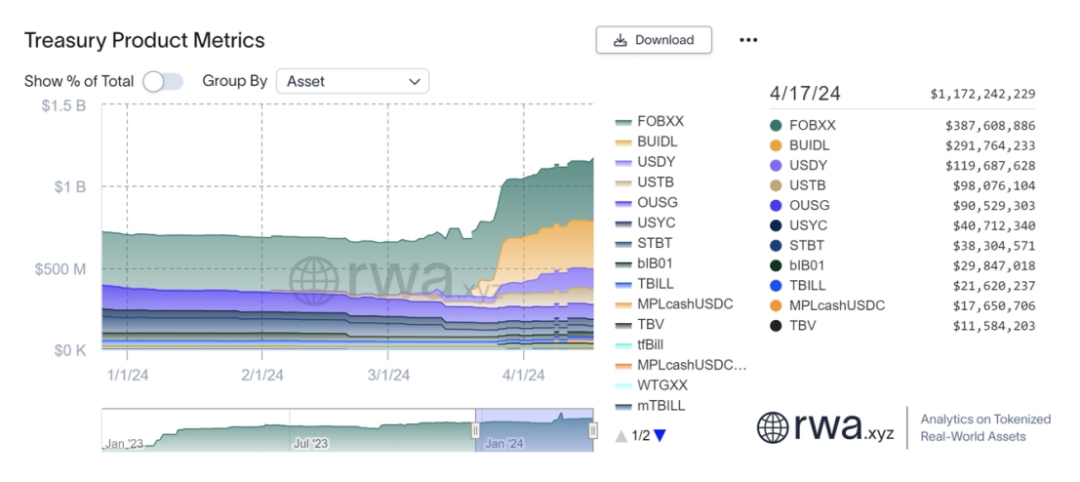
The most immediate impact: BUIDL establishes an institutional-grade collateral layer (Collateral Layer) for crypto assets, delivering both safety and stable yield. We’ve already seen this realized in the case of ONDO Finance, enabling 24/7/365 real-time subscription and redemption for on-chain fund products.
(app.rwa.xyz/treasuries)
Finally, borrowing from the recent BIS report titled *Finternet: the Financial System for the Future*:
"Despite decades of digital advancement transforming daily life, much of the financial system remains stuck in the past. Many transactions still take days to settle, relying on time-consuming clearing, messaging, and settlement systems—and even physical paper records. Improving the functioning of the financial system is thus a key public policy objective.
A blockchain-based Finternet will be the future of finance."
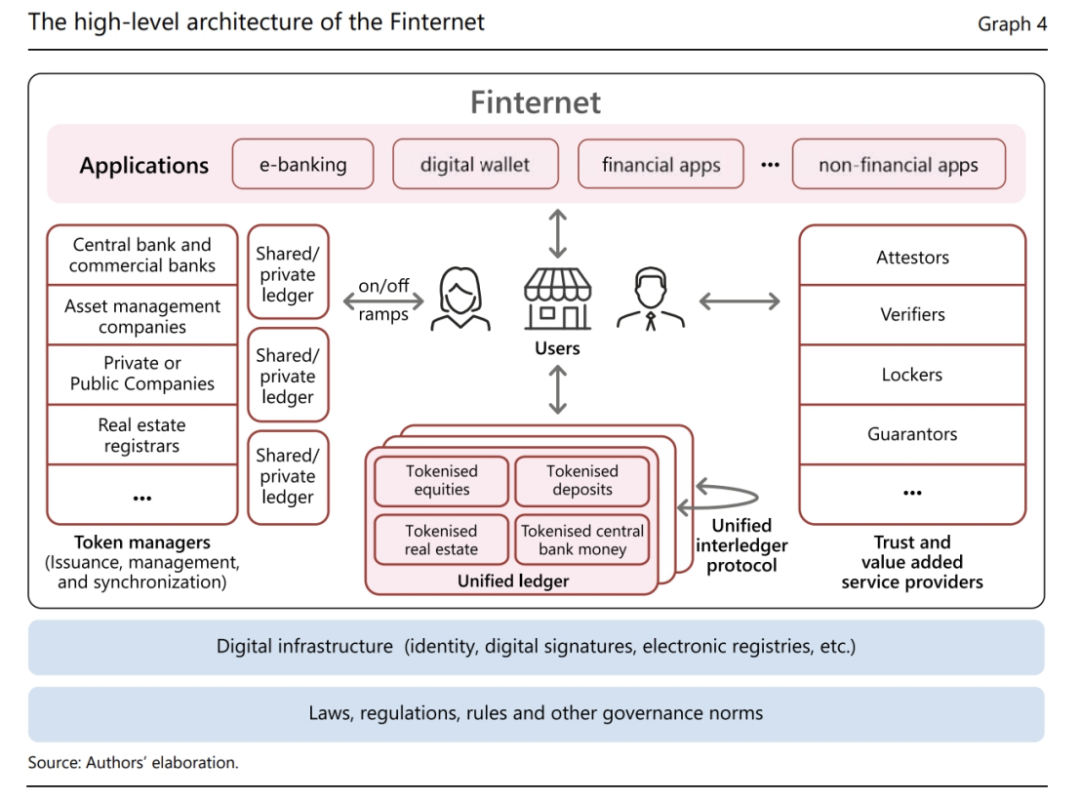
(Finternet: the Financial System for the Future)
Join TechFlow official community to stay tuned
Telegram:https://t.me/TechFlowDaily
X (Twitter):https://x.com/TechFlowPost
X (Twitter) EN:https://x.com/BlockFlow_News
 0xWillmfer











