








Web3 oligarchs are exploiting users: from tokenomics to pointomics
TechFlow Selected TechFlow Selected
Web3 oligarchs are exploiting users: from tokenomics to pointomics
It's time for Web3 degens to take notice of this exploitation.
 Navigating Web3 tides with focused insights
Preface
We have just experienced the fastest crypto cycle in history—one that transitioned from bear market to extreme bull market in less than two quarters. Bitcoin’s price surged from under $30,000 to an all-time high in record time. The key driver behind this surge was naturally the approval of numerous BTC ETFs against the macroeconomic backdrop of the Federal Reserve nearing the end of its tightening cycle, injecting massive new capital into the market. Amid this grand speculation, the Web3 world has quietly evolved: on one hand, new narratives keep emerging—from Ordinals to Bitcoin Layer 2, and then to Restaking—each creating yet another wealth myth; on the other hand, the core DNA of Web3 projects themselves is subtly changing. This is precisely the topic we aim to explore today: the so-called "magic flywheel" that Web3 projects once prided themselves on now appears to be shifting from Tokenomics to Pointomics. From my perspective, however, this shift doesn’t seem quite as promising.
First, let's clarify this concept. "Tokenomics" refers to the fusion of “Token” and “Economics,” meaning a project issues a blockchain-based token as its central asset and builds an economic model around it. Typically, such models serve three core purposes:
1. Incentivizing user behaviors beneficial to the project’s growth through token rewards, thereby promoting development;
2. Designing token distribution ratios to meet the project’s fundraising needs;
3. Assigning governance rights to tokens to achieve a relatively decentralized co-governance mechanism between users and the project team.
The success or failure of most Web3 projects typically hinges on whether the first objective can be achieved. A well-designed tokenomics model can sustainably incentivize core user activities with stable returns over a long period, while keeping maintenance costs low for the project team. For top performers among them, we often say they possess a positive-feedback flywheel—an engine that continuously draws energy to enable cold starts and drive growth.
"Pointomics," a term coined by me, refers to an economic model centered not on tokens but on Loyalty Points. It emphasizes incentivizing key user actions to boost protocol growth. Its design pattern resembles the incentive components within traditional tokenomics—but replaces the blockchain-native token with a digital point (commonly known as a Loyalty Point) stored on the project’s centralized servers.
Recently, it's become evident that many of the hottest new Web3 projects have opted for Pointomics over Tokenomics during their launch phases—and these projects often show strong performance metrics. We can easily illustrate this trend using representative data from leading projects such as Blast (a prominent Ethereum Layer 2), EigenLayer, and EtherFi in the Restaking space. All three rely heavily on Loyalty Points as their core flywheel, and both their total value locked (TVL) and growth rates significantly outpace those of projects launched with traditional token-based incentives.
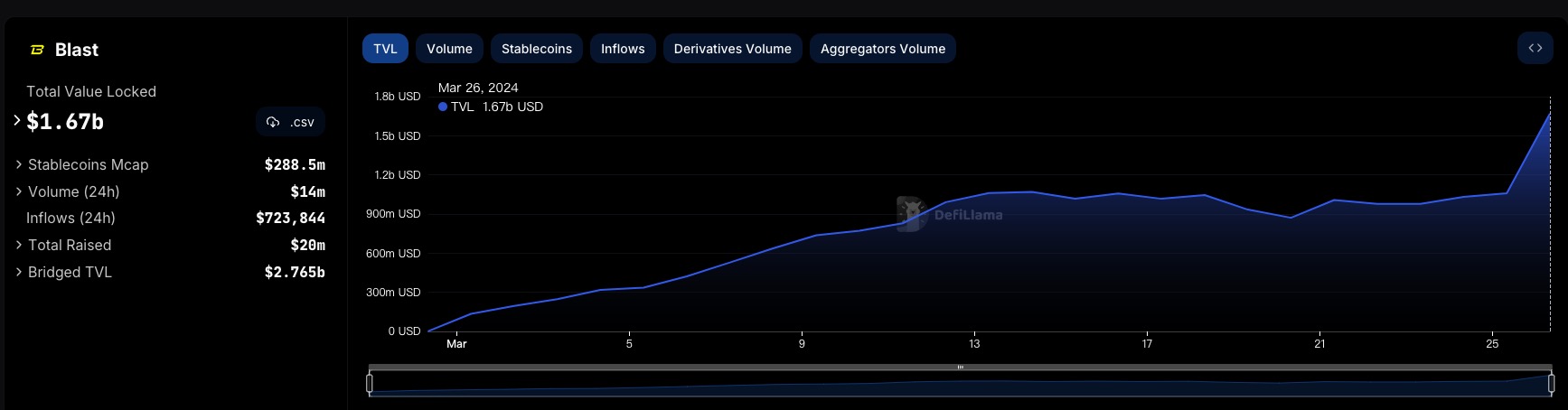
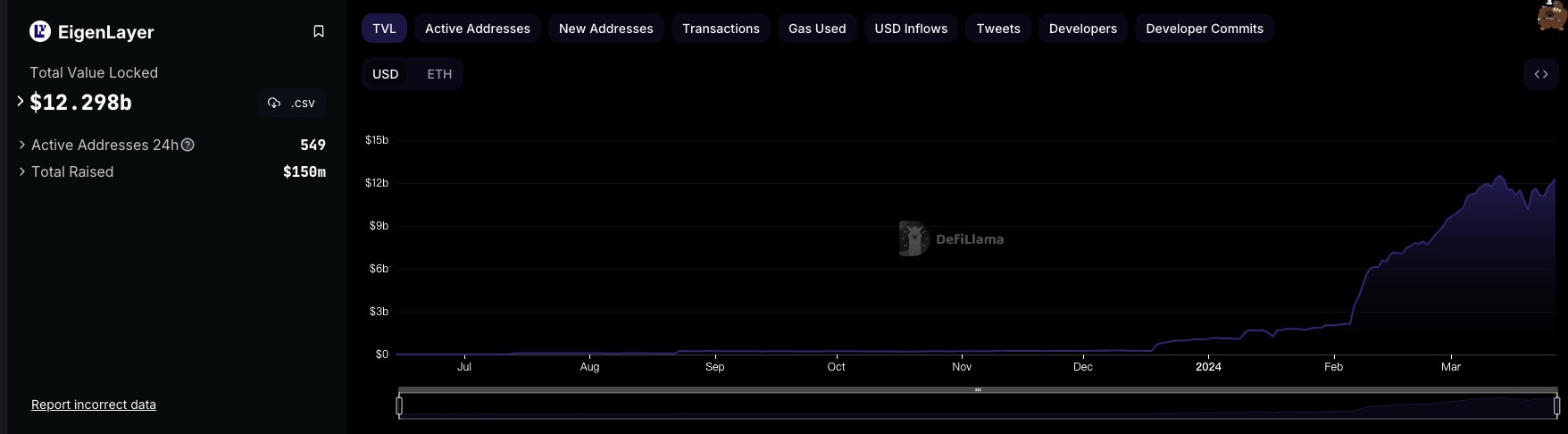
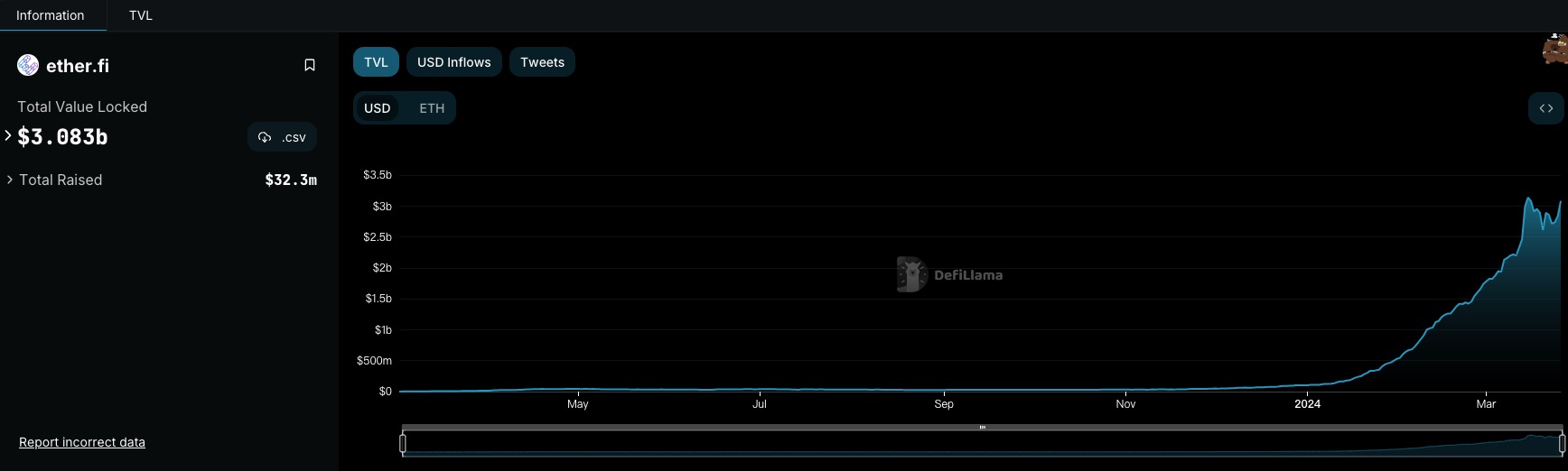
Can we therefore conclude that Web3’s new flywheel has shifted from Tokenomics to Pointomics? I believe it's too early to make such a judgment.
Pointomics: A Reluctant Choice Born in the Bear Market
First and foremost, I argue that replacing tokens with centralized Loyalty Points as the core incentive system—what we call Pointomics—is not a sufficient condition for Web3 project success. Rather, it emerged as a necessary compromise during the bear market.
Let us examine the differences between Pointomics and Tokenomics. While both aim for similar outcomes, there are fundamental distinctions:
1. **Ambiguous Rights**: Unlike Tokenomics, projects using Loyalty Points as their primary flywheel rarely offer clear value commitments. Instead, they provide vague soft promises—such as potential airdrops or unspecified boosting effects—which are uncommon in token-driven models. Since tokens are publicly tradable from the outset, their market price reflects speculative value early on, giving users concrete reference points. With Points, no such transparency exists.
2. **Opaque Incentive Mechanisms**: Many project teams do not fully disclose how Loyalty Points are calculated. Because these points reside on centralized servers, the entire incentive mechanism becomes a black box to users. They see only a number without understanding how it was derived or whether the process is fair. In contrast, Tokenomics relies on smart contracts, ensuring full transparency and enabling users to verify reward calculations independently.
3. **Illiquid Rewards**: Users cannot trade Loyalty Points directly. To realize any gains, they must wait for the project team to fulfill its soft promises—a process that is often prolonged and uncertain. Under Tokenomics, rewards are distributed in tradable tokens, empowering users to exit at will. This liquidity also pressures project teams to continuously improve their offerings to retain users.
This setup hardly seems ideal. So why has it gained traction? I believe it stems from project teams’ need to reduce operational costs during the bear market. Looking back a year ago, Blur and Friend.tech were breakout hits—Blur being an NFT marketplace and Friend.tech a decentralized social platform. Both diverged from the norm by using centralized points to incentivize user engagement, achieving notable success. These projects essentially established the blueprint for today’s Pointomics paradigm.
Their success can be attributed partly to excellent execution and design—but more importantly, to the prevailing bear market conditions. At that time, market liquidity and user purchasing power were low. Distributing actual tokens would have created significant downward pressure, increasing the cost of maintaining attractive yields. Pointomics offered a workaround: by deferring tangible rewards until after successful launch, teams avoided immediate valuation and treasury management pressures. This reduced early-stage operational burdens—but came at the expense of user interests, dampening participation incentives. As markets rapidly entered a new bull phase, renewed user enthusiasm and willingness to buy into projects allowed Pointomics to persist with apparent success. However, treating Pointomics as a universal recipe for success is reckless. When the ecosystem becomes saturated with unredeemed, centralized points, disillusioned users may ultimately turn against the crypto space altogether.
The Intrinsic Value of Loyalty Points Is Project Team Credibility
Next, we must ask: what makes a Pointomics model succeed? What gives Loyalty Points their intrinsic value? My answer: the credibility of the project team. As discussed earlier, projects using Pointomics usually avoid defining precise rights tied to their points, offering only vague assurances instead. This ambiguity grants teams greater flexibility—they can dynamically adjust redemption terms based on project performance, balancing cost and effectiveness.
Under these circumstances, user motivation hinges entirely on trust—that the team will eventually deliver meaningful rewards. The strength of this trust determines whether Pointomics successfully drives engagement. But credibility is closely tied to team background: projects backed by elite VCs, supported by major ecosystems, or led by renowned founders inherently command more trust. In contrast, degenerate or community-driven grassroots projects typically lack such advantages at launch. This explains why successful Pointomics adopters tend to be large Web3 incumbents—especially evident in the Restaking sector.
Therefore, compared to direct token incentives, Pointomics carries higher trust requirements and favors monopolistic players. Yet this also equips dominant players with a convenient tool to exploit users under the guise of flexibility.
Web3 Oligarchs Exploit Users via Loyalty Points—Gaining Flexibility at the Cost of Network Effects
How exactly does this exploitation manifest? There are three main aspects:
1. **Time Cost**: By strategically delaying real rewards into an indefinite future—and given that TVL remains a key metric—projects incentivize capital deposits. Users must lock assets to earn potential points, increasing their time commitment. Until concrete redemption terms are announced, users remain trapped in anticipation, and the longer they wait, the harder it becomes to exit.
2. **Opportunity Cost**: During bull markets, liquid capital is crucial—alpha opportunities abound and are relatively easy to capture. Funds locked into Point-earning activities face high opportunity costs. Imagine allocating 10 ETH to Project A and earning a steady 15% APY, versus locking the same amount into Project B for uncertain point rewards—only to find later that the payout amounts to just 1%. This tragedy recently played out within the EtherFi community.
3. **High Risk, Low Potential Return**: Early-stage projects are fragile, especially in Web3. We’ve seen countless high-profile projects amass huge TVLs overnight, only to collapse due to smart contract bugs or operational errors—with early adopters bearing the brunt. These users face disproportionately high risks. Meanwhile, thanks to the flexibility granted by Pointomics, project teams can discard early supporters once the project stabilizes—they’ve served their purpose and become liabilities. If the project fails to gain traction, teams may further minimize payouts to cut costs. Thus, for users, participating in such schemes becomes a dangerous gamble: high risk, low upside.
But is this exploitative model perfect for projects? No—it comes at a steep price: the loss of network effects. The core values of Web3 are decentralization, co-governance, and transparency. By transforming closed databases into open, transparent platforms via blockchain, and leveraging fair incentive mechanisms (usually tokens), the collective power of communities has built miracles. The key ingredient? Network effects. Relying on centralized Loyalty Points closes off the entire incentive system—a step backward, and a disregard for the very essence of Web3. I assert that any project relying solely on Pointomics, unless it successfully transitions back to Tokenomics in a way that satisfies users, will never cultivate a vibrant community or a thriving ecosystem. That would be an even greater loss.
Granting Liquidity to Web3 Loyalty Points Is Crucial—and Inevitable
Has nothing changed? I believe the crypto community has already noticed this issue and begun acting. The root problem lies in the centralized nature of Loyalty Points, which strips them of liquidity and transparency, leaving users powerless. Therefore, finding ways to inject liquidity into these points is both compelling and urgent. Unlike most Web2 loyalty programs, many key user actions in Web3 occur on-chain—meaning they are public and verifiable. This opens the door for innovative solutions: using on-chain proxies to tokenize off-chain points, something nearly impossible in the Web2 world.
We’re already seeing interesting projects tackle this challenge: WhaleMarkets, Michi Protocol, and Depoint SubDAO. On WhaleMarkets’ Point Marketplace, we observe active trading of accounts accumulating point rewards. Michi Protocol even won an award at ETH Denver Hackathon—proof that the pain point is real and the market potential substantial. Broadly speaking, these initiatives fall into two categories:
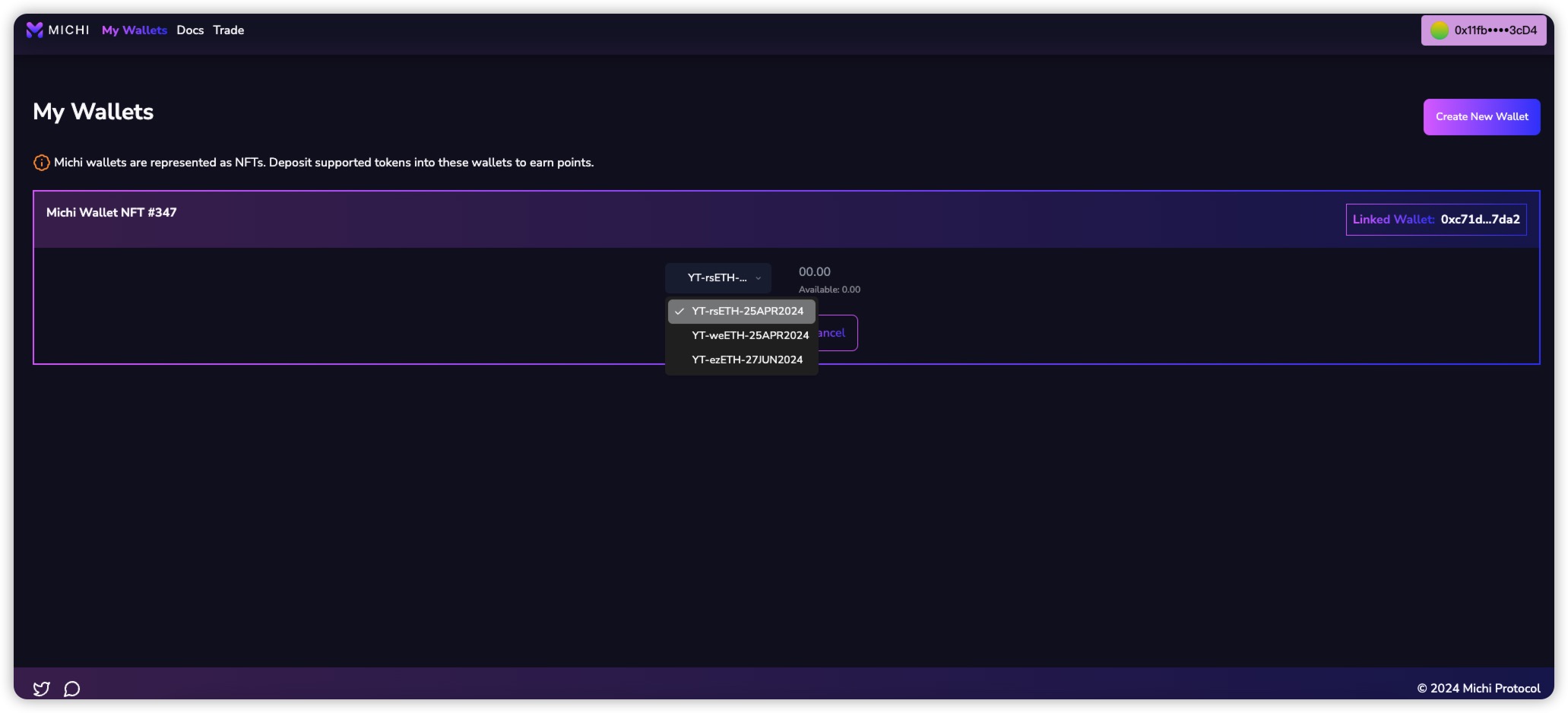
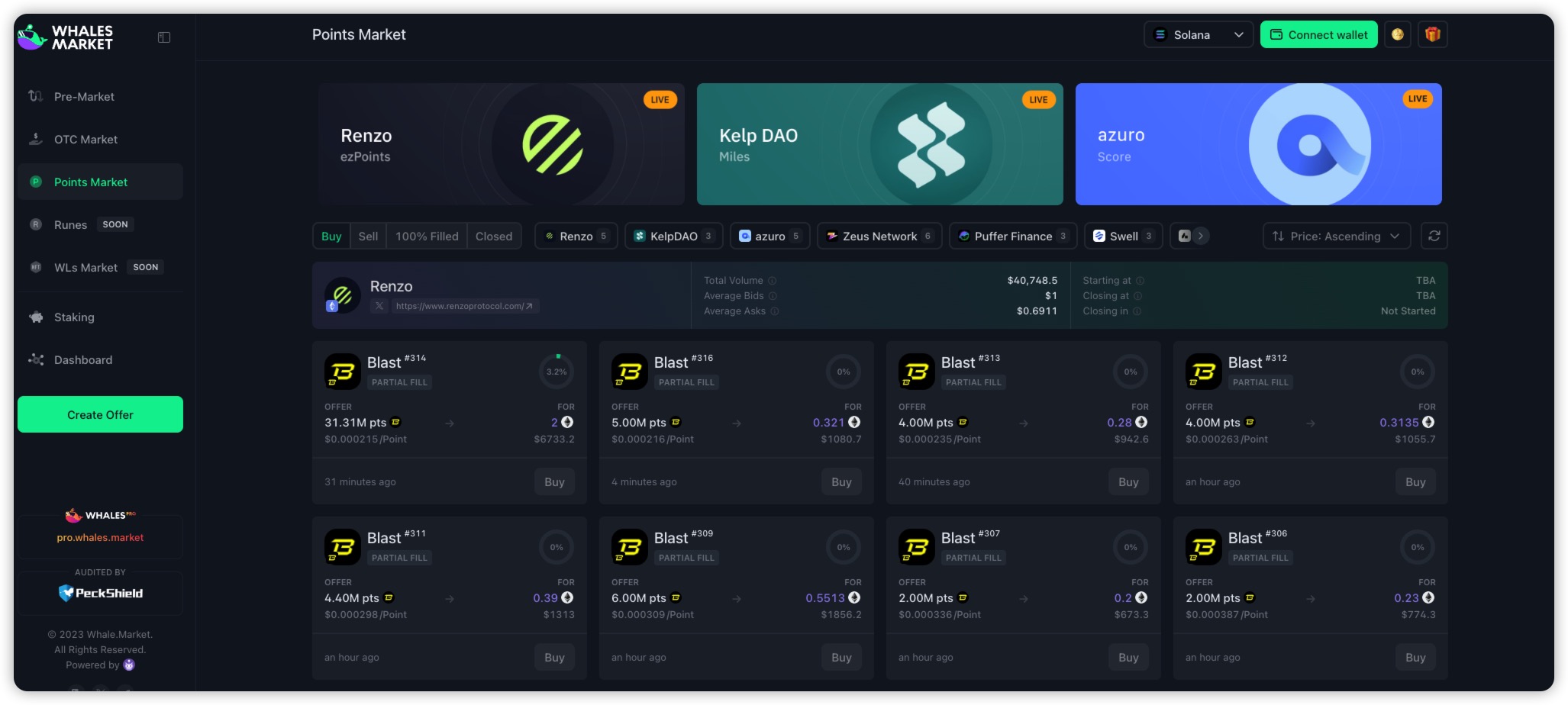 1. Creating an on-chain proxy (e.g., a dedicated wallet), then representing ownership of this account as an NFT. This allows the future收益 rights of the account to be tokenized on-chain. Buyers gain access to all future rewards associated with the account, while sellers can monetize expected earnings upfront, reducing time and opportunity costs. Examples include WhaleMarkets and Michi Protocol. However, this approach has limitations: NFTs generally suffer from poor liquidity, making robust secondary markets difficult to form. Moreover, financial innovation around NFTs remains underdeveloped, limiting broader network effects.
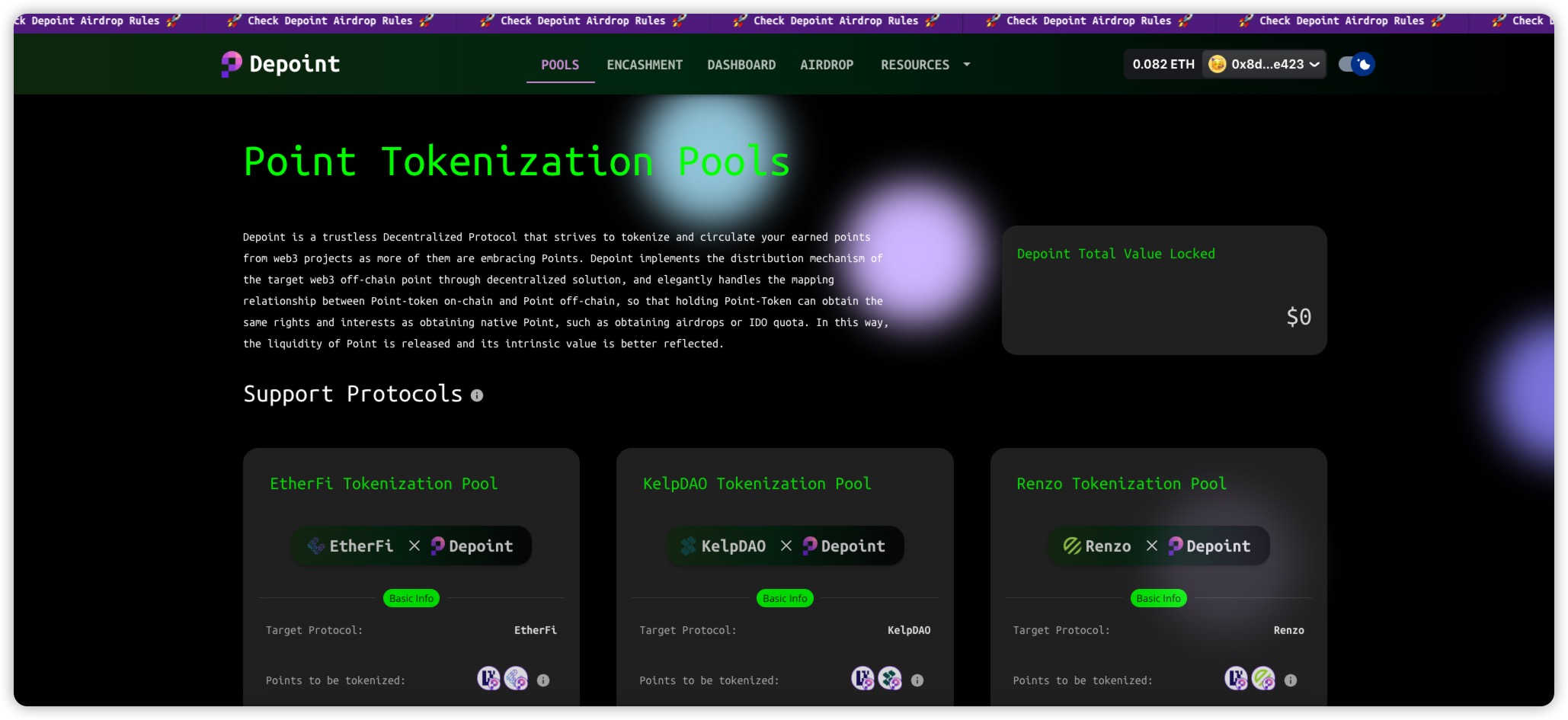
2. Similar in spirit, but instead directly tokenizes off-chain Loyalty Points by issuing ERC-20 tokens that map 1:1 to point balances. Through specific mechanisms, the value of these tokens stays pegged to the underlying points, so holding the token effectively grants claim over future point redemptions. Depoint SubDAO exemplifies this path. Compared to the NFT-based model, this enables better secondary market liquidity and greater potential for financial innovation. However, accurately mapping value between off-chain points and on-chain tokens becomes critical. While many targeted user behaviors (like staking or bridging) are on-chain and easily trackable, others—such as following X accounts or joining Discord—are off-chain, posing challenges for comprehensive coverage.
In conclusion, it's time for Web3 degens to take notice of this exploitation. After relentless efforts, we reclaimed ownership of the internet and escaped the relentless surveillance and extraction of Web2 giants. Let us not now surrender the very foundation that makes Web3 proud.
Join TechFlow official community to stay tuned
Telegram:https://t.me/TechFlowDaily
X (Twitter):https://x.com/TechFlowPost
X (Twitter) EN:https://x.com/BlockFlow_News
 @web3_mario











