








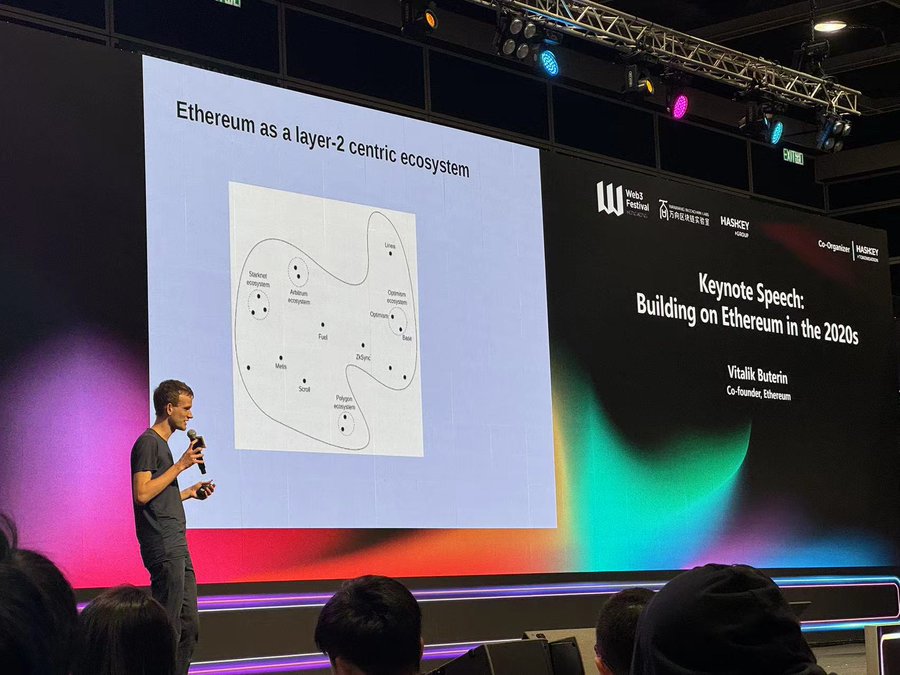
Ethereum is pushing the limits of cryptography
TechFlow Selected TechFlow Selected
Ethereum is pushing the limits of cryptography
All blockchains are rooted in cryptography.
 Navigating Web3 tides with focused insights
Author: 0x_Todd
Vitalik made a low-key appearance today at the Wanxiang HashKey Hong Kong Summit. True to form, V God delivered a crisp and straightforward talk—no fluff, just straight-up $ETH insights, laid out clearly. Here’s my take based on his presentation.
All blockchains are rooted in cryptography—indeed, cryptography is the true foundation. In recent years, the theoretical frontier of cryptography has continued to advance. Ethereum’s $ETH current goal is to transform cutting-edge cryptographic theory into engineering practice.
Developers know well that academic research—especially the most advanced—is often challenging to apply directly in industry, and cryptography is no exception.
The key areas of cryptographic advancement currently attracting Ethereum’s attention include:
-
ZK-SNARKs
-
2PC, MPC, FHE
-
Aggregate signatures
-
Improving P2P networks
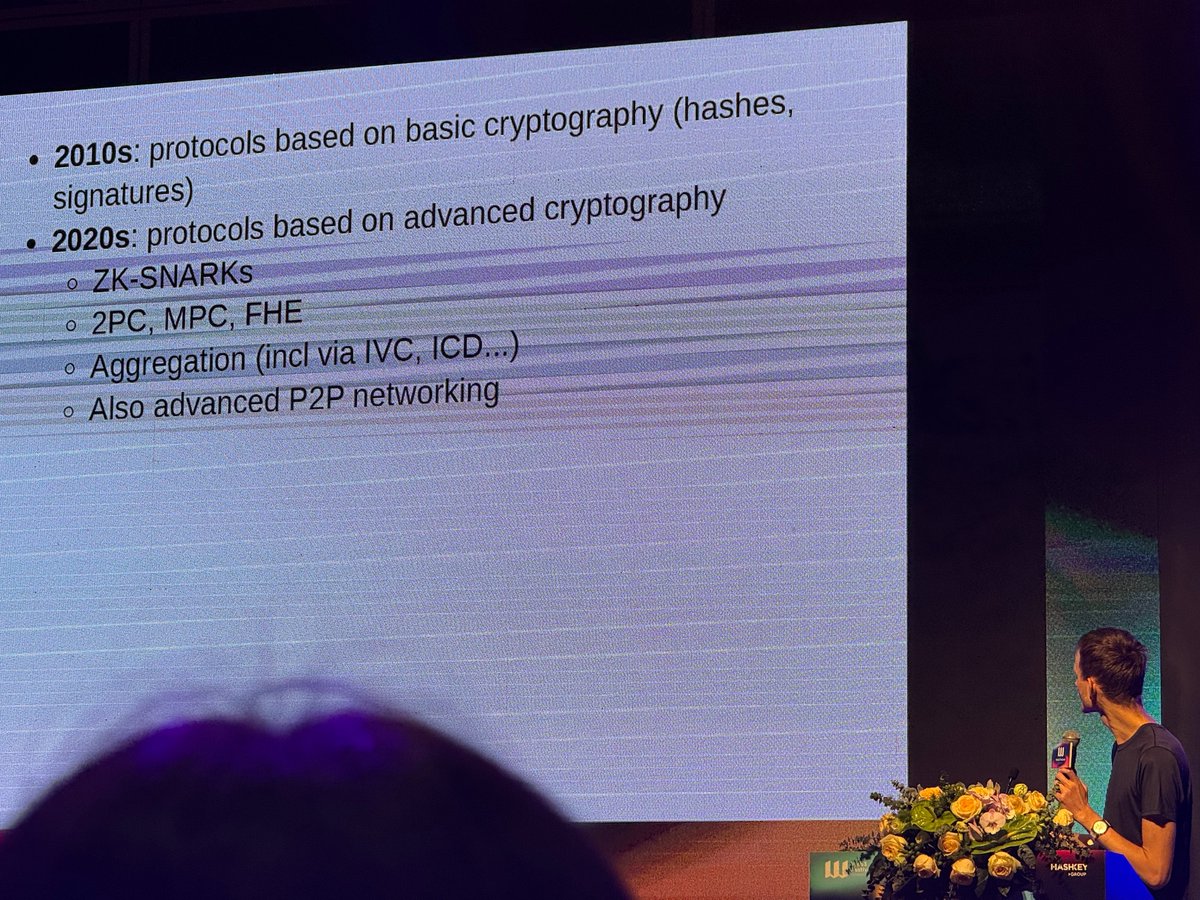
For example, aggregate signatures—Bitcoin already implemented something similar with its Schnorr upgrade. Ethereum’s preferred BLS-based aggregation offers different advantages compared to Schnorr, enabling multiple signatures to be smoothly combined into one.
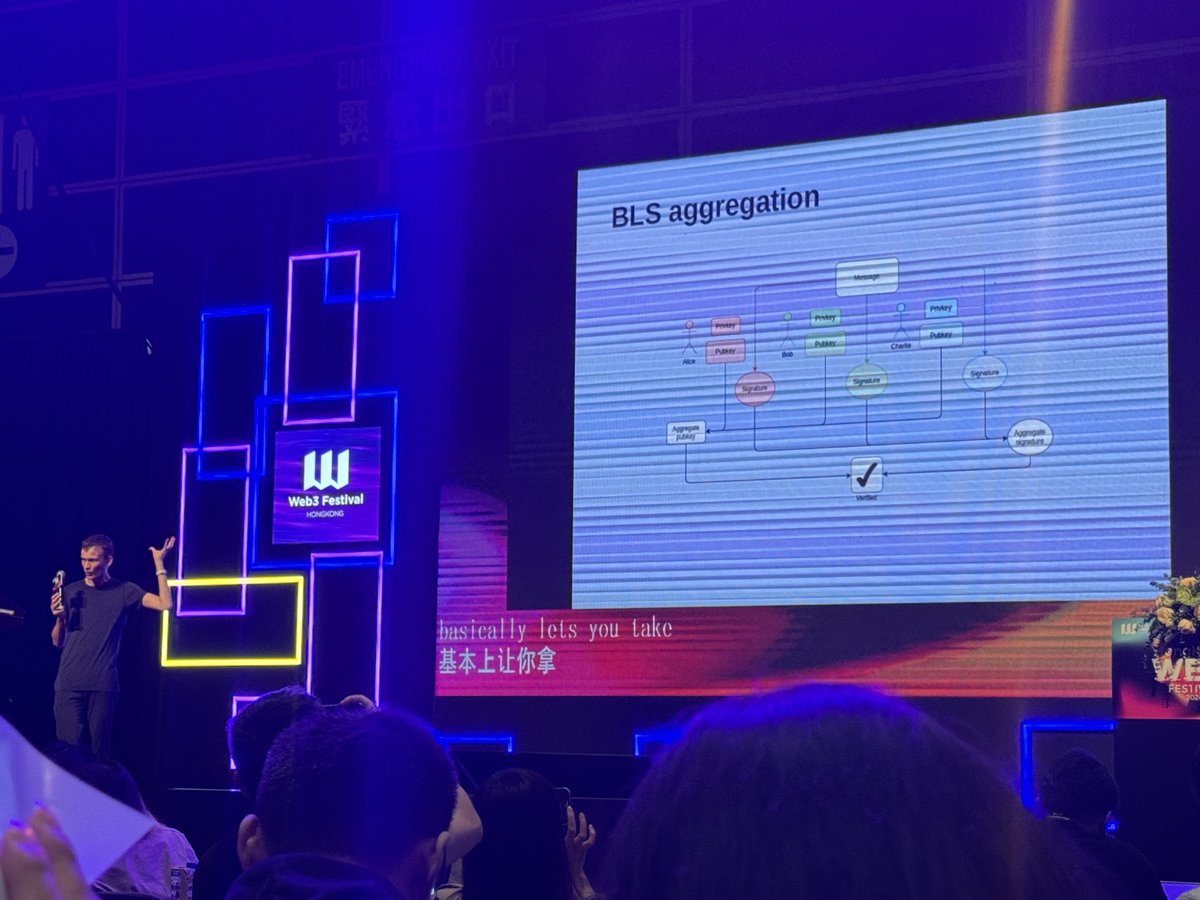
A single cryptographic breakthrough can translate into real-world benefits such as:
-
Greater blockchain privacy (multi-signature schemes help protect user privacy)
-
Reduced gas fees (aggregated signatures take up less space)
-
Lower hardware requirements (easier verification)
Additionally, V God highlighted two critical factors for bridging the gap from “academic theory → technical implementation.”
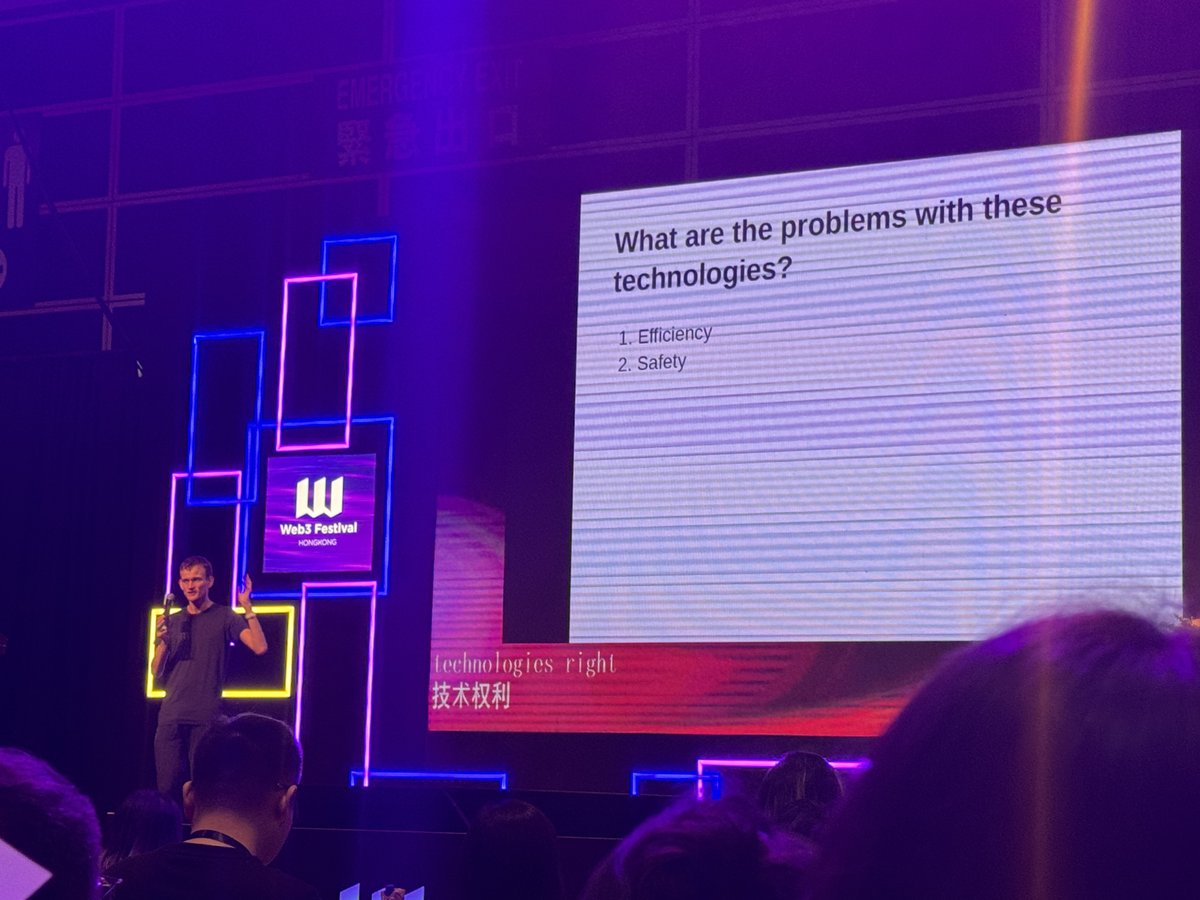
First: Efficiency
A practical example: Ethereum mainnet produces blocks every 12 seconds, but generating a ZK-SNARK proof currently takes at least 20 minutes.
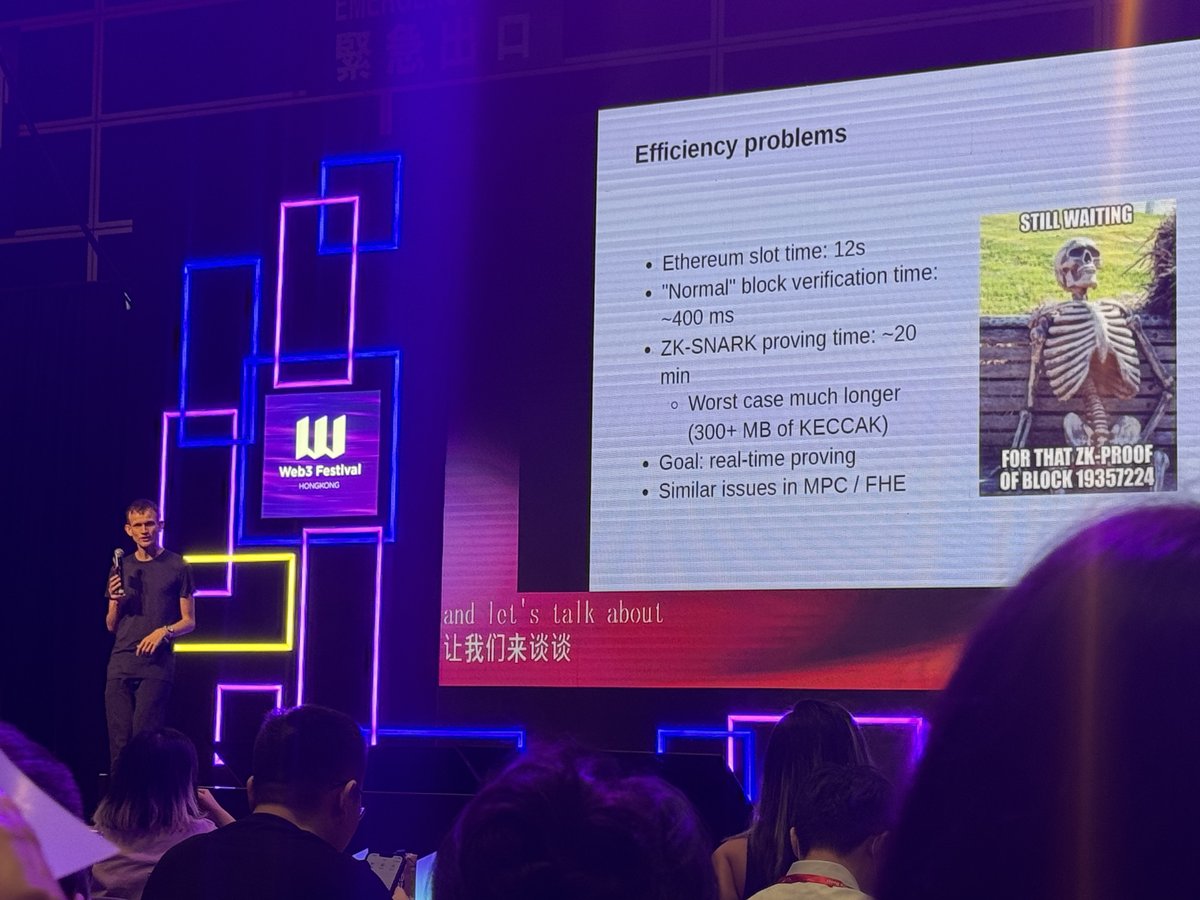
If lightweight ZK-proof solutions were available—enabling full ZK validation for every block—Ethereum would become significantly more private, secure, censorship-resistant, and potentially even faster.
Second: Security
Humans make mistakes.
No one can guarantee their code is bug-free.
Currently, debugging relies on manual review—such as by a “security council.”
But in the future, perhaps we can leverage multi-provers,
And further ahead, maybe even AI.
With both security and efficiency addressed, Ethereum aims to integrate an ever-growing range of cryptographic innovations—pushing toward the very limits of what cryptography can achieve.
Listening to this was truly inspiring. What drives ETH—and indeed all blockchains forward—is truly cutting-edge technology.
Nowadays, every public chain ranked below ETH is desperately benchmarking against Ethereum, trying to find answers in this leading competitor.
But Ethereum itself is finding answers in cryptography. This is the real difference between first-tier and second-tier blockchains.
Join TechFlow official community to stay tuned
Telegram:https://t.me/TechFlowDaily
X (Twitter):https://x.com/TechFlowPost
X (Twitter) EN:https://x.com/BlockFlow_News
 @0x_Todd











