








Deep Dive into Zeus Network: Building a Native Communication Layer Between Solana and Bitcoin, Launching on Jupiter on April 4
TechFlow Selected TechFlow Selected
Deep Dive into Zeus Network: Building a Native Communication Layer Between Solana and Bitcoin, Launching on Jupiter on April 4
Zeus maintains an open mindset—though not cross-chain, it surpasses cross-chain, ultimately connecting all chains and making interoperability a fundamental capability.
 Navigating Web3 tides with focused insights
By TechFlow
The 2024 bull market belongs to Bitcoin and Solana. After the approval of spot Bitcoin ETFs, off-exchange capital inflows fueled a relentless rise in BTC, while BTC L2 projects began emerging within the crypto-native startup scene. Yet the bigger surprise in the crypto world has been the Solana ecosystem — from DePIN represented by Helium, AI led by BitTensor, to hardware and memes symbolized by Saga and Bonk. Solana has become a de facto independent ecosystem.
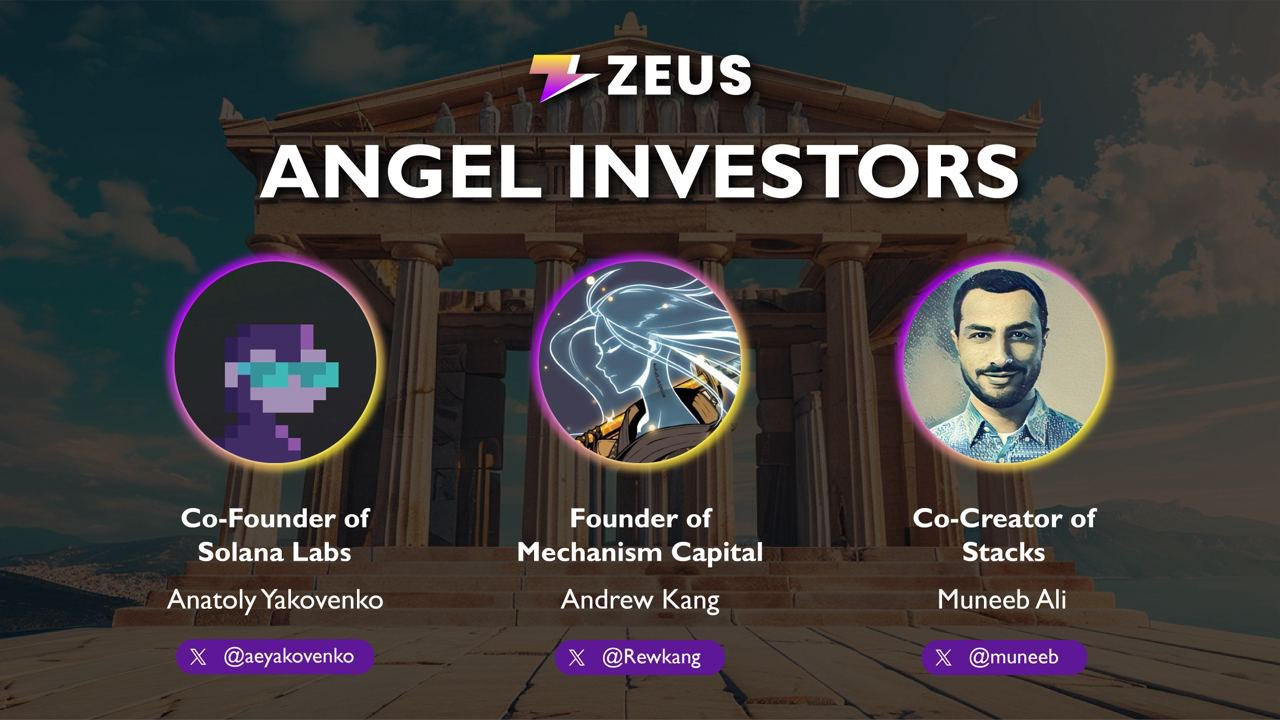
Jupiter, a key pillar of the Solana ecosystem, will launch Zeus Network on its Jupiter LFG Launchpad at 9 PM on April 4th—a significant step toward bridging the Solana and Bitcoin ecosystems. Zeus Network has attracted widespread attention due to backing from Solana co-founder Anatoly and the founder of Stacks, a major player in the Bitcoin ecosystem.
Prior to this, over 300,000 addresses have qualified for airdrops, including Jupiter Voters, zuPoint Holders, and Dapping Gang NFT holders—highlighting Zeus Network’s strong emphasis on both the Bitcoin and Solana ecosystems. Each group will receive rewards amounting to 1% of the total ZEUS token supply.
The significance lies in the long-overlooked connection between Solana and Bitcoin, as early efforts like WBTC and current BTC L2 trends have primarily focused on linking Bitcoin with EVM-based ecosystems, mostly through multi-sig bridges and rollups.
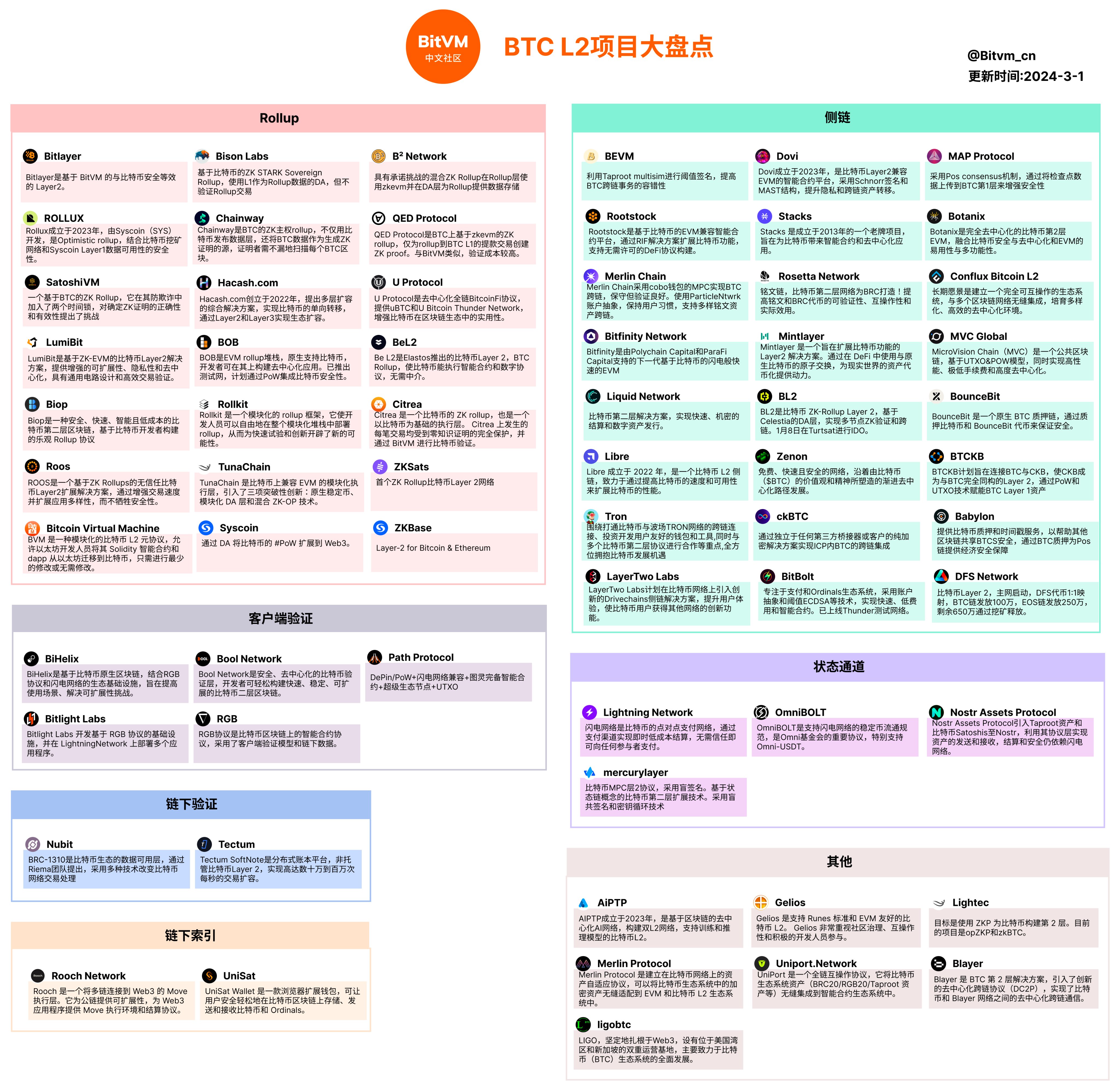
However, how to expand Bitcoin's capital potential securely while meeting real-world interoperability demands across chains has long been intentionally or unintentionally ignored. For example, creating a secure, bidirectional communication bridge between Solana and Bitcoin that can be extended to any public blockchain remains an open challenge.
Zeus was born from this vision. On March 9, 2024, Zeus Network secured funding from Solana co-founder Toly and the founder of Stacks, underscoring its strategic importance within the Solana ecosystem.
Decoding Zeus: A Communication Layer, Not a Cross-Chain Bridge
First, it's crucial to clarify: Zeus Network is a permissionless communication layer—not a conventional asset cross-chain bridge. It operates without transferring assets, offering superior security.
To the left: Solana. To the right: Bitcoin.
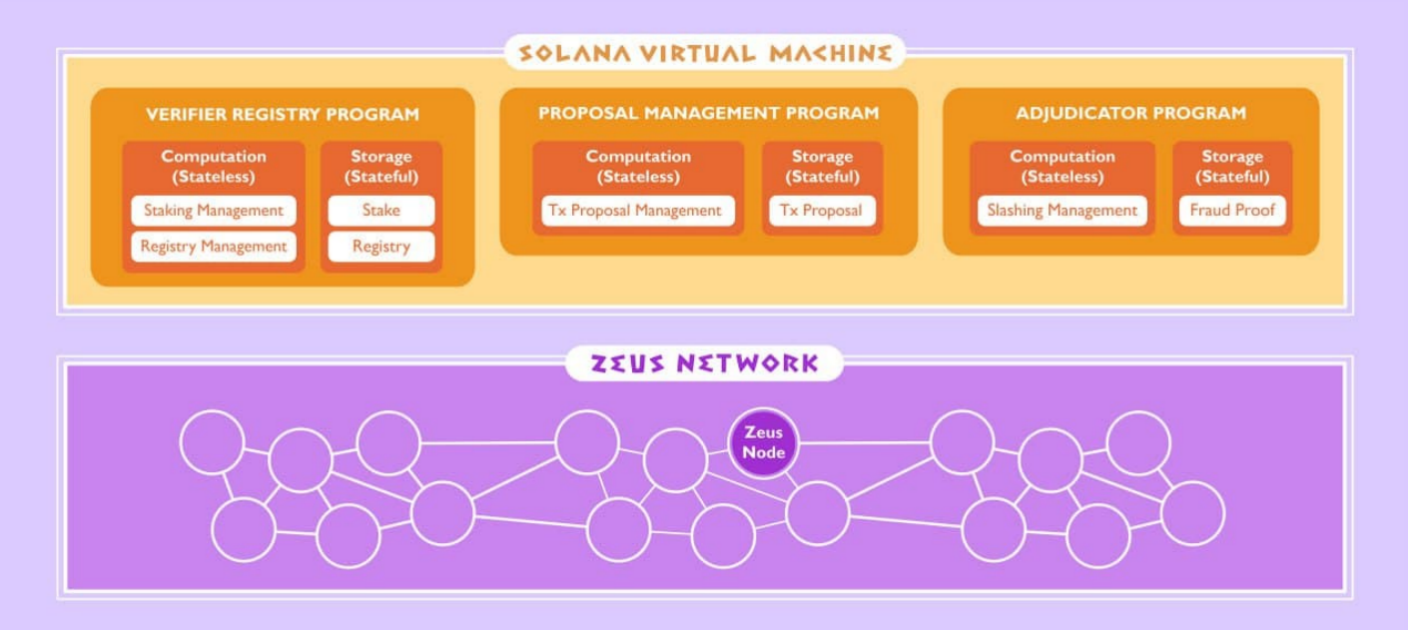
Zeus Network serves as a communication layer connecting Solana and Bitcoin. Backed by the Solana Virtual Machine (SVM), Zeus ensures node security and delivers high-performance transaction experiences.
Specifically, Zeus enables communication between cross-chain dApps, allowing liquidity to flow freely across networks and bringing interoperability to Bitcoin—unlocking access to its trillion-dollar market cap.
Take Apollo on Zeus Network: it issues zBTC, a 1:1 pegged asset to Bitcoin, linking BTC to the Solana network via a two-way peg (2WP) mechanism. This allows BTC to be locked on the Bitcoin chain while equivalent zBTC is minted and used on Solana.
In the future, anyone can issue their own assets on Zeus Network and seamlessly connect them to both Bitcoin and Solana ecosystems. Developing on Zeus is effectively developing for both chains simultaneously.
Technically, Zeus Network consists of Zeus Nodes and SVM (Solana Virtual Machine, analogous to EVM), adopting a "one main chain + N side chains" multichain architecture. This design leverages Solana’s efficiency to bring Bitcoin’s capital into the broader on-chain ecosystem.
Zeus Nodes handle service discovery, load balancing, API monitoring, configuration management, service governance, and fault tolerance—core functions ensuring network stability and performance.
Leveraging SVM, Zeus enables “develop once, deploy everywhere” functionality, unlocking trillions in Bitcoin liquidity and utilizing Solana’s powerful on-chain processing to build a censorship-resistant, cross-chain DeFi infrastructure.
As a communication layer, Zeus not only connects Solana and Bitcoin but also empowers developers to create innovative solutions and diverse applications. Developers can deploy dApps across blockchains seamlessly. Through Zeus, Bitcoin—whose circulating value exceeds one trillion dollars—can achieve true interoperability with Solana.
On one hand, Solana supports up to 50,000 TPS; on the other, BTC remains the most widely accepted digital asset. Their integration could break the current cycle of DeFi congestion and competition.
Beyond BTC L2: The Solana DeFi Revolution
Solana co-founder Toly once stated that Solana could serve as Layer 2 for all blockchains—a vision far broader than narrow BTC or ETH-focused L2s. With Ethereum’s upcoming Cancun upgrade, the battle between high-performance L1s and Ethereum L2s is about to intensify.
Anatoly explained: “Solana will be a high-performance Layer 2 for all blockchains, fundamentally different from EVM-based L2s. By connecting with other chains, Solana becomes the application layer, enabling a new wave of cross-chain products.”
From this perspective, Zeus’ integration of BTC represents a strategic offensive move. If value is defined by BTC’s native status, and speed by Solana’s consistent TPS above 3,000, their union positions Zeus uniquely in the market.
After Solana’s rebirth, defining the path forward for post-FTX DeFi has become a critical consensus for the ecosystem.
On March 9, 2024, Zeus Network raised an angel round from Solana co-founder Toly, Mechanism Capital founder Andrew Kang, and the founder of Stacks.
Zeus emphasizes both collaboration and operational precision. This includes deep partnerships with key Solana DeFi projects such as Jito, Jupiter, and Marginfi.
Coevolution with Solana DeFi projects.
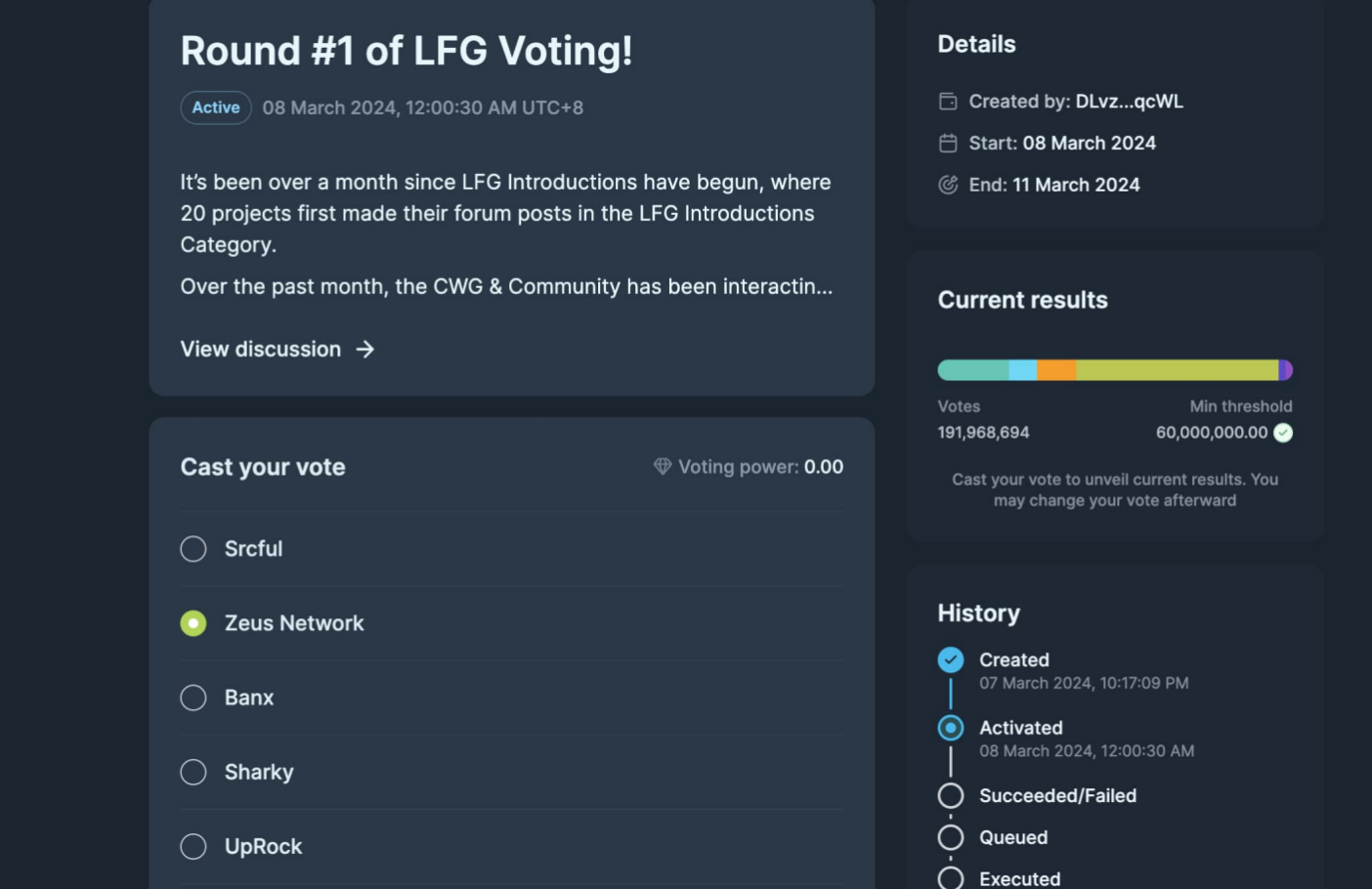
Notably, Zeus Network won over 50% of votes in Jupiter LFG’s project selection poll, becoming one of the first projects selected by Jupiter DAO for launch on April 4 at 9 PM SGT.
Additionally, Marginfi plans to launch YBX, a high-yield decentralized stablecoin backed by Solana-native LSTs, earning yields from Solana staking (~8%) and MEV capture—requiring users to use Jito’s MEV client—all of which are compatible with Zeus integration.
Moreover, Zeus’ own node staking mechanism prioritizes LSD assets such as SOL or mSOL, deeply embedding itself within the Solana ecosystem—a consistent strategic approach.
Operationally, Zeus adopts a user-centric model and actively promotes its flagship application, Apollo, to drive adoption and ecosystem growth.
Fine-grained operations are essential for sustainable growth.
For Zeus Network’s roadmap, major upgrades are planned by end of 2024, including node deployment, ZEUS token staking, and native BTC staking capabilities.
Decentralized Zeus nodes will ensure network operation, and Apollo will introduce native BTC staking. Key milestones include:
-
Q2 2024: Muses Upgrade
-
Deploy Zeus nodes;
-
Begin audit processes;
-
Launch APOLLO testnet v0.3 with tBTC deposit/withdrawal and zBTC custody;
-
-
Q3 2024: Gaia Upgrade
-
Introduce ZEUS token staking and native BTC staking;
-
Mainnet experiment with Schnorr and EdDSA threshold signatures;
-
Apollo mainnet supports BTC staking;
-
Zeus nodes support staking of SOL tokens.
-
Clearly, Zeus Network follows a dual-track strategy, gradually unifying the Bitcoin and Solana ecosystems while actively exploring native Bitcoin technology adoption.
Expanding the ecosystem: Bringing BTC into Solana
Beyond ecosystem, developer engagement, and operations, Zeus’ tokenomics stand out.
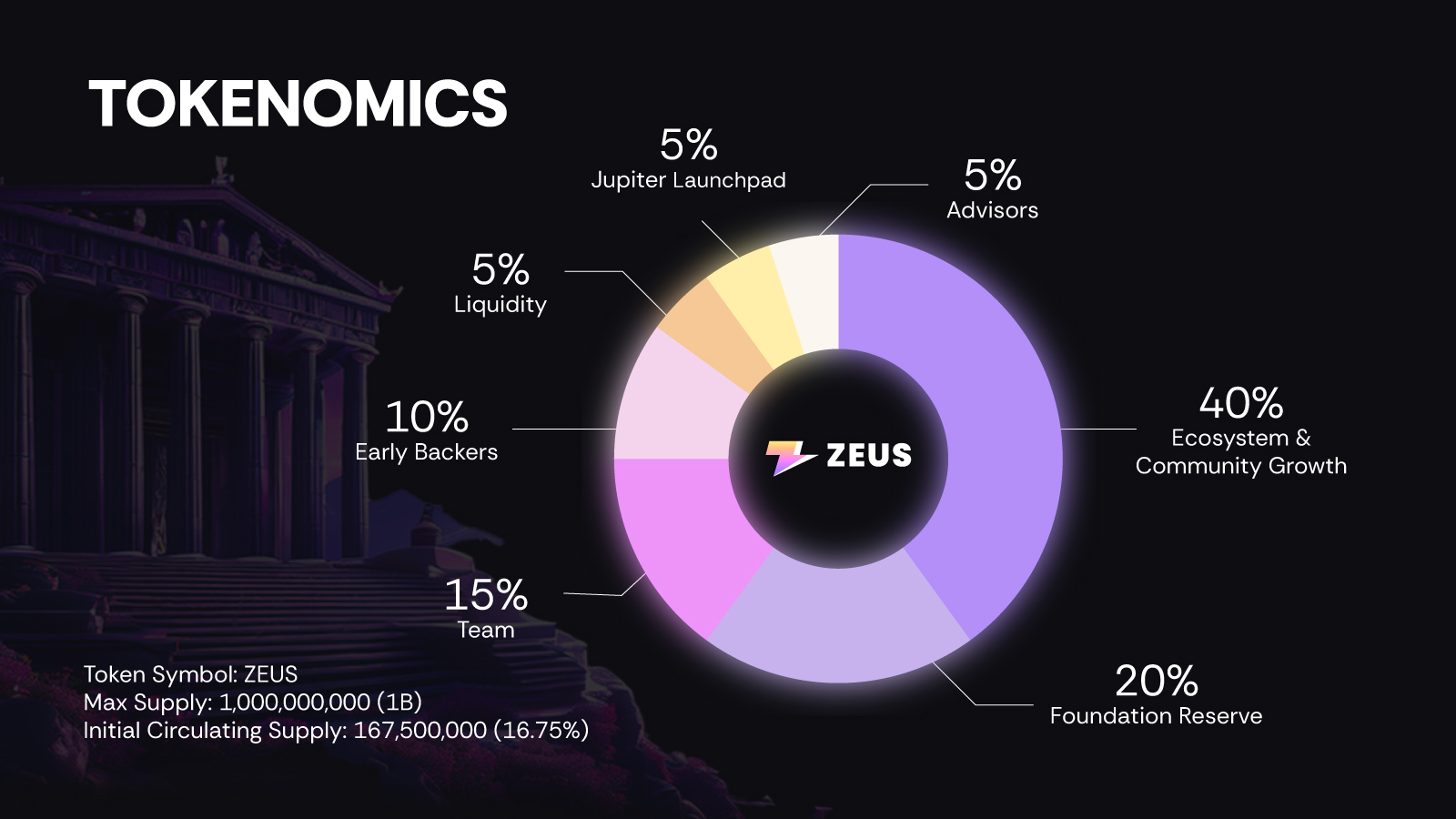
The total ZEUS supply is 1 billion tokens, with nearly half (40%) allocated to ecosystem and community growth. The team receives only 15%, less than the 20% reserved for the foundation—ensuring ample resources for future ecosystem competition.
In practice, beyond earning points via zuPoint, users can qualify for token airdrops by engaging with various Zeus ecosystem projects—such as Zues, the first Solana-first multichain wallet. Additionally, Solana and Jupiter developers can integrate the Zeus SDK, enabling BTC holders to directly purchase SPL assets on Solana.
For regular users, the easiest entry point is Apollo: simply connect a Bitcoin wallet and a Solana wallet to access Zeus-powered services. When using Apollo, BTC is not actually transferred to Solana, yet users still earn yield from Solana’s ecosystem.
Low-effort users can let Apollo automatically manage and distribute yield to their SPL wallets. Advanced users, however, can manually manage zBTC and design custom yield strategies within Solana.
In essence, channeling BTC into the Solana ecosystem is the foundational principle behind Zeus’ design.
As previously noted, prominent figures from both the Solana and Bitcoin (via Stacks) ecosystems have invested in Zeus. Its future development will continue to focus on wallets, stablecoins, and DEXs, further unleashing asset liquidity.
Conclusion
BTC has been the biggest catalyst of 2024, yet solutions like WBTC or BTC L2s are either centralized or too closely tied to Ethereum. Zeus takes a novel path by bringing BTC into the Solana ecosystem. Currently, Solana’s market cap is less than 10% of Bitcoin’s—indicating massive growth potential.
More importantly, though rooted in Solana, Zeus aims to interconnect with multiple public chains. zBTC is not just a decentralized alternative to WBTC—it’s an on-chain liquidity management solution with built-in AMMM mechanisms, giving users the freedom to choose between self-custody and centralized models.
In terms of technical implementation, Zeus draws inspiration from BTC L2 experiments—such as fraud proofs for transaction validation—and maintains an open stance toward EVM and Move VM integrations. It’s not just cross-chain—it’s better than cross-chain, aiming to make interoperability a fundamental layer for all chains.
Join TechFlow official community to stay tuned
Telegram:https://t.me/TechFlowDaily
X (Twitter):https://x.com/TechFlowPost
X (Twitter) EN:https://x.com/BlockFlow_News
 深潮TechFlow


