









Donation model plagued by chaos: Will the "I'm Qin Shi Huang, send me money" trend collapse within a week?
TechFlow Selected TechFlow Selected
Donation model plagued by chaos: Will the "I'm Qin Shi Huang, send me money" trend collapse within a week?
The wealth effect is weakening, the risk-reward ratio has significantly decreased, and donation-based gameplay has entered the "winner takes responsibility" phase.
 Navigating Web3 tides with focused insights
Author: Nan Zhi, Odaily Planet Daily
Following BOME's launch of the "send money" fundraising model, a number of early-stage crypto projects with high wealth effects emerged, and fundraising amounts have continued to rise. However, due to excessive market enthusiasm, standards for fundraisers have progressively declined, leading to frequent chaos. Degen participants eager to jump on the "new model" trend have gone from boasting about gains, to bittersweet laughter, and finally to angry accusations against project teams for being dishonest—experiencing a full emotional rollercoaster.
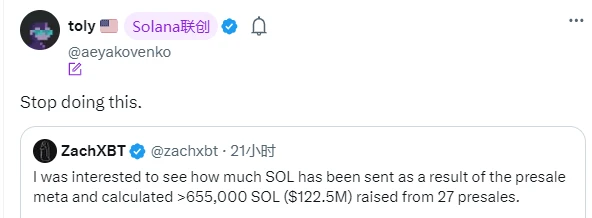
Yesterday, Solana co-founder Anatoly Yakovenko shared a chart by ZachXBT showing statistics on presale projects on the Solana chain (27 presale projects raised over 655,000 SOL in total) and called for an end to sending funds to presale projects.
Odaily Planet Daily published an article yesterday titled "Meme Fundraising Projects Explode in Popularity—How to Find the Next Alpha?", introducing characteristics of trending projects, data tools for research, and warnings about participation risks. Today, we will focus on the risk factors—reviewing already-rugged donation-based projects and discussing how long this model’s wealth effect can last.
Rug Pulls
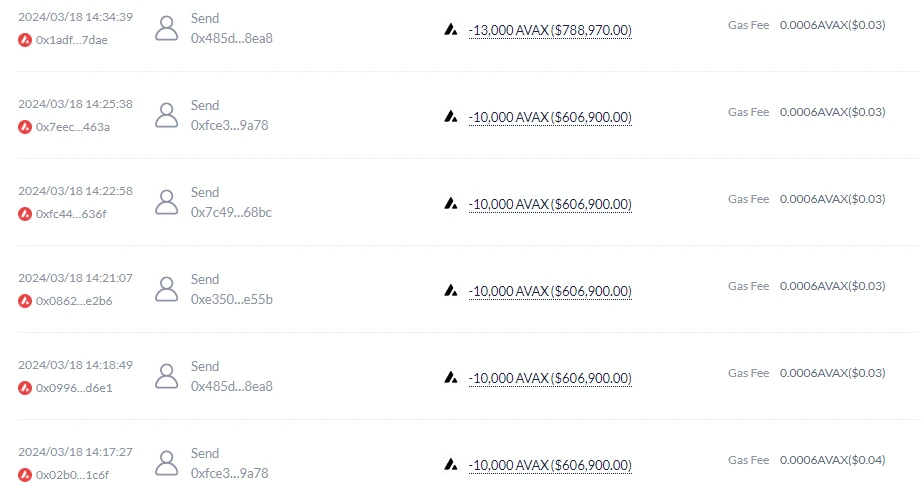
The Avalanche-based fundraising project Sener raised approximately 93,000 AVAX (worth around $4.8 million). However, at listing last night, the founder added only 20,000 AVAX to the liquidity pool and transferred all remaining AVAX out. The project token SENDER saw only a minor initial price increase, with no subsequent buybacks or market support actions from the team. The token is now in full sell-off mode.
Since the token launch, neither the founder @4msener nor the official project account @Sender_MEME has posted any further content.
Selling Your "Valuable Coins" For You
WHALES, the token launched by Whales Market founder @dexter_cap (hereinafter referred to as dexter), has a circulating market cap of $38.6 million and an FDV of $185 million. Given his successful track record, dexter was previously considered one of the most trustworthy figures in the donation-based fundraising space. However, a series of questionable moves yesterday began raising concerns about the project’s future.
At 5 PM yesterday, dexter’s fundraising address showed unusual activity—159,802 SOL (nearly $30 million) was transferred to Binance’s deposit address, sparking immediate fears of a rug pull.
Shortly afterward, 15,979 SOL—about 10% of the previously deposited amount—was sent back from Binance to the original address.
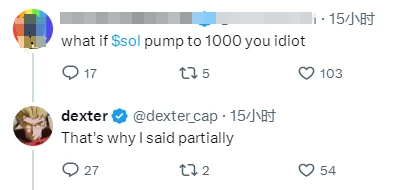
One hour after these transactions, dexter posted on X stating that excess funds would soon be distributed, explaining that he had moved the surplus to Binance and partially converted it into stablecoins to hedge against potential SOL depreciation. At the time of transfer, SOL was trading around 178 USDT—near its daily low. Some users believe his active selling contributed to the price drop, while more believe SOL has greater upside potential, arguing that this move diluted the overall value of the project. Criticism followed: “Can’t I manage my own trades?” “If you wanted stablecoins, why not just raise in stablecoins?”
Poetry, Promises, Then Exit
Compared to the classic "I'm Qin Shi Huang, send money" scam, @MerlinOrbitX’s fundraising approach seemed slightly more creative. The team repeatedly posted online crafting a narrative of being "hard-working developers overlooked by the market." However, MerlinChain's donation campaign failed to gain traction, ultimately raising only several hundred thousand dollars.
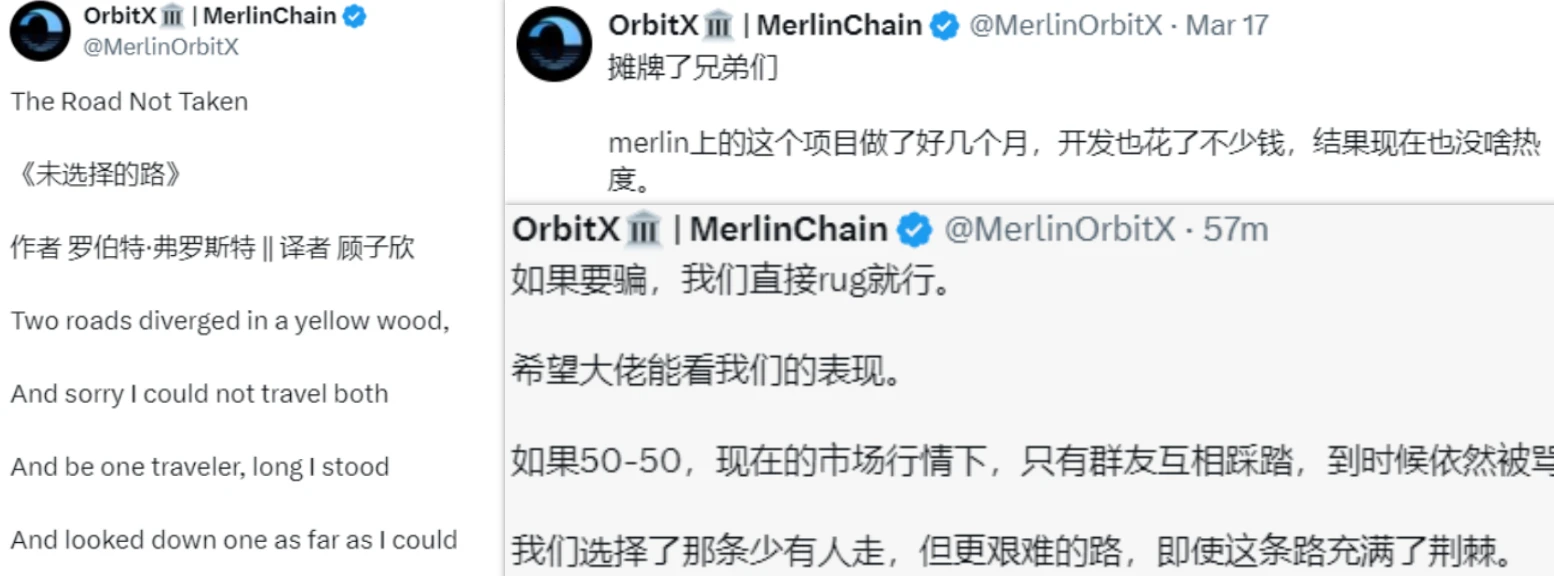
In terms of token distribution, the typical donation model copied from BOME usually allocates 50% of tokens to form a liquidity pool (LP) with raised funds, and 50% to airdrop to donors. However, some later projects reduced either the LP contribution or airdrop share, often down to 20%-30%. OrbitX "creatively" slashed the airdrop portion to just 2.5%, telling users they could profit only if the token rose 100x.

Just two hours after listing last night, the OrbitX team drained all funds from the LP pool. The token is now worthless, and the project’s X account has been deleted.

Conclusion
The donation model continues spreading across multiple chains, while the proportion of teams taking funds and running keeps rising. While a small number of projects (such as Milady Wif Hat) have chosen to refund all 90,000 raised SOL and proceed with token issuance, overall, the wealth effect is weakening, and the risk-reward ratio is deteriorating. Investors are advised to remain cautious when participating in such models.
Join TechFlow official community to stay tuned
Telegram:https://t.me/TechFlowDaily
X (Twitter):https://x.com/TechFlowPost
X (Twitter) EN:https://x.com/BlockFlow_News
 Odaily











