Returning to NEAR in AI: Overlapping Multiple Narratives Could Lead to Value Discovery
TechFlow Selected TechFlow Selected
Returning to NEAR in AI: Overlapping Multiple Narratives Could Lead to Value Discovery
NEAR currently has three main narratives: chain abstraction (CA), data availability (DA), and AI.
 Navigating Web3 tides with focused insights
Author: LD Capital
I. Fundamental Overview
Introduction: NEAR Protocol is a first-layer blockchain based on sharding and Proof-of-Stake (PoS), designed to incentivize computer networks to operate a platform where developers can create and launch decentralized applications.
Unlike other blockchains, the NEAR Protocol network was built from scratch to be easily adopted by developers and their end users, while still delivering the scalability required to serve these users. Specifically, NEAR is designed to make it easier to achieve the following:
(1) Build decentralized applications: Whether you're an experienced blockchain developer or accustomed only to building with "traditional" web or app concepts, NEAR makes it easy to build the next generation of decentralized applications;
(2) Provide users with a seamless experience: Even if they have never used cryptocurrency, tokens, keys, wallets, or other blockchain artifacts;
(3) Seamlessly scale your application: The underlying platform automatically scales capacity through sharding, without requiring additional cost or effort from you;
NEAR currently has three main narratives: Chain Abstraction (CA), Data Availability (DA), and AI.
1. CA
The evolution of public blockchain tracks follows two primary directions: modularization and chain abstraction. NEAR Protocol has made significant progress in both areas. Over the past three years, chain abstraction has been NEAR's primary focus, positioning it as one of the leading protocols in this field.
Most Dapps today are not truly decentralized applications (Dapps). If users must leave the application to begin using it, it isn't really an application—it’s merely a frontend. If users must manually register and manage multiple accounts, gas fees, and bridges via exchanges, it cannot be considered a decentralized application. The core goal of chain abstraction is to solve the growing fragmentation problem in Web3.
NEAR Protocol achieves chain abstraction through three components:
(1) Underlying data availability and decentralized ordering;
(2) Unified account aggregation for identity and security: Users can have a single address across all possible chains and freely move assets between them. From the user’s perspective, this should appear as one unified account, enabling interaction with applications across different chains, with assets automatically bridged or swapped;
(3) Unified experience layer: Provides a way to interact with applications across different chains without requiring users to switch or exit a single interface;
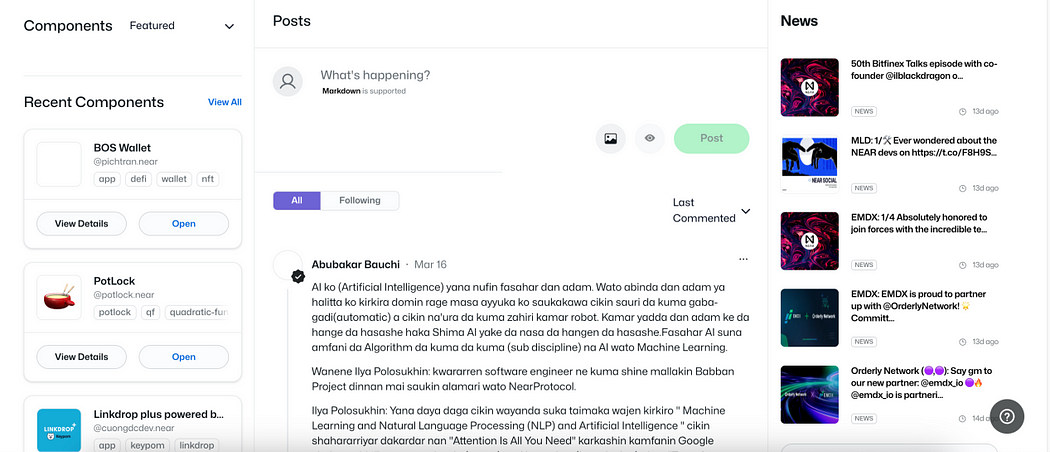
On the front-end interface, NEAR Protocol launched the new Blockchain Operating System (BOS), aiming to become an open-source alternative to Google, Apple, Amazon, Facebook, and Microsoft—a secure, transparent, accessible, carbon-neutral platform that eliminates the complexity of the Web3 space. Currently, visiting NEAR’s website reveals a Web2-like portal interface, allowing users to launch various types of DApps with a single account.
2. DA
NEAR Protocol's DA will expand the modularized ecosystem and consolidate fragmentation across all of Web3, serving as the foundation for both CA and AI development directions. According to official data, NEAR currently offers the cheapest transaction fees among all Web3 networks. NEAR DA is 85,000 times cheaper than posting blob commitments on Ethereum and 30 times cheaper than on Celestia.
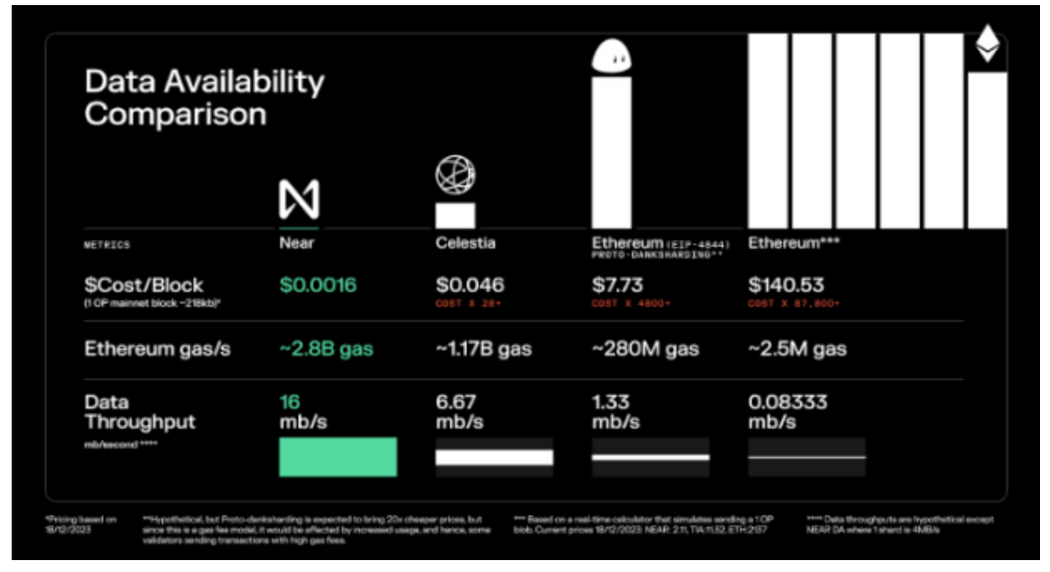
Data availability and NEAR DA play crucial roles in chain abstraction. Zero-knowledge technology enables unified cross-chain security via state proofs, making settlement data easier to retrieve from different networks. With account aggregation and decentralized frontends, dApps become truly multi-chain applications. When data is published in one place, querying data from multiple chains becomes much simpler. Doing so on NEAR Protocol is significantly cheaper for rollups. NEAR DA provides developers with an out-of-the-box solution, enabling rollup builders to easily leverage NEAR’s infrastructure—backed by over three years of proven reliability. In November 2023, NEAR launched its data availability layer for ETH rollups and Ethereum developers, which can be integrated into any OP Stack, Polygon CDK, or Arbitrum Nitro rollup.
3. AI
NEAR Protocol enjoys unique advantages in AI, primarily due to co-founder Illia Polosukhin. Before founding NEAR, he worked as an AI researcher at Google AI, contributed to TensorFlow, and co-authored the seminal paper “Attention Is All You Need” with several colleagues. This paper introduced the Transformers architecture, which underpins most well-known LLMs driving the explosive growth of AI last year, including ChatGPT and Bard.
Secondly, as Web AI gains momentum, NEAR is increasingly focusing on AI, building upon its strong foundations in CA and DA. In November 2023, NEAR launched NEAR Tasks, a platform for training and improving AI models. Simply put, model training requesters (Vendors) can post tasks and upload raw data, while users (Taskers) participate by completing tasks such as text annotation and image recognition. Upon task completion, users receive NEAR tokens as rewards, and the human-annotated data is used to train corresponding AI models.
In January 2024, Illia Polosukhin delivered a speech titled “NEAR’s Vision for Building Digital Self-Sovereignty,” outlining plans to evolve NEAR Protocol into a fully independent operating system equipped with personal AI assistants optimized for individual user needs—without leaking private information about user data or assets. These AI assistants should also enable peer-to-peer interactions and transactions with others’ AIs and community AIs. He calls this concept “User-Owned AI,” leveraging NEAR’s existing infrastructure to develop AI agents.
At the GTC24 conference on March 20, Illia Polosukhin will join the other seven authors of “Attention Is All You Need” to share insights on AI models and technologies.
II. Team and Investment
Illia Polosukhin is co-founder and CEO of the NEAR Foundation. Previously, he worked at MemSQL, Google AI, and the TensorFlow team. During his time at Google, he was a key contributor to TensorFlow and led a team that developed question-answering solutions for core Google Search. He is passionate about machine intelligence and natural language processing and was once a finalist in the ICPC competition.
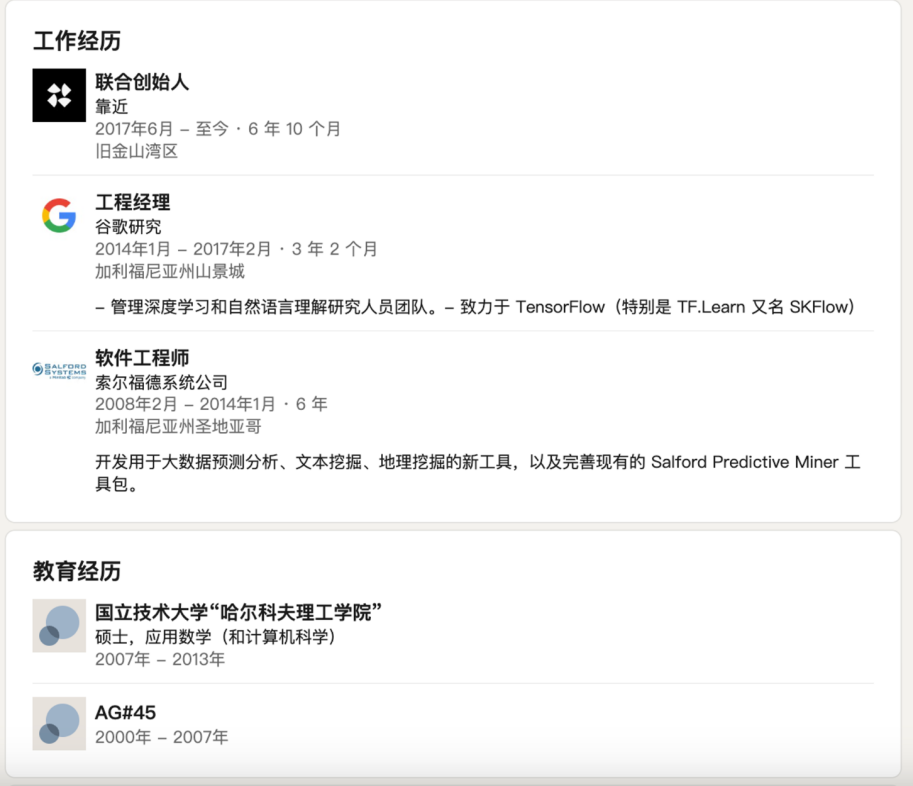
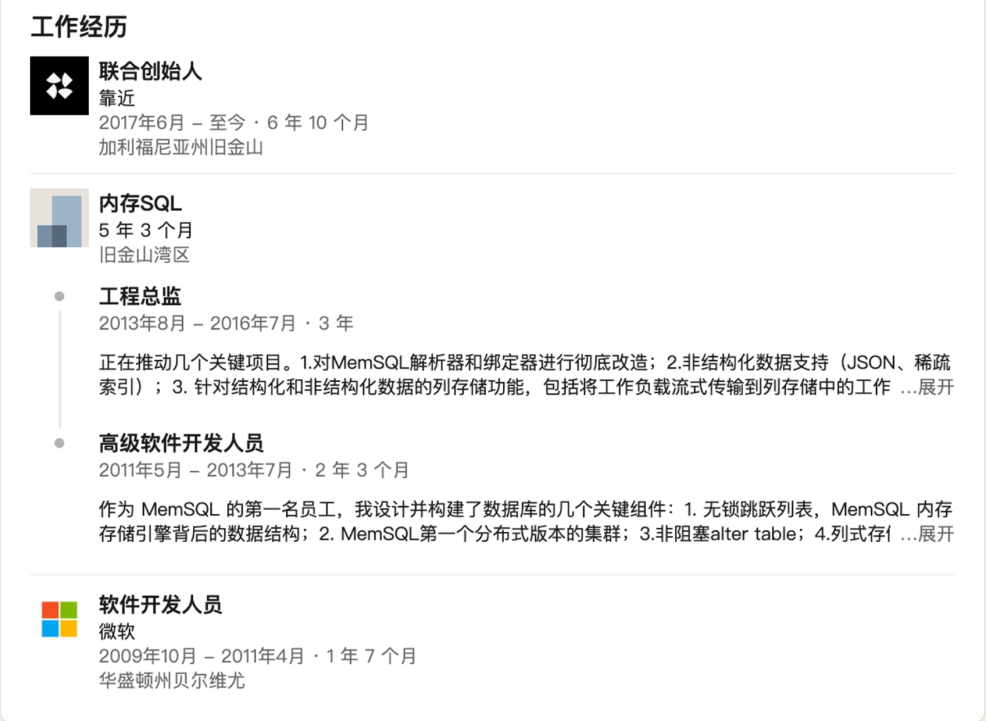
Alexander Skidanov is co-founder of NEAR Protocol. He previously led engineering teams at MemSQL. He began his career at Microsoft in 2009, then joined MemSQL in 2011, where he served as architect and director of development for five years. He is a two-time ICPC medalist, winning bronze in 2005 and gold in 2008.
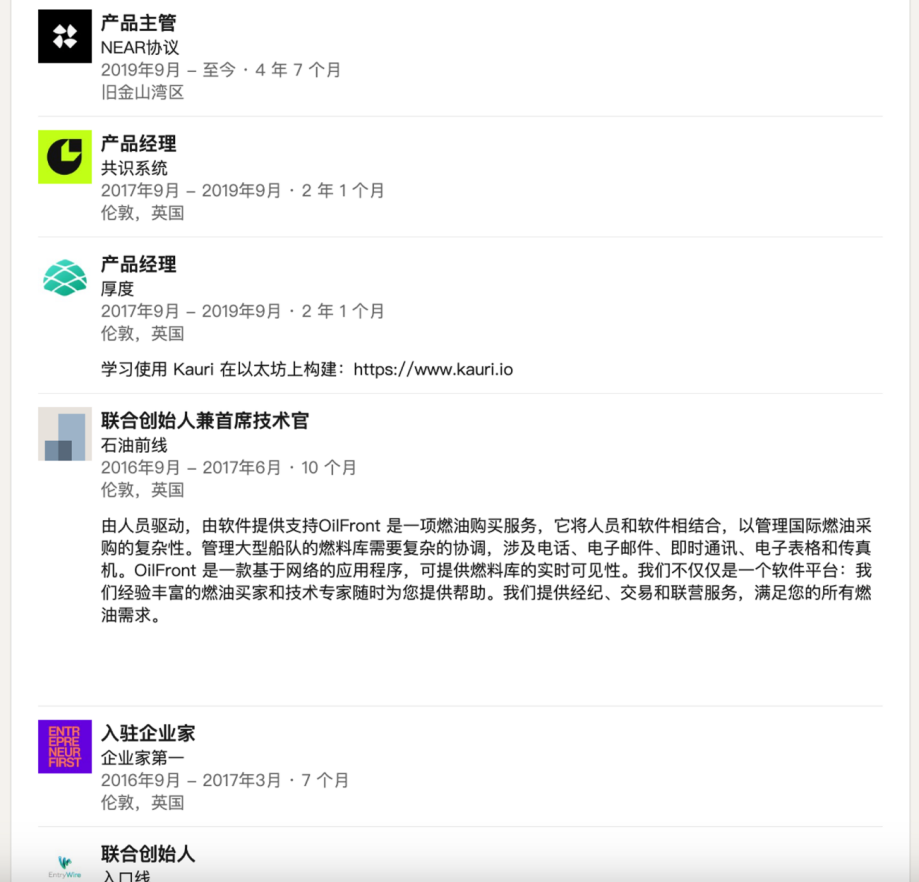
Kendall Cole is currently Head of Product at NEAR Protocol. Prior to this role, he was responsible for building Kauri.io at ConsenSys and co-founded projects including OilFront and EntryWire.
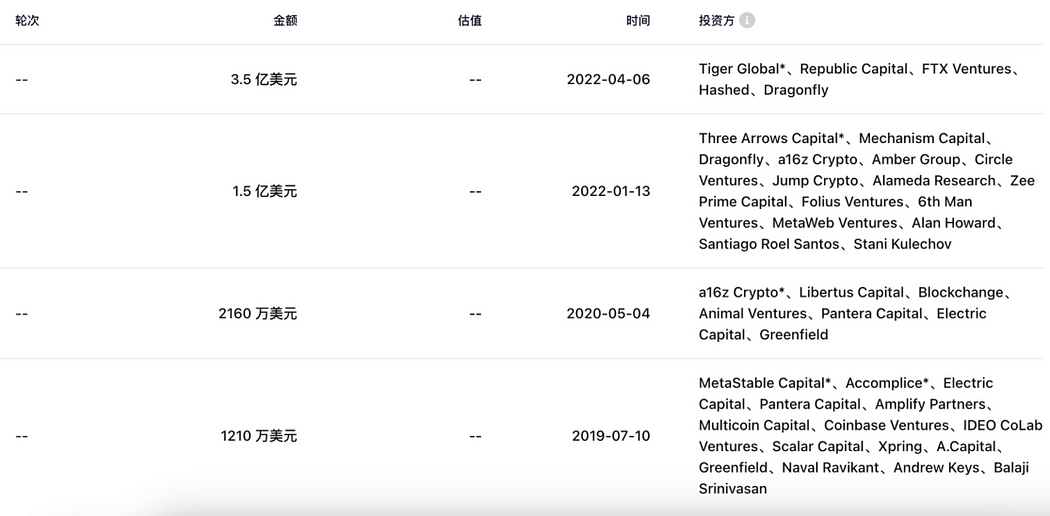
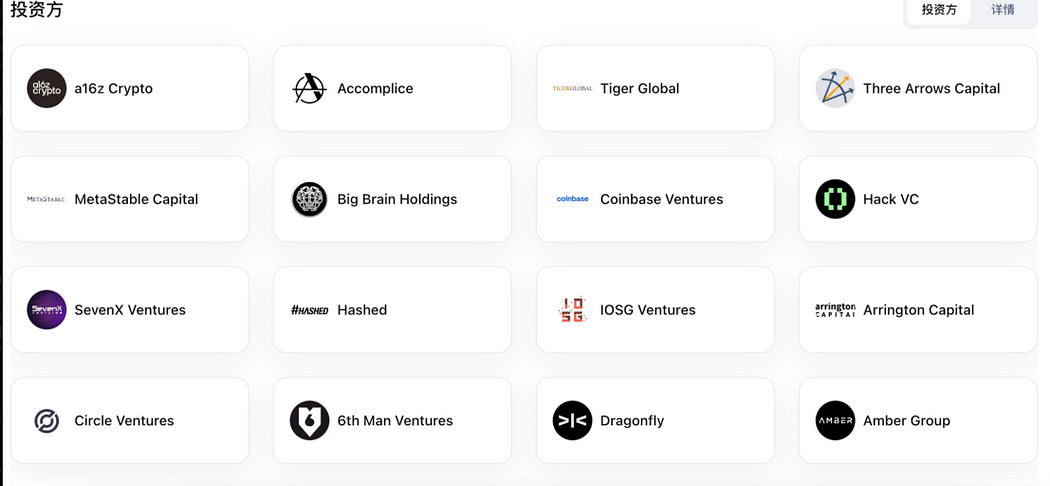
NEAR Protocol has received investment and support from top-tier crypto investors including a16z, Pantera Capital, Coinbase Ventures, Tiger Global, and Hashed.
III. Token Information
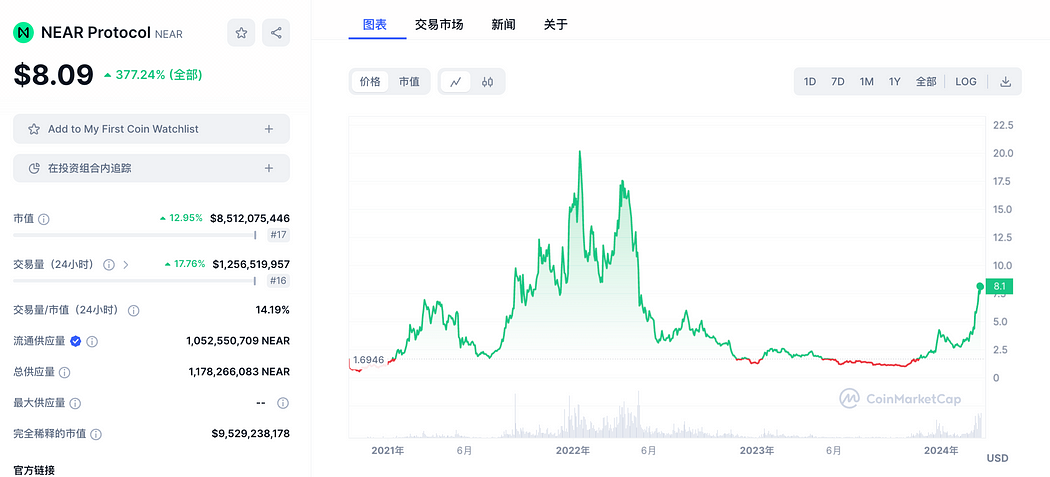
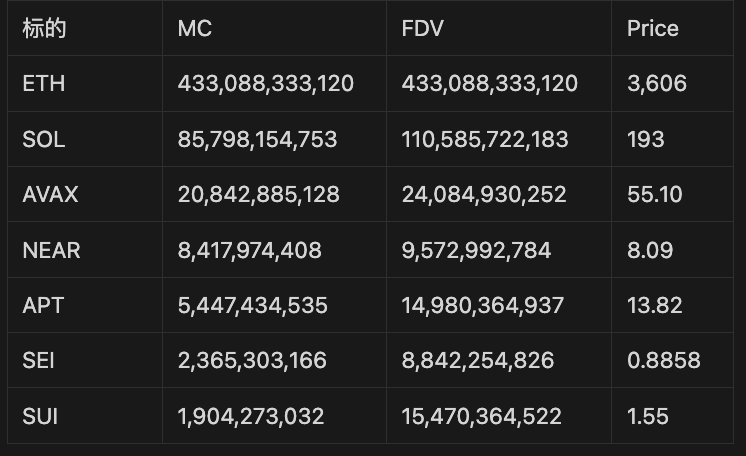
Currently, NEAR has a market cap of $851.2 million, FDV of $952.9 million, and a circulating supply of 1.052 billion. It is listed on major exchanges including Binance, OKX, and Coinbase, with recent trading volumes around $100–150 million.
NEAR’s current TVL stands at $280 million. While the ecosystem is still in relatively early stages, official user data released in January revealed that since the mainnet launch in October 2020, the four-shard network has achieved 100% uptime, with over 100 million registered accounts and 16 million monthly active accounts (MAA). With growing momentum in chain abstraction and AI, NEAR has potential for capital appreciation.
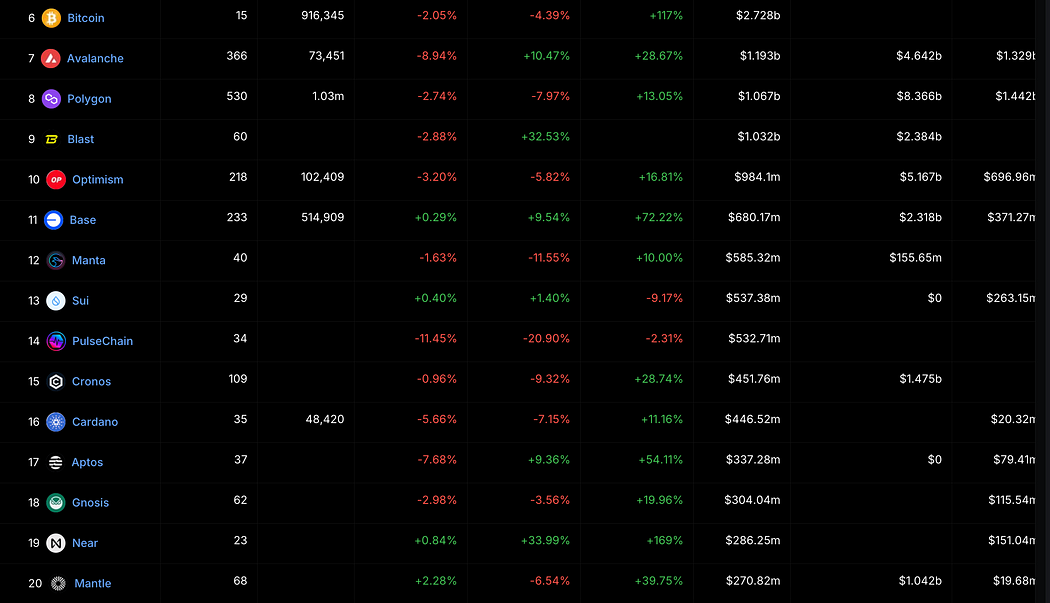
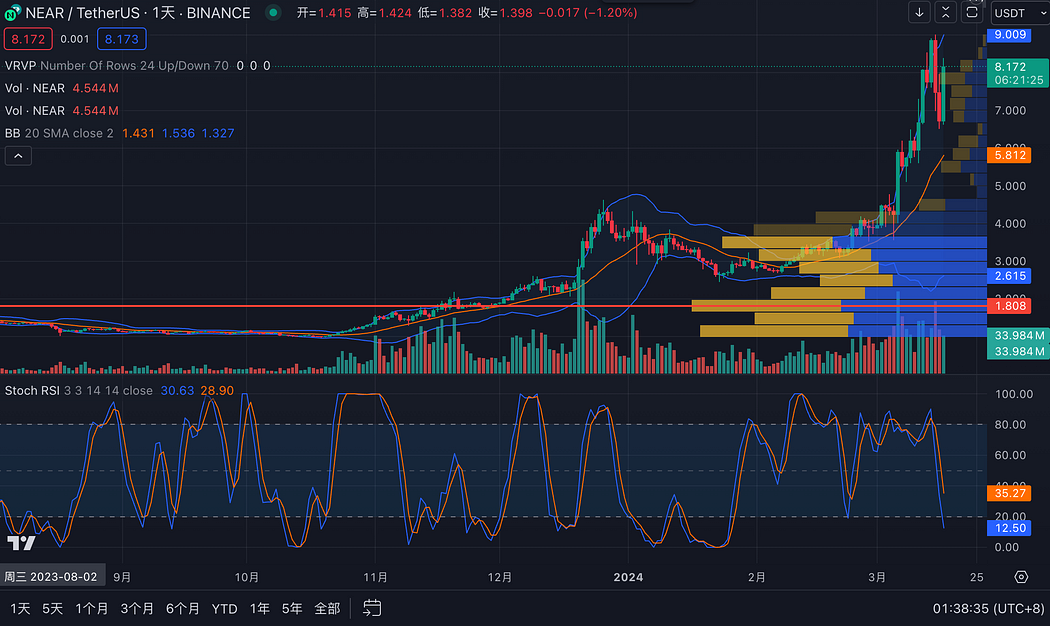
Currently, NEAR’s market cap is approximately 0.019x that of ETH, 0.098x that of SOL, and 0.4x that of AVAX. Although its on-chain ecosystem is still nascent, the chain itself possesses strong technical capabilities combined with the triple narrative of CA + DA + AI. Given the current chart patterns, the token price may see further upside amid the strong AI narrative.
Join TechFlow official community to stay tuned
Telegram:https://t.me/TechFlowDaily
X (Twitter):https://x.com/TechFlowPost
X (Twitter) EN:https://x.com/BlockFlow_News
 Cycle Capital Research