









DAI supply plunge could trigger liquidity crisis? MakerDAO implements multiple fee adjustments, annualized profit forecast surges
TechFlow Selected TechFlow Selected
DAI supply plunge could trigger liquidity crisis? MakerDAO implements multiple fee adjustments, annualized profit forecast surges
To address potential risks from the significant decline in stablecoin DAI, MakerDAO recently implemented a series of fee adjustments, including raising the DAI Savings Rate (DSR) to 15% and increasing stability fees for multiple core vaults by over 8% to 10%.
 Navigating Web3 tides with focused insights
Author: Nancy, PANews
To address potential risks arising from the significant decline in the stablecoin DAI, MakerDAO has recently implemented a series of fee adjustments, including raising the DAI Savings Rate (DSR) to 15% and increasing stability fees by over 8% to 10% across multiple core vaults. With this proposal now officially in effect, what impact will it have on MakerDAO?
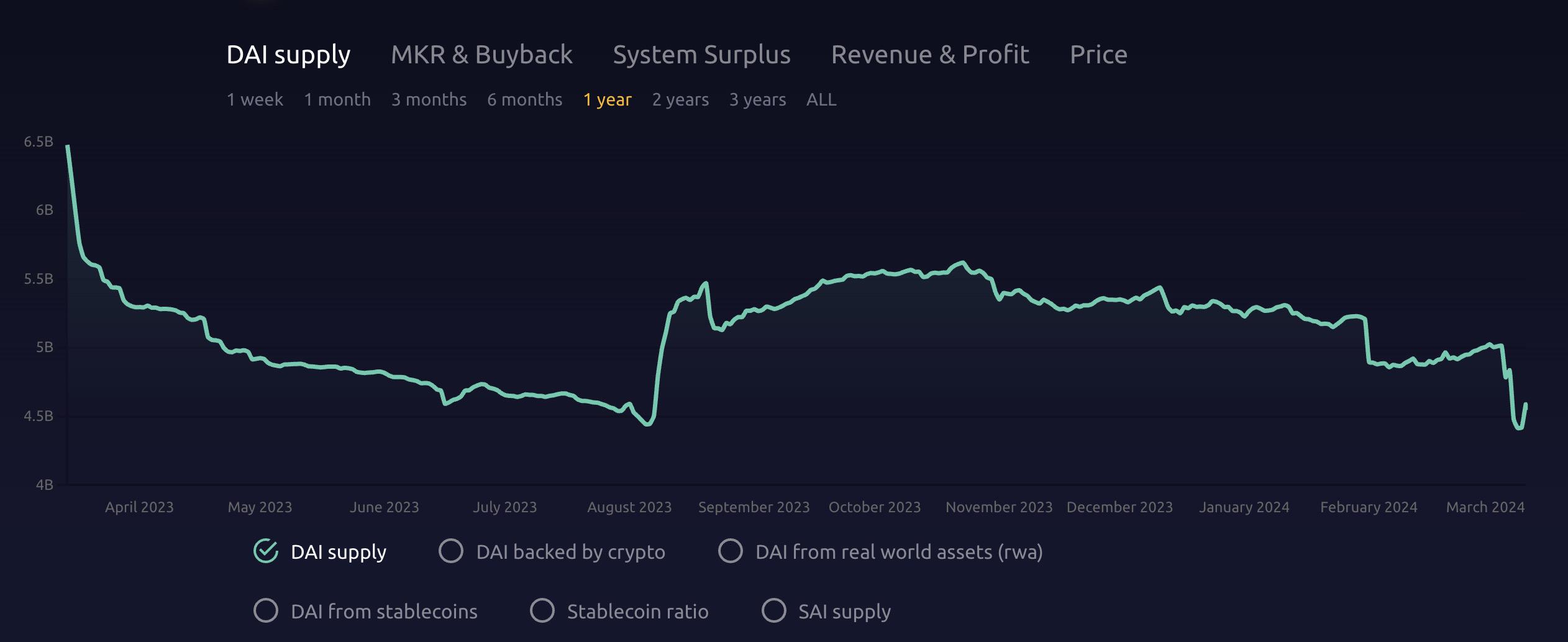
In recent months, the supply of the stablecoin DAI has seen a notable drop. According to Maker Burn data, as of March 11, DAI's total supply had fallen to $4.5 billion, marking its lowest level since August last year. In response, BA Labs, a core development team within MakerDAO, recently proposed that while stablecoin reserves held for liquidity purposes and those deployed into real-world assets (RWA) are sufficient to withstand pressure from potential bullish market sentiment, the issue lies in the inherent liquidity constraints associated with RWA-deployed stablecoins.
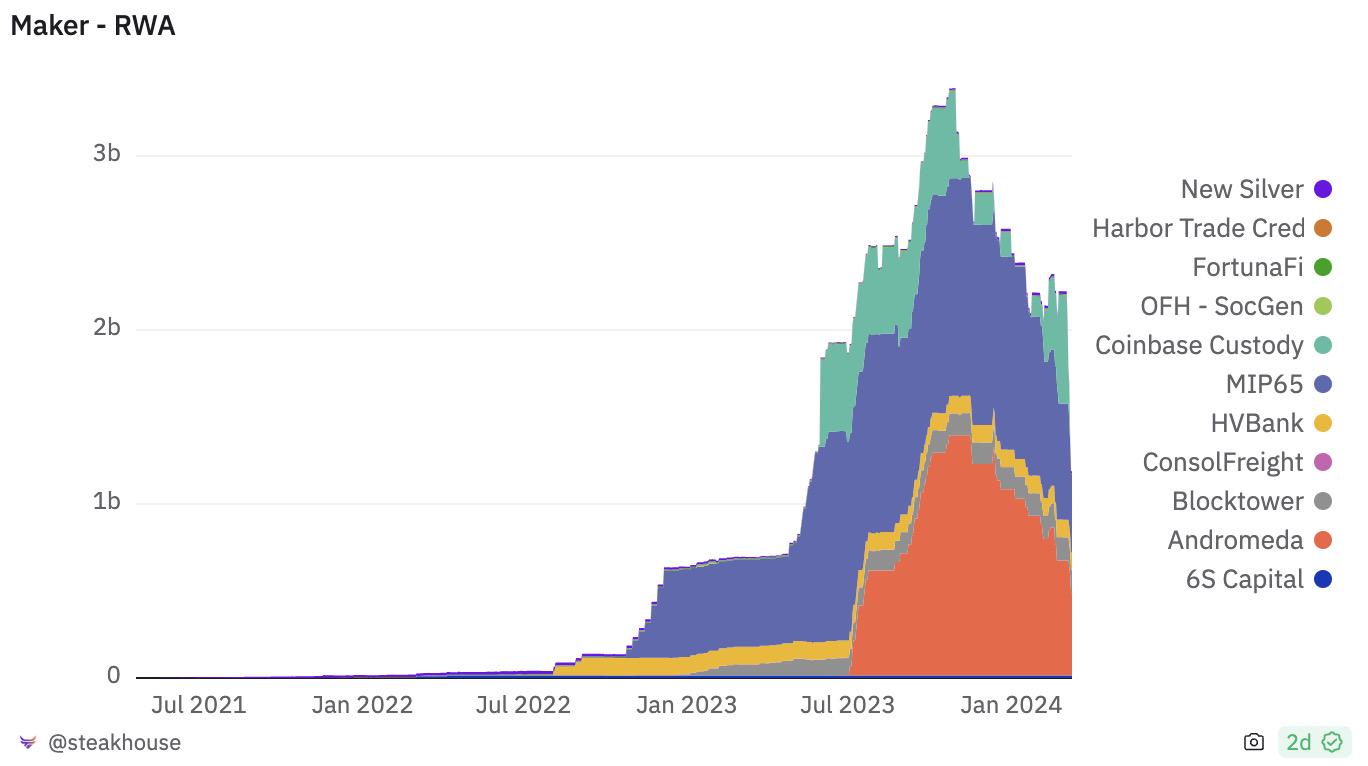
Dune data shows that Maker’s investments in the RWA sector have exceeded $1.77 billion. However, due to the product characteristics of RWAs, there are daily limits on redemptions of collateralized crypto assets. If DAI supply continues to shrink, this could trigger liquidity crunch risks. At the same time, according to MakerEndgame data, the stablecoin reserves backing PSM (Peg Stability Module), which supports DAI liquidity, have dropped to below $790 million.
To prepare for further market volatility and potential surges in DAI demand driven by bullish sentiment, BA Labs introduced a fee adjustment proposal, which was approved via voting and officially took effect on March 11. Key changes outlined in the proposal include raising the DAI Savings Rate from 5% to 15%, and adjusting stability fees on core vaults, expected to increase by approximately 9–10%.
In addition to approving increases in stability fees for collateral assets such as ETH, WSTETH, and WBTC vaults—raising them to between 15% and 17.25%—the DAI Savings Rate has also been raised from 5% to 15%, making holding DAI more attractive, thereby boosting demand and alleviating downward price pressure. Meanwhile, MakerDAO also adjusted parameters related to the PSM: the cooling period for increasing debt ceilings in PSM has been shortened from 24 hours to 12 hours, improving USDC deposit and DAI minting throughput; the GSM pause delay has been reduced from 48 hours to 16 hours, enabling faster implementation of future adjustments. Additionally, Spark Lend, a lending market within the Maker ecosystem, has made corresponding changes, increasing the annual interest rate for borrowing DAI from 6.7% to 16%.
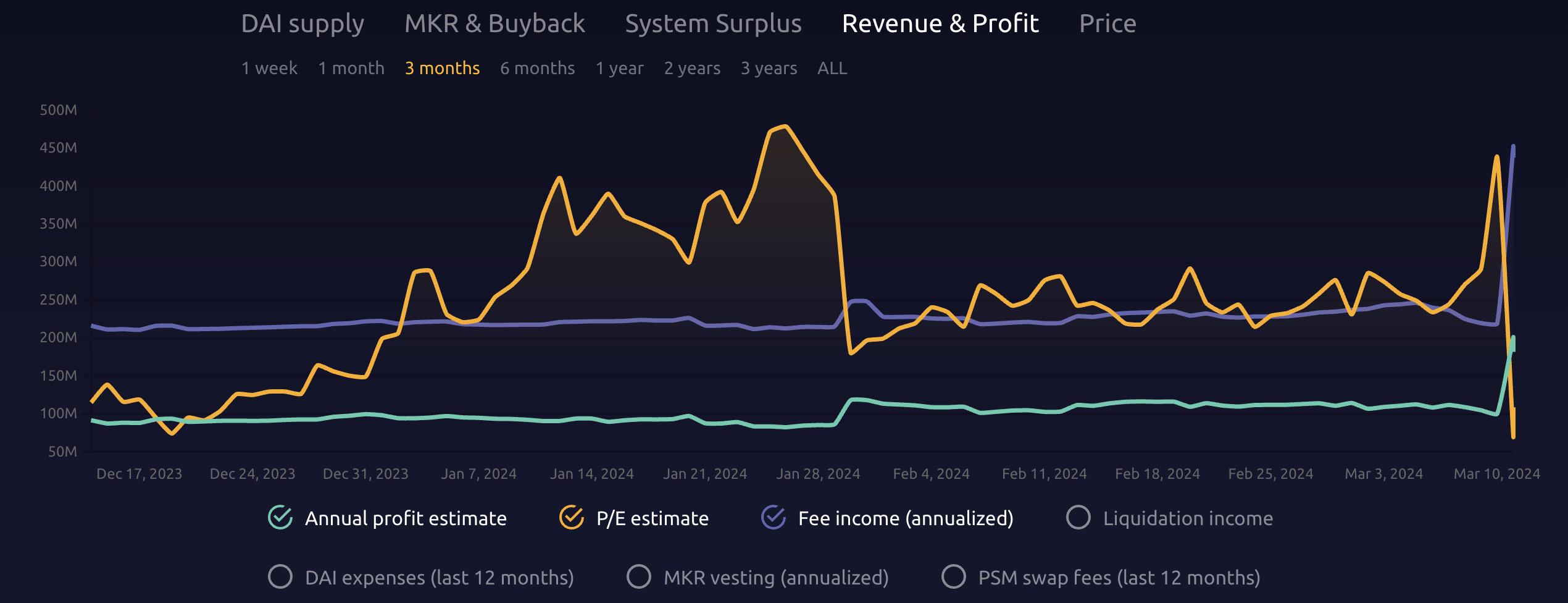
Following the approval of the new rate proposal, Maker Burn data indicates that over the past 24 hours, Maker’s estimated annualized profit increased by 81.8% to $182 million, annualized fee revenue rose 97.2% to $437 million, and the PE ratio estimate declined from 22.36 to 13.4.
Additionally, CoinGecko data shows that Maker’s token MKR surged over 33.2% in the past 24 hours as a result. Notably, beyond the positive impact of fee adjustments on token prices, MakerDAO founder Rune Christensen has been actively selling other tokens—including tens or even hundreds of thousands of dollars worth of LDO and SHIB—while consistently accumulating over 1,900 MKR tokens, currently valued at more than $5.14 million.
However, some industry participants have expressed differing views on this approach. For instance, dForce founder Mindao pointed out that with funding rates remaining high and stablecoins continuously being drained through arbitrage, if minting volume cannot be stabilized, protocol revenues may ultimately be illusory.
"Income within the DSR system comes from U.S. Treasuries yielding 5%. If too much USDC flows in and earns the 15% interest rate, it effectively results in a 10% subsidy, which would reduce protocol income. Currently, RWA accounts for 25% of total holdings, and this portion is operating at a loss—it’s important to monitor changes in this allocation," noted Super Jun, curator of the Benmo community.
Join TechFlow official community to stay tuned
Telegram:https://t.me/TechFlowDaily
X (Twitter):https://x.com/TechFlowPost
X (Twitter) EN:https://x.com/BlockFlow_News
 PANews











