








FTX claims have just begun, but the impact of asset liquidation is nearing its end
TechFlow Selected TechFlow Selected
FTX claims have just begun, but the impact of asset liquidation is nearing its end
Compensating creditors with bull market gains could actually help sustain the bull market?
 Navigating Web3 tides with focused insights
Author: Fu Ruheshi, Odaily Planet Daily
On March 3, the Joint Official Liquidators (JOL) of FTX Digital formally notified customers and non-customer creditors to submit claims through the FTX Digital Claims Portal by the deadline of May 15, 2024, in order to participate in the liquidation process.
With this announcement, does it signal an end to the FTX bankruptcy saga that began on November 11, 2022, when FTX and its affiliated companies initiated insolvency proceedings—nearly a year and a half later?
Odaily Planet Daily will comprehensively analyze the ongoing challenges facing the FTX bankruptcy case and its potential impact on the market.
FTX Liquidation Claims Are Just the Beginning
In reality, submitting a claim merely marks the official start of the FTX liquidation claims process—not its conclusion. The most critical unresolved issue remains: how customer creditors will be compensated.
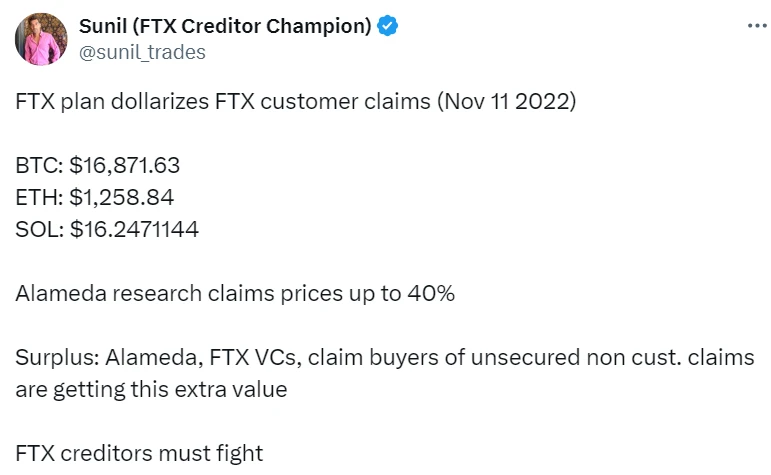
As early as December 27, 2023, court filings revealed that FTX sought court approval to calculate customers’ digital asset claims in U.S. dollars, proposing to set compensation prices based on values from November 11, 2022—the day FTX filed for bankruptcy. According to those prices, Bitcoin was valued at 16,871 USDT, Ethereum at 1,258 USDT, and SOL at 16 USDT.
From one perspective, this pricing approach effectively forces creditors to sell their crypto holdings at bear-market lows, forfeiting any gains since then. However, the legal filing included an objection period ending January 11, 2024. By the deadline, approximately 80 creditors had submitted letters opposing the proposal.
Notably, Sunil Kavuri, a prominent creditor, publicly opposed the plan on Twitter and rallied other creditors to resist the proposal.
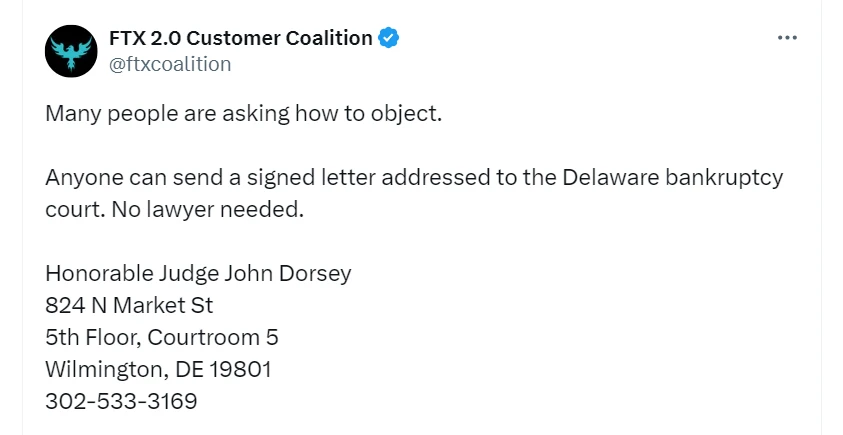
The FTX 2.0 Creditors Alliance also urged members to write to the judge against the proposal.
From a solvency standpoint, compensating creditors in USD has practical merit—given current market prices, paying out in cryptocurrency is unfeasible due to insufficient token reserves. However, valuing Bitcoin at $16,871 per coin as repayment is unlikely to satisfy creditors. For holders of SOL, the situation is even more stark: with SOL now trading above $130, reimbursement at just $16 per coin would be deeply disappointing.
The challenge of determining fair compensation—similar to what occurred during the Mt. Gox recovery—is another major hurdle ahead for the FTX bankruptcy. On March 15, FTX Digital will hold its first creditors' meeting, where this issue may be discussed. Odaily Planet Daily will continue to cover developments closely.
Could FTX’s Liquidation Actually Benefit the Market?
Since September 14, 2023, when the court approved FTX's asset liquidation plan, there have been widespread concerns about massive sell-offs flooding the crypto market. Yet today, BTC has surpassed 65,000 USDT and SOL has reclaimed levels above 130 USDT—suggesting that fears of market dumping from FTX liquidations have not materialized. Rather than causing downward pressure, the liquidation process appears to have indirectly supported price rebounds in the crypto market.
BTC, ETH, and SOL together make up 72% of FTX’s asset value. According to court documents, selling these assets requires prior approval and cannot be dumped directly into the open market, which would drain liquidity. Moreover, FTX has strong incentives not to trigger a collapse in crypto prices. As such, asset sales are likely to occur via over-the-counter (OTC) transactions. Smaller assets have largely been transferred to market makers who facilitate orderly, gradual sales at fair prices.
Su Zhu, co-founder of 3AC, posted on X stating that “events like FTX/Alameda selling SOL may seem bearish on the surface, but are actually ‘very bullish’ because they redistribute token supply and provide new investors with discounted entry opportunities.”

Data shows that as of February 20, according to Lookonchain, the total value of crypto assets held in FTX/Alameda addresses stands at $1.19 billion, including 266.84 million FTT (~$482.98 million), 25 million WLD (~$168 million), 105.47 million BIT (~$83.33 million), 1,500 BTC (~$77.64 million), and 140.2 million STG (~$71.36 million).
Looking back to when FTX began liquidating assets—see “FTX Token Asset Liquidation in Progress: How Much Impact Will It Have on the Market?”—the total portfolio value has declined from $3.4 billion as of August 31 to $1.19 billion. This figure does not even account for price increases of certain assets during this time, indicating that FTX’s asset liquidation is nearing completion.
As Su Zhu noted, the FTX liquidation has helped decentralize token ownership and redistribute trading positions—ultimately benefiting project development. Given the significant reduction in FTX/Alameda’s overall holdings, the future market impact of the FTX bankruptcy event is expected to be minimal.
Conclusion
The FTX bankruptcy has now entered the first phase of creditor claims, yet key issues around compensation standards remain unresolved. Users are encouraged to actively cooperate with the FTX liquidators and promptly submit their claims. For detailed instructions on how to file a claim, please refer to “Official Guide: 5 Steps to File Your FTX Liquidation Claim.”
Join TechFlow official community to stay tuned
Telegram:https://t.me/TechFlowDaily
X (Twitter):https://x.com/TechFlowPost
X (Twitter) EN:https://x.com/BlockFlow_News
 Odaily






