Coinbase: Overview of Current State of Wallet Technology Development
TechFlow Selected TechFlow Selected
Coinbase: Overview of Current State of Wallet Technology Development
Over the next decade, the number of cryptocurrency wallets will grow exponentially.
 Navigating Web3 tides with focused insights
Author: Ryan Y Yi, Head of Investments at Coinbase Ventures
Translation: Jinse Finance xiaozou
Blockspace and cryptographic keys/wallets are two of the most important technologies created in the crypto/web3 world. Wallet technology has now evolved beyond self-custody wallets, and we believe the wallet landscape will undergo massive transformation within the next five years—ushering in an "iPhone moment" for cryptocurrency. In this article, we'll walk you through various wallet technologies.
Key Takeaways:
-
Cryptocurrency ecosystem infrastructure is increasingly geared toward serving everyday mainstream applications. While much of the focus has been on innovation in blockspace (reducing fees and increasing throughput via L2s and alt-L1s), equally significant innovations are emerging in wallet infrastructure.
-
To date, self-custody wallets have been the primary means of interacting with crypto/web3 applications and networks. Looking ahead, the wallet space is undergoing a major technological shift with the emergence of embedded wallets (also known as MPC or WaaS [Wallet-as-a-Service]) and smart accounts.
-
These advancements will significantly impact how users interact with crypto applications, application adoption, and the positioning of various wallet providers.
At its core, wallets are the new identity primitive.
-
A wallet is a public-key level identifier [0x...], but ownership is cryptographically secured.
-
Users can use their wallets to sign on-chain or off-chain transactions.
On-chain transactions involve gas fees and appear on blockchain explorers like Etherscan. Off-chain transactions do not require gas and involve signing (e.g., "logging in" to a session on a Dapp's frontend) but do not appear on blockchain explorers like Etherscan.
1. The Era of Self-Custody
(1) How It Works
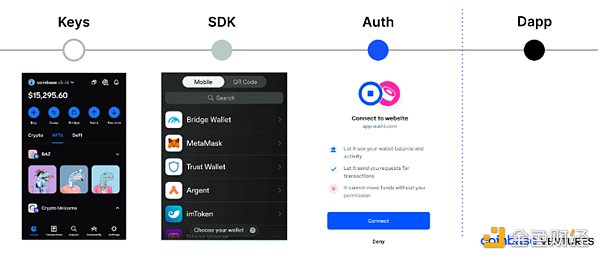
In the self-custody model, users are responsible for key management, transaction signing, and recovery. Popular wallet brands include Blockchain, Trust Wallet, Coinbase Wallet, MetaMask, Rainbow Wallet, and Phantom.
Dapps need to connect to wallets via various SDKs—either native to the wallet or open-source (like WalletConnect). This is important because it enables viable choices during the user’s crypto journey, similar to how web2 apps display login options via Okta Auth0.
Dapps can define a series of off-chain or on-chain approvals for users initiating transactions.
(2) Observations on Self-Custody Wallets
Superapps: Wallets are adding multiple functionalities so users can access the entire crypto ecosystem through their core wallet—such as Send/Receive, Swap, Bridging, Messaging, and Notifications.
App-led Distribution: Recently, popular web3 apps have decided that, given their user attention and alignment, offering a wallet is a natural extension. Examples include MagicEden, Aave, and Uniswap.
Ecosystem Positioning: Wallet providers may choose to establish early presence in new ecosystems to gain first-mover advantage, build relationships, and integrate technically for success. Examples include Phantom on Solana or Kepler on Cosmos.
2. The Era of Embedded Wallets and WaaS (Wallet-as-a-Service)
(1) How It Works
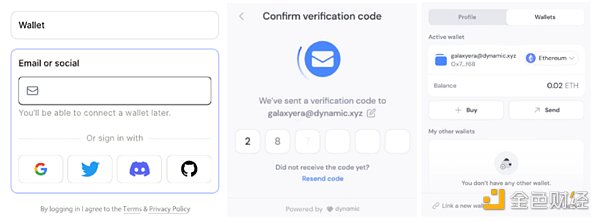
In the embedded (MPC/WaaS) wallet model, users can log in using their web2 credentials (email, SMS, Twitter, etc.).
The private keys themselves can be split among the Dapp, the user’s device, and/or third parties (centralized or decentralized). Dapps leverage third-party services to handle parts of the key management, SDK, and authentication experience. User devices can utilize underlying passkeys.
Because the Dapp manages the user flow, the SDK/authentication happens implicitly in the backend.
Dapps and embedded wallet providers may also gain access to CRM-style key interfaces and associated social login data.
(2) Observations on Embedded Wallets
While still in the very early stages, the UX improvements from embedded wallets are already significant—especially for early non-crypto-native adopters.
User Control: With embedded wallets, users still retain full control. They can choose to “export” their keys and transition back to a fully self-custodied wallet or switch to a smart account. While many non-crypto-native users might not use this feature, it provides crucial opt-out freedom, mitigating centralization risks associated with typical web2 data silos.
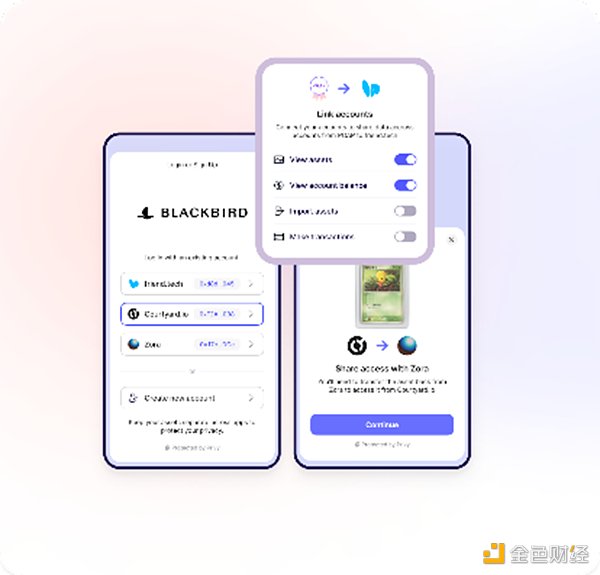
Wallet Linking: If an embedded wallet provider supports logins across multiple Dapps, and a user logs into those Dapps using similar methods, the provider can link these different wallets to the same user and present a unified interface. Thus, winning as many Day-1 integrations as possible becomes a key opportunity for embedded wallet providers.
Data Foundation: Dapps can now leverage their user databases combined with other digital footprints, further evolving web2 databases into web2.5 utility. For example, a Dapp running a DevRel campaign might want to identify authenticated GitHub users and track their activity.

3. The Era of Smart Accounts
(1) How It Works
Smart accounts are smart contract wallets with "account abstraction," enabling users to define transactions for execution by third parties.
(2) Observations
We view smart accounts/account abstraction as complementary to the above trends.
Self-custody wallets can onboard/mint smart accounts and "link" them to the user's other wallets/keys.
Embedded wallet providers can offer smart account capabilities as a service to Dapps seeking added benefits (e.g., gasless experiences).
4. Implications
(1) Authentication & Data
The path of wallet adoption will shape how authentication and authorization work. The auth layer defines user sessions, data read/write interactions, and security parameters. Key stakeholders include wallets, the authentication layer, and Dapps themselves. Whichever party emerges dominant will win the race to build network effects around usage and drive economic activity.
Status Quo: Wallets, authentication, and data are separate. Users download a wallet and connect to OpenSea via an authentication flow.
Beyond on-chain Ethereum data, wallet providers typically know little about user identities.
The authentication layer collects various information such as addresses, session data, and other public data (IP address, etc.).
Dapps may know the most about real user identities. For example, OpenSea may ask users to provide email/Twitter/social data stored on OpenSea servers. OpenSea knows [0x...] belongs to John Doe, while the authentication layer only knows [0x...] interacted with OpenSea.
Future: Embedded wallets bundle all three together. Users log into OpenSea via an embedded wallet provider.
The embedded wallet solution handles both keys and authentication—they are bundled. You no longer go through a separate Dapp login; logging in via WaaS completes everything at once. Dapps also favor this streamlined integration with embedded wallet partners.
The embedded wallet solution may own the data and present it to the Dapp when needed. For instance, if I log into OpenSea using my Twitter OAuth (powered by WaaS), both should see the associated key and social login.
Then, the embedded wallet solution could maintain an overview of data tied to keys. Dapp 1 may not care who Dapp 2’s users are—but the WaaS provider sees overlapping social profiles and can expose a public interface. This assumes users have granted data authorization when authenticating with identifiable credentials.
(2) Adoption Pathways
So far, self-custody wallets have been the main consumer choice. Meanwhile, new technologies offer viable alternatives and significantly impact wallet adoption. Ultimately, we believe the outcome will depend on the first Dapp or use case a user encounters—and the corresponding wallet technology.
User Types: Until now, crypto app users had only one viable option: self-custody wallets. With the emergence of new wallet technologies, multiple paths exist. This should help attract entirely new users already familiar with "OAuth-style" logins (likely non-crypto-natives).
Geography: In certain regions, potential regulatory hurdles around self-custody may make adoption prohibitively costly. It remains unclear whether embedded wallets (holding part of the key) would be classified as custodial services.
(3) Business Models
Wallets can monetize in various ways. Embedded wallets may operate on freemium or SaaS models—but over time, we expect their pivotal role between users and on-chain activity will enable direct participation in the growth of on-chain volume.
(4) Wallet Form Factors
Will there be one wallet per user, or one wallet per Dapp?
One Wallet to Rule Them All: The self-custody model follows a “one person → one wallet ↔ super app” structure. Users can create another wallet within the same interface, but it won’t look fundamentally different.
One Wallet Per App: Since embedded wallets are hidden in the app backend, they feel like native Dapps (similar to iPhone apps). This leads to a “one wallet per Dapp” outcome.
Connected Wallets: We believe the most likely outcome is a middle ground. As long as there is a shared identifier, wallets can be “linked.” On-chain linking can be achieved via smart accounts—delegating control between wallets. Off-chain linking could be a common identifier behind the embedded wallet API (e.g., [email protected] authenticated across multiple Dapps).
5. Conclusion
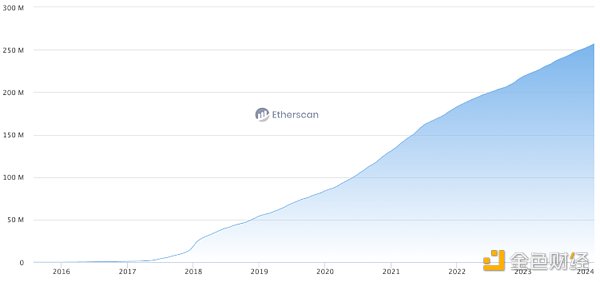
We believe the number of crypto wallets will grow exponentially over the next decade. Around ten years ago, the total number of unique ETH addresses hovered around 250 million (100 million after five years, only 200 million after two more). That was an era of expensive blockspace and costly self-custody wallets.
Looking ahead, we believe the arrival of embedded “Wallet-as-a-Service” (WaaS) and smart accounts will reduce the friction and cost of wallet creation and onboarding to nearly zero. Coupled with the rise of L2s and relatively low-cost blockspace technologies, more crypto activities will emerge, and wallets will become the primary gateway to participate in these use cases.
Join TechFlow official community to stay tuned
Telegram:https://t.me/TechFlowDaily
X (Twitter):https://x.com/TechFlowPost
X (Twitter) EN:https://x.com/BlockFlow_News