









Chief Narrative Officer Arthur Hayes' Project Selection: Can Krav Achieve Viral Growth?
TechFlow Selected TechFlow Selected
Chief Narrative Officer Arthur Hayes' Project Selection: Can Krav Achieve Viral Growth?
Krav has significant room for growth, but demands very high marketing capabilities.
 Navigating Web3 tides with focused insights
Author: Nan Zhi, Odaily Planet Daily
Last week, Arthur Hayes published an article outlining his and his investment team's investment philosophy—“I would rather invest in a token with a 0.01% expected success probability but whose narrative is in a viral growth phase, than invest in a token with a 50% expected success probability but whose narrative has already become common knowledge,” stating that technology isn’t important; what matters is the narrative.
In this article, Hayes shared several key narratives he believes are currently most critical, with GMX and Pendle having already become mainstream. This piece from Odaily Planet Daily analyzes Krav Trade—a BTC perpetual futures exchange built on altcoins—and examines its narrative and potential for explosive growth.
Krav: A BTC Perpetual Exchange Based on Altcoins
The Narrative
Beyond major cryptocurrencies like BTC and ETH, and fleeting Meme tokens, there exists a broad category of altcoins with market caps ranging from millions to hundreds of millions of dollars that have not yet been listed on exchanges. These tokens typically lack use cases beyond their native protocols, have little or no lending or short-selling markets, and users profit solely from price differences through buying and selling. Moreover, capital utilization stands at 100%, meaning users cannot leverage their funds via N× margin to increase capital efficiency.
On the other hand, under a bull market backdrop, major coins such as BTC carry strong upward momentum expectations. For altcoin holders locked at 100% capital utilization, they must choose between investing in these high-potential altcoins or riding the BTC wave—one or the other.
To address this, Krav introduced a derivative product called Quanto, which allows users to use their altcoins as collateral to trade BTC and ETH futures contracts.
Quanto Derivatives
What is a Quanto? According to Wikipedia, a Quanto is a derivative where the underlying asset is denominated in one currency, but the derivative itself settles in another currency at a fixed exchange rate. This structure appeals to speculators and investors who want exposure to foreign assets without taking on associated foreign exchange risk.
This definition can be difficult to grasp, so here’s an example based on Krav’s UNIBOT token pool:
-
Fixed exchange rate: Assume UNIBOT is priced at 50 USDT and BTC at 50,000 USDT, establishing a ratio of 1:1000;
-
Deposit assets: The user holds 1,000 UNIBOT tokens and deposits them into Krav;
-
Open position: The user then opens a long or short position on BTC—for instance, a 2 BTC long position, with the initial exchange rate still at 1:1000;
-
Exit and settle: Suppose BTC rises by 10%, increasing the position value to 2.2 BTC. The user chooses to close the position;
-
Based on the pre-established fixed rate of 1:1000, the user receives 200 UNIBOT tokens—regardless of how the actual UNIBOT/BTC exchange rate fluctuated during the holding period.
To summarize once again: Krav’s Quanto is a derivative product allowing users to use altcoins as collateral to go long or short on BTC/ETH, with settlement executed at a fixed exchange rate.
Protocol Participants
Participants in the protocol, along with their roles and profit mechanisms, are as follows:
-
Traders: Profit from trading major coins, while paying transaction fees;
-
LP Providers: Act as counterparty liquidity providers to traders, earning revenue from trading fees. If traders collectively profit, LPs incur losses (and vice versa). Krav allows anyone to create a liquidity pool for any token;
-
KRAV Token Holders: By staking KRAV, users receive 30% of trading fees, plus veKRAV and reward multipliers.
Current State of the Protocol
Krav currently supports Quanto trading across seven blockchains, including Ethereum, Base, Arbitrum, and Polygon. For example, Ethereum hosts pools for RLB and UNIBOT; Base features nine token pools; and Arbitrum includes last year’s viral Meme coin pogai. Official data shows total liquidity provided amounts to $1.56 million.
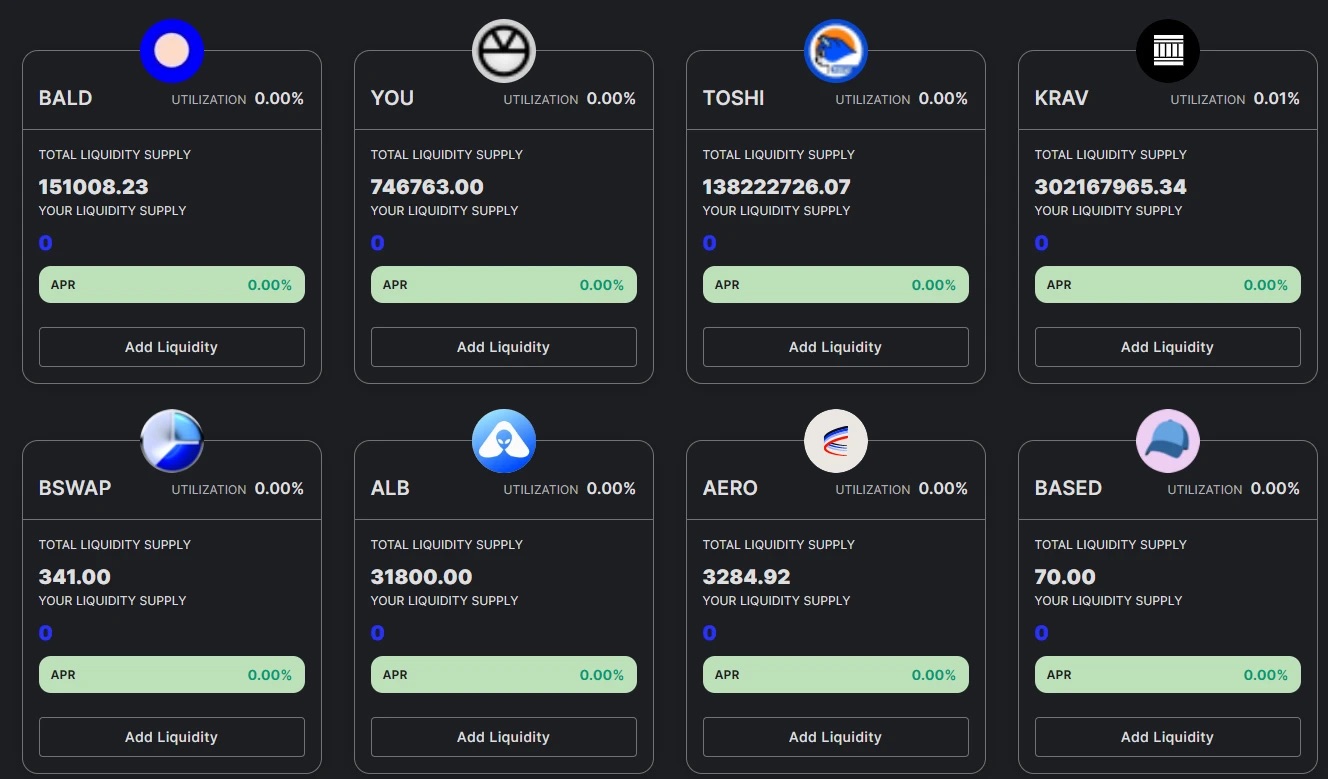
Take RLB on Ethereum—an altcoin issued by the gambling platform Rollbit, with a market cap of $476 million. Due to compliance issues, it struggles to get listed on major centralized exchanges, and few protocols integrate it. Through Krav’s permissionless Quanto trading, users can fully leverage this large-cap altcoin for further trading activities.
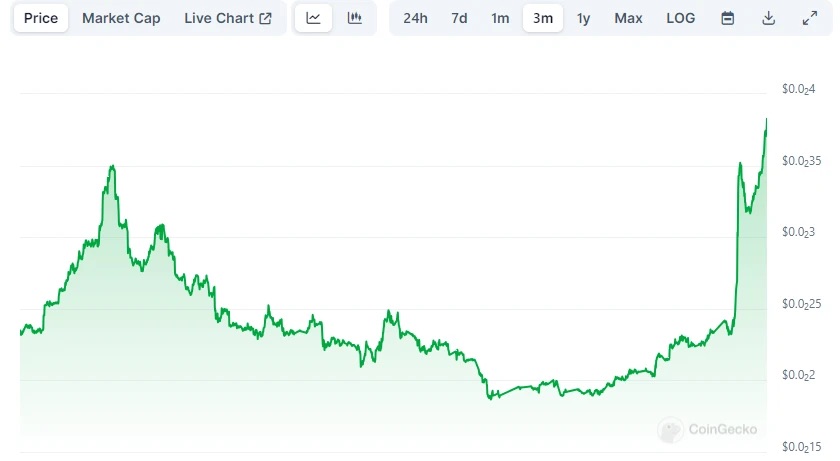
According to CoinGecko, KRAV currently has a market cap of $3.82 million and has risen 63% over the past three months. If its narrative gains traction, significant upside potential remains.
Narrative Analysis
Vast Growth Potential
As previously noted, excluding mainstream tokens already listed on exchanges, there remains a universe of altcoins worth tens of billions of dollars that lack exchange listings or usable composability protocols.
Meanwhile, multiple catalysts—including the approval of Bitcoin spot ETFs, improving macroeconomic outlooks, and the upcoming Bitcoin halving—have heightened market expectations for BTC.
These two factors together represent both a massive user base and solid underlying demand. Krav Trade indeed possesses the potential for viral, explosive growth.
Challenges and Risks
As a pioneering new protocol, Krav’s fundamental challenge lies in user acquisition. Altcoin investors and major coin traders generally operate in separate ecosystems—the former tend to stay purely on-chain, while the latter prefer CEX platforms. Krav must precisely target users willing to hold altcoins while also trading BTC/ETH, cultivating the habit of depositing altcoin assets into Krav to trade major coins. Given that each altcoin has its own distinct community, marketing efforts will be extensive and complex.
Additionally, Krav faces inherent risks related to collateral assets. Altcoins are extremely volatile, and when used as collateral, sudden crashes could trigger cascading liquidations. There are also risks from developer rug pulls or hacker attacks leading to collateral wipeouts. These concerns will significantly constrain users’ willingness to trade at scale.
Conclusion
Krav holds immense growth potential, but its success hinges heavily on marketing execution. Whether Chief Narrative Officer Arthur Hayes’ vision of viral growth can materialize remains to be seen.
Join TechFlow official community to stay tuned
Telegram:https://t.me/TechFlowDaily
X (Twitter):https://x.com/TechFlowPost
X (Twitter) EN:https://x.com/BlockFlow_News
 Odaily











