








Story Protocol: A New Narrative – Programmable IP Leading the On-Chain Renaissance
TechFlow Selected TechFlow Selected
Story Protocol: A New Narrative – Programmable IP Leading the On-Chain Renaissance
By transforming code into law, Story Protocol will drive a renaissance on the blockchain.
 Navigating Web3 tides with focused insights
Author: Story Protocol
Translation: TechFlow
Introduction
Story Protocol pioneers a new way to unleash creativity and liquidity by transforming intellectual property (IP) into networks that transcend media and platforms. In an era where generative AI expands creative possibilities infinitely, protecting and developing IP faces unprecedented challenges. Story Protocol builds a programmable IP layer that allows creators to combine, reconfigure, and monetize their works through on-chain rules—effectively turning code into law and leading a wave of on-chain renaissance.
Main Content
Story Protocol transforms IP into networks that transcend media and platforms, unlocking global creativity and liquidity.
Generative artificial intelligence is expanding the boundaries of creativity. Today, anyone connected to the internet can create high-quality music, art, prose, and videos. In theory, this should usher in a golden age of creation, just like all previous creative technologies.
Yet despite having global distribution channels and powerful AI tools, creators still struggle to protect and develop their work.
The culprit? IP.
The problem with IP is significant: it's isolated, opaque, and static. Story Protocol is building a programmable IP layer that will allow IP to be combined, remixed, and monetized through on-chain rules set by its creators. By turning code into law, Story Protocol will drive an on-chain renaissance.
So, what exactly is programmable IP?
First, Let’s Talk About Programmable Money
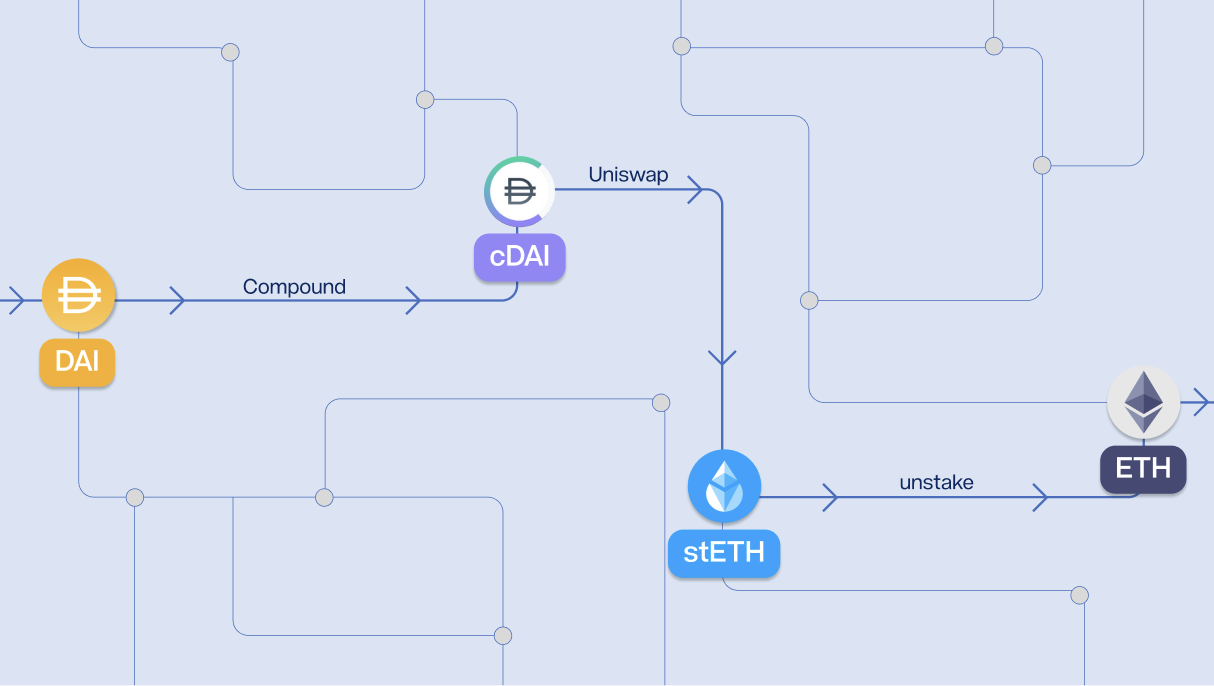
The first wave of cryptocurrency revolved around programmable money. For the first time, new “money Legos” could be created using self-executing rules, and services could be built on top of these rules. Anyone could add an API atop a fungible token, enabling programs to extend the token’s functionality through interface interactions. Users could now create infinite variations of financial services: you could lend WBTC on Compound to generate cDAI, swap that cDAI for stETH on Uniswap, then unstake stETH to obtain ETH, and so on—an open, programmable economy constrained only by software. Today, billions of “programmable dollars” trade daily across these protocols, powering parallel financial systems with unique network effects.
But (programmable) money can't buy everything.
Despite the promise of programmable money, the first wave of crypto barely scratched the surface of what programmable assets can achieve. DeFi remains accessible mainly to advanced users—primarily large players executing complex financial strategies to earn yield. Unlike finance, content is universally accessible and intuitively appealing, yet remains static.
The problems that programmability solved for financial systems still plague the creative world. Just as banks once acted as clunky, rent-seeking intermediaries, IP licensing requires entire legal teams and extensive paperwork, making it inaccessible for individual creators. Like financial institutions obscuring or hiding data, existing IP registries are localized and opaque, lacking critical information about ownership and rights.
From the internet and mobile devices to artificial intelligence, each major technological paradigm has only achieved mainstream adoption after successfully integrating creative content. Now it’s blockchain’s turn—IP needs to be programmable.
From Programmable Money to Programmable IP
If the first wave of crypto was about programmable money, the next wave will be defined by programmable IP. Programmability means giving creative assets built-in APIs for on-chain rights enforcement, remixing, and monetization. By programming participation rules on-chain, any application or program can remix programmable IP while allowing creators direct control over their work. With programmable IP, code becomes law.
Static JPEGs Aren’t Enough
There have already been some promising early attempts to bring IP on-chain. NFTs represent a key advancement, offering provable ownership of digital media files. By introducing scarcity into the digital asset world (which otherwise could be copied at zero marginal cost), NFTs became the foundation of digital provenance. However, NFTs alone aren’t enough—the current model of static JPEGs has hit its developmental ceiling.
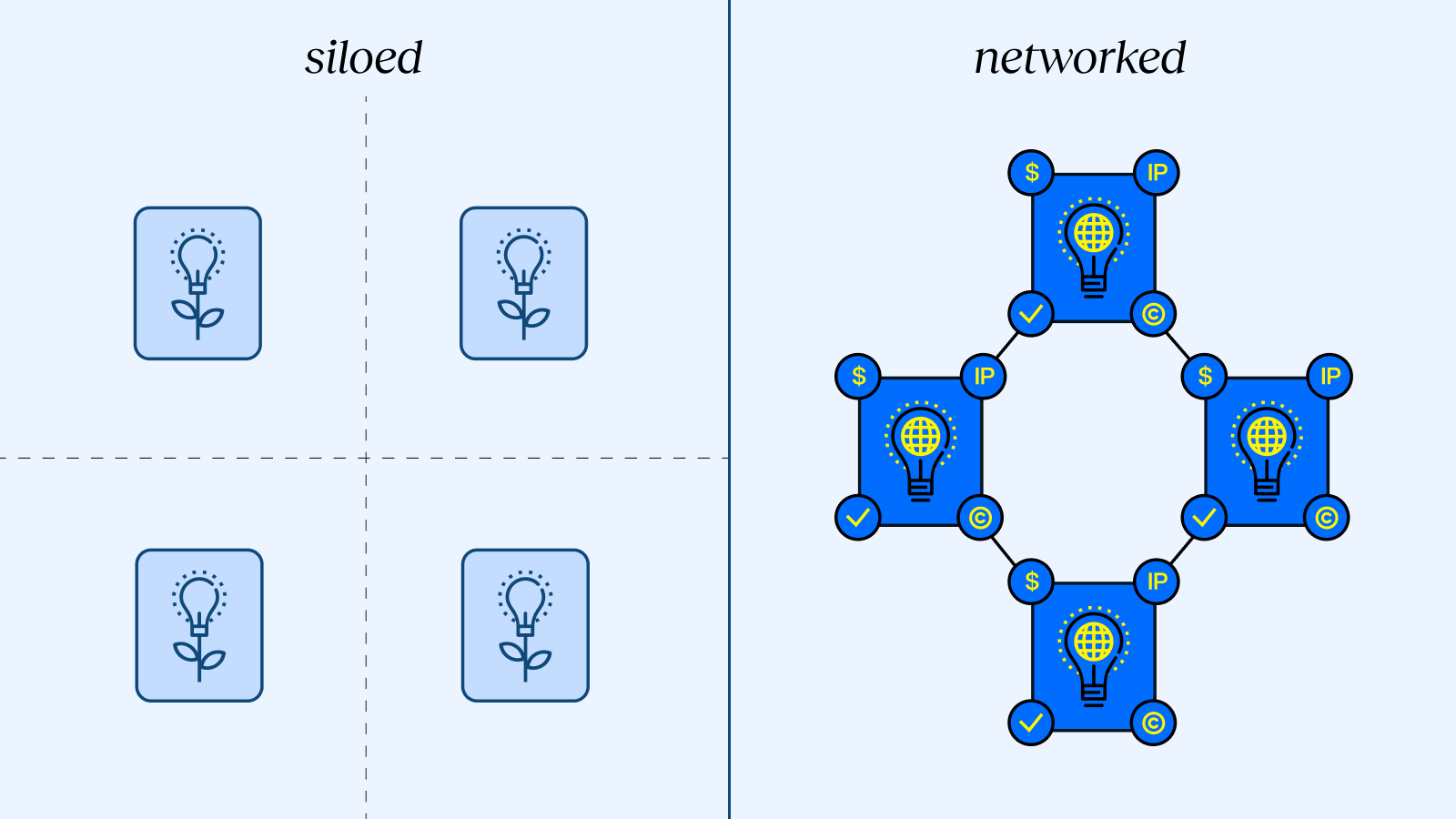
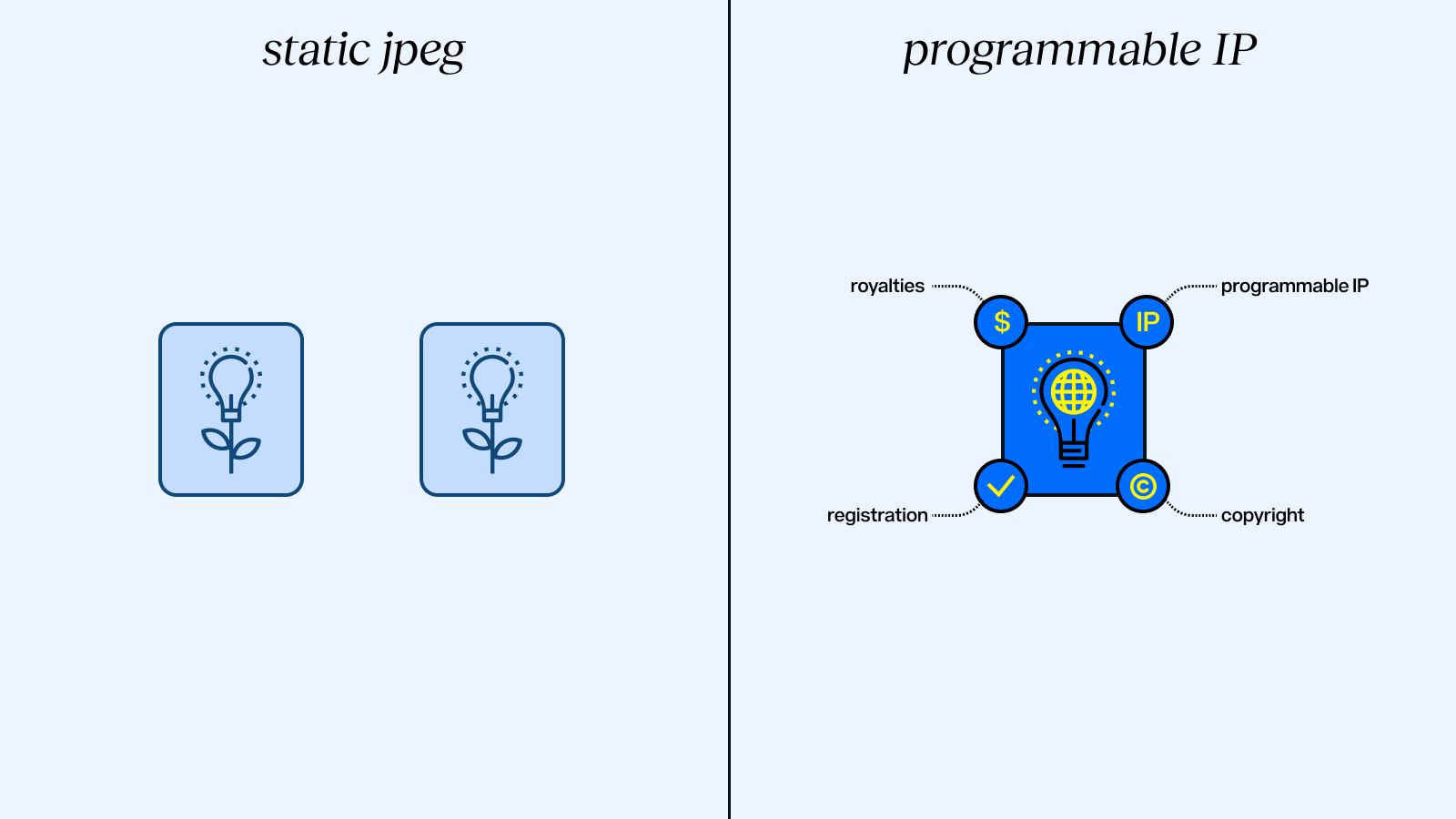
The essential characteristic of on-chain assets is their programmability, but static JPEGs are fundamentally non-programmable. Most NFTs remain static pointers to media files—rigid, isolated, and trapped metadata. Even when licenses are attached, they’re typically fully off-chain and opaque. Beyond basic transactions, the capabilities of the current NFT paradigm are limited. Derivatives simply cannot be created without reverting to high-friction, off-chain licensing processes—the world of lawyers, documents, and bespoke negotiations.
Enter the Programmable IP Layer: Story Protocol
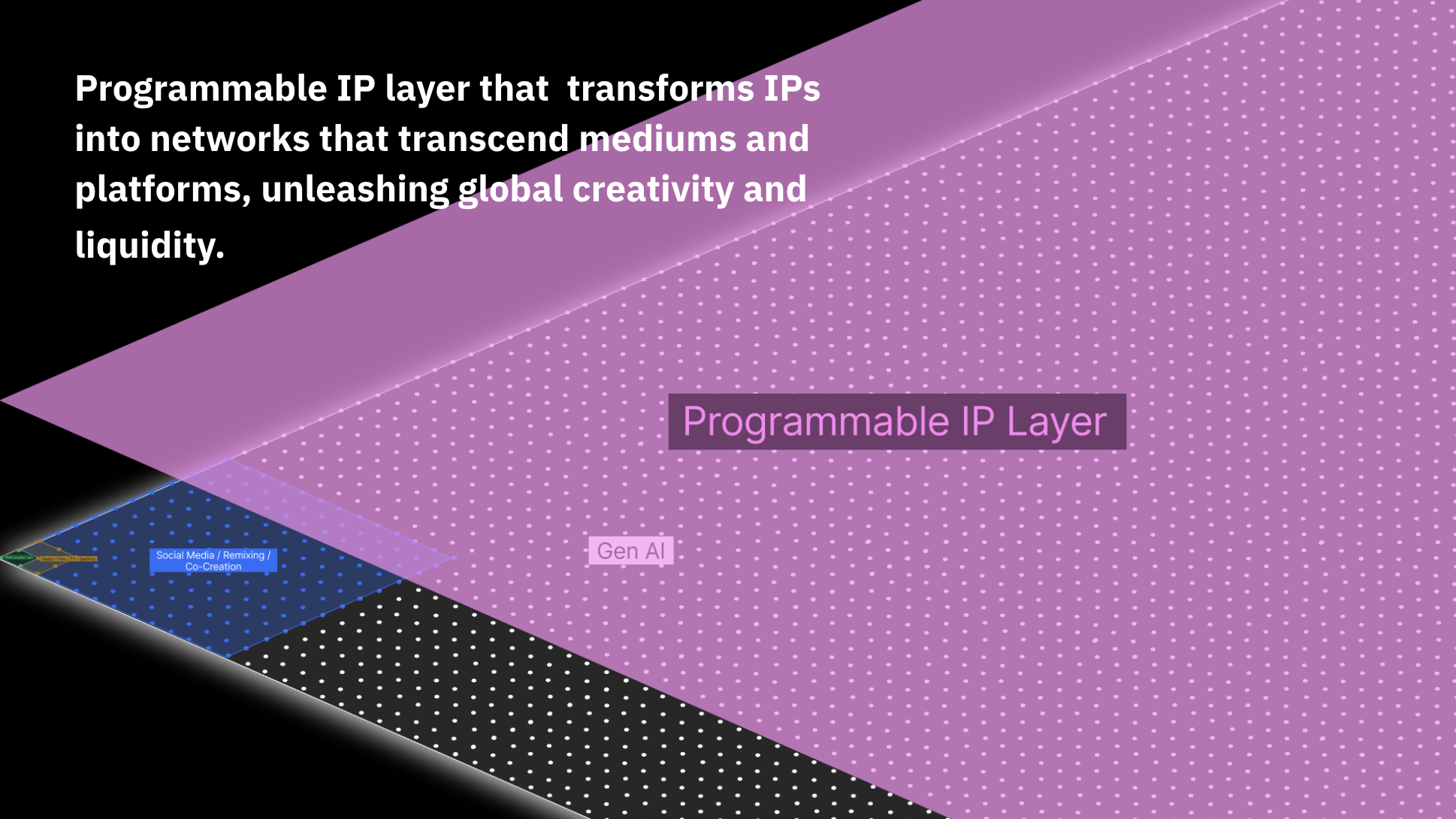
Story Protocol is building a programmable IP layer, bringing programmability directly to the level of intellectual property. Story Protocol transforms IP into networks that transcend media and platforms, unleashing global creativity and liquidity. Unlike static JPEGs, which lack interactivity and composability with other assets, programmable IP is dynamic and scalable. Creators and applications can register their IP on Story Protocol, converting static IP into programmable IP by declaring a set of on-chain rights that any program can read and write.
How It Works
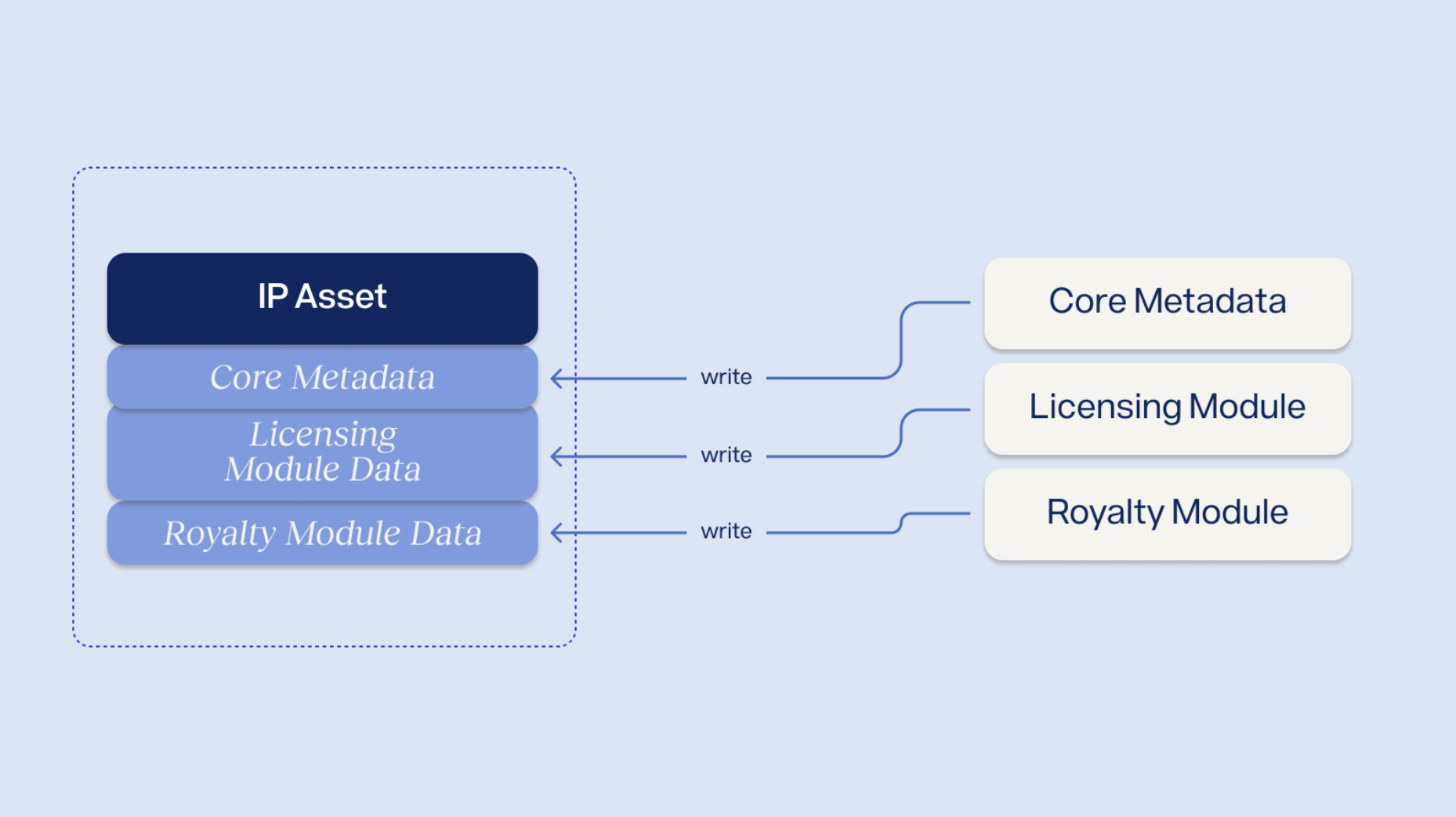
Our programmable IP layer consists of two elements: data structures and modules. Data structures are the "nouns" of the protocol, storing relevant IP metadata into "IP Legos." Modules are the "verbs," providing diverse functionalities for IP assets registered on the protocol. Story Protocol’s data structures capture the core components of IP, while our modules represent the operations that can be performed on those data structures.
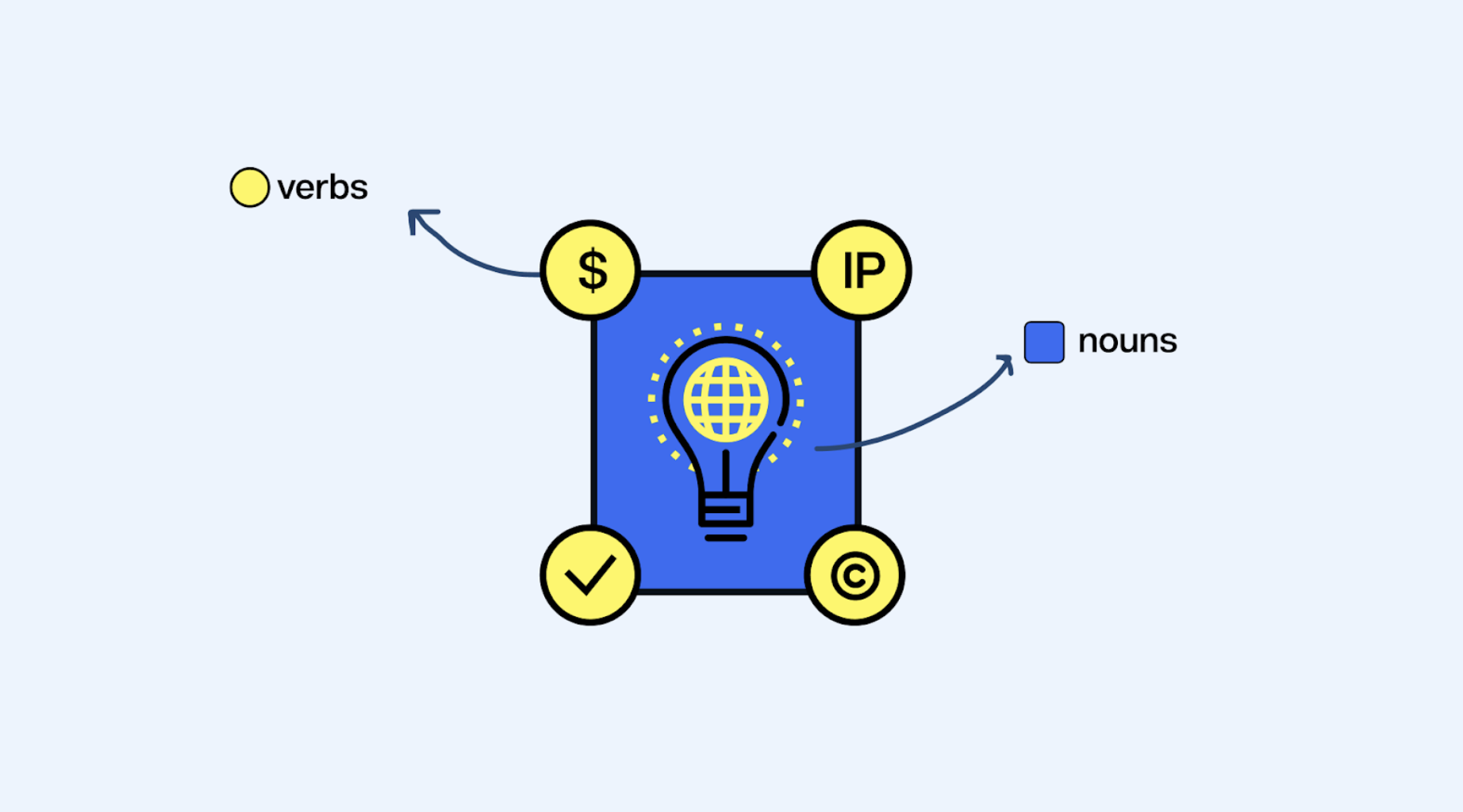
Data structures provide an on-chain, scalable, and composable standard for programmable IP. Just as the creation of protocols like HTTP, HTML, and CSS accelerated internet adoption, Story Protocol’s IP standards are designed to similarly simplify and network IP. We leverage ERC-6551 implementation, enabling any existing or new NFT to access our protocol via bound accounts. This standardization allows any application to easily read from and write to programmable IP.
Modules form the functional layer of programmable IP. Once IP is captured into our IP Legos, it can be seamlessly composed and extended through our modules. Modules are functions that unlock a range of capabilities such as authorization, revenue streams from derivative works, and access to global capital. For example, our licensing module enables programmable license NFTs to be generated as flexibly and expressively as code—a programmable Getty Images applicable to all forms of IP. Creators can transparently set conditions for others to remix their creative works, enabling seamless expansion of their creations without relying on one-on-one legal negotiations, paperwork, or specialized agreements.
By making IP programmable, Story Protocol turns code into law, adding readability and liquidity to IP.
Increasing Readability
Currently, rights and ownership status of static IP—whether on-chain or elsewhere—are fragmented and opaque. The current copyright.gov website has a Craigslist-style user interface with minimal informational clues. In contrast, Story Protocol is establishing a simple, composable, and fully on-chain standard for IP information and rights. We are aggregating the world’s IP onto the blockchain. As more IP registers on Story Protocol, we will become the universal IP ledger, enabling developers and creators to explore, remix, and profit from creative works via simple API calls—eliminating unnecessary intermediaries.
Unlocking Liquidity: Frictionless Remixing
Creating a universal, programmable IP ledger is just the first step. Beyond consolidating global IP under a single composable standard, Story Protocol allows creators to attach on-chain, legally binding, and automatically enforceable rights to their IP. This means anyone in the world can access and license global IP. We’ve created Programmable IP Licenses (PIL), combining the simplicity of Creative Commons with built-in value capture and commercialization options. Creators can choose from a set of parameters (or select one of our preset “simple styles”), reflected both in legal text and enforced through on-chain terms. By eliminating all remix friction, Story Protocol leverages global creativity and generates IP liquidity.
Cultivating the Next Marvel
Today, the process of developing IP is neither transparent nor affordable. For example, Marvel had to engage in costly and complex negotiations with Sony to regain rights to Spider-Man. If another major company wanted to use Spider-Man, they would need to start entirely new negotiations. For individuals, even this latter route is closed—they cannot discover what rights are available to them. Because the current static IP growth model is expensive and unscalable, only large corporations can participate in licensing, leaving most artists’ and fans’ creativity untapped.
Enter Story Protocol: Any creator worldwide can register their IP on-chain and declare pricing and permissions for their creation. On the other side, anyone can discover and match these terms to automatically use that IP. The creator of Spider-Man could register it as an IP asset, making it accessible through Story Protocol’s no-license-needed module. The creator could set on-chain terms defining upfront payments, royalty structures, and other details related to the Spider-Man IP asset. Anyone interested in Spider-Man could discover the IP, accept the terms, and obtain a license with a single click—all handled by Story Protocol, with no intermediaries.
The next generation of programmable IP will allow creators to build together, rather than operate in isolation.
Igniting the Programmable IP Ecosystem
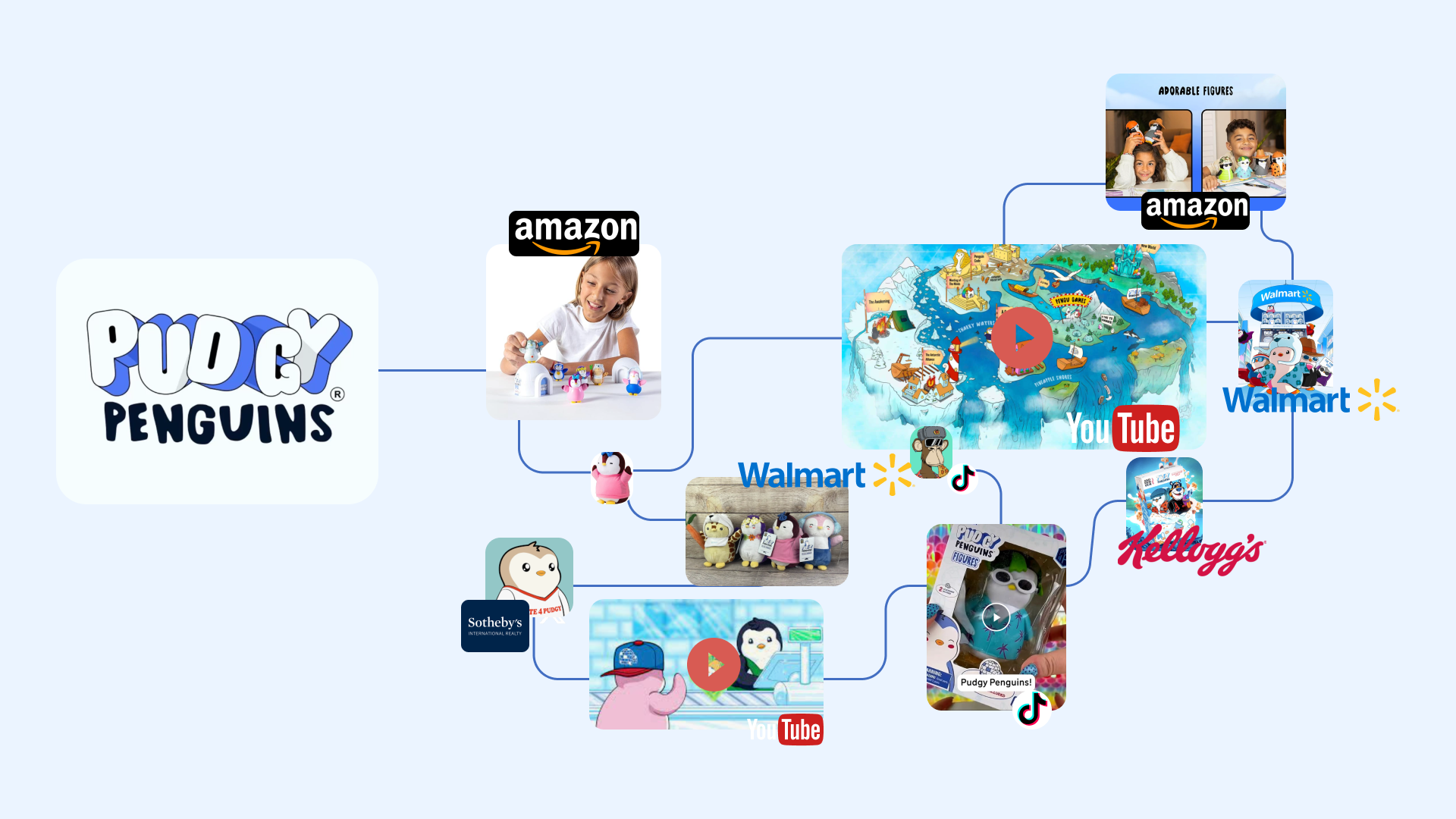
Like programmable money, programmable IP enables creativity to flow across protocols, applications, and platforms. Story Protocol’s programmable IP layer serves as foundational infrastructure powering a vibrant ecosystem of decentralized applications.
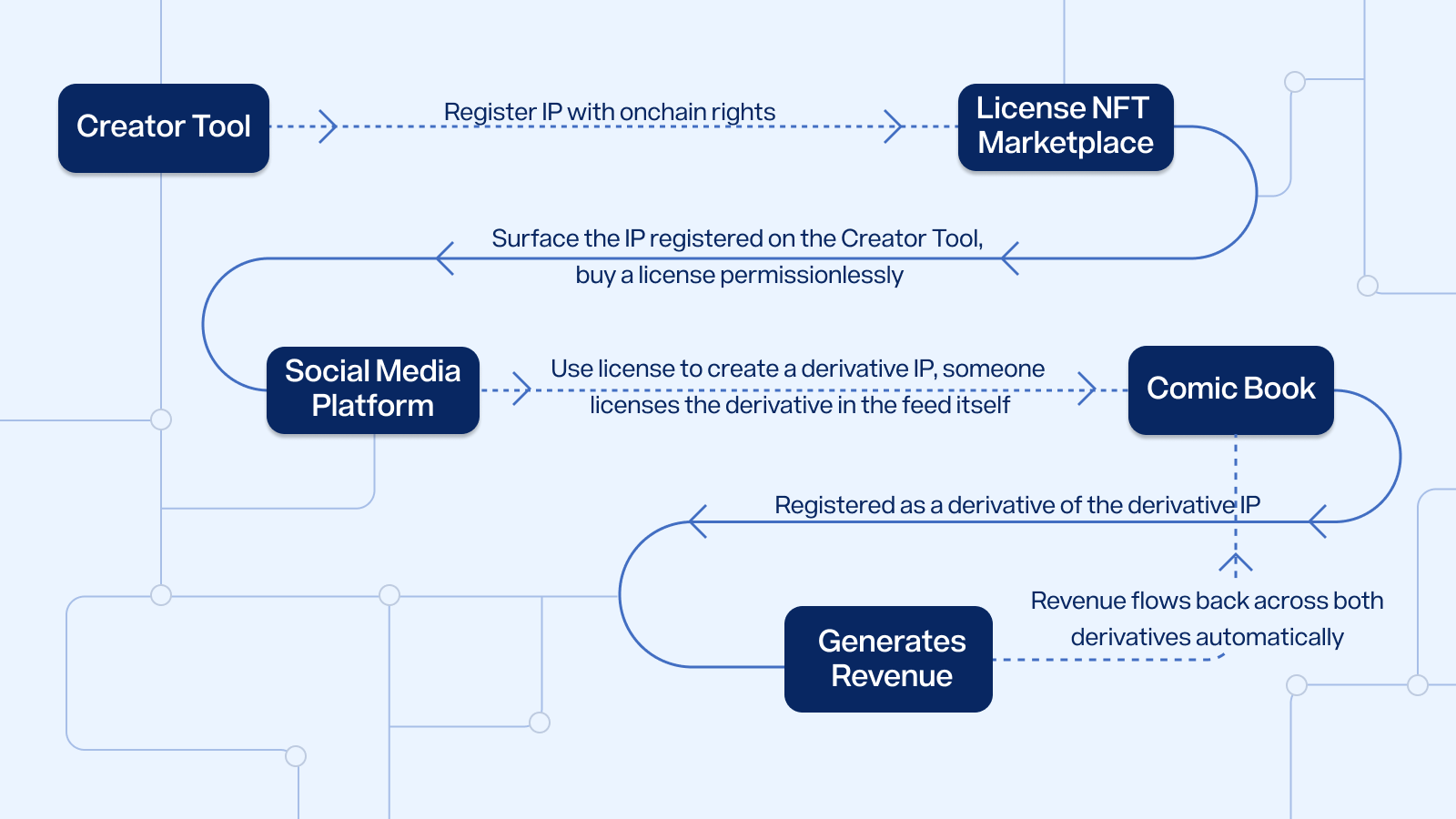
Within our ecosystem, applications gain immediate access to a rich repository of programmable IP. Imagine a comic book application built on our programmable IP layer. This app allows users to create and register unique narrative elements—characters, scenes, plots—directly on our protocol. Once registered, these narrative elements can transcend the boundaries of their original application, becoming portable and composable assets within our ecosystem. For instance, a character from the comic app could be frictionlessly remixed and expanded into an autonomous chatbot on a Character.AI-style platform.
This level of liquidity and interoperability not only enriches user experiences but also fosters virtuous cycles that amplify the value of all IP within our ecosystem. If DeFi enabled financial liquidity, Story Protocol cultivates IP liquidity. New applications no longer face cold-start problems—they always have access to all programmable IP registered on the protocol, assets that are easy to port and scale.
Welcome to the On-Chain Renaissance
We stand at a pivotal moment in the history of IP.
Every person on the internet now has access to a built-in global distribution network and the most powerful creative tools ever invented. Yet creators still struggle to protect, distribute, and monetize their intellectual property. Paper-based legal documents and armies of lawyers cannot operate at internet speed and scale—but programmable IP with on-chain rights can.
New media technologies always require new IP layers. During the last renaissance, Gutenberg’s printing press made mass reproduction possible, prompting the emergence of the first IP laws to incentivize creators. The combination of new technology and new IP laws led to an explosion in culture, art, and literature. Now, generative AI makes mass creation possible, demanding a new programmable IP paradigm.
We are entering a new wave of cryptocurrency and creativity. Only time will tell what new cultural creations await invention.
Join TechFlow official community to stay tuned
Telegram:https://t.me/TechFlowDaily
X (Twitter):https://x.com/TechFlowPost
X (Twitter) EN:https://x.com/BlockFlow_News
 @StoryProtocol






