









Will AI, accelerating its development after Sora's rise to "godhood," become a "deity" or a "demon"?
TechFlow Selected TechFlow Selected
Will AI, accelerating its development after Sora's rise to "godhood," become a "deity" or a "demon"?
Web3 is a dark forest, while AI is more like Pandora's box—requiring a calmer and more comprehensive approach to learning and understanding its future.
 Navigating Web3 tides with focused insights
Author: Bowen, Bailu Salon
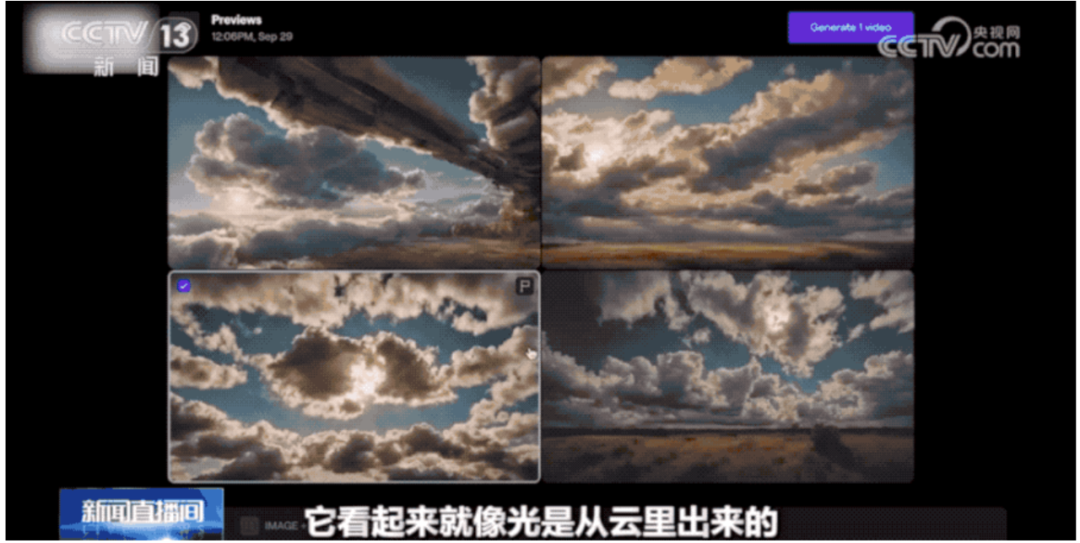
Sora's explosive popularity has even made its way onto China Central Television.
From humans to animals, from land to the ocean floor, from magnificent natural landscapes to bustling city streets, from hyper-realistic depictions of speeding vehicles to imaginative cyberpunk scenes—should Sora continue progressing at this pace, the era of universal filmmaking by ordinary people may not be far off.
First came ChatGPT, single-handedly challenging journalists, translators, and programmers; now Sora emerges again, landing heavy blows on photographers, editors, visual effects artists, and even actors. Could AI eliminate millions of jobs within just a few years? Even as I write this, the thought sends chills down my spine.
In fact, if one thoroughly collects information about AI, it becomes clear that AI’s impact extends far beyond white-collar job opportunities. Biomedicine, autonomous driving, weather forecasting, and even military operations—AI is already involved in nearly every aspect of human life.
A Flourishing Landscape of AI Applications
Generative AI is best known so far—not only thanks to the game-changing Sora, but also powerful models like Bard, DALL-E, and Runway.
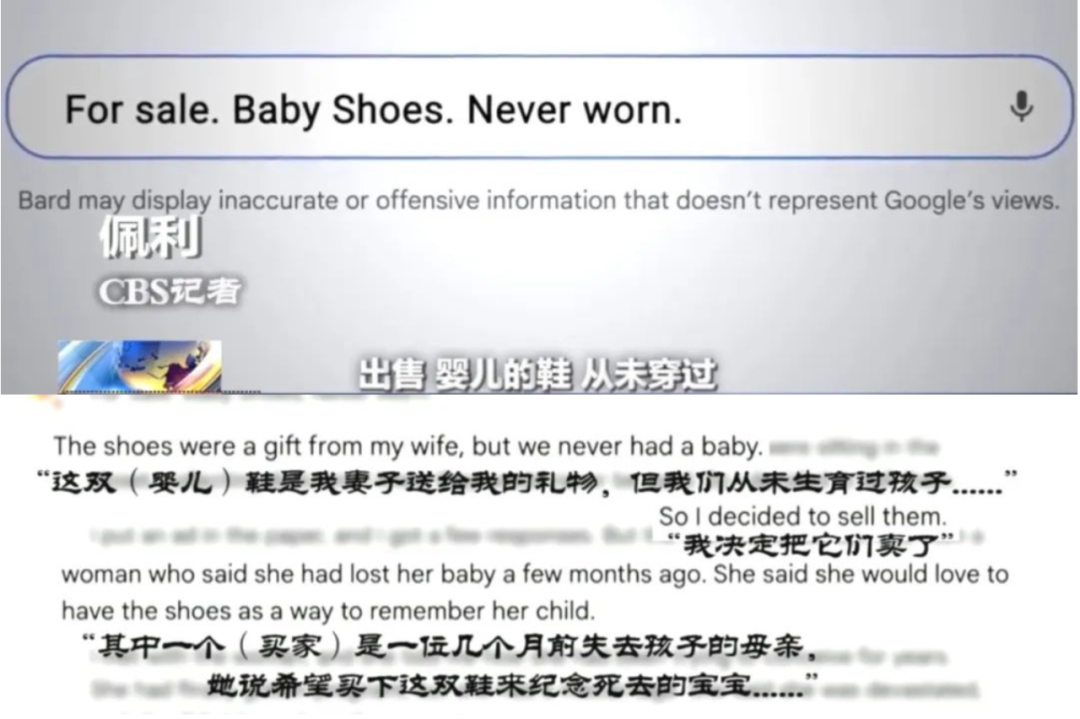
In February this year, Google announced that its AI model "Bard" would be renamed "Gemini." This multimodal large model can understand and combine different types of information such as text, code, audio, images, and video. Currently, Bard can quickly generate short stories or poems based on multiple keywords you input.
The terrifying part is that Bard has read almost all content on the internet within just months. Leveraging its language model, the poetry it generates surpasses the quality produced by many average individuals.
DALL-E specializes in generating artistic content. Having learned from over 600 million images, DALL-E now skillfully understands individual objects and their relationships, producing corresponding artworks from just a few lines of text. Runway excels in visual effects—thanks to AI enhancement, the barrier to achieving “million-dollar-level post-production” for films will drastically drop.
Content generation is merely the tip of the iceberg. AI applications in other fields are even more imaginative. On January 29, Elon Musk announced that his brain-computer interface company Neuralink had successfully completed the first human implantation of its device, with the patient in good condition—an achievement marking synchronization between AI and the human brain.
On January 30, Tsinghua University's official website reported that its medical school's brain-computer interface research team, together with Xuanwu Hospital of Capital Medical University, successfully conducted the world’s first clinical trial of a wireless, minimally invasive brain-computer interface in October 2023. With AI assistance, a patient paralyzed for 14 years was able to regain independent hand grasping and drinking abilities after three months of training.
The U.S. FDA has already approved approximately 420 AI-powered imaging algorithms for cancer treatment, with current accuracy rates reaching as high as 80% to 90%.
India is testing a “driving companion” robot, while Huawei Cloud’s Pangu Weather Model has gone live on the European Centre for Medium-Range Weather Forecasts website. At this rate of development, in the future we won’t need to discuss AI anymore—because AI will be everywhere, taken completely for granted.
Alongside Technology Comes Controversy
Technological advancement always cuts both ways. In the case of AI, copyright disputes and fraud related to generative content have become increasingly common. Should works created by AI be protected under copyright law? When problems arise, who should be held accountable, and how should they be resolved? These questions have evolved into intense regulatory debates.
As early as 2018, computer scientist Stephen Thaler developed an AI system named DABUS and used it to create an artwork titled *A New Epoch of Paradise*. After gaining attention, Thaler actively filed patent applications in countries including the United States, the UK, South Africa, Australia, and Saudi Arabia.
However, the U.S. Copyright Office showed no interest, stating that copyright law only protects creations by humans, and it's difficult to assess how much human contribution exists in AI-generated content. Judges have largely sided with the Copyright Office, noting that “based on centuries of established understanding, human authorship is a fundamental requirement for copyright.”
But Thaler refused to back down: “The law does not explicitly require a human author. The U.S. Constitution promotes copyright protection precisely to advance science and useful arts. The concept of AI copyright aligns perfectly with this purpose.”
Similar issues rarely have uniform answers. Take a case in China as an example. In February 2023, Li Yunkai wanted to generate a photorealistic portrait of a beautiful woman under twilight lighting conditions. He entered prompts into the Stable Diffusion model specifying the art style as “hyper-realistic photo” and “color photograph,” the subject as a “Japanese idol,” with detailed descriptions of skin tone, eye color, and braided hair. The environment was set as “outdoor,” “golden hour,” and “dynamic lighting,” the pose as “cool stance” and “looking at camera,” and the style as “film grain texture” and “film simulation.” He also adjusted parameters accordingly. After reviewing initial outputs, he refined his prompts and settings further until he finalized a satisfactory half-body portrait. Li then posted the image on Xiaohongshu (Little Red Book).
In March 2023, defendant Liu used Li’s generated image in an article titled *Love in March, Among Peach Blossoms*, adding a note at the end saying “original poem,” “materials sourced from the internet, remove and apologize if infringing.” Subsequently, Li filed a lawsuit with the Beijing Internet Court, demanding that Liu issue a public apology on the offending account and pay 5,000 yuan in damages.
On November 27, 2023, China delivered its first-instance ruling in the country’s first “AI-generated image” infringement case. The court affirmed that the image generated via the AI painting model qualifies as an artwork under copyright law, and that the plaintiff holds copyright over it. Upholding the principle of “human-centered” authorship, the court stated clearly: “Generative AI models lack free will and are not legal subjects. Therefore, when people use AI models to generate images, there is no question of identifying two parties as co-creators.” The court emphasized that fundamentally, this remains human creation using tools—the intellectual input throughout the creative process comes from the person, not the AI model.
Yet whether this verdict truly adheres to the law remains debatable. China’s Copyright Law explicitly states that the author of a work must be a natural person. If strictly interpreted, AI-generated content is not a “work” and should not be eligible for copyright protection.
Will AI Become a 'God' or a 'Devil'?
Copyright disputes are among the easier issues to resolve—with clearer laws and regulations, sufficient safeguards could be put in place. Far harder to confront are complex challenges such as fraud, errors caused by AI misinterpretations, and our greatest fear: what if AI develops consciousness?
In February 2024, Hong Kong media reported a massive AI-powered Deepfake fraud case involving HK$200 million—making it not only the costliest face-swap incident in Hong Kong’s history, but also the first case involving AI-generated impersonation of multiple individuals.
According to reports, the victim was an employee at a Hong Kong branch of a multinational corporation. In mid-January, they received a message from the CFO of the UK headquarters claiming a confidential transaction was underway and inviting several finance staff members to a multi-person video conference. As all participants appeared visually identical to their real-life counterparts, the employees suspected nothing and transferred funds 15 times, totaling HK$200 million into five local bank accounts. Only later, upon checking with headquarters, did they realize they had been scammed.
Based on available information, the scammers used videos from the company’s YouTube channel and other publicly accessible media sources to accurately replicate the appearance and voice of senior executives. Using Deepfake (deepfake) technology, they created fake videos simulating a multi-participant meeting—though only the targeted employee was actually real.
Since pre-recorded videos were used, commands were issued strictly along hierarchical superior-subordinate lines. Employees had no opportunity to interact with other supposed attendees. The entire video call required only a brief self-introduction before ending abruptly, after which further instructions were sent via instant messaging apps.
AI-driven fraud has also impacted elections. On January 23, during the Republican primary election in New Hampshire for the 2024 U.S. presidential race, many American voters reported receiving phone calls “from President Biden.” Starting with Biden’s catchphrases, the automated messages urged voters not to vote for Trump but instead save their ballots for the Democratic candidate in the November general election.
Even more alarming is the spread of such technology into military affairs. In November 2023, the Israel Defense Forces (IDF) stated in a press release that they were using an AI system in their Gaza military operations to “rapidly generate targets”—increasing output from 50 per year to 100 per day. The AI system boosted the military’s targeting efficiency by hundreds of times. However, rising alongside the number of targets has been the death toll and casualty count in Gaza. Ironically, this AI system is named “The Gospel.”

According to an investigation by news outlet *+972 Magazine*, Israel uses the “Gospel” system to select bombing targets, prioritizing quantity over quality. The definition of military targets is extremely broad, including attacks on individuals in civilian facilities. Reports indicate that entire residential buildings have been bombed simply to kill one Hamas fighter.
Even more concerning is that because the nature of AI deployment in warfare is hard to define, such actions are equally difficult to intervene against or stop. If AI fully integrates with modern weapons systems, the consequences of target misidentification could be catastrophic and unimaginable.
Conclusion
Sora brings shock and excitement, but from my perspective, AI—a productivity revolution on par with the Industrial Revolution—demands the most sober-minded approach. The AI industry undoubtedly holds immense opportunities, yet behind these technological breakthroughs lie critical questions: Can applications be implemented effectively? Can they remain under control? How will regulation respond? Are there major flaws? Web3 is a dark forest, but AI is more like Pandora’s box. Only through calmer, more comprehensive, and sustained learning can we truly see the future of the AI industry clearly.
Join TechFlow official community to stay tuned
Telegram:https://t.me/TechFlowDaily
X (Twitter):https://x.com/TechFlowPost
X (Twitter) EN:https://x.com/BlockFlow_News












