








Opinion: Sharing sequencer fees will attract developers to flock to the application layer
TechFlow Selected TechFlow Selected
Opinion: Sharing sequencer fees will attract developers to flock to the application layer
Developers build DApps for free use and can still make a profit.
 Navigating Web3 tides with focused insights
Author: Jarrod Watts, Developer Relations Engineer at Polygon Labs
Translated by: Luffy, Foresight News
My prediction: By 2024, we’ll start seeing more Web3 developers building at the application layer.
Why? Because of shared sequencer fees.
Here’s how I envision L2s beginning to share their sequencer profitability with DApp developers:
Today, most L2s run centralized sequencers.
Centralized sequencers typically generate revenue by charging users fees and take a portion of that revenue as profit.
-
+ Revenue: Transaction fees collected by the L2
-
- Costs: Sending transaction data back to L1 (Ethereum)
-
= Sequencer profit: What's left over.
This sounds simple because it doesn't factor in elements beyond the sequencer, such as publishing ZK proofs or fraud proofs. But just considering the sequencer alone, running them is typically a profitable operation for L2s.
For example, according to @DefiLlama, Arbitrum’s sequencer over the past 24 hours:
-
+ Collected $213,274 in user fees
-
- Cost $147,237 to send transaction data to L1
-
= $66,037 in profit
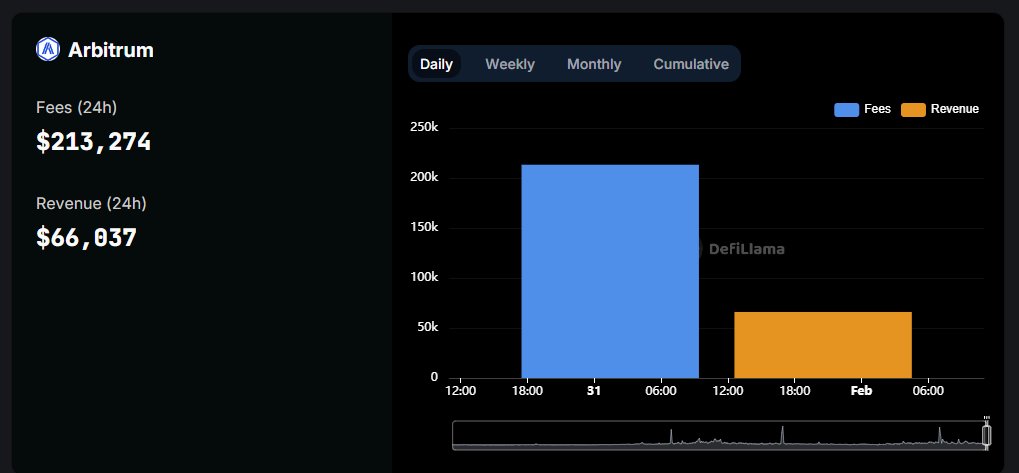
Here are definitions of these terms:
-
Fees: Transaction fees paid by users to the sequencer
-
Revenue: ETH received from users minus the cost of sending data to the L2
Sometimes, this profit does go back to the developers who generated those gas fees—for example, Optimism’s RetroPGF.
However, these mechanisms aren’t defined on-chain and are distributed to developers in one-off allocations months or even years later. They also rely on off-chain social systems.
So what exactly is shared sequencer fee distribution, and how does it solve this problem?
Distributing Sequencer Profits to Developers
Shared sequencer fees aim to redistribute sequencer profits directly back to DApp developers on-chain. This concept was first introduced by Blast (if I’m not mistaken).
As stated in their documentation, Blast “redirects sequencer fees to the DApps that generate them.”
This means Blast’s sequencer collects gas fees from users and redistributes them to the developers behind the DApps that generated those fees.
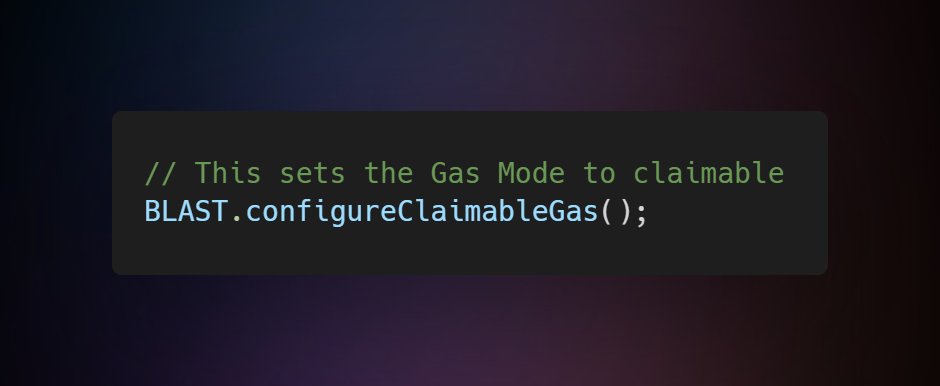
As a smart contract developer, you can opt your contract into receiving these fees by calling the function “configureClaimableGas” on the Blast smart contract:
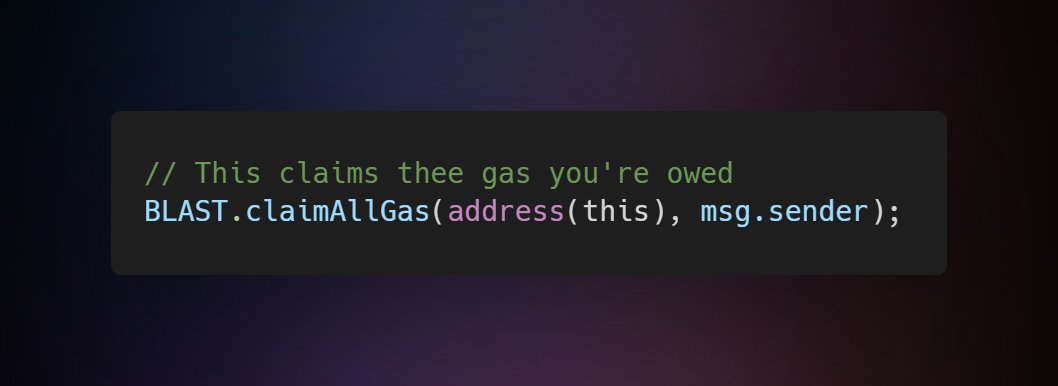
Then, you can claim your share of the gas fees generated by that contract at any time by calling another function, “claimAllGas”:
Mode Network (built on the OP Stack) implements a similar mechanism called “SFS” (Sequencer Fee Sharing).
It works almost identically to Blast—you first register your smart contract with the Mode contract by calling the “register” function.
Once registered, an NFT is minted to your wallet. After your contract generates fees, you can withdraw funds from the Mode contract by calling the “withdraw” function and providing your NFT token ID.
Similar Incentive Models
A similar alternative approach is Astar Network’s (built on Polygon CDK) “DApp Staking.”
As the name suggests, DApp Staking allows users to stake their tokens into specific DApps they wish to support.
Each block sends a portion of rewards back to the DApp where users have staked.
From their documentation: “In every block on the network, a portion of rewards is allocated to DApp Staking…” “…then, these rewards are distributed between the DApp operator (developer) and nominators.”
Risks
When incentives are tied to the amount of gas spent by a smart contract, developers are indirectly incentivized to make their contracts consume as much gas as possible.
This could lead developers to send unnecessary transactions to the network or perform needlessly expensive operations within functions.
In this scenario, users suffer losses, potentially paying more in gas fees than necessary—simply because developers want to earn more.
Conclusion
This is an idea that excites me because it means application developers could potentially build DApps that are free to use (still requiring gas fees) and still turn a profit.
For many Web3 applications, charging users to generate revenue doesn’t make sense. Beyond grants for public goods and infrastructure, there are few incentives for Web3 apps.
But now, this is starting to change.
Imagine a social DApp with no traditional business model. They’re simply operating an engaging app that users love. It generates massive traffic and burns through significant gas on the L2 where it’s built.
By opting into a shared sequencer fee system like this, a portion of the gas spent via their smart contract can be reclaimed from the network and returned to the developers.
Developers can focus on increasing product usage by delivering value to users, rather than worrying about sustainability.
This revenue can reward developers proportionally over the DApp’s entire lifecycle based on its usage.
In my view, one reason Web3 lacks innovation at the application layer is that developers have far fewer incentives to build there compared to building L2s.
These systems could mark the beginning of incentivizing developers to build at scale on the application layer.
Join TechFlow official community to stay tuned
Telegram:https://t.me/TechFlowDaily
X (Twitter):https://x.com/TechFlowPost
X (Twitter) EN:https://x.com/BlockFlow_News
 @0xPolygonLabs


