








Why Do ERC-5169 and TokenScript Need Smart Layer?
TechFlow Selected TechFlow Selected
Why Do ERC-5169 and TokenScript Need Smart Layer?
How a token-centric architecture drives the structural evolution of Web3?
 Navigating Web3 tides with focused insights
By LINDABELL and ZHIXIONG PAN
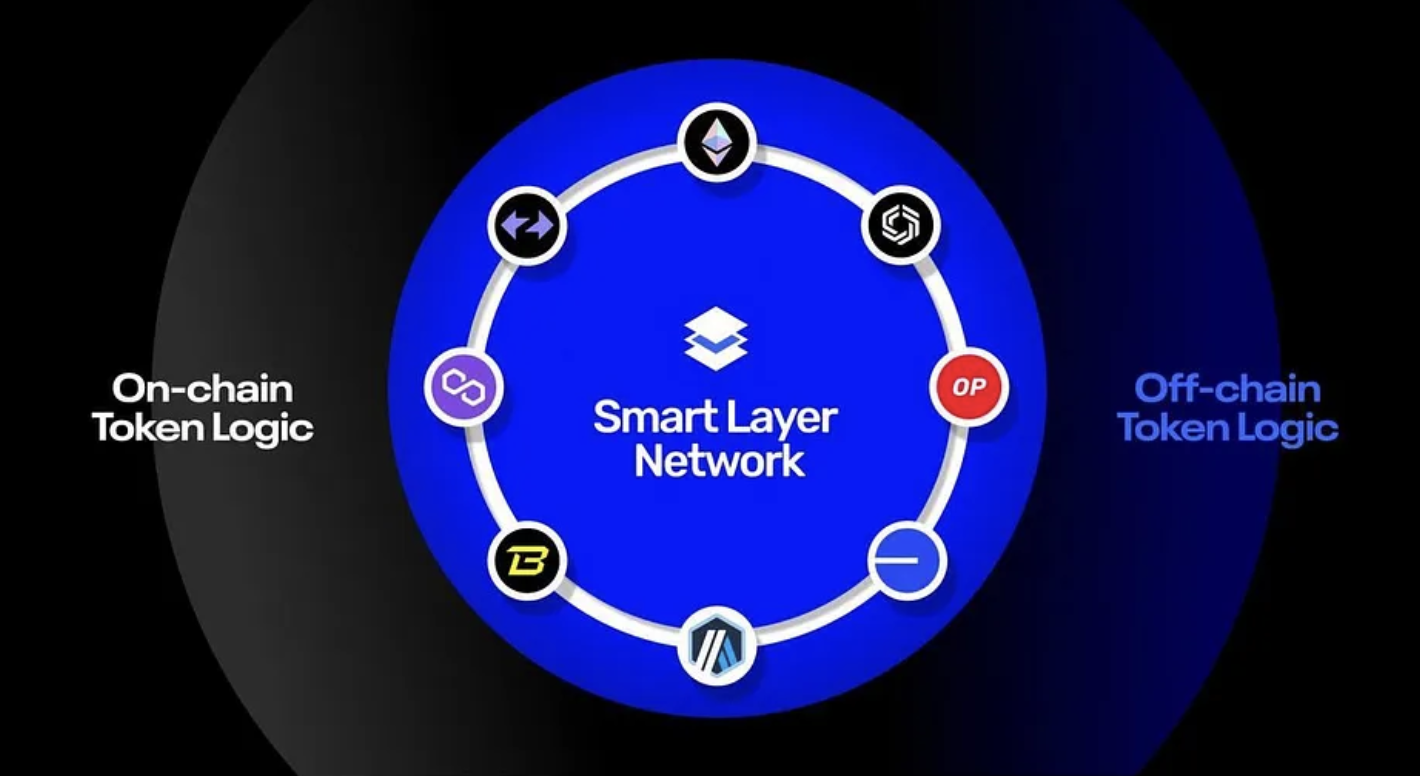
When the AlphaWallet team introduced TokenScript in 2019, they significantly expanded the industry's understanding of "tokens." Whether ERC-20 or ERC-721, by incorporating TokenScript’s extensibility, tokens could more easily execute predefined functions. The subsequent proposal of the ERC-5169 standard further enhanced their programmability and execution capabilities. Their next milestone—Smart Layer Network—represents another upgrade built on these foundations, extending the boundary beyond blockchain.
Or to put it this way:
-
TokenScript: Provides a secure, programmable front-end for tokens;
-
ERC-5169: Enables token contracts to invoke their corresponding token front-ends;
-
Smart Layer Network: Works with blockchain to extend off-chain logic and execution for tokens.
Smart Layer can be viewed as a service layer that connects the blockchain world with traditional web services, providing support and incentives to make tokenization of web services or integration with smart tokens easier—thus improving user experience and business efficiency. For token issuers, Smart Layer offers tools to create and manage programmable smart tokens. For traditional web services, it simplifies the process of integrating token functionality.
In many ways, Smart Layer redefines token economics: tokens are no longer just assets but become enablers of economic activity through the integration of rights, functions, and systems.
TokenScript
TokenScript is a programming interface designed specifically for tokenization, introduced in 2019 by Smart Token Labs. It enables users to access all token functionalities while allowing more advanced, complex, and flexible interactions between users and tokens.
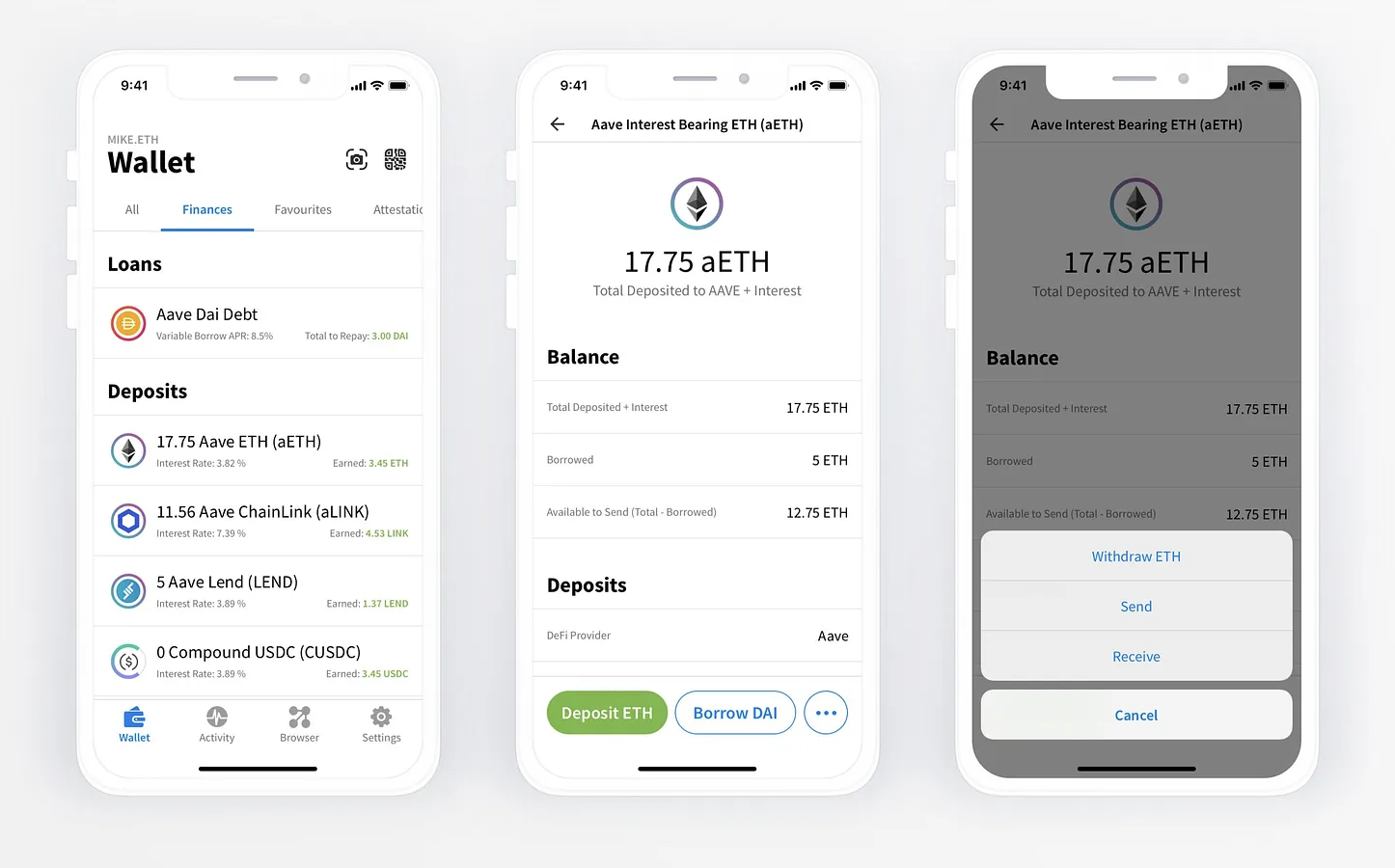
Simply put, TokenScript is a JavaScript code layer marked with XML that describes attributes, logic, actions, and user interfaces associated with a token. TokenScript files are issued and signed by the respective token issuer and can be imported by any service or device integrated with a TokenScript engine. Token issuers can embed any information and rules into the token without being constrained by smart contract limitations. The main goal of TokenScript is to allow tokens to operate seamlessly across platforms and wallets while consolidating all relevant information, making asset management and understanding easier for users. Currently, the AlphaWallet wallet supports all tokens implemented under the TokenScript standard.
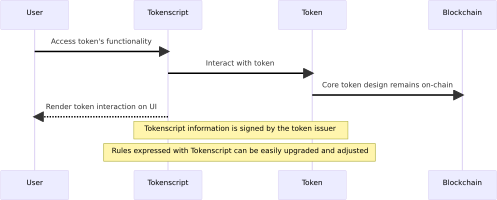
We can think of TokenScript as a computer program for handling music files, where the music file is like the token—immutable—but the playback software can be flexibly switched. This program can also auto-update, support recording, cutting audio, and organizing tracks into your preferred library. TokenScript ensures that interactions between tokens and software aren't arbitrary but are defined by the token issuer.
ERC-5169
TokenScript enhances token extensibility. However, to enable tokens to interact with various services and applications within the Web3 ecosystem, Smart Token Labs proposed the Ethereum standard ERC-5169 in May 2022 (now in Final status). This standard introduces the concept of executable scripts, enabling tokens to carry their own logic and behaviors, thus achieving stronger interactivity. TokenScripts can be embedded into tokens according to the ERC-5169 standard, allowing tokens to exhibit dynamic behavior when interacting with different services and platforms.
Specifically, ERC-5169 provides a URI pointing to an official script when calling a token contract (via scriptURI), ensuring users are using the correct script. This URI can be any RFC-3986 compliant identifier—such as links to IPFS multihashes, GitHub gists, or cloud storage. Each contract implementing this ERC includes a scriptURI() function returning the download URI for the client-side script, providing executable files for hosted tokens. Moreover, to avoid key risks, operational overhead, and storage costs from storing client scripts directly on-chain, ERC-5169 allows volatile data to be stored off-chain.
ERC-5169 opens up numerous possibilities for interactive tokens bridging Web2 and Web3, including creating custom "miniDapps" for individual tokens, allowing users to interact with contract features not provided by wallets, extending hardware wallet capabilities, and even controlling IoT devices via tokens within wallets. From an asset perspective, this standard greatly improves user experience by enabling direct program execution inside wallets, eliminating the need for repeated account and password creation. Additionally, because logic is embedded within the token itself, reliance on external interfaces is reduced, enhancing security and privacy during token interactions.
Tokenscript + ERC-5169 = ?
Baek Kim, partner at Hashed, once stated that Hashed's investment philosophy begins with the belief that all assets will eventually be tokenized. In fact, we've already seen two waves of tokenization—but neither has led to mass adoption. To achieve widespread use of tokenization, two core issues must be addressed:
-
How do we give users a better experience through tokenization?
-
How do we help enterprises gain greater efficiency through tokenization?
This is precisely the vision Smart Token Labs has long pursued: fragmenting all services into smart tokens (executable tokens and executable NFTs), where users hold full invocation and usage rights, enabling access to various third-party services. For example, we could issue a "Car Smart Token" representing car ownership. When users access third-party services like insurance providers via this smart token, no manual form-filling is required—the insurer can directly recommend suitable products based on the token. Furthermore, the insurance policy itself could also become a token linked to the "Car Smart Token."
This vision is made possible by Smart Token Labs’ integration of ERC-5169 and TokenScript. Under the ERC-5169 standard, scripts defined by TokenScript can be embedded into tokens, allowing them to dynamically interact with various services and platforms. By transforming tokens from simple assets into functional tokens, smart tokens enhance asset extensibility while opening new development paths for areas such as Web3 gaming and loyalty programs.
Web3 Gaming:
Smart tokens can serve as in-game items connecting users and project teams, allowing users to invoke various encapsulated functions within digital services—such as completing specific in-game tasks or cross-game achievements.
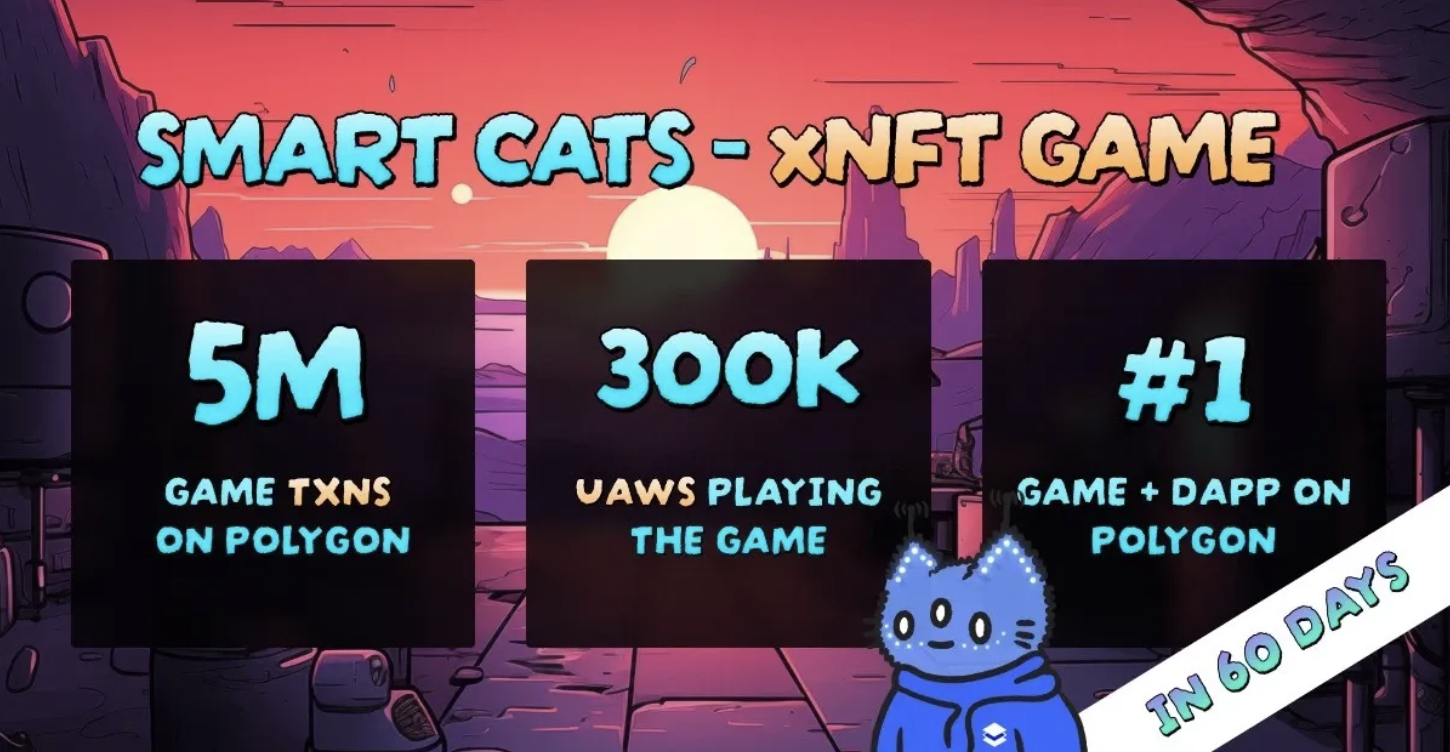
Smart Cats is a fully on-chain derivative collection of Cool Cat #2426 launched by Smart Layer on Polygon—and also a smart token. This NFT can run directly within a wallet like an app; users can click on Smart Cats and interact in multiple ways without leaving the wallet, such as feeding, cleaning, or inviting other Smart Cats to play.
Open Loyalty:
In 2023, Weiwu Zhang, CTO of Smart Token Labs, introduced the concept of "Open Loyalty" at EDCON 2023 and collaborated with the EDCON team to launch Permissionless Perks—a permissionless solution. Attendees received proof of ticket ownership via email, which could be stored locally in browsers and used to verify tickets and claim exclusive benefits with any third party.
Through Smart Layer, users can obtain identity-based entitlements by verifying off-chain smart tokens via URL—without opening a wallet or spending gas. Ticket data that would normally reside within the EDCON ticketing system now belongs to users, eliminating the need for EDCON to integrate with third parties.
AI Agents:
As all service providers begin tokenizing their offerings, the smart token system gradually forms a modular framework. This maximizes the potential for service invocation and unlocks maximum service value. For integrators, it means a more open integration market and lower integration costs. In the future, as smart token systems converge with artificial intelligence, when modular service ownership resides with users, individuals could authorize AI agents to freely invoke smart tokens from different websites and combine them to deliver personalized, customized services.
Decentralized Service Network: Smart Layer Network
As the central hub of a tokenized network, smart tokens encapsulate business logic, enabling tokens to engage in complex, interoperable interactions with various systems and tokens. Yet, blockchains only provide trust guarantees—they don’t allow smart tokens to be used directly on any website. Integration remains essential. To address this, Smart Token Labs launched Smart Layer, a programmable blockchain-based service network that brings smart tokens into gaming and loyalty ecosystems via ERC-5169 and TokenScript.
Smart Layer aims to promote the deployment and operation of smart tokens and TokenScript. From a website’s perspective, Smart Layer functions similarly to a RESTful API provider, enabling smart tokens to interact with websites, IoT devices, smart contracts, and more. For token issuers, it offers support for creating and managing programmable smart tokens. For traditional web services, it streamlines the integration of token functionalities. This architecture enhances the usability and interoperability of smart tokens, facilitating broader application across diverse scenarios.

Smart Layer achieves its functionality through three key components:
-
Blockchain: Executes token transaction rules via smart contracts and maintains snapshots of token operations for future verification.
-
Anchor Nodes: Operated by organizations selected by a DAO to ensure network stability, security, and alignment with service objectives.
-
Service Nodes: Assigned tasks via distributed hash tables and provide TokenAPIs for integration. Service nodes are incentivized with Smart Layer Tokens, paid by users or websites requiring token integration, with payments attached as incremental commitments to API calls. Smart contracts handle payments and may burn a portion of Smart Layer Tokens.
Smart Layer Tokens incentivize nodes to contribute resources to the network. Both types of nodes earn rewards in Smart Layer Tokens proportional to their resource contributions, ensuring continuous growth and sustainability of the network.
Smart Layer launched its testnet on January 15 and is expected to go live on mainnet in 2025. Despite being less than half a year old, Smart Layer has already demonstrated strong potential. Its xNFT game, Smart Cats, attracted over 300,000 unique active wallets within just 60 days of launch, becoming one of the most popular games in the Polygon ecosystem. Meanwhile, the public beta of the Smart Layer Launchpad received over 1,000 developer applications within just 10 days of its release earlier this year.
Airdrop Imminent?
With market recovery, excitement around airdrops is rising again. Smart Layer is reportedly planning an airdrop soon, with details to be announced in phases over the coming weeks. According to available information, Smart Layer is supported by two distinct tokens: the governance token SLN and the service unit token SU. The governance token is the primary one, granting holders voting rights on protocol decisions and direct income and token rewards from operating nodes. This indicates that SLN’s value is directly tied to the scale and adoption of the Smart Layer network. Based on current testnet data, within less than 10 days of launch, Smart Layer has already supported over 3 million executable NFTs and processed more than 9.2 million transactions. Regardless of how the airdrop is structured, getting started with Smart Cats or upcoming products is a solid first step.
Join TechFlow official community to stay tuned
Telegram:https://t.me/TechFlowDaily
X (Twitter):https://x.com/TechFlowPost
X (Twitter) EN:https://x.com/BlockFlow_News
 @ChainFeedsxyz











