








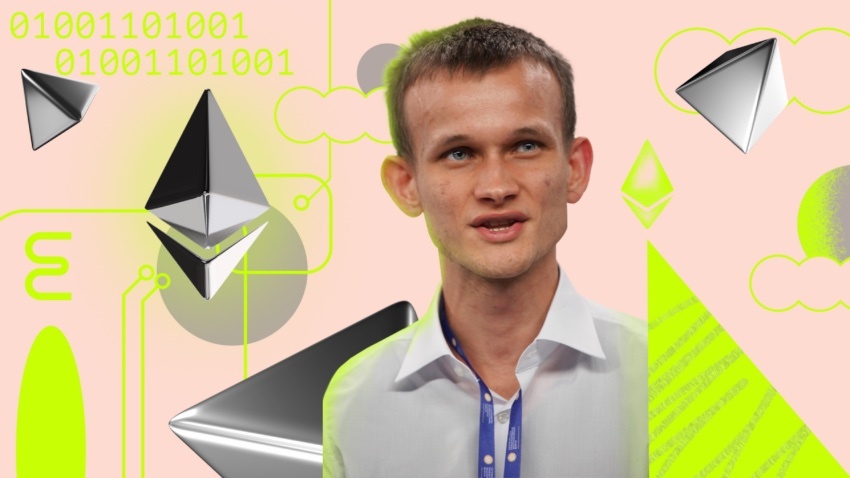
30 Reasons to Love Vitalik Buterin
TechFlow Selected TechFlow Selected
30 Reasons to Love Vitalik Buterin
He did not participate for the sake of money.
 Navigating Web3 tides with focused insights
Text: Daniel Kuhn, CoinDesk
Translation: Deng Tong, Jinse Finance
Vitalik Buterin, co-founder and spiritual leader of Ethereum, has turned 30. He calls it "the day my childhood ends." Buterin has already achieved a great deal in his life—and still has much more to accomplish. Following in the footsteps of Satoshi Nakamoto, that fictional anonymous hero, is no easy task, but Buterin has risen to the challenge by consistently putting aside personal ambition. To celebrate his many accomplishments, here are 30 reasons why we love Buterin. Of course, this list isn't exhaustive.
1. Buterin speaks his mind: In 2017, at the peak of the initial coin offering (ICO) boom when the total crypto market cap exceeded $500 billion, Buterin tweeted: "Have we made any money?" A fair question, considering that many—though not all—of the largest ICO projects had yet to deliver anything.
2. His intentions are right: Buterin’s mission in creating Ethereum was to build a “world computer” capable of running any imaginable application. Yet throughout his career, he has consistently highlighted projects focused on solving real-world problems.
3. He shares the passion: Buterin first learned about Bitcoin from his father at age 17. Today, both his parents, Dmitry Buterin and Natalia Ameline, work in the crypto industry. Ameline is helping build Metis, an Ethereum Layer 2 solution.
4. He's a true Bitcoiner: Around the time he first encountered Bitcoin in 2011, Buterin began writing articles for the now-defunct publication Bitcoin Weekly to learn as much as possible about the emerging technology. By year’s end, he co-founded Bitcoin Magazine, becoming one of its most prolific contributors and exploring Bitcoin concepts—such as native smart contracts and layer-two scaling—that are still discussed today.
5. He's humble like Pi: He's been featured on Forbes’ 30 Under 30, Fortune’s 40 Under 40, received honorary doctorates, and been the subject of numerous magazine profiles. Yet no one could credibly claim Buterin entered this space for money or fame. Try
6. He's contributed to economics: Together with Glen Weyl and Zoe Hitzig, Buterin helped develop a mechanism for fairly allocating funds without central decision-makers, known as quadratic voting. Today, this system is widely used in crypto, especially in the decentralized application Gitcoin, which funds public goods.
7. He's generous with both time and money: In recent years, Buterin has made multiple charitable donations, supporting causes such as AI safety, human longevity research, and other practical concerns.
8. Even when trolling, he does good: During the initial Dogecoin craze in 2021, the Shiba Inu team sent Buterin around 5% of SHIB’s circulating supply—clearly for promotional purposes. Buterin chose to donate these tokens, then worth over $1 billion, to India’s Crypto Relief fund.
9. He speaks up for what he believes in: Though born in Russia, Buterin has publicly opposed his homeland’s invasion of Ukraine, famously tweeting on the first day of the invasion: "Ethereum is neutral, I am not."
10. He loves simple things: Buterin’s current Twitter/X bio, “mi pinxe lo crino tcati,” translates from Lojban—a rule-based constructed language—as “I drink green tea.” He’s also known for mixing green tea with red wine (after all, none of us are perfect).
11. Impeccable fashion sense: Whether it’s unicorn T-shirts, fluffy onesies, or glasses straight out of The Matrix, Buterin knows how to pull off a unique look.
12. He pokes fun at himself: Remember Vitalik’s “badger dance” at the opening of Edcon 2018 in Toronto?
13. He has a distinctive voice: Somewhere between Professor Frink from The Simpsons and Kermit the Frog, Vitalik’s unique vocal tone has become part of history.
14. Vitalik allows his thinking to evolve and isn’t afraid to challenge himself later: Here’s a thread where Vitalik reconsiders many of his past views. This isn’t the first time, nor will it be the last.
15. He isn’t afraid to critique his idols: Many crypto leaders cite James Dale Davidson and William Rees-Mogg’s book The Sovereign Individual as a favorite—Buterin included. In 2020, he published a detailed analysis of the book’s core ideas, how they apply to today’s digital world nearly 30 years after publication, and where the authors got things right—or wrong.
16. He’s an advocate for accessibility: Not only was Ethereum designed to be open and usable to anyone with internet access, but Vitalik continuously explores ways to reduce fees, improve access, and subsidize usage—including some controversial methods other blockchain advocates might abandon.
17. He knows how to throw a great party: Just ask anyone who attended Zuzalu in Montenegro, a week-long pop-up community event for those interested in crypto and longevity research.
18. He leads by example: Vitalik frequently uses decentralized applications—from social media platforms like Farcaster to donation protocols like Gitcoin—making him perhaps the ideal Ethereum user.
19. He sees competing chains as positive-sum, not zero-sum: After Solana weathered the collapse of FTX and Sam Bankman-Fried, who were closely tied to its ecosystem, Buterin tweeted: “Smart people tell me Solana has a genuine, smart developer community; now that the awful opportunists are gone, the chain has a bright future. Hard for me to judge from the outside, but I hope the community gets a chance to thrive.” No need to overstate it—this single tweet did wonders for restoring confidence in rival projects. He doesn’t kick others when they’re down; he offers a hand.
20. Though technologically optimistic, he thinks pragmatically: Consider his earlier blog post discussing the intersection of AI and crypto. Buterin emphasizes areas he sees as most feasible—like enabling AI agents to operate on-chain, where “the underlying mechanisms continue to be designed roughly the same way.” (See “Vitalik: How I See the Intersection of Crypto and AI, and Its Prospects and Challenges”)
21. He knows how to coin new terms: From his recent proposal of Defensive/Decentralized/Differential Acceleration (d/acc)—a playful counterpoint to the hyper-aggressive, pro-technology, pro-capitalism e/acc, advocating for a more cautious human approach to technological progress—to the blockchain “trilemma,” Vitalik has coined many phrases that have become mantras.
22. He’s somewhat of an anarchist (in a good way): Beyond creating Ethereum, Vitalik has contributed to more radical projects, including Cody Wilson’s reportedly censorship-resistant DarkWallet.
23. He pays homage: The name “Ethereum” is commonly believed to derive from “Ethernet,” the physical backbone of the internet. (Though some say it also references “aether,” the medieval fifth element—but Buterin says he came across it while reading Wikipedia.)
24. If he doesn’t have time to implement something, he shares the idea anyway: Take Uniswap, the largest decentralized exchange.
25. He’s an exceptional developer: This may seem obvious, but if you need an example, consider The Merge—an event often described as “changing an airplane’s engine mid-flight.”
26. He embodies the best of Ethereum’s “social layer”: After the infamous DAO hack, Buterin initially advocated for a soft fork to avoid rewriting blockchain history. Over time, partly due to technical challenges, the community opted for a hard fork, resulting in two chains: Ethereum and Ethereum Classic. This moment was pivotal in crypto history, demonstrating that code isn’t always law and that people have a voice in how projects evolve.
27. He’s not in it for the money: In a recent blog post, Buterin lamented crypto’s excessive focus on profit. He wants to “make Ethereum a cypherpunk project again.”
28. He has a sense of humor: I’m not entirely sure if he invented the terms Merge, Verge, Surge, Purge, and Splurge to describe Ethereum’s future development phases, but he definitely played a role.
29. He seeks revenge (when justified): There’s strong evidence that the spark for creating Ethereum came when Vitalik’s warlock character in World of Warcraft was “nerfed.” After Blizzard weakened his favorite Life Tap spell, Vitalik began pondering how people could gain control over their digital lives. He also keeps tabs on Craig Wright.
30. Vitalik is the kind of leader crypto needs: After Bitcoin’s creator Satoshi Nakamoto stepped away, someone needed to uphold the ideals of decentralization, censorship resistance, and credible neutrality. Buterin has taken on the difficult task of staying in the spotlight while building technology that runs counter to many of today’s most powerful institutions. As he wrote in a recent manifesto, he does it because he believes it’s right—because open-source, openly accessible technology will ultimately benefit the world: “I believe these [technologies] are very good because I believe humans are very good.” Crypto is good, in part, because Vitalik is good.
Join TechFlow official community to stay tuned
Telegram:https://t.me/TechFlowDaily
X (Twitter):https://x.com/TechFlowPost
X (Twitter) EN:https://x.com/BlockFlow_News
 CoinDesk











