








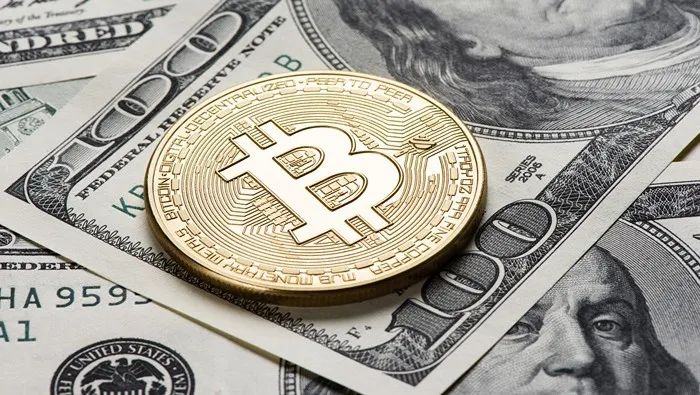
Forbes: Bitcoin ETFs Will Upend the Rules of the Dollar
TechFlow Selected TechFlow Selected
Forbes: Bitcoin ETFs Will Upend the Rules of the Dollar
Americans can buy Bitcoin as insurance against the dollar's depreciation due to the surge in federal debt.
 Navigating Web3 tides with focused insights
Author: Avik Roy
Translator: Qin Jin
Discussions about the U.S. Securities and Exchange Commission’s (SEC) approval of the long-awaited spot Bitcoin ETF have largely focused on how the SEC’s move might affect Bitcoin’s price. But that’s just the short-term story.
The most profound impact of the ETF-driven institutionalization of Bitcoin is that it will become extremely difficult for the United States to ban digital assets, thereby allowing Bitcoin to permanently influence the evolution of how money fundamentally works.
Why Is Creating More Money Politically Popular in the Short Term?
Fifteen years ago, when Satoshi Nakamoto published the Bitcoin white paper, he reframed long-standing concerns about the political economy of money: governments have strong political incentives to devalue their official currencies in order to spend more than they earn.
Increasing government spending is politically popular, while raising taxes is not. As a result, governments constantly try to increase spending through borrowing without raising taxes—and when borrowing no longer works, they simply create more money out of thin air.
In the short term, this strategy works politically, as politicians can secure re-election by increasing spending among favored constituencies. But in the long run, increasing the supply of money leads to declining purchasing power per unit of currency—simply put, inflation.
Satoshi and his followers sought to solve this problem by fixing Bitcoin’s supply at 21 million units. Unlike the dollar, euro, yen, or yuan, whose supplies increase over time, Bitcoin’s circulating supply cannot be altered by politicians. In theory, this makes Bitcoin a more reliable store of value over the long term compared to modern fiat currencies.
Could the U.S. Government Ban Bitcoin?
If Bitcoin truly becomes a superior store of value relative to the dollar, some worry that the U.S. government might outlaw the cryptocurrency. Ray Dalio, founder of Bridgewater Associates, said in a 2021 Yahoo Finance interview with Andy Serwer: "There's a good chance they'll outlaw Bitcoin." Reflecting on wartime policies from the 1930s, Dalio observed that governments feared capital flight from dollars into gold, so “they outlawed [private ownership of] gold... and they also established foreign exchange controls because they didn’t want money going elsewhere.”
Technically speaking, the U.S. government cannot ban Bitcoin any more than it can ban the internet. Bitcoin operates on a distributed network of computers that functions beyond the jurisdiction of the United States. Indeed, despite China banning Bitcoin mining in 2021, the Cambridge Centre for Alternative Finance estimated that around one-fifth of global Bitcoin mining electricity consumption still occurred in China by early 2022. Chinese crypto traders often use virtual private networks and other tools to evade law enforcement.
But that doesn't mean the U.S. government lacks influence. Theoretically, the U.S. could ban exchanging dollars for Bitcoin on exchanges like Coinbase or Kraken. It could prohibit mainstream banks from doing business with Bitcoin companies. Through SEC mandates or accounting rules, it could prevent firms like MicroStrategy from holding Bitcoin on their balance sheets. Governments could erect barriers preventing retailers from accepting Bitcoin payments.
In other words, while the U.S. cannot stop the Bitcoin network itself, it could theoretically make it extremely difficult for average Americans to use or purchase Bitcoin—just as Franklin D. Roosevelt banned private gold ownership in 1933.
ETFs Make Banning Bitcoin Extremely Difficult
This is where the new Bitcoin ETFs come in. With a stroke of the SEC’s pen, we now see some of the biggest and most powerful players in finance—including BlackRock, Fidelity, Invesco, and Franklin Templeton—holding billions of dollars’ worth of Bitcoin. These ETFs give immediate exposure to Bitcoin for a vast number of investors who have never traded on a crypto exchange or held private keys.
This matters because it dramatically expands the coalition of special interests that benefit from maintaining and strengthening Bitcoin’s role in U.S. financial markets. If you’re a congressman hostile to Bitcoin, or an ambitious regulator seeking to implement some of the restrictive policies I described above, you won’t just hear from individual Bitcoin holders—you’ll also face pushback from major financial players with substantial influence in Washington.
For this reason alone, it becomes much harder for policymakers to actively restrict Bitcoin’s adoption. As someone who frequently interacts with Washington, I can confirm the conventional wisdom that special interest groups play a significant role in shaping policy. Lobbyists are particularly skilled at opposing new regulations that threaten their clients’ interests.
Today, more than $25 billion worth of Bitcoin is already held within ETFs, with about $1 billion accumulated in just the first two weeks after the SEC approved the new funds. Even for giants like BlackRock, that’s real money.
The U.S. SEC Knows What It Has Done
The SEC understands all of this, which is why the battle over approving Bitcoin ETFs was so fierce. Under relevant U.S. securities laws, the SEC’s responsibility isn’t to determine whether Bitcoin is a good investment—that decision lies with investors and the market. Yet for the past decade, the SEC steadfastly resisted allowing investors to access Bitcoin through mainstream, regulated vehicles. This resistance stemmed precisely from the SEC’s awareness that its endorsement would significantly boost investor interest in digital assets.
The SEC only approved spot Bitcoin ETFs under legal pressure from a unanimous appellate court opinion written by Neomi Rao of the U.S. Court of Appeals for the District of Columbia Circuit, which ruled that the SEC’s opposition to Bitcoin ETFs was “arbitrary and capricious,” especially since the agency had already approved nearly identical products based on Bitcoin futures and other commodities.
SEC Chair Gary Gensler has repeatedly stated that Rao’s ruling forced his hand. Given these circumstances, Gensler wrote in a statement that “I believe the most sustainable path forward is to approve listings,” even as he criticized Bitcoin as “largely a speculative, volatile asset” that is “used for illicit activity including ransomware, money laundering, sanctions evasion, and terrorist financing.” Two other Democratic appointees on the commission, Caroline Crenshaw and Jaime Lizárraga, voted against the January ETF approvals.
What Happens in a Crisis?
I’ve explained why the approval of Bitcoin ETFs makes it difficult for the government to ban Bitcoin in the U.S., at least in the foreseeable future. But what if Bitcoin bulls are right, and Bitcoin rises enough to compete directly with the dollar as a store of value? Would the U.S. then step in to suppress Bitcoin?
It could try. But by then, it would likely be too late. Take Argentina as an example. The Argentine government bans citizens from converting more than $200 of pesos into dollars annually. Despite this restriction, Argentina’s central bank estimates that Argentines hold dollar-denominated assets equivalent to 10% of all physical dollars in circulation—over $200 billion in cash.
Currently, U.S. federal debt stands at approximately $34 trillion, meaning there are roughly $34 trillion in Treasury securities outstanding. Bitcoin’s liquidity—or its appeal to large institutions as a store of value—might begin to rival U.S. Treasuries at around one-fifth of that value (say, $7 trillion, roughly nine times Bitcoin’s current market cap). As federal debt continues to grow, the threshold for liquidity competition would rise accordingly.
However, by circular logic, Bitcoin’s market capitalization could only reach $7 trillion if it gains far broader acceptance as a store of value than it currently enjoys. By that point, any U.S. attempt to crack down on Bitcoin would likely backfire—much like Argentina’s current capital controls—because such actions would signal to global markets that the U.S. no longer believes in the inherent superiority of the dollar.
Supporting Fiscal Reform
Ideally, the U.S. would address its fiscal problems—most notably excessive spending on healthcare entitlements—and place federal debt on a sustainable trajectory. Until then, Americans can buy Bitcoin as insurance against dollar depreciation driven by surging federal debt. The SEC has just ensured that this insurance will remain available for the long term.
Join TechFlow official community to stay tuned
Telegram:https://t.me/TechFlowDaily
X (Twitter):https://x.com/TechFlowPost
X (Twitter) EN:https://x.com/BlockFlow_News
 Forbes











