








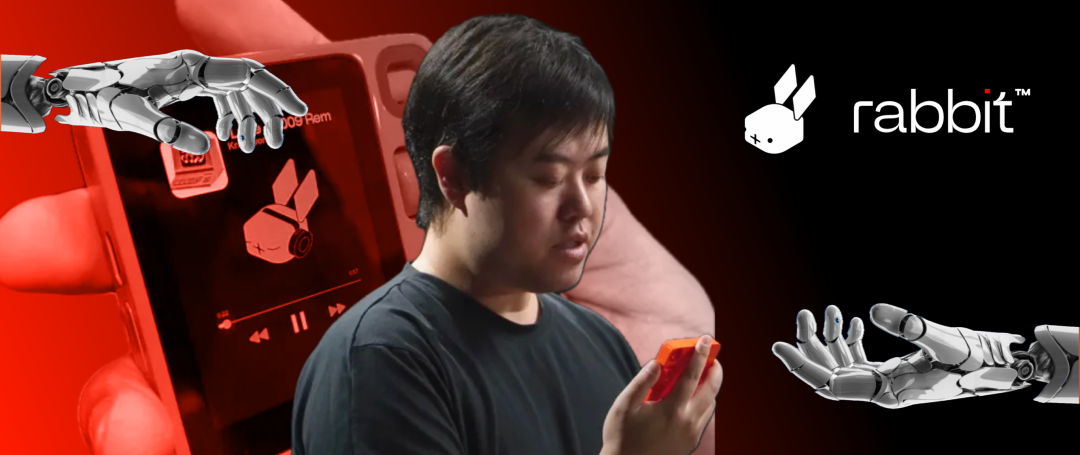
Rabbit founder and CEO Lu Cheng's latest interview: R1 is more like an AI + iPod, not an iPhone killer
TechFlow Selected TechFlow Selected
Rabbit founder and CEO Lu Cheng's latest interview: R1 is more like an AI + iPod, not an iPhone killer
Lv Cheng: Indeed, making money from hardware—the R1 is the result of choosing hardware based on necessity rather than preference, using a neuro-symbolic model instead of an LLM.
 Navigating Web3 tides with focused insights
This is Rabbit CEO Jesse Lyu's latest conversation with Silicon Valley angel investor Jason Calacanis on the show "This Week in Startup" after CES. The 90-minute discussion details his latest product thinking.
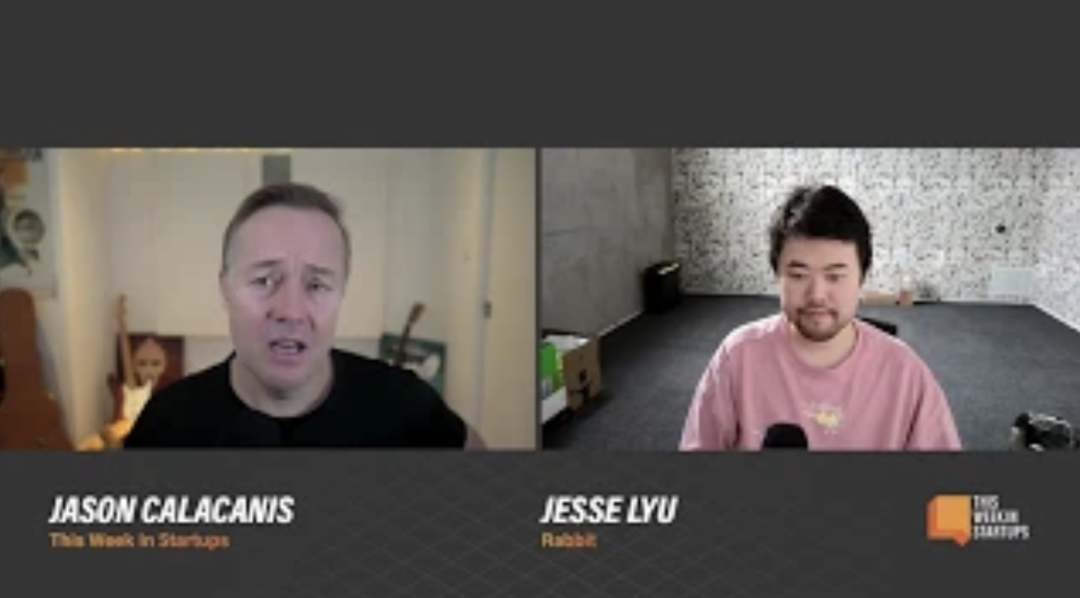
Lyu emphasized that technological evolution aims to solve the same problems but in more intuitive ways. He detailed how LAM (Large Action Model) works—designed to boost efficiency and save time, it's a true time-saving device allowing users to focus on other things. This philosophy drives the company’s core mission.
He also shared personal challenges from over a decade ago starting hardware ventures, differences between hardware startups now versus then, discussed shortened hardware iteration cycles, manufacturing capabilities in places like Shenzhen, and concerns about low-latency tech potentially impacting AI and data center energy consumption.
Below is the full transcript of this conversation:
Jason Calacanis: Last week we talked about the Rabbit R1, one of the most talked-about new products at CES—the Consumer Electronics Show held in Las Vegas. Maybe you've seen its demo video on X/Twitter. It looks really cool—a portable AI companion that fits in your pocket.
It has a scroll wheel for navigation, a flip-up camera, an LED screen—I assume—and a bright, beautiful orange, my favorite color. It was the star of the event.
They did a great demo, and today we have the founder here to talk about this product. In some ways, it feels a bit retro, yet with a custom LLM and a $200 price tag, it has everyone excited.
They’ve already sold over 60,000 units. Over the past five days, they’ve been selling about 10,000 per day. Here is Rabbit’s founder, Jesse Lyu, from Santa Monica, California.
Jesse, how are you? Great to see you. Did you expect such a reaction to your device? Did you think it would become the hottest product, aside from LG's first wireless transparent OLED TV? Many people are excited about that transparent TV too—I don’t even know what use case it serves. If it leans against the wall, can we see behind the wall? That makes no sense to me. So how does this feel? Did you anticipate this?
Jesse Lyu: Not at all. Honestly, we were very cautious—we’re being transparent with our audience and with you—we expected maybe 500 sales on day one, perhaps 3,000 early adopters total, and that might’ve been it. But we were prepared to scale up orders if needed.
We had backup plans, but I was actually the most conservative person on the team. Our marketing and design teams probably had more confidence than I did, but I’m naturally very cautious.
One thing I must mention—I love this product. The first prototype was actually a Raspberry Pi with a screen. We're a very niche team; last year we launched a web version for a small group of users to test one feature of our LLM—pre-playing Spotify songs—and it worked well.
I love this product because I’ve had the first prototype for about four months—it looks almost like a phone. I had a hand-built pre-production prototype eight months ago. I’ve been tinkering with it constantly. On the other hand, I worried maybe we were just geeks building something fun only for ourselves.
Jason Calacanis: Building something that brings you joy ensures at least one customer—you yourself—then you just need to figure out whether there are others.
Let’s start with this crazy price—the device sells for $200. I looked into it—no subscription fee. You need a data subscription if you want to insert an LTE card,
and if you want 5G, that’s on you—just buy Google’s data plan, around $20–30 per month, quite cheap. With the hardware so premium and priced at only $200, how do you plan to make money? How do you turn this into a business?
Jesse Lyu: From a business perspective, this is one of the most frequently asked questions.
First, I can tell you, Jason, we worked extremely hard to find the perfect balance between design and hardware cost. Though I can’t share exact hardware cost figures—we’re not allowed to—but yes, we do make profit from hardware.
From my observations and experience, hardware gross margins are very low. For phones, it’s typically between -25% and 7% or 8%. Despite that, most companies still try to profit from hardware—obviously through subscriptions.
There were two reasons for choosing removable SIM trays instead of eSIMs. First, we wanted to further reduce hardware costs—eSIMs require more expensive components while standard trays don't. More importantly, we wanted to sell the product in multiple markets, not just the U.S.
We’d have to negotiate with carriers like Verizon, T-Mobile, or AT&T. We moved too fast to spend a year negotiating with these companies. Now they’re reaching out to us—that’s great. So these were strategic decisions.
First, let me correct something. After watching your previous episode about us, we didn’t build any LLM. We use a neuro-symbolic model, not an LLM. Typically, when we say LLM, we mean GPT, Bard, Grok—models based on Transformers requiring massive cloud GPU power for training and accurate results.
No startup can suddenly build their own LLM—even with $30 million in funding. For the record, we didn’t do that. We collaborate with all the best language models and small language models. If open-source models emerge, we’ll consider them.
We built an internal evaluation system to continuously monitor performance across major providers and switch flexibly. That’s how RabbitOS works. But we focus on LAM (Large Action Model).
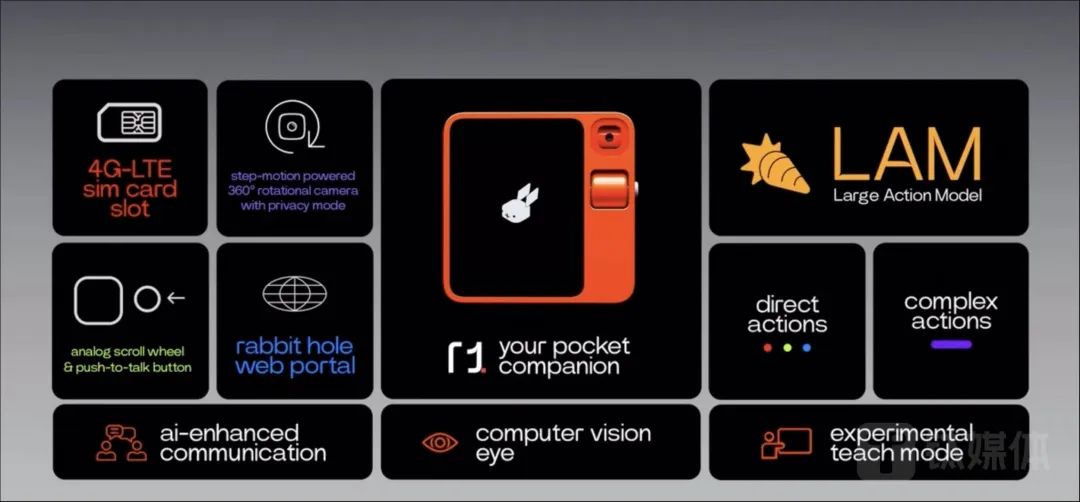
We clearly understand that language models or Transformers are designed to better comprehend language, but currently perform poorly at completing tasks. Also, we dislike working with APIs because they come with many issues.
First, you’d have to bet that everyone provides APIs—which isn’t true. OpenAI encourages—or big companies encourage—building APIs easily for them. But for startups, convincing 2,000 suppliers to format their APIs as you need is nearly impossible.
Even if you get all the APIs, they often can’t fully replicate app functionality. When my previous company Raven worked with Uber’s API, it could only perform 3 out of 10 tasks. Convincing them to expose full app features was hard—they lacked incentives. That’s why we don’t like APIs.
That’s why we wanted a universal solution—and created AI for universal solutions. Whether Android, iOS, or Windows apps, we aim to build a general-purpose system. We realized language models weren’t designed to trigger actions.
So we started using neuro-symbolic methods. We partnered with data annotation companies. Based on our own evaluations, we began collecting real human interactions with various software—common apps like Uber, Spotify, etc.
We started this process about two and a half years ago—collecting data on real humans interacting with different apps. Then we developed a neuro-symbolic algorithm, which is today’s LAM. You feed all these clips into LAM and ask our model to read them frame by frame.
Jason Calacanis: Over time, LAM learns the pixels on the screen—it knows this is an app, knows where I clicked inside the app. So when someone says to Rabbit: “Order me an Uber Black. When I get home, have five family-sized sushi rolls ready, including some rolls and vegetarian options,” it knows how to do it because you’ve trained it repeatedly, watching hundreds or thousands of interactions within an app. How many interactions are needed? Am I describing this correctly?
Jesse Lyu: You described it accurately. First, we don’t record user operations. We have a test group assigned specific tasks. We work with data annotation partners to ensure all clips are collected purposefully without violating privacy.
We never set up systems to record user screens. But your understanding is correct. We’ve published a full research paper on Rabbit Research detailing the backend. You can go check out that paper.
We collect data from real humans interacting with these apps. Ironically, neuro-symbolic runs better on CPUs than GPUs. Compared to OpenAI or any LLM, our cloud deployment is very reasonable—we’re not talking millions in cash, not even millions in dollars.
We have decent GPU clusters and solid CPU cloud computing. We don’t collect data per request. We just ask people to freely explore—for example, our data collection method: “You have 10 minutes on Spotify—try everything you want. I won’t tell you to play this song, click here, do that—you can freely explore for 10 minutes.”
The key difference from traditional RPA is neuro-symbolic. If you’re familiar with RPA, it basically records screen actions, then deploys a pre-programmed sequence to navigate your mouse cursor to absolute x,y coordinates.
Jason Calacanis: You mean RPA?
Jesse Lyu: Exactly.
Jason Calacanis: When you program a robot, you physically pick up the robotic arm, move it to pick something up, put it in box A, then pick another object, put it in box B. It records that, learns it, and then can repeat the action over and over. You physically complete the task—it’s almost like showing a monkey how to peel a banana, then it peels it your way. Monkey see, monkey do—basically that?
Jesse Lyu: That’s RPA. But neuro-symbolic takes it a step further because we don’t identify elements via absolute screen coordinates. Instead, we extract and automatically label certain elements directly through symbolic methods and reasoning. This means if an app completely redesigns its UI, it doesn’t matter.
Jason Calacanis: Got it. So when Spotify redesigns its app—moves podcasts out of tabs, puts tabs on top, or under a hamburger menu—it still recognizes the word “podcasts” and finds where podcasts are located within Spotify.
Jesse Lyu: Exactly. Because fundamentally, modern software is designed for human eyes to process information. There must be certain layouts, symbols, text, search bars, etc.
Compared to simply building hardware atop GPT-4, this gives us an advantage. First, let me clarify—we don’t build any LLMs. We work with LLMs, but we created LAM, a neuro-symbolic approach.
When I tell Rabbit: “Order me sushi, five-person household, this much food, etc.” it knows how to use the Uber Eats app or Doordash app. Then the Rabbit device sends this request to somewhere in the cloud.
Jason Calacanis: I’ve authenticated this request through a web interface—I’ve verified my Uber Eats and Doordash accounts. It knows my preferred sushi restaurant, then starts the ordering process. Then I imagine it comes back to me saying: “Just confirming—is this what you want?” I say yes. Then what happens? Does it pop up a cloud-based emulator? You have a web emulator with my login authentication—how does this work?
Jesse Lyu: Let’s start with authentication. Because if you think about this device, it works completely differently from previous generations—it doesn’t come with pre-installed software. Nothing is pre-installed. It’s just an AI—you choose which services to enable. You decide how complex or advanced this device becomes.
If you say: “This looks like a cool iPod—I just want to listen to music,” then unlock music functions, pick any provider, and it plays music.
But tomorrow, if you want to start ordering food, you must unlock that function. Your understanding of the login process is correct. We have a web portal—a mini version of iCloud/iQ, if you will—that helps manage all authentication setups and feature configurations.
You go online, select any service you want to unlock—because again, for LAM, Spotify, YouTube Music, Apple Music are all the same—they’re interfaces. In fact, Expedia and YouTube Music aren’t different either—they’re all interfaces.
We give you freedom to choose your preferred services. You go there, click the “Connect to Spotify” button, then get redirected to Spotify’s login page. We don’t save your credentials—we don’t touch them.
You log into Spotify, Uber, or Doordash through their official pages. Then we recognize this account is linked to RabbitOS. What happens next is an innovative structure in our cloud.
We have a supercomputer. When Jason talks to his Rabbit about ordering a burger from Doordash, first we check if Jason is logged into Doordash or Uber Eats. Then we see Jason picked Doordash. Next, on that supercomputer, LAM virtually interacts with the Doordash app or website. You don’t see any of this—it just instantly happens because it’s AI.
Then we re-render Rabbit’s themed interface to deliver the results. You’re not directly interacting with the host—you’re just conversing, passing intent to the LLM.
Jason Calacanis: You want to do this, then LAM executes it in a virtual environment, and re-renders the results to your device. That’s how it works. Do you need permission from Spotify to do this, or once trained on the data, can you proceed? I mean, getting permission is nice, but it sounds like you don’t need to.
Jesse Lyu: Yes. Of course, getting approval from them would be nice—or rather, we should develop a better business model. To me, this feels a bit like early days—when Jobs called Sony saying: “Starting tomorrow, since we have this device, every song will cost 9 cents.” Feels somewhat similar.
First, we’re not creating new users—we’re not creating spam users or prepaid UIU junk. You’re Jason, using their interface under your authentication to access their services—just like using it on your phone or TV.
We spent a lot of time studying terms and agreements trying to understand. To us, unless they shut down their interfaces—which won’t happen—because we’re not violating any rules, nor creating fake users with wasteful spending. There’s a lot of waste.
I don’t know if you saw Sunbird bypassing Android SMS—there are many strange ways to set it up—but we haven’t done any of that.
Jason Calacanis: That makes sense—because for them, it’s just their user interacting with their app via a voice interface, with some confirmations on screen.
At your released version 1.0 or 0.1 stage, how does this interaction work? If the restaurant takes two hours to deliver, or stops delivery altogether?
Jesse Lyu: Great question—this is a new problem we’re actively solving. Part of it we know exactly: direct operations immediately trigger services. If you want to hear “Lucky,” it plays “Lucky.”
If you want to get somewhere immediately, it’s easy. But we discovered other cases. Some reasons I didn’t showcase during my keynote—I used Expedia to book internal travel plans or things quite relevant to my imagination. We essentially want to create a way for you to keep checking.
Exactly. Everyone gets the idea—you get the idea, I get the idea. So we need to categorize. Some cases—like wanting Uber to take you home—are simple.
For more complex future texts, you should be able to see a copy of the actual document on your Rabbit Hole web portal. That’s how we want to design it. You always get a portal to verify, legally important things, backups, notes, meeting summaries—all synced to the white portal. That’s why I see it more like our mini version of cloud—it’s actually small.
Jason Calacanis: It’s exactly half an iPhone—same thickness as iPhone 15.
Jesse Lyu: Because I have very small hands, many people misunderstand the actual size. We actually debated removing the screen entirely—it’s a disadvantage for us.
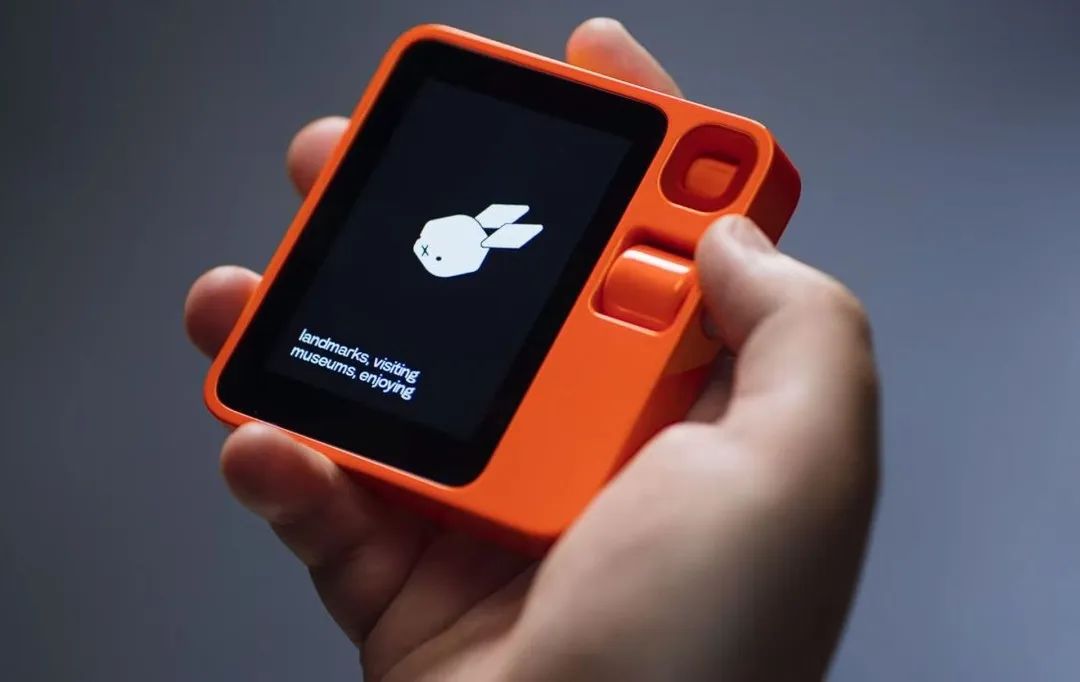
Jason Calacanis: The iPod Shuffle was a very small product. So it just became a tiny recorder, or whatever you can make it into—a watch, anything. Walk me through the form factor. You used a fantastic design company to design this—maybe you can talk about how you worked with them and the inspiration behind the device, since it looks both modern and retro.
Jesse Lyu: It’s iconic. I’m not sure I’m confident enough to say it’s already iconic, but I’ve seen many people making chassis and frames for it. That’s a good start. At least it’s a great story between me and Teenage Engineering—I respect them, they’re my hero company.
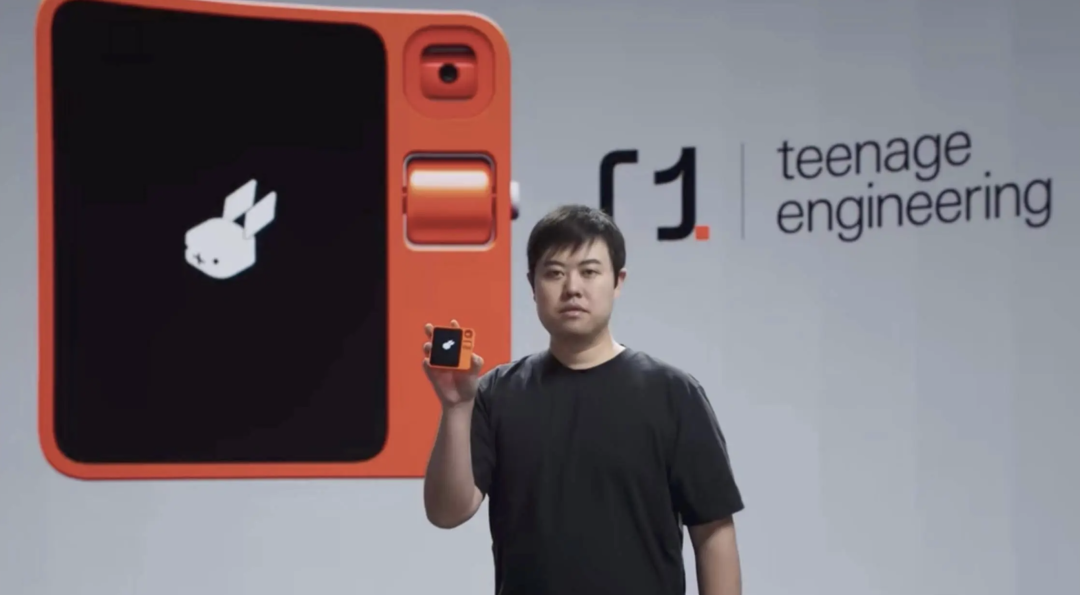
About 15 years ago, I started working on vintage synthesizers. When they launched the portable OP1 synthesizer, I bought it immediately, though production cost was very high—initially took months to raise funds.
First, Teenage Engineering isn’t a design firm actively seeking collaborations for fees. They’re a highly focused consumer music tech company existing nearly 10–20 years—truly impressive team.
I told my team when I was at Raven—if these guys gave me a chance to work for them, I’d go. Back to 2017, during my Raven hardware project, I realized maybe I could convince them to collaborate with me instead of me joining them—I wanted to pick the best.
In my mind, they were the best, so I wrote them an email. Three days later, I was sitting in their office in Stockholm. Yasper is Teenage Engineering’s CEO and co-founder.
We both pulled out notebooks and pencils and started sketching. During the process, he asked me: Who’s your favorite artist? Favorite car design? Some web chat questions. Surprisingly, we had nearly identical tastes on almost everything—like when he asked me questions, showed me his vinyl collection, I showed him mine—completely the same, even in order. He said: I like this, I like that.
We talked about things, then instantly clicked. The whole process felt magical. I’ve never discussed this in media or social networks—but we actually created a secret Instagram account.
No emails, no calls, nothing. We just started posting sketches and visuals on Instagram. Then we’d like each other’s posts, comment. That’s it—so we made it.
Jason Calacanis: Was it a public or private account?
Jesse Lyu: Private account, public comments.
Jason Calacanis: Interesting approach.
Jesse Lyu: Because it took so long—maybe I can share some early work later. But I’d say it was two groups of highly intuitive people who recognized each other and had strong synergy.
In 2018, I officially joined their board. Then I understood the company better—I realized they needed to stay highly focused on their current roadmap with many things to complete. But I began seeing broader recognition of their industrial design—over the past 3–4 years, I’ve been very happy.
Teenage is also a co-founding design partner for a company called Nothing—I don’t know if you’ve heard of Nothing? They make phones—Nothing Phone.
We’re also co-founders of Nothing—like the entire Teenage team—we helped Nothing establish their initial design language and everything. Then when we started R1, the situation reversed—we wanted to create something cool. Of course, the first thing we looked at was who was there—we saw strong competitors like Humane, AI-Pin, ex-Apple people—huge respect for those teams.
I told myself—I kind of convinced myself—you’re offering a whole new generation of interaction software. To me, launching sci-fi gadgets that nobody knows how to use is too risky.
In my theory, hardware is never the first choice. You don’t build hardware because you want to make a cool gadget. Most of the time, if you do that, it fails completely. I’ve studied many good examples, experienced many—I’ve learned you should have great software first, then specialized hardware to enhance it. It’s always about the software, always about the internals.
If you have very avant-garde, novel software, you want to minimize hardware risk—at least in the first generation. To me, R1 was hardware chosen out of necessity, not preference.
If I wanted to make hardware, I might want many other form factors—like you said, what about fancy glass? What about this or that? The first thing we realized was we wanted to establish a strong position to compete with all these big companies and emerging rivals. Simultaneously, we wanted to offer something resonating with your culture, memories, and existing workflows—something you don’t need menus to understand how to use.
Jesse Lyu: For any single direct operation, I now prefer Rabbit. Why? Because when I start completing tasks, it’s as fast as thought—I already have that speed. And I find it faster and more intuitive than finding that physical button—even without looking, just speaking. And AI accuracy is good enough, execution fast enough.
Let me give quick references. I always work across multiple screens, juggling many things daily, maybe communicating with others. If I need something I don’t know, it’s definitely faster. Forget alarms—just searching, it’s absolutely faster. Then I’d have to open a new tab or launch Chrome to start typing.
Jason Calacanis: You have the action button, sort of like a radio—you press it, then define the word. I don’t need to think—about 6 or 7 steps.
Jesse Lyu: Even fewer—some very advanced shortcuts make you much faster. Let me give a real example. I was in a meeting with one of our existing investors. They asked about performance comparisons—sales numbers and such from other companies.
I generally don’t know—I don’t recall last year’s revenue for a company. If you think about it, I’d search Google—have 200 tabs open—which one is accurate? Which one is correct? That’s why we set strategic partnerships—to enhance precisely this part—just searching.
Another thing is music. I can tell you—you’ll like this—it plays music. Second-generation classic iPad-level control, same level or even simpler. Yesterday I actually got to talk with Tony Fadell for over three hours. Just playing music—it’s definitely been my go-to over the past eight months. Besides searching, probably 70% of my time is music.
Many still don’t understand. I started posting on Twitter—there’s a scene where I use visual features: double-click the camera, rotate and point at whatever you want. I use vision to view a Discord—because of Rabbit. Past three days, we’ve had 5,000 members, and I’m doing customer support there.
Jason Calacanis: As a founder doing customer support—that’s where you’re closest to users.
Jesse Lyu: I try to reply to as many messages as possible, but I started getting lost—too many messages. I was actually in a video call with someone else, then simply pointed the camera and said: What are people discussing here? Many don’t understand how to use it—many think: You have eyes, you’re not blind—this is so stupid, why do this?
Actually, I’m doing other things—don’t have time to scroll through 50 pages. Even though the current version of visual GPT and our own visual model needs to be faster—actually needs to be faster before launch—I’m pushing it. After 4–5 seconds, it says: Here’s the conclusion. People are discussing whether Rabbit R1 might waste jobs—it gives me the report.
Jason Calacanis: Usually, you might hire a college-educated person to summarize what happened on customer support each day? Or you might point it to an LLM to generate a report—here you just quickly snap a photo.
I had this issue too. This weekend I was skiing, kept trying to change music with Siri—just lowering volume or changing tracks or playlists was painful. You said success takes 5–10 seconds, Siri gets it wrong, then you redo it, and your music cuts off.
You mentioned several times Raven—you once sold it to Baidu—was that your first or second company? You must’ve learned a lot about voice command response time—how awful waiting those 4–5 seconds for it to wake up and understand you. This is the problem you’re trying to solve—the first 5 seconds. How are you solving this?
Jesse Lyu: Breaking it down, latency comes from two parts. LAM is fast. If you check my demos posted on Twitter, you’ll see it’s fast. Playing a song is instantaneous.
If you ask random general questions, we have technology—basically streaming tokens via LAM—to make it very fast. If you ask: What’s the difference between oranges and tangerines? Anything not requiring latest info—it’s under 500 milliseconds. If you tried OpenAI initially, anything needing latest info starts slowing down.
I haven’t tried recently—I feel it improved lately—but usually we’re talking 2–3 seconds compared to 500 milliseconds. But the visual part has the biggest latency.
We’re talking roughly 8–10 seconds—but it’s not our fault. Actually, it’s currently the fastest speed in the industry. We’re relentlessly working to shorten it further.
Now the main cause of latency is really just searching for latest information—nothing else. If you’re just triggering LAM, it’s fast.
Let me share some frustrations. First, I don’t want to carry two devices—nobody wants to carry two devices. I’m not trying to convince people it’s sexy—so maybe you’d want to carry it.
Right now, all we can do is acknowledge it can’t be an app. Same footprint as your iPhone. It’s actually very light—only 110g. What does 110g feel like? Take two uncooked pork ribs from your fridge—that’s it. Light enough that every time I put it in my pocket, I forget it’s there.
I appreciate the tactile feedback from the physical button I designed—because I don’t need to take it out to look at the screen. I reach into my pocket, feel that button. That’s actually how I use it most of the time—just connect my AirPods or other Bluetooth devices or car system—I truly don’t need to look at it.
I reach for it—but there are many things I’d still prefer checking on my phone—at least for now. First, important social functions. At least in this generation, it’s not meant to connect all your friends, chat casually, catch up on what’s happening. It’s more focused on task completion. Unfortunately, for that part, I still have to go back to my phone. Another part is professional group chats.
Jason Calacanis: If you want to join group chats on Signal, WhatsApp, or other messaging tools, it can’t fully replace them yet.
Jesse Lyu: We can—we have a tray, SIM card slot. It’s a phone. We’re not trying to become a phone, but it has the capability to do everything a phone does. Another thing—perhaps just the reality—is that phones are actually content consumption devices. Think about the fastest-growing apps on AppStore—TikTok, Netflix, Instagram, etc.
iPhone has a better screen—I have to admit that. That’s why, when I considered laser projectors, I wasn’t sure—because I saw Humane’s demo, gesture messaging—I might not do that.
When I started Raven in 2013, I actually collaborated with a few people from Sri—seems Stanford—who later founded Nuance. Nuance incubated Siri—so long history. But I remember very clearly when I first visited Siri—dictation accuracy was around 74%, native English baseline—very poor—but it improved rapidly.
Another issue was intent understanding. We were in the pre-Transformer era. At Raven, we worked hard on natural language processing (NLP)—best-in-class tech pre-Transformer. I guess the problem wasn’t that we didn’t consider algorithm design—we just lacked sufficient computing power like GPUs to run it. So if you say intent recognition, it was really painful, very labor-intensive. Essentially, Alexa and every previous-gen smart speaker was like assembling a menu for this so-called AI—then hardcoding 70 ways to communicate with the speaker. Meaning—if you want to hear this track, there’s a bunch of sentences describing the same intent. NLP helped us understand and assemble this menu—but many things weren’t ideal.
I completely understand skepticism toward R1—a voice-first device—because we’re all from the same generation of consumers still suffering PTSD from early terrible experiences.
Jason Calacanis: Exactly—that’s what frustrated people about Siri. Alexa was slightly better, but not as widely used on phones as Google Assistant. Assistant never really took off—we just assumed it was bad.
Actually, it’s much better now—even using ChatGPT’s app. I now have iPhone 15 with an action button—similar to what you’re doing on Rabbit. I connected it to ChatGPT’s voice interface—when I press it, it enters that conversation mode in the app. That’s excellent.
In the U.S., it runs fast. When will you know you’ve made a product challenging the phone in your pocket? When will you win the race—“which device do I go back for?” If you forget your phone, you go back. If you forget your wallet, you don’t—you say: I forgot my wallet. My phone has payment options—if you don’t have it, you go back. When you reach that milestone—“I must turn back for my Rabbit”—that’s when you’ve succeeded.
Jesse Lyu: First, challenging is an ambitious goal. We never set it ourselves—at least mentally—we never said: The whole purpose of Rabbit is to kill the iPhone.
Whatever it is. On the other hand, we deeply understand—especially from my experience—my company was sold to Baidu, we maintained a unique working relationship, still keeping Raven alive—but I’ve seen enough—not just Baidu, but Microsoft, all other big companies—how they operate.
Our current view is—we don’t think we have the confidence to challenge it, but we don’t want to wait either. Like you can be a user—I posted the product on Twitter—be the trendsetter, the observer, or the follower? You can only be one of these three.
We’re not saying how ambitious or delusional we are. I have a very clear overall plan—it’s not typical startup nature. One thing I’m highly confident about is: For all these current-generation app-based operating systems, improvement is impossible. Because the fundamental OS shift isn’t technological—it’s never an improvement, always a reinvention, always relevant.
The issue isn’t technology. Many engineers see it differently—they think just do this, and Siri becomes R1, then it’s RabbitOS.
No—it’s about the motivation behind their profits. They built an App Store with billions of developers and apps—suddenly no apps? How is that possible?
I don’t see a smooth transition—how could it change so rapidly? We think we should wait, further reduce risks. I believe considering R1 as an iPod—compared to the requests we’re discussing—it’s a slightly broader requirement because iPod only replaced Walkman. But in iPod era, you still used BlackBerry phones—I used BlackBerry 8900—I had my iPod—you carried two in your pockets.
Jason Calacanis: One in each pants pocket.
Jesse Lyu: Exactly. It’s kind of fixed shape—if you wear jeans, you don’t even want to touch it—just leave it there. But we have R1—our first attempt or approach to future structure—how future software will work with humans? How will you interact with software? Maybe in a year and a half to two years, we’ll have a better answer.
Jason Calacanis: Now, you’re targeting early adopters—people who want to try it, invest time, give you great feedback. Have app developers approached you directly wanting to build directly for your LAM, provide interfaces—could Uber’s engineers and your engineers seamlessly operate in the same space? Is that happening?
Jesse Lyu: Actually, it’s mutual. On one hand, we communicated via handshake on Twitter—no prior coordination. Now we’re offering $200 credit for first 100,000 devices. If you consider the device itself, it’s only $99. More importantly, RabbitOS’s most underestimated feature—currently experimental, but we’re confident we’ll roll out at least a beta version soon after users receive devices—is Teach Mode.
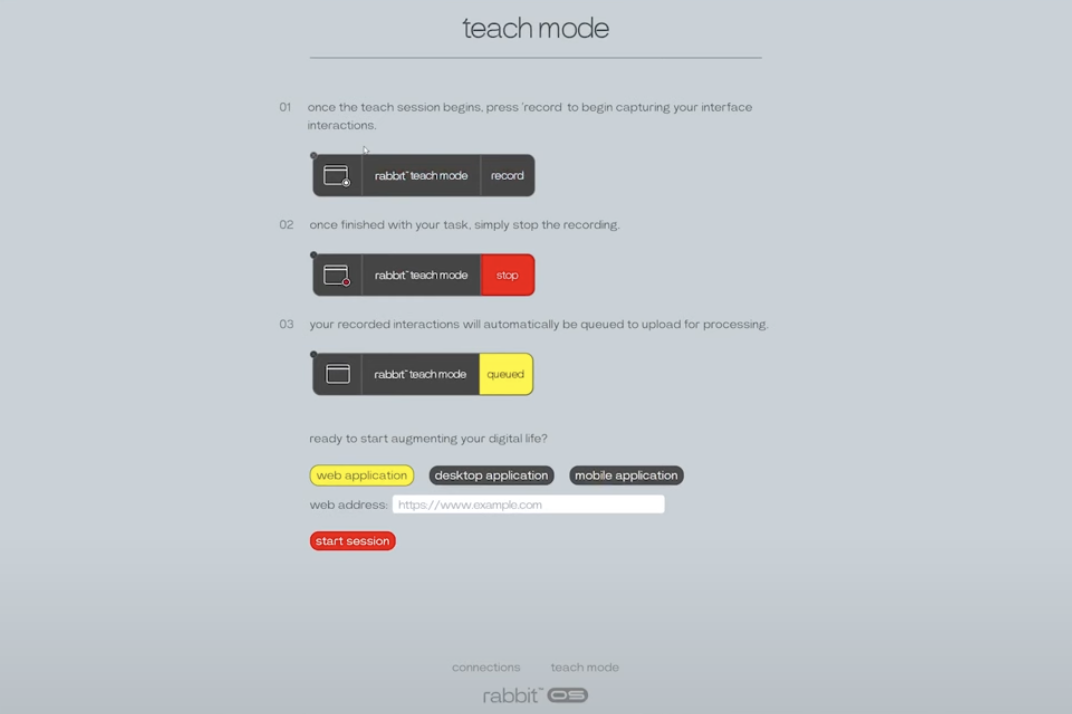
How does Teach Mode work? You explained it earlier—like monkey see, monkey do. You go to the web portal—Rabbit Hole—turn on Teach Mode. You decide: Today I’ll teach you something—like teaching your 8-year-old child—you say: Come here, sit down, watch what I do, learn.
If you think about neuro-symbolics, same analogy—there’s a psychological factor. If I ask you to teach me skateboarding—would you? Two decisions: One, are you willing? Two, even if you want to, you might not want to. But more importantly—if you simply don’t know how, you’d just say no. Right? So as a user entering Teach Mode, you clearly know what you’re going to teach.
Jason Calacanis: Right—if you’ve never skateboarded or skied, you wouldn’t teach how to do it. But if you say: Hey, how do I ski? If I choose to do this, it becomes great training data—that’s your idea. If there’s an app people aren’t using—say you haven’t trained Twitter—I could say: Let me train Twitter—record my replies, topics I mention, content I like reading—then immediately read aloud five of them to me—but don’t read dates—just read content—only first 200 characters, not full content.
Jesse Lyu: Exactly. You’re already using this feature—that’s its power. When teaching, you know what you’re doing. The data you collect—we don’t record it locally. We launch a virtual machine—an old technology—you enter the VM, pick the platform you want to teach, then start teaching. This recording is very clean—RabbitOS gets a one-time opportunity.
Jason Calacanis: So you’re letting the entire community teach RabbitOS.
Jesse Lyu: Build your own Rabbit—that’s how we make money, by the way.
Jason Calacanis: Got it. I can create a Rabbit—my way of explaining TikTok or social media apps—as we discussed—then I can sell these, sell my Rabbit to other users.
Jesse Lyu: We’re not reinventing any business model—it’s the classic app logic from Apple’s App Store or Google Play Store—but we’re not worried about monetizing from day one.
Jason Calacanis: Making hardware like this, building these things—how large a team do you need? We see many people doing more with fewer resources—I’m curious.
Jesse Lyu: So far, we have about 17 full-time employees—we’re hiring. But I also collaborate with excellent ODM and OEM partners. From my previous career at Raven, I had resources—same team plus design department, and Teenage helped us a lot. We’re hiring, working hard to build the next version of LAM.
Consider this—this is LAM1—we’re designing LAM2. Next year will be more interesting, with different phone-like features. Overall, I learned from my previous company—if your goal is to profit on day one, you probably won’t become a consumer hardware company—you’ll become something else... how to say it? More like Oracle.
Jason Calacanis: You seem heavily inspired by iPod. If you think about iPod—I don’t know if you remember—Gen 2 Shuffle was my favorite. I believe it was Apple’s peak madness—a clip, almost like a tie pin.
Jesse Lyu: Shorter head, shorter earphone cable—they didn’t change that. I remember it was a loop—I had one too.
Jason Calacanis: Shorter earphone cable—because they knew you’d clip it above waist—no need to run it into your pocket. But it also had physical controls—so from that angle, very elegant. Physical scroll wheel—what does this wheel do?
Jesse Lyu: We’re exploring different ideas—I can’t share much, but I can share one idea under development—how to unlock your device.
Jason Calacanis: When you were in high school, your locker combo was like a lock—twice left, twice right—that was so clever.
Jesse Lyu: With tactile feedback—and nobody would know—it’s not even text or anything.
Jason Calacanis: So cool. Will there be different sizes? You said you don’t actually need a screen—do you need to make your own responsive headphones, or do you think Bluetooth is fine?
Because I have a problem—I have third-gen AirPods—they work very elegantly—but I prefer Pixel Buds—I don’t know if you’ve used Pixel Buds—but they’re flat, more elegant devices.
If you use a ski helmet, or want to listen to podcasts or audiobooks before sleeping like me—they’re better. What do you think? Because if it’s a unique headphone, do I get hardware gains or UI advantages?
Jesse Lyu: If you customize from kernel level, you can further reduce latency. Latency is an issue—especially in car systems—that’s why all car theories fail—because car system latency is excellent. It uses Bluetooth 5.0, defaults compatible with any airport and third-party manufacturers. I’m more interested—maybe we can make Rabbit AirPods—but fully independent.
Jason Calacanis: That’s fascinating. So you wear them—your personalized Rabbit. I just talk to it, authenticate—go out with only my Rabbit AirPods—say: Book me an Uber. It says: OK—Uber Black, Uber X, or Uber SUV? That’s cool.
Jesse Lyu: Challenges come from one aspect—you
Join TechFlow official community to stay tuned
Telegram:https://t.me/TechFlowDaily
X (Twitter):https://x.com/TechFlowPost
X (Twitter) EN:https://x.com/BlockFlow_News












