








AI Box Operates Apps for You: Is Rabbit R1 a Game-Changer or a Gimmick?
TechFlow Selected TechFlow Selected
AI Box Operates Apps for You: Is Rabbit R1 a Game-Changer or a Gimmick?
The Rabbit R1, touted as being powered by a large AI model system, sold 40,000 units within six days of launch.
 Navigating Web3 tides with focused insights
By Mu Mu
At CES 2024, a pocket-sized AI hardware device called the Rabbit R1 went viral. This small square gadget, about the size of a palm, can connect to Wi-Fi, make phone calls, and log into mobile apps. Without any manual operation, simply speaking commands allows the Rabbit R1 to automatically navigate, hail rides, and order food delivery for you. Its "AI eyes" can also help you check pending tasks and handle work accordingly.
On the surface, this device seems similar to smartphone voice assistants like Siri, Bixby, or Xiaomi's Xiao Ai, but Rabbit R1 claims to be powered by a large AI model system. With a pre-sale price of $199 (approximately ¥1,425), it sold 40,000 units within six days of launch.
Positioned as a new smart hardware product and described as an “intermediary between users and smartphones,” company executives believe this device leverages AI to transform how people interact with applications.
However, alongside rising sales have come growing doubts: major smartphone brands are already planning to integrate AI Agent (AI assistant) features—will people still need this “intermediary”? The window of opportunity for Rabbit R1 may be closing fast.
What Makes Rabbit R1 So Special—40,000 Units Sold in 6 Days?
As AI Agents become practical applications of large models, Rabbit.tech—a new venture founded by former Raven Tech CEO Lu Cheng—has launched the hardware-based AI assistant Rabbit R1. After debuting at CES 2024, the device attracted not only attention but real sales momentum.
Within 24 hours of opening pre-orders, over 10,000 units were sold—far exceeding initial expectations. By January 16, four rounds of orders had been opened, totaling 40,000 confirmed purchases. Public reports also indicate that Rabbit.tech recently raised another $10 million in funding, bringing its total financing to $30 million.
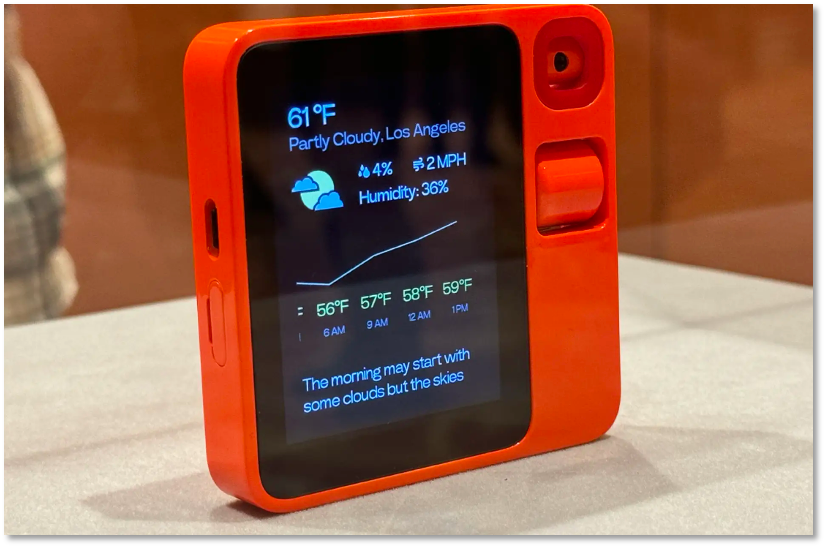 Rabbit R1 sees strong sales
Rabbit R1 interacts with smartphones, laptops, tablets, smartwatches, and smart TVs via Wi-Fi or Bluetooth, enabling file transfers and audio/video calls. It also has a SIM card slot, allowing direct connection to cellular networks.
Unlike other smart devices, Rabbit R1 does not run any applications itself. Instead, it acts as an intelligent terminal assistant that operates apps on your connected devices to meet personalized needs. For example, when you say “I want to take a ride to the office,” Rabbit R1 automatically opens your ride-hailing app, inputs the destination, and completes the booking—all without further input from you.
This is something current smartphone voice assistants cannot do. At best, Siri might open the ride-hailing app for you—but the rest of the process still requires manual interaction.
Beyond hearing, Rabbit R1 also has vision. Equipped with a built-in camera based on computer vision technology, it offers 360° rotation and supports photo capture, document scanning, and conversion into PDFs, text files, or spreadsheets. It can recognize objects—including faces and text—in images or videos.
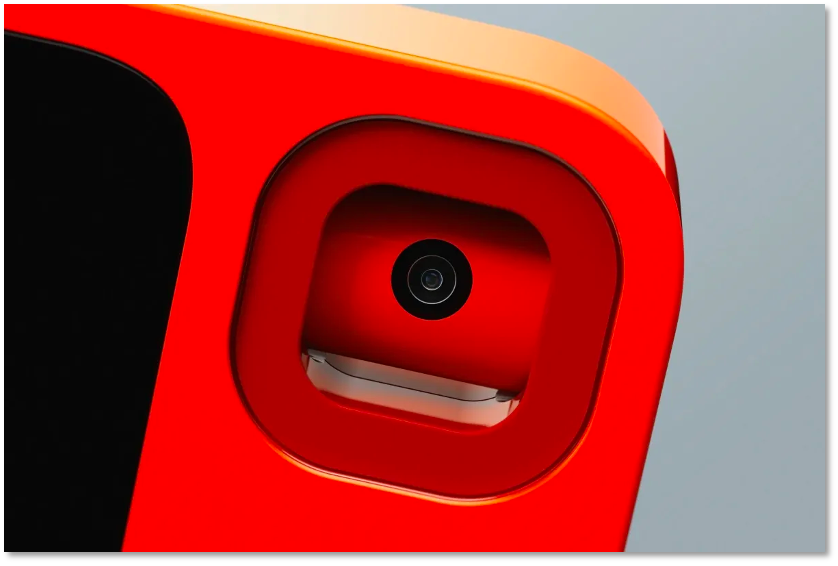 Rabbit R1 features a built-in camera powered by computer vision technology
The intelligence of Rabbit R1 comes from its Rabbit OS—an operating system based on a Large Action Model (LAM). Compared to large language models (LLMs), LAM requires extensive training on human operational behaviors. Users interact with Rabbit OS through natural language, and the system interprets complex intentions and performs corresponding app operations.
Through continuous demonstrations, Rabbit R1 demonstrates strong learning capabilities. After observing a user perform a task once, it can evolve across different interfaces and acquire new skills. At CES, Rabbit founder Lu Cheng demonstrated teaching Rabbit R1 how to use Midjourney for image generation.
Indeed, today’s average users install multiple apps for similar functions—several ride-hailing apps, various beauty filters, and numerous e-commerce platforms. When shopping for electronics, consumers may prefer JD.com; for clothing, Taobao; and for affordable luxury alternatives, NetEase Yanxuan. Each platform has its niche. Having an intelligent assistant manage these apps according to your needs could save significant time—and even money.
From the perspective of using apps to fulfill personalized needs, Rabbit R1 isn’t just changing how users interact with smart devices and applications—it might also pressure app developers to improve usability. In the future, judging whether an app is good may no longer depend solely on human feedback. AI assistants fluent in code and machine logic might personally test apps and leave their own “negative reviews.”
With Large Models Coming to Smartphones, Can Rabbit R1 Sustain Its Sales Success?
With abilities in both hearing and seeing, Rabbit R1’s impressive features and sales performance add credibility to the potential of AI-powered hardware.
In 2023 alone, advancements in AI voice assistants' conversational capabilities sparked a wave of consumer-grade smart hardware innovations and upgrades. According to iResearch, China’s core market size for human-computer interaction products reached 16.9 billion yuan in 2023. This figure includes contract values for dialogue robots, AI voice assistants in smart hardware, and voice AI chips.
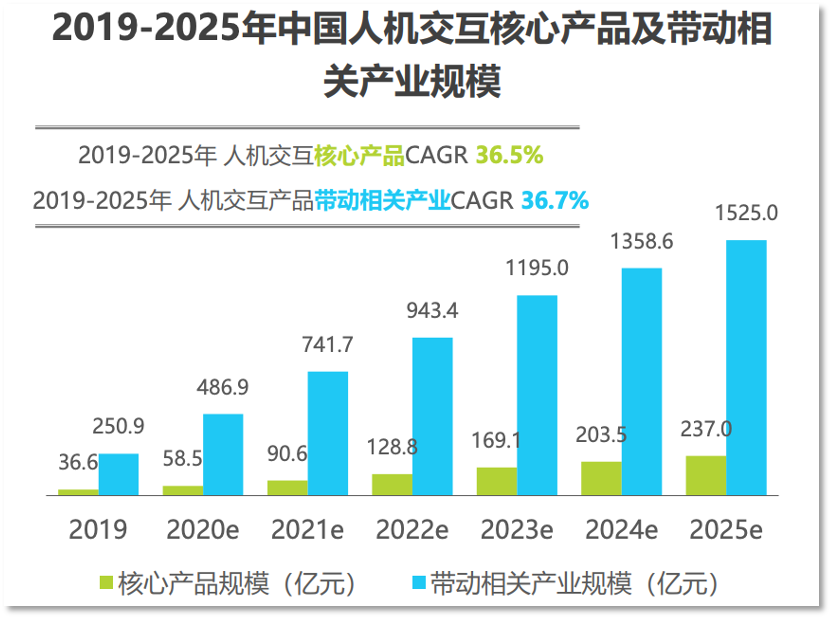 Market size and driven output value of human-computer interaction products
Clearly, AI chips are increasingly being integrated into smartphones, and some AI hardware companies have even set their sights on replacing smartphones altogether.
Previously, a wearable AI device called AI Pin drew widespread attention. This small projector, designed to clip onto clothing, projects an interface onto the user’s palm, allowing gesture- and voice-based interactions for functions like taking photos and translating text. AI Pin also features two breathing lights to notify users of incoming calls or messages. Like Rabbit R1, AI Pin doesn’t run third-party apps but relies instead on an embedded large AI model to deliver functionality.
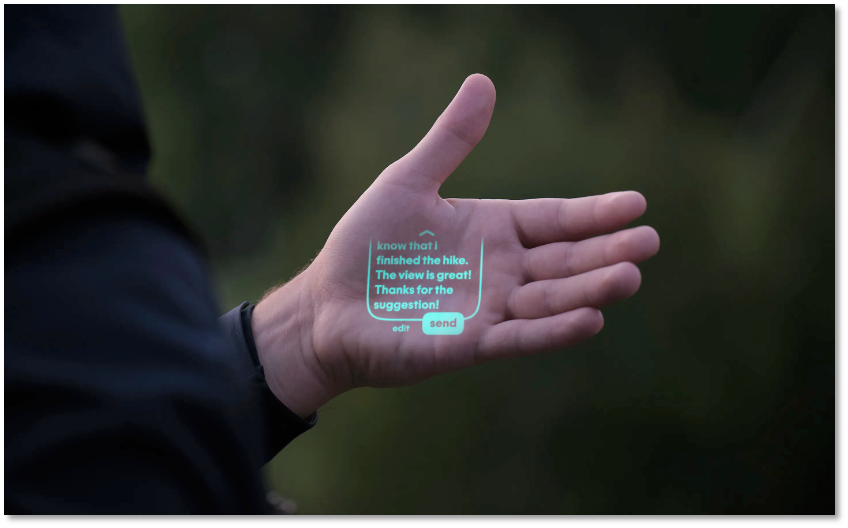 AI Pin's palm-projection interface
Priced at $699 with a monthly subscription fee of $24 (covering cellular data and AI model usage), AI Pin was marketed as a revolutionary product aiming to “transform how humans interact with digital devices” and even “replace traditional smartphones.” Humane, the company behind AI Pin, was co-founded by Imran Chaudhri and Bethany Bongiorno—former Apple design leads who contributed to the development of Mac, iPod, iPad, iPhone, Apple Watch, and iOS.
Yet, AI Pin currently lacks the capability to replace smartphones. Beyond limited functionality, the green-text interface projected onto the palm has only 720p resolution—just enough for reading text, but impractical for watching movies or playing games, especially since one hand must serve as the screen while the other interacts…
In contrast, Rabbit R1 doesn’t aim to replace anything. Founder Lu Cheng emphasized that Rabbit R1 is positioned as an accessory—a faster, more direct, and universal way to access integrated devices, helping users reclaim time wasted navigating countless smartphone apps.
Yet, this very “accessory” risks becoming obsolete as smartphones evolve. Ever since ChatGPT brought large language models into mainstream awareness, smartphone manufacturers have begun integrating large models directly into phones.
In 2023, Huawei became the first to integrate a large model into its smartphones, enabling them to perform complex tasks such as text generation, knowledge retrieval, information summarization, and intelligent content arrangement. Xiaomi developed a lighter-weight large language model, likely prioritizing smartphones as the primary deployment platform. Samsung is preparing to launch its Galaxy S24 series, openly committing to integrating AI features into its flagship phones and offering on-device large model services.
Once smartphones adopt large models, at minimum, their native apps will upgrade first to support new AI features. Third-party apps will inevitably follow suit. Moreover, built-in voice assistants could directly leverage these models to become full-fledged AI agents. If so, Rabbit R1—which aims to be “a complete, universal controller across all apps”—could quickly become redundant.
Notably, on January 18 at 2 a.m., Samsung will host a global launch event for Galaxy AI, unveiling what many expect to be the first true AI smartphone. Following Samsung, more smartphone brands are expected to line up behind the AI trend.
While Rabbit R1 is expected to continue upgrading, the rise of AI smartphones looms large—and the window of opportunity for this little pocket device may already be narrowing.
Join TechFlow official community to stay tuned
Telegram:https://t.me/TechFlowDaily
X (Twitter):https://x.com/TechFlowPost
X (Twitter) EN:https://x.com/BlockFlow_News












