2023's biggest winner in U.S. stocks wasn't Nvidia
TechFlow Selected TechFlow Selected
2023's biggest winner in U.S. stocks wasn't Nvidia
Bitcoin ETF approved—did Coinbase, whose stock surged 4x, profit again?
 Navigating Web3 tides with focused insights
By: Eric
Edited by: Zuri

Recently, the U.S. Securities and Exchange Commission (SEC) caused a fiasco surrounding spot Bitcoin ETFs, stirring excitement across capital markets and the cryptocurrency sector.
At the same time, cryptocurrency exchange Coinbase has been thrust into the spotlight, with its stock price riding a rollercoaster amid SEC announcements.
As a leading player in the industry, Coinbase saw its share price surge 400% throughout 2023—outpacing even NVIDIA, which rose 249%. Now, as momentum builds again, can Coinbase sustain this strong performance into 2024?
01 The Fiasco and Stock Volatility
A few days ago, the SEC tweeted that it had “approved the listing of spot Bitcoin ETFs.”
This long-awaited development was seen as a major positive, especially for exchanges like Coinbase that primarily handle Bitcoin trading. Approval of spot Bitcoin ETFs would allow investors to trade Bitcoin like stocks, without needing to directly purchase Bitcoin or use riskier platforms.
From a market-wide perspective, this lowers the barrier for retail and institutional investors alike to enter Bitcoin trading, potentially accelerating growth in the digital asset industry, which already boasts a market cap of $1.7 trillion.
The news sent shockwaves through markets. Immediately after the SEC’s tweet, Coinbase shares jumped 3.5%.
However, the situation quickly reversed. On January 9 local time, SEC Chair Gary Gensler stated that the agency's Twitter account had been hacked and had posted an unauthorized message. The SEC had not approved any spot Bitcoin ETFs for listing or trading.
As a result, Coinbase shares plunged 4.6%.
Yet Gensler’s statement seemed to be a smokescreen. On January 10 local time, the SEC officially announced the approval of 11 spot Bitcoin ETFs, authorizing them to begin trading on January 11. Netizens joked, "Denying rumors while approving at the same time—America knows how to play."
Unsurprisingly, Coinbase’s after-hours gains surged as high as 8%.
Amid denials and official approvals, Coinbase’s stock swung wildly, capturing Wall Street’s attention. In fact, Coinbase was undoubtedly one of the standout performers in capital markets during 2023.

In 2023, the Nasdaq Composite Index rose over 40%, outperforming major global indices, with NVIDIA among the top gainers. Yet Coinbase’s “quadrupling” in value stood out even more.
Moreover, investors have assigned Coinbase a relatively high valuation. Its current P/E ratio stands at 16x, up from 1.6x a year ago. By comparison, larger exchange operators such as Cboe and the London Stock Exchange trade at P/E ratios of 5x and 6x, respectively—lower than Coinbase.
So what is the logic behind Coinbase’s appeal to investors?
Many will say it’s simply due to rising Bitcoin prices. Indeed, Bitcoin gained 160% in 2023 and recently hit $49,000—the highest since December 2021. However, rising crypto prices benefit nearly all exchanges, so why has Coinbase outperformed so dramatically?
Others argue that investor optimism stems from expectations of regulatory easing, given widespread speculation in 2023 that the SEC would soon approve spot Bitcoin ETFs. But again, this is a broad market tailwind, not unique to Coinbase.
In reality, today’s investors prioritize security—especially when entering a heavily regulated space like cryptocurrency. And Coinbase delivers precisely that sense of safety.
That is the true reason behind its investor appeal.
02 Security: The Ultimate Investor Magnet
With global economic uncertainty mounting, investors are increasingly focused on the safety of their assets. How does Coinbase measure up? This requires examining both the broader industry landscape and Coinbase’s own fundamentals.
One of the biggest shocks in the crypto industry in 2023 was the $4.3 billion fine levied against Binance, one of Coinbase’s largest competitors, along with the removal of its CEO Changpeng Zhao.
Binance is the world’s largest crypto exchange, while Coinbase is the largest publicly traded crypto exchange. Their fortunes often move in opposite directions—when one stumbles, the other benefits.
When news of Binance’s penalty and Zhao’s departure broke, investor panic spread rapidly. Seeking safer ground, capital shifted toward Coinbase, sending its stock soaring.
Of course, the SEC has also sued Coinbase. But comparatively, the severity of these allegations is far less than those leveled against Binance.
The SEC’s case against Coinbase centers on the integration of traditional services—exchange, broker-dealer, and clearing functions—without registering them separately with the SEC as required by law. As SEC Chair Gary Gensler noted, “Elsewhere in our securities markets, these functions are kept separate.”
In other words, Coinbase’s core issue lies in operational refinement to meet regulatory standards.
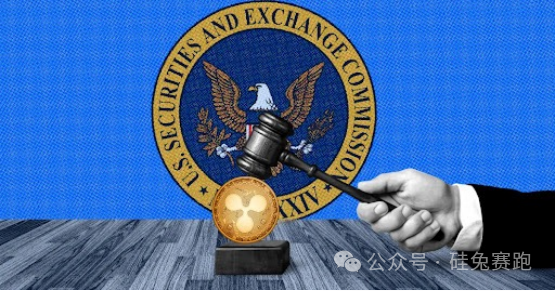
In contrast, the SEC brought 13 charges against Binance and Zhao, including operating unregistered exchanges, broker-dealers, and clearing agencies, making false claims about trading controls and oversight, and—more seriously—allegedly allowing funds to flow to terrorists, cybercriminals, and child abusers, according to the SEC, Department of Justice, and Treasury Department.
This ties directly into geopolitical and national security concerns, making the situation far more severe than Coinbase’s. Relative to Binance, Coinbase appears significantly safer.
From a business standpoint, Coinbase offers investors a key form of security: revenue stability.
Previously, nearly all of Coinbase’s revenue came from trading fees. However, its higher-than-average fees limited market share expansion.
Now, however, Coinbase is rapidly shifting toward infrastructure services, diversifying its income streams. Today, half of its revenue comes from the “Subscription and Services” segment, including blockchain rewards, custody services, and interest income.
Between industry dynamics and internal developments, Coinbase provides greater security—a key factor in attracting capital. The recent SEC approval of spot Bitcoin ETFs further strengthens this perception.
Still, despite its success, Coinbase faces underlying risks that could threaten future growth.
03 Underlying Risks
Although the SEC has approved spot Bitcoin ETFs, it hasn’t fully opened the door.
SEC Chair Gary Gensler emphasized continued caution toward crypto assets: “Importantly, the commission’s action today is limited to ETPs (exchange-traded products) holding Bitcoin, a non-security commodity. This in no way means the commission has approved listing standards for crypto asset securities.”
He added, “While we’ve approved the listing and trading of certain spot Bitcoin ETFs today, we have neither approved nor endorsed Bitcoin. Investors should remain cautious about the significant risks associated with Bitcoin and crypto-linked investment products.”
Gensler continues to view Bitcoin primarily as a speculative, volatile asset used in illegal activities such as ransomware, money laundering, sanctions evasion, and terrorist financing.
In short, the SEC has not endorsed Bitcoin. For Coinbase and other crypto exchanges, regulatory uncertainty remains a looming threat.
For Coinbase itself, several unresolved issues persist.
First, tensions with the SEC remain high.
Coinbase consistently responds to SEC lawsuits with a firm stance. In March 2023, after receiving a Wells notice indicating potential enforcement action, Coinbase CEO Brian Armstrong welcomed litigation, calling it an opportunity to challenge the SEC in court and expose gaps in its crypto regulation.
Clearly, the relationship is adversarial. As SEC oversight deepens and becomes more granular, clashes over core business interests could intensify—posing a negative signal for Coinbase’s long-term stability.
Additionally, while Coinbase has diversified its revenue—reducing reliance on trading fees—its overall revenue decline raises concerns.
In Q3 2023, Coinbase reported $1.31 billion in revenue, down approximately 42.3% quarter-on-quarter, with EBITDA declining around 46.3%. Monthly transacting users dropped to 6.7 million, down from 8.5 million a year earlier, while trading volume fell 29% sequentially.
Part of this reflects broader market weakness—global crypto trading volume declined 37% in Q3 2023. But part also stems from diminishing user appeal, including concerns over high fees.
With spot Bitcoin ETFs now approved, more institutions and investors are expected to enter the crypto market. For Coinbase, this presents both opportunities and challenges. While positive industry momentum is welcome, competition will intensify. Given its Q3 performance, Coinbase still has work to do.
Join TechFlow official community to stay tuned
Telegram:https://t.me/TechFlowDaily
X (Twitter):https://x.com/TechFlowPost
X (Twitter) EN:https://x.com/BlockFlow_News