








Bitcoin Spot ETF Launches, SEC Tames the Elephant in the Room
TechFlow Selected TechFlow Selected
Bitcoin Spot ETF Launches, SEC Tames the Elephant in the Room
The revelers roar—whose turn is next?
 Navigating Web3 tides with focused insights
Author: Zuo Ye
Gary Gensler is a good comrade. When he first took the helm at the SEC, the crypto world had high hopes for him—after all, during his time at MIT, he taught courses openly advocating blockchain technology. Notably, 3 out of 7 books recommended in his course "Blockchain And Money" were directly related to Bitcoin.
However, after taking office, Gary frequently launched lawsuits against crypto firms and repeatedly claimed that many tokens are securities, leading the public to accuse him of betraying his ideals and original vision.
Perhaps in his view, blockchain technology ≠ cryptocurrency. But blockchain without coins is just a joker. Interestingly, in this latest SEC vote, Gary ultimately gave the green light. As for other spot ETFs, there's no sign of approval in the short term, and market FOMO sentiment will need time to settle.

In any case, this is a good start.
The elephant sits down—Bitcoin enters the mainstream
For early Bitcoin enthusiasts, Bitcoin represented chaos—a mix of anarchism, classical liberalism, and technical geek culture—so much so that most people on Earth couldn't understand why private individuals could issue money or how binary data could be an asset.
The world we know is rapidly slipping away. If we don't want to die in yesterday’s world, we must tightly grasp the sails of the future, gradually transitioning humanity’s concept of assets from physical to virtual, and from nation-states to private companies.
Among current top assets, gold, silver, and Bitcoin have no national affiliation. The rest—FAAMG—constitute everything we aspire to. Yet it's hard to define whether Bitcoin is a virtual item or physical hardware. It differs from gold’s natural scarcity and from the core businesses of Big Tech. Bitcoin has created trillions in value through its unique nature, with most of it being liquid.
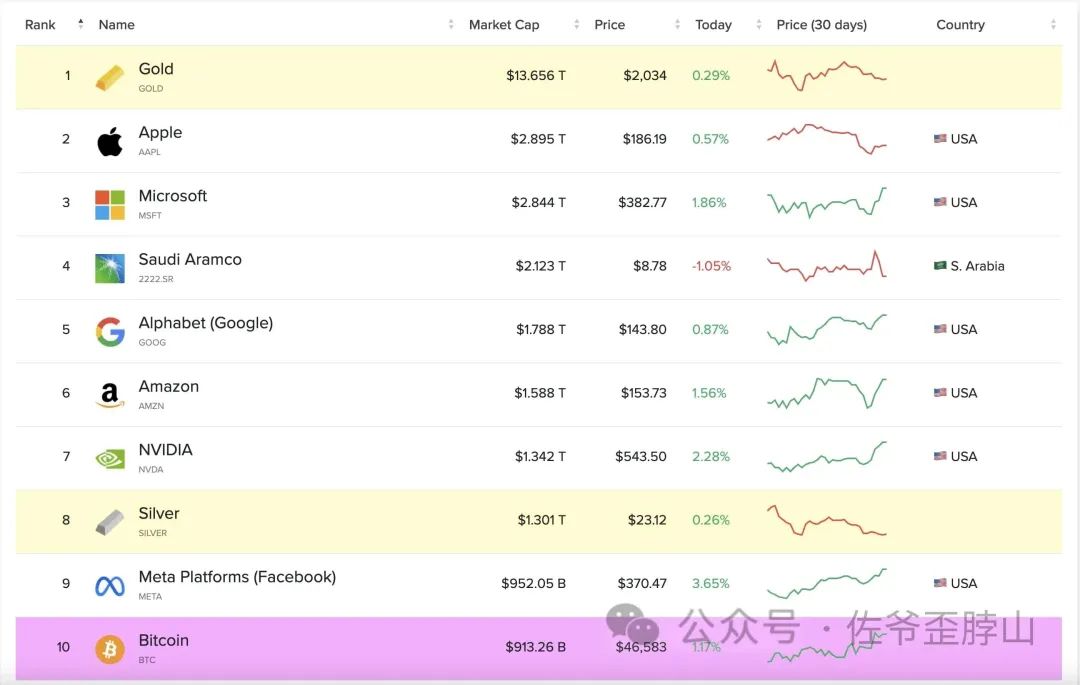
How to classify Bitcoin? Globally, opinions either long dismissed it as worthless or hoped it would revolutionize the entire traditional financial system. This sentiment peaked after the approval of Bitcoin spot ETFs, triggering a fee war among applicants. Grayscale’s GBTC, held back for years, finally saw the light of day.
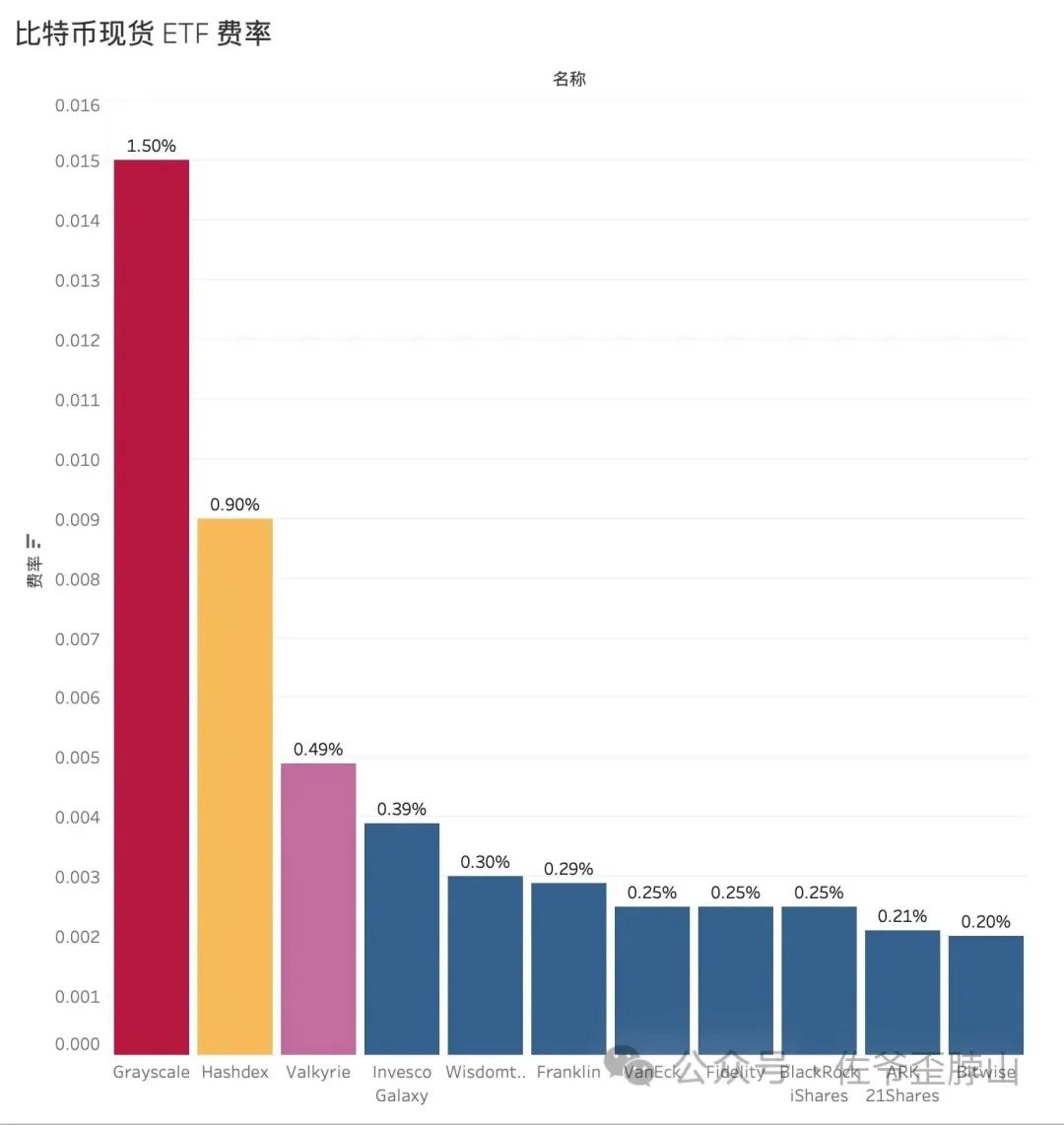
Today, everyone recognizes that Bitcoin can no longer be ignored. After Bitcoin comes a long line of cryptocurrencies waiting to be discovered and accepted. In today’s crypto landscape, Bitcoin stands alone at the top—but ETH and other ETFs becoming new hotspots is also expected. Unlike previous trends like DeFi and NFTs, which were mostly insider entertainment, the breakout of crypto into traditional finance is imminent.
Mainstreaming subcultures—the dragon slayer’s fate
Bitcoin is not money, but money is naturally Bitcoin.
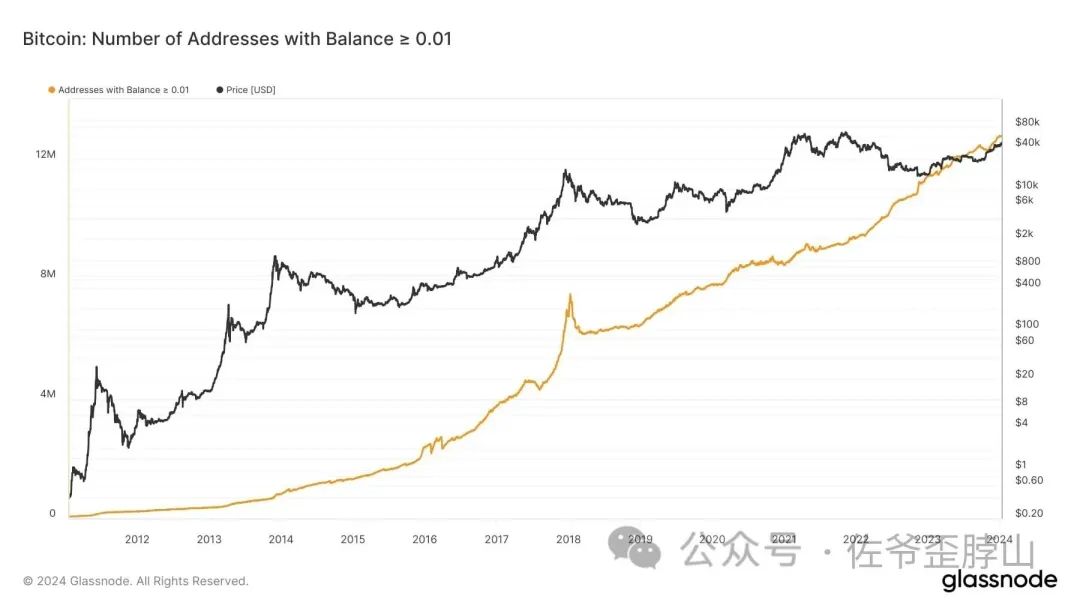
Doubted and rejected for years, Bitcoin has nonetheless gathered enough followers. Since 2011, the number of Bitcoin addresses holding assets has steadily risen to over 12 million today. Unlike internet platform users, Bitcoin ownership represents wealth. Being a Facebook user doesn’t entitle you to Meta’s profits, but holding Bitcoin continues to appreciate—with no Ponzi scheme in sight.
Now that Bitcoin has entered the mainstream, will it gradually shed its anti-authority character and compromise more with real-world interests? During the recent inscriptions battle, developers like Luke ultimately abandoned efforts to restrict inscriptions—after all, miners need real transaction fees.
In human history, every form of counterculture—rebellious movements against prevailing authority and mainstream norms—eventually fades as its protagonists grow older. From America’s hippie movement to France’s May 1968 uprising, once-radical youth eventually become staunch defenders of the old system.
Satoshi Nakamoto’s anonymity fulfilled its mission. Bitcoin has indeed become a shared global super ledger. Now, we’ll witness Bitcoin’s next magical journey—how it adapts to life after mainstream acceptance.
The revelers roar—who’s next?
Cryptocurrency history has never lacked challengers to Bitcoin—from BCH and BSV to Vitalik’s frustration with Bitcoin’s conservatism, prompting his shift to Ethereum. Every word left by Satoshi is treated as sacred scripture by believers. Put simply, after Satoshi, Bitcoin’s evolution slowed, making revolutionary innovation extremely difficult.
It’s the best of times, offering other cryptocurrencies great opportunities to improve—like not only Ethereum, but China’s “Ethereum” Conflux, Japan’s “Ethereum” Cardano, South Korea’s “Ethereum” Terra, and India’s “Ethereum” Polygon.
It’s also the worst of times. After Bitcoin, nearly every type of token shows severe centralization tendencies. Vitalik and the Ethereum Foundation steer ETH’s every move. Solana was manipulated by FTX and Jump, the former enabling passive staking for SOL.
It’s time to talk about the next spot ETF.
Let’s bring Gary back in. He once listed ADA, SOL, MATIC, and several other tokens as securities. But Gary has never explicitly said whether ETH is a security—even during the April 2023 congressional hearing, he remained ambiguous, exuding a certain Ma Ke-like aura.

With the positive momentum from Bitcoin spot ETF approval, can ETH become the second spot ETF under Gary’s watch?
I remain optimistic. Even if it doesn’t happen this year, it will likely materialize eventually. However, altcoins beyond ETH have almost no chance of widespread approval.
The Bitcoin spot ETF chapter ends relatively圆满 (fulfilled). After the U.S. gives the nod, Hong Kong is likely next in line. The balance of power between East and West in crypto assets has become severely unbalanced—mining power, exchanges, miners, and mining equipment manufacturers have gradually shifted away from the East. Spot ETFs might help regain some ground, but the overall trend is clear—a sigh is all we can offer.
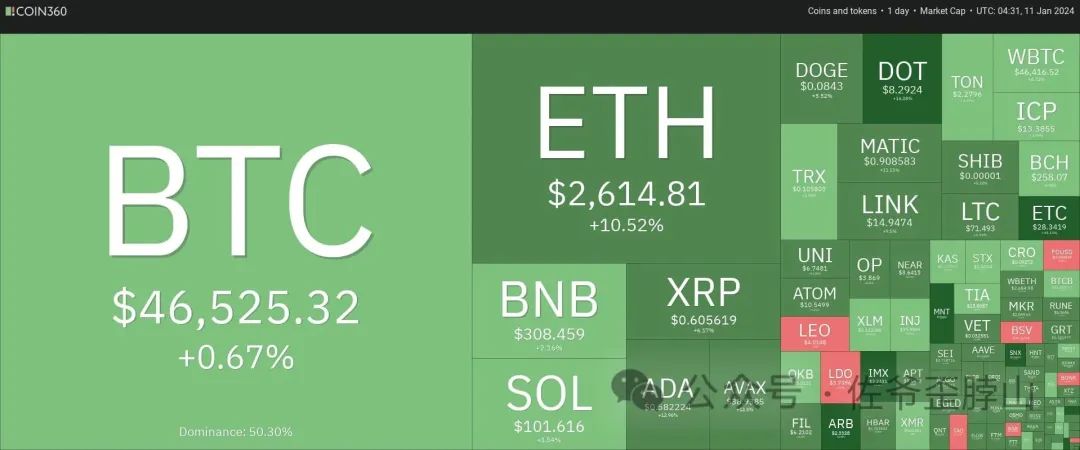
After sanctioning Binance came the approval of Bitcoin spot ETFs. The U.S. government and Wall Street skillfully played the good-cop-bad-cop routine, seizing control over crypto asset pricing. Next up is Ethereum—then who after that?
Conclusion
While waiting late into the night for the SEC decision, a quote suddenly came to mind: “An organization is like a tree full of monkeys. Each monkey sits on a different branch. The ones above look down and see nothing but smiling faces. The ones below look up and see only assholes.”

I watched the SEC’s five members all night. The takeaway? Yesterday is gone. Family, let’s welcome Bitcoin’s new era!
Join TechFlow official community to stay tuned
Telegram:https://t.me/TechFlowDaily
X (Twitter):https://x.com/TechFlowPost
X (Twitter) EN:https://x.com/BlockFlow_News
 @zuoyeweb3











