








From Infrastructure Pioneer to Web3 Gateway: OKX Wallet Champions "Ordinals 2.0"
TechFlow Selected TechFlow Selected
From Infrastructure Pioneer to Web3 Gateway: OKX Wallet Champions "Ordinals 2.0"
Behind the Scenes of OKX Web3 Wallet's Move into the Inscriptions Ecosystem
 Navigating Web3 tides with focused insights
Author: TechFlow
A KOL once asked on Twitter: How many people are there in the OKX Web3 Wallet team to build such a phenomenal product?
Discussions like this are common across social media, communities, and even offline summits—filled with three parts curiosity and seven parts admiration. After all, amid the 2023 frenzy of "inscribing en masse," countless market participants were eager to get a piece of the action. Yet OKX Web3 Wallet secured an absolute dominant position in the inscription market within just a few months.

Image source: dune.com
Indeed, the popularity of inscriptions is undeniable. According to the latest data from Dune, the cumulative fee revenue from Bitcoin NFT protocol Ordinals inscription minting has exceeded 5,178 BTC, with over 52,446,571 inscriptions minted to date. By November, the inscription craze rapidly spread beyond Bitcoin to other public chains. Etherscan tweeted that in recent weeks, 95% of transaction activity on major EVM chains consisted of inscription-related activities. The sudden influx of users caused daily on-chain transaction volumes to spike dramatically, driving gas fees through the roof. This unexpected stress test challenged the performance of various blockchains, with networks including Arbitrum, zkSync, Avalanche, and Cronos experiencing partial or full outages.
Among numerous competitors, OKX Web3 Wallet may not have been the first mover: Eight months ago, due to severe infrastructure gaps in the Bitcoin ecosystem, users eager to participate in inscriptions struggled with complex operations. At that time, the Bitcoin inscription wallet UniSat gained massive attention upon launch and quickly became the most popular inscription wallet. Later, as BTC NFT concepts rose in prominence, Magic Eden—previously focused on the Solana ecosystem—swiftly pivoted and emerged as a leading marketplace for Bitcoin NFTs.
So what exactly did OKX Web3 Wallet do right? How was it able to surge forward after fully launching its Ordinals marketplace in late May, achieving a staggering market share exceeding 80% within just a few months? The answer seems self-evident—from its Web2-like seamless user experience and user-centric product design principles to its strong technical team enabling rapid response to market demands.
This article aims to explore the behind-the-scenes story of OKX Web3 Wallet’s strategic move into the inscription ecosystem. By examining its product experience, features, market strategy, and future plans, we will analyze how OKX Web3 Wallet achieved success in this inscription race, further forecasting upcoming trends, opportunities, and challenges in the next bull market.
Image source: Twitter @OKXWeb3_CN
OKX Web3 Wallet: A Pioneer in Inscription Ecosystem Infrastructure
Many say that OKX Web3 Wallet reaped the greatest benefits from this unprecedented boom in inscriptions. But conversely, one could argue that without a convenient tool like OKX Web3 Wallet, this widespread FOMO around inscriptions might never have materialized.
There are plenty of supporters of this second viewpoint within the community.
Looking back at the beginning of this inscription mania, when waves of users were left confused by the severely underdeveloped Bitcoin ecosystem infrastructure, OKX Web3 Wallet was among the very first pioneers building essential tools for this new frontier.
In May 2023, OKX Web3 Wallet unveiled its roadmap for the Bitcoin ecosystem, officially marking its full entry into the Ordinals market. As a Web3 product under the centralized exchange giant OKX, its decision to embrace inscriptions was seen by many as a significant positive signal for the entire inscription space. On one hand, the vast user base reachable through OKX's influence would now gain easy access to the inscription market via OKX Web3 Wallet. On the other hand, OKX’s top-tier product, technical, and operational teams turned their focus toward the inscription赛道, reevaluating user needs and planning functionalities from a professional standpoint. This not only drastically lowered the barrier to entry but also accelerated the development of Ordinals ecosystem infrastructure and helped establish industry standards for Bitcoin-related applications.
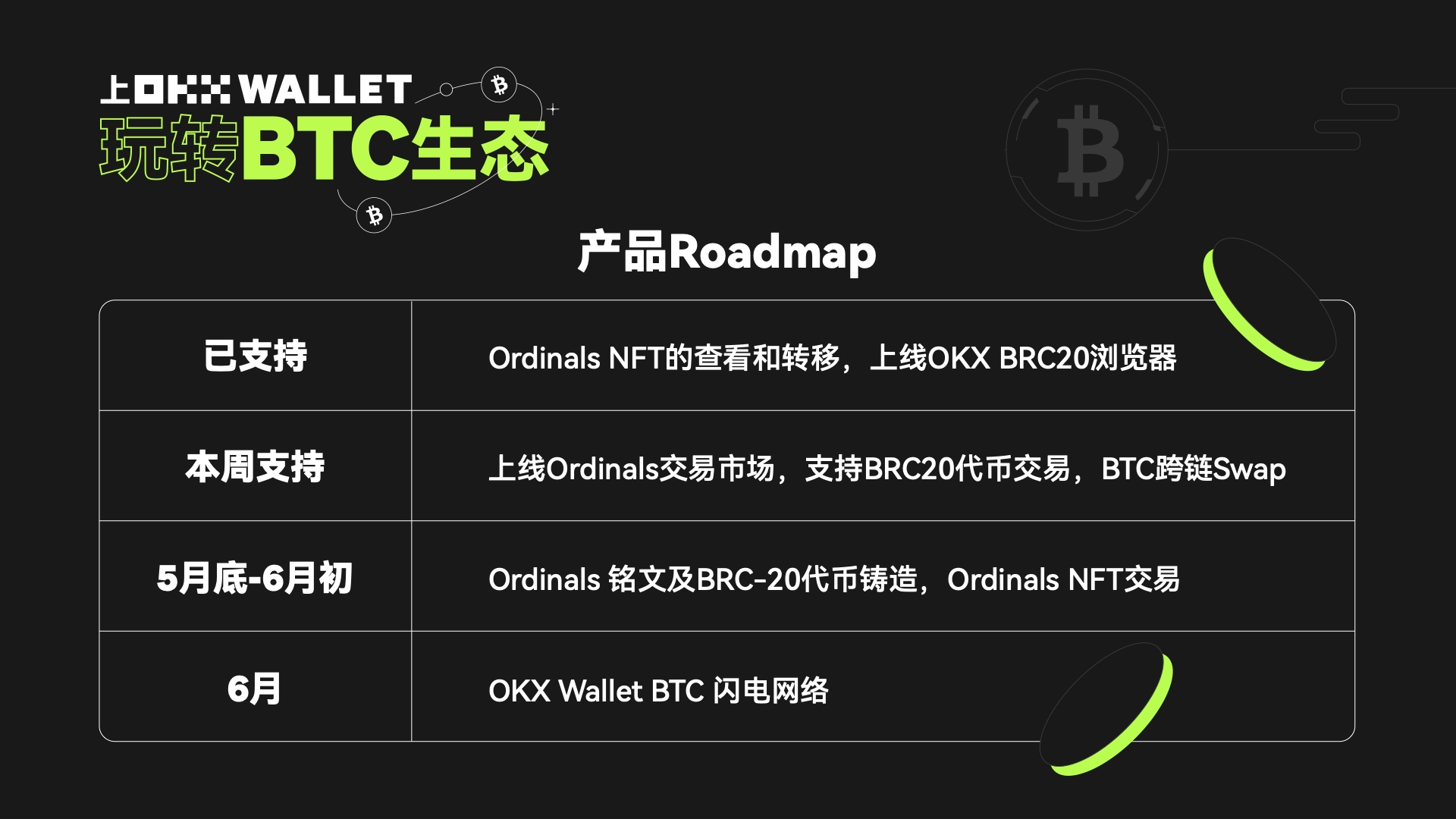
Image source: Twitter @OKXWeb3_CN
In practice, OKX Web3 Wallet delivered exactly on these promises.
At the time, several Bitcoin inscription wallets already existed, each racing to capitalize on the trend. However, early offerings hardly qualified as mature products—rudimentary features hinted at rushed development, frequent technical vulnerabilities led to service disruptions, resulting in poor user experiences and compromised asset security.
This changed dramatically when OKX Web3 Wallet fully launched its Ordinals marketplace at the end of May—quickly earning acclaim across the ecosystem as the “go-to wallet” thanks to its unmatched smoothness and usability.
Support across desktop, browser extension, and mobile app platforms exemplifies OKX Web3 Wallet’s commitment to convenience. Many refer to the mobile app as a groundbreaking innovation that brought inscriptions into the mobile era. During peak inscription periods, I’ve seen multiple friends sitting on airport floors, laptops open, scrambling to seize opportunities. With OKX Web3 Wallet’s mobile app, much of that hassle disappears.
Functionally, as a fully parsing wallet, OKX Web3 Wallet integrates minting, inscription, sending, and receiving capabilities for BRC-20 tokens and BTC NFTs. When purchasing, users can filter prices and customize network fee rates. When listing, they can view estimated profits directly on the inscription page. Additionally, OKX Web3 Wallet supports nearly all major blockchain networks, eliminating the need for users to switch between different chains—an all-in-one solution for participating in inscriptions.
Despite its clean interface, every function is thoughtfully included. Users naturally navigate through intuitive interactions to achieve their goals, offering an experience comparable to buying NFTs on Ethereum—with zero additional learning curve.
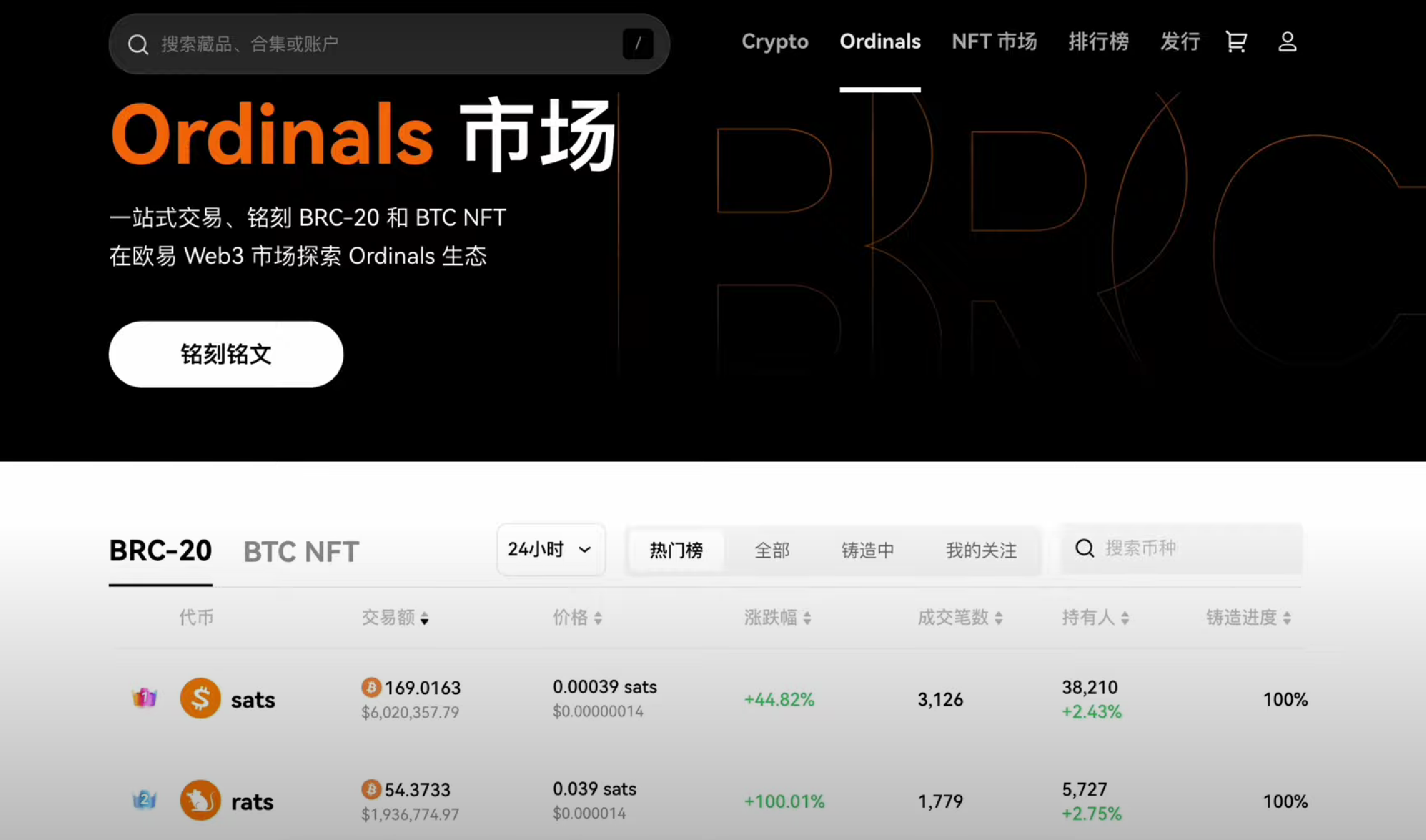
Image source: Screenshot from OKX Web3 Wallet
As the saying goes: To do your job well, you must first sharpen your tools. Beyond smoothness, another key attraction of OKX Web3 Wallet is efficiency. Market opportunities vanish in seconds, and batch processing functions are critical for maximizing user productivity. OKX Web3 Wallet’s Ordinals marketplace supports bulk purchases—allowing floor hunters to buy multiple items with one click. It also enables batch transfers and batch inscription. For example, regarding BRC-20 assets, OKX Web3 Wallet has increased the maximum number of inscriptions per session to 1,200, significantly boosting efficiency.
The Inscription Center, supporting single-signature batch inscription (up to 50 inscriptions), is another manifestation of OKX Web3 Wallet’s efficiency.
“Hand-cranking” is a playful term used in the community to describe the act of inscribing—a nod both to the repetitive, tedious clicking involved and to users’ desire for secure, efficient inscription tools.
In early December, OKX Web3 Wallet officially launched its Inscription Center, enabling single-signature batch inscription of up to 50 items. Users can choose between text mode or hexadecimal mode for single or multiple text inscription. While both options exist, using single-text mode is recommended to avoid failed or disordered inscriptions. Currently, the OKX Inscription Center supports 23 public chains, including two non-EVM chains (BTC and Aptos) and 21 EVM-compatible chains such as Ethereum, Polygon, BNB Chain, and Metis—effectively covering virtually all user needs across major blockchains.
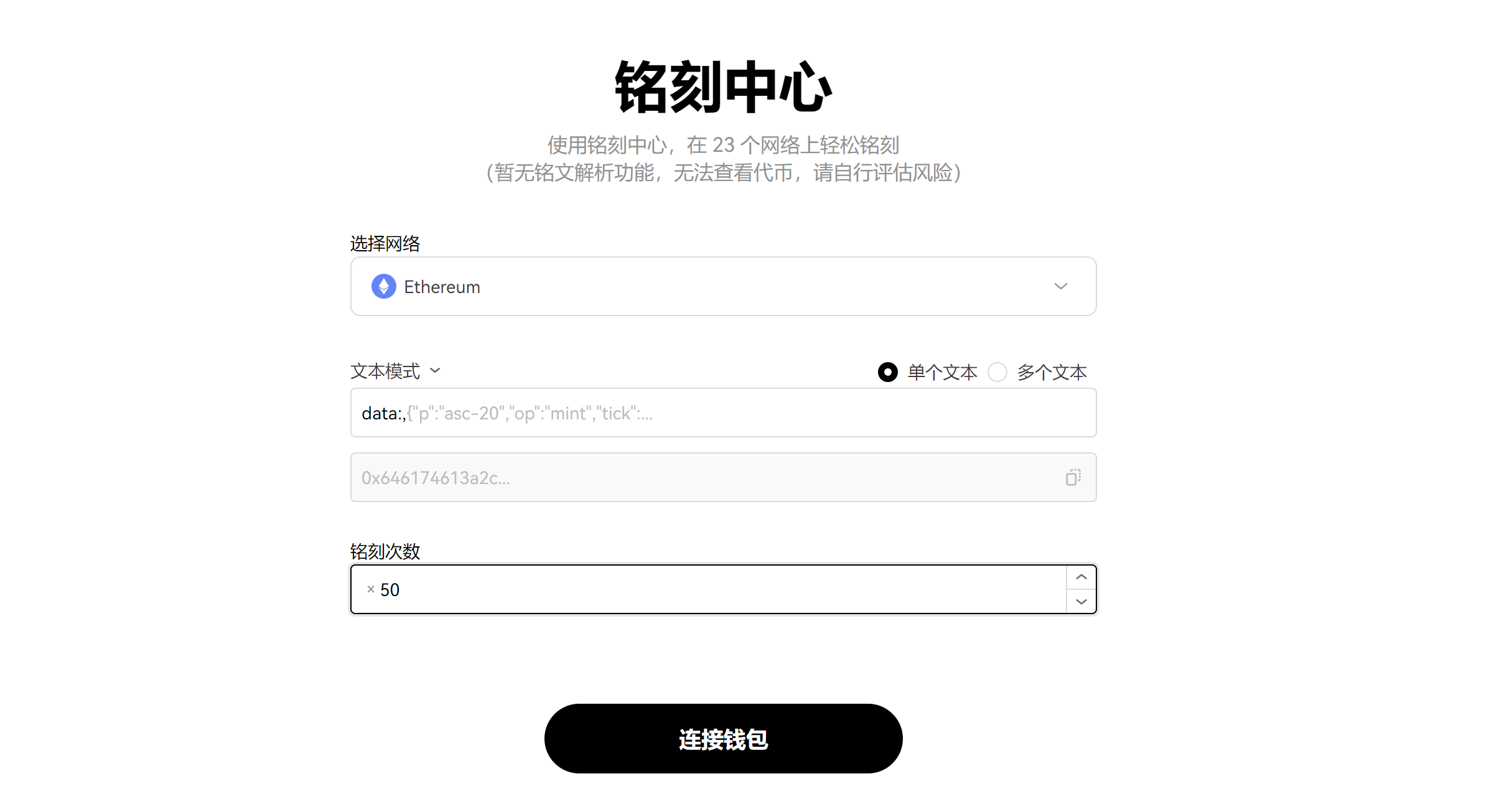
Image source: Screenshot from OKX Web3 Wallet Inscription Center
Moreover, when it comes to security—the foundation of any wallet—OKX Web3 Wallet implements robust protective measures.
First and foremost, OKX Web3 Wallet is a non-custodial, decentralized multi-chain wallet. Users retain full control of their assets via private keys. Unless leaked by the user, no third party—including OKX—has access to account keys, ensuring asset security from the outset. Furthermore, amid growing incidents of malicious websites stealing private keys during batch operations, OKX Web3 Wallet’s Inscription Center requires no private key importation and remains free to use—eliminating concerns about key exposure and delivering a safer, more convenient inscription experience.
Another commendable detail is OKX Web3 Wallet’s emphasis on wallet authorization management. Since Bitcoin does not support smart contracts, it lacks native account authorization mechanisms. However, all EVM networks do support contract interactions, where each signature carries potential risk of asset loss. This is precisely why OKX Web3 Wallet designed its Authorization Management page—to provide clear visibility into active permissions and allow one-click revocation, helping users easily manage wallet authorizations and enhance account security.
User-centric in product design, OKX Web3 Wallet also wins hearts in market strategy. Alongside the launch of its Ordinals marketplace, OKX Web3 Wallet rolled out a series of limited-time trading subsidies, waived fees, campaigns rewarding BRC-20 holders and traders with a chance to split 30,000 BTC, and various airdrops—all fueling user enthusiasm for inscriptions.
Another compelling reason to choose OKX Web3 Wallet for inscription trading: superior liquidity. Due to liquidity concerns, many questioned whether BRC-20’s popularity would be short-lived. Yet as the undisputed leader in the inscription market, OKX Web3 Wallet offers stronger liquidity, translating into better trade matching and higher capital efficiency. In fact, the liquidity of many inscriptions now surpasses that of blue-chip NFTs. Looking ahead, this positive feedback loop—the rich getting richer—will continue to strengthen OKX Web3 Wallet’s long-term growth trajectory.
From Uncertainty to Conviction: From Inscription Infrastructure to Web3 Gateway
After gaining fame in the inscription market, members of the OKX Web3 product team have repeatedly shared in online sessions that although OKX had long monitored the Bitcoin ecosystem, internal discussions around fully supporting the Ordinals market went through phases of research, debate, testing, and eventual confirmation before finalizing the decision.
Back in March 2023, when the concept of inscriptions began circulating in various communities, the OKX Web3 product team—which had been closely tracking Bitcoin developments—immediately took notice. But adhering to the principle that “user demand defines product demand,” they refrained from rushing in. Instead, they conducted comprehensive user research to assess whether the inscription ecosystem warranted investment, while simultaneously launching their first NFT collection, Bitcoin Punks. Data showed high user interest, validating initial assumptions.
By April, as the inscription market started gaining momentum, solid research convinced some team members of the opportunity. Around the same time, Bitcoin inscription wallet Unisat launched its BRC-20 trading market. OKX Web3’s technical team proactively engaged with Unisat, jointly establishing the BRC-20 parsing standard. They also collaborated on dual verification based on OKX’s proprietary BRC-20 ledger parsing and indexing library.
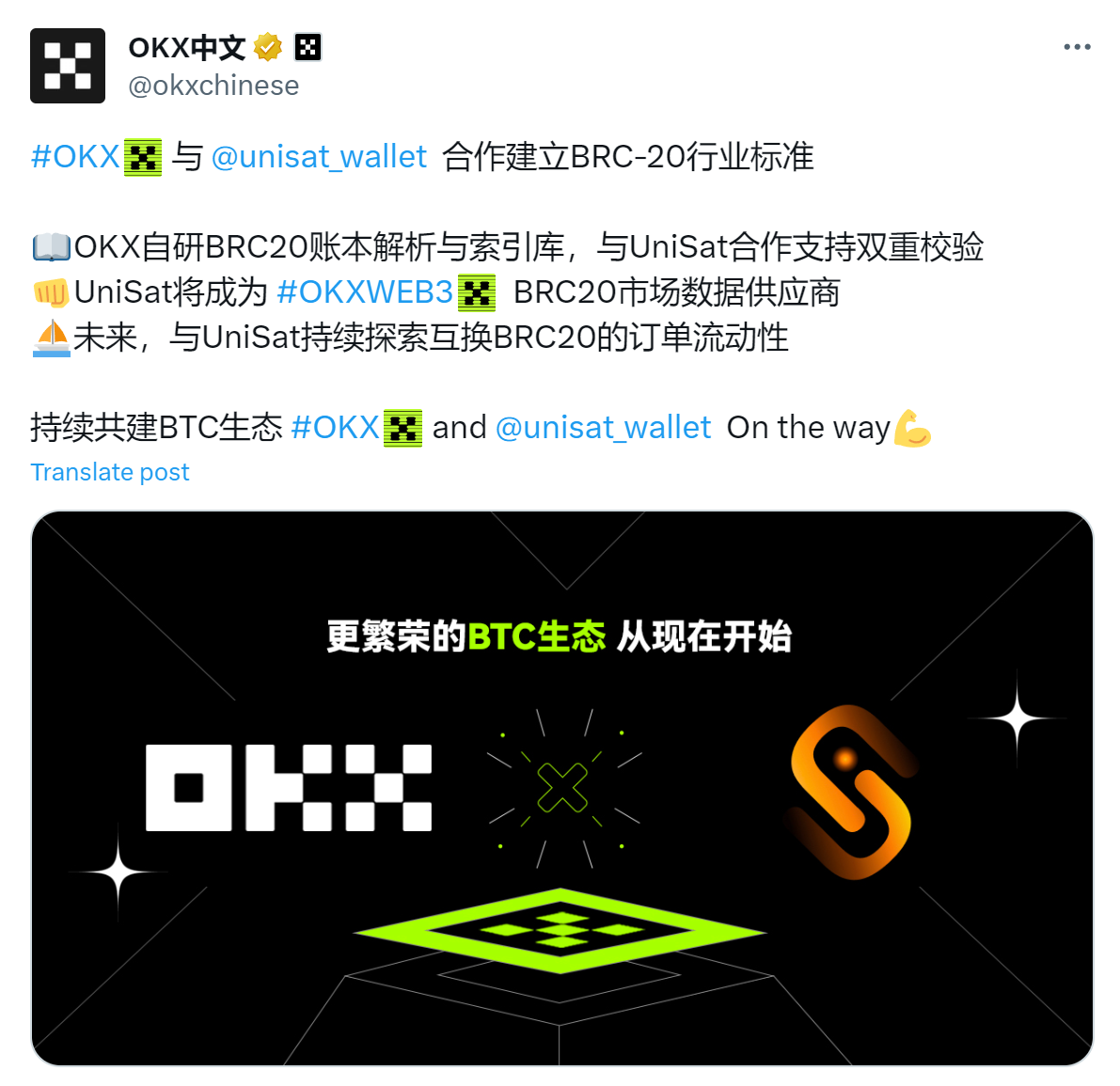
Image source: Twitter @okxchinese
Guided by technical feasibility and data-driven decisions, the combined affirmation from market and engineering perspectives ultimately allowed the OKX Web3 team to overcome internal disagreements. On May 16, they publicly released the Web3 Wallet Bitcoin ecosystem roadmap. Judging by market performance, this proved to be an excellent decision. Reflecting on earlier uncertainties, Jason Wang, Head of Bitcoin Wallet at OKX, shared:
"Our current achievements aren’t solely due to efforts over the past year, but rather the result of continuous development and foundational work over several years. Although our Web3 Wallet has only existed for a little over two years, our underlying technical architecture dates back five years. Over the past five years, we’ve not only built up our technology stack but also refined highly effective methods for user interaction. These results stem from years of accumulation—not something achievable overnight."
This humble reflection prompted many to reassess OKX Web3 Wallet’s success in the inscription boom. Notably, OKX’s official website describes the wallet as: “One Web3 gateway is enough.” This slogan underscores OKX’s focus on Web3 and clarifies the wallet’s positioning:
The wallet, as a core component of OKX’s Web3 infrastructure, aims to become the primary “Web3 gateway.” And beyond entry, OKX is building and refining additional components beyond the wallet to enrich the post-entry experience.
Viewed this way, the wallet’s success in the inscription niche appears as a successful execution within OKX’s broader Web3 transformation strategy. As early as 2021, OKX announced its shift toward Web3. Unlike other CEX giants that invest in or incubate projects to reach users indirectly (B2B approach), OKX chose a unique path—direct engagement with end-users (C2C), leveraging user-centric, high-quality products to attract users and convince them of the value of OKX’s comprehensive Web3 ecosystem.
Of course, staying true to its “user-first” philosophy, OKX Web3 Wallet’s first step toward becoming a beloved “Web3 gateway” is lowering barriers and simplifying processes.
To lower entry barriers, OKX Wallet offers iCloud/Google Drive backup for seed phrases and actively explores MPC (private-keyless) wallets and AA (account abstraction) smart contract wallets—both significantly reducing the cost and complexity of key recovery and minimizing friction for new users.
In April 2023, OKX Web3 Wallet launched its MPC private-keyless wallet, introducing an innovative “emergency exit” feature that relieves users of managing complex private keys or seed phrases. In emergencies, users can export their private key and withdraw assets using two self-managed key shards—achieving true decentralized, self-custodial, private-keyless custody. In August 2023, OKX Web3 Wallet made breakthroughs in AA smart wallets, currently allowing users to create AA wallets on eight popular public chains including Ethereum, OKTC, and Arbitrum. Features include paying gas fees with stablecoins (USDT/USDC), accessing DEXs on-chain, and one-click authorization for multiple NFT collections. As OKX continues deepening its wallet innovations, the role of OKX Web3 Wallet as a “Web3 gateway” becomes increasingly prominent.
To simplify processes, OKX Web3 Wallet follows an “All-in-One” strategy: one wallet for everything. With the proliferation of public chains, each operating independent ecosystems, users often need to install multiple plugins to access different chains. OKX Web3 Wallet addresses this through its long-standing multi-chain strategy: supporting over 80 public chains, including heterogeneous chains like Bitcoin, Solana, and Aptos, as well as all EVM-compatible chains. This “unified across chains” approach genuinely helps users—now needing just one OKX Web3 Wallet to seamlessly engage with diverse blockchain ecosystems.
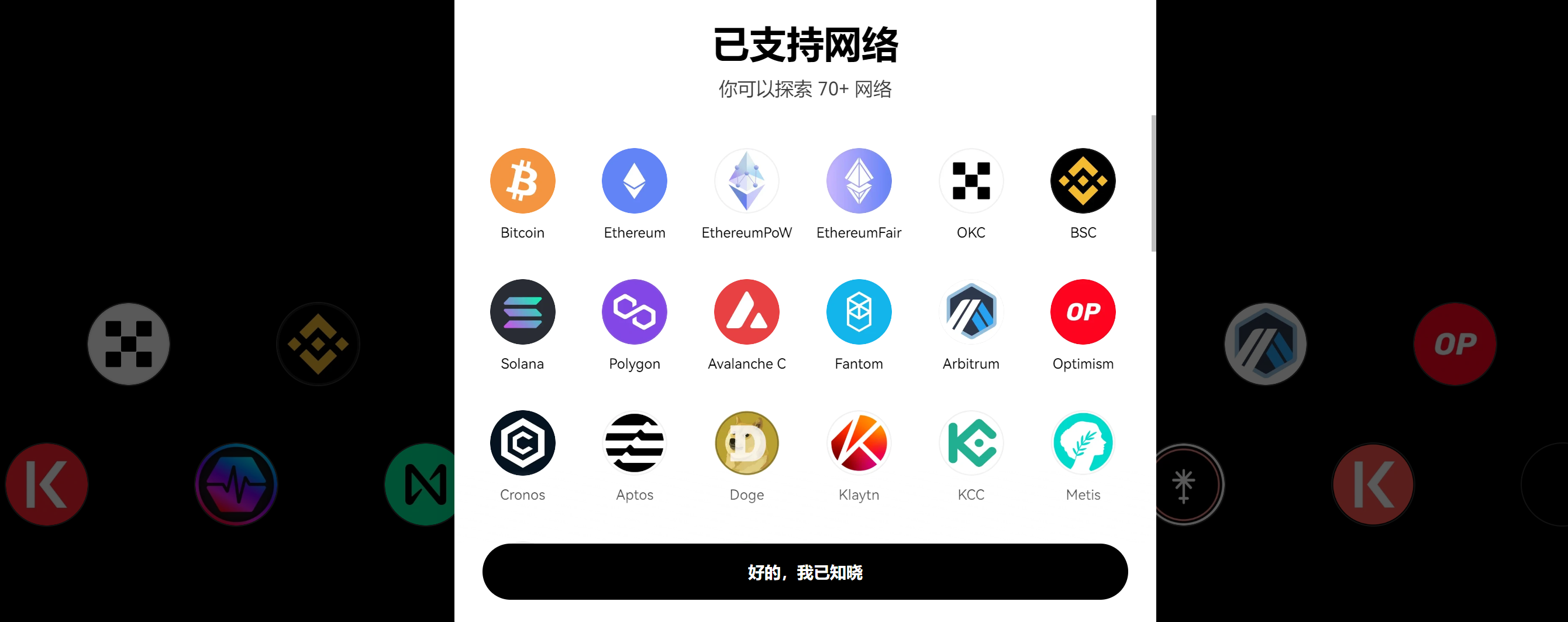
Image source: okx.com
Once inside the Web3 ecosystem, OKX aims to deliver enhanced participation experiences through comprehensive infrastructure. Thus, for the two breakout narratives in crypto—DeFi and NFT—OKX has strategically invested accordingly.
As an all-in-one on-chain investment tool, OKX Web3 DeFi provides optimal solutions for engaging in decentralized finance. Within OKX Web3 DeFi, users can participate in investments across various protocols without constantly switching interfaces. Going forward, OKX DeFi will continue hosting exclusive bonus events with top-tier protocols, generating greater returns for ecosystem users.
Additionally, OKX has developed OKX Dex—a Web3 infrastructure layer uniquely combining a swap aggregator and cross-chain bridge. It aggregates liquidity from multiple sources to offer users optimal routes and quotes while supporting nearly all token types and customizable cross-chain bridging. Since launch, OKX Dex has seen rapid growth in users and transaction volume, nearing $20 million in daily trading volume.
On the NFT front, OKX Web3 NFT Marketplace is a multi-network decentralized platform supporting NFT trading across 20+ networks including Ethereum, Solana, OKTC, and Polygon. Its primary issuance market regularly launches high-quality projects. The secondary market offers multidimensional filtering, batch purchases, and real-time on-chain analytics to aid decision-making and accelerate trades. In December, DappRadar reported that OKX NFT Marketplace achieved a 24-hour trading volume of $50.33 million, making it the highest-volume NFT marketplace on record for a single day.
In the broader Web3 landscape, OKX centers its wallet around social, gaming, music, MEME, and utility sectors. According to the latest ecosystem map released by OKX Web3 Wallet, it currently supports 150+ DeFi protocols, 35+ NFT marketplace aggregators, totaling over 500 supported platforms and protocols. Moving forward, the OKX team will collaborate with more leading dApps to natively integrate wallet support, offering users a richer and more diverse Web3 experience.
After years of groundwork, OKX’s Web3 product matrix is taking shape—a simple, secure, interconnected wallet serving as the starting point, linking DeFi, NFTs, L2s, CEXs, and more. This emerging OKX Web3 infrastructure network empowers millions to enter the Web3 world with low friction and interact effortlessly.
Looking Ahead: OKX Web3 Wallet Shapes the “Inscription 2.0” Era
Just as Uniswap’s moves defined the next hotspots during the DeFi Summer, OKX Web3 Wallet—given its current dominance in the inscription ecosystem—is poised to shape the future of inscriptions as the trend shows no signs of cooling down.
Recently, Kyle, Product Lead of OKX Web3 Marketplace, revealed in an online event: “As foundational infrastructure and tools, OKX Web3 Wallet will continue to stay close to market trends, remain rooted in the front lines of the crypto industry, listen closely to authentic user feedback, and respond promptly to growing, diverse, and personalized demands through continuous product iteration and technological innovation. We’ll keep upgrading our core capabilities—from wallet parsing and trading markets to batch tools and OpenAPIs—delivering ever-smoother experiences.”
For the Bitcoin ecosystem:
OKX Web3 Wallet is committed to fully parsing BRC-20, gradually improving the completeness and robustness of the BRC-20 ecosystem. Notably, parsing work for newer asset issuance protocols such as ARC20, SRC20, DRC20, and Runes is already underway. Additionally, the team will focus on enhancing OpenAPI functionality, opening up access to OKX Ordinals market data queries, real-time order pricing, and shared PSBT order liquidity to meet the needs of developers and professional users.
Furthermore, the UTXO management feature will soon be upgraded to UTXO Smart Release. As more Bitcoin inscriptions emerge, some abandoned Ordinals-inscribed UTXOs render portions of users’ BTC balances unusable, blocking normal transfers or gas payments. While OKX Web3 Wallet previously introduced UTXO management, manual release carried risks of accidentally releasing valuable UTXOs. To solve this, OKX Web3 Wallet will soon upgrade to Smart Release—automatically identifying and freeing up worthless NFTs (including invalid BRC-20 and BRC20s) without affecting valuable assets, making Bitcoin interactions far more convenient.
For the EVM inscription ecosystem:
Currently, OKX Web3 Wallet cannot display EVM inscription tokens. Therefore, the team will prioritize implementing inscription parsing functionality. Notably, considering user habits and backend logic, OKX Web3 Wallet will adopt a “split-support” model: For upcoming Ethereum inscriptions (ETHS), users will transfer and check balances via the wallet, while trading will be handled through Dex. For other EVM inscriptions like Sols and Apts, trading will occur on OKX NFT Marketplace, which aggregates orders from platforms like MagicEden, Tensor, and BlueMove to ensure users get the best possible price.
Regarding asset issuance protocols:
We’ve observed that OKX Web3 Wallet’s batch transfer now supports the Nostr Assets protocol, allowing up to five addresses per transfer—simple, safe, and efficient, improving capital flow speed. In 2024, OKX Web3 Wallet will support parsing and trading for more Bitcoin ecosystem protocols.
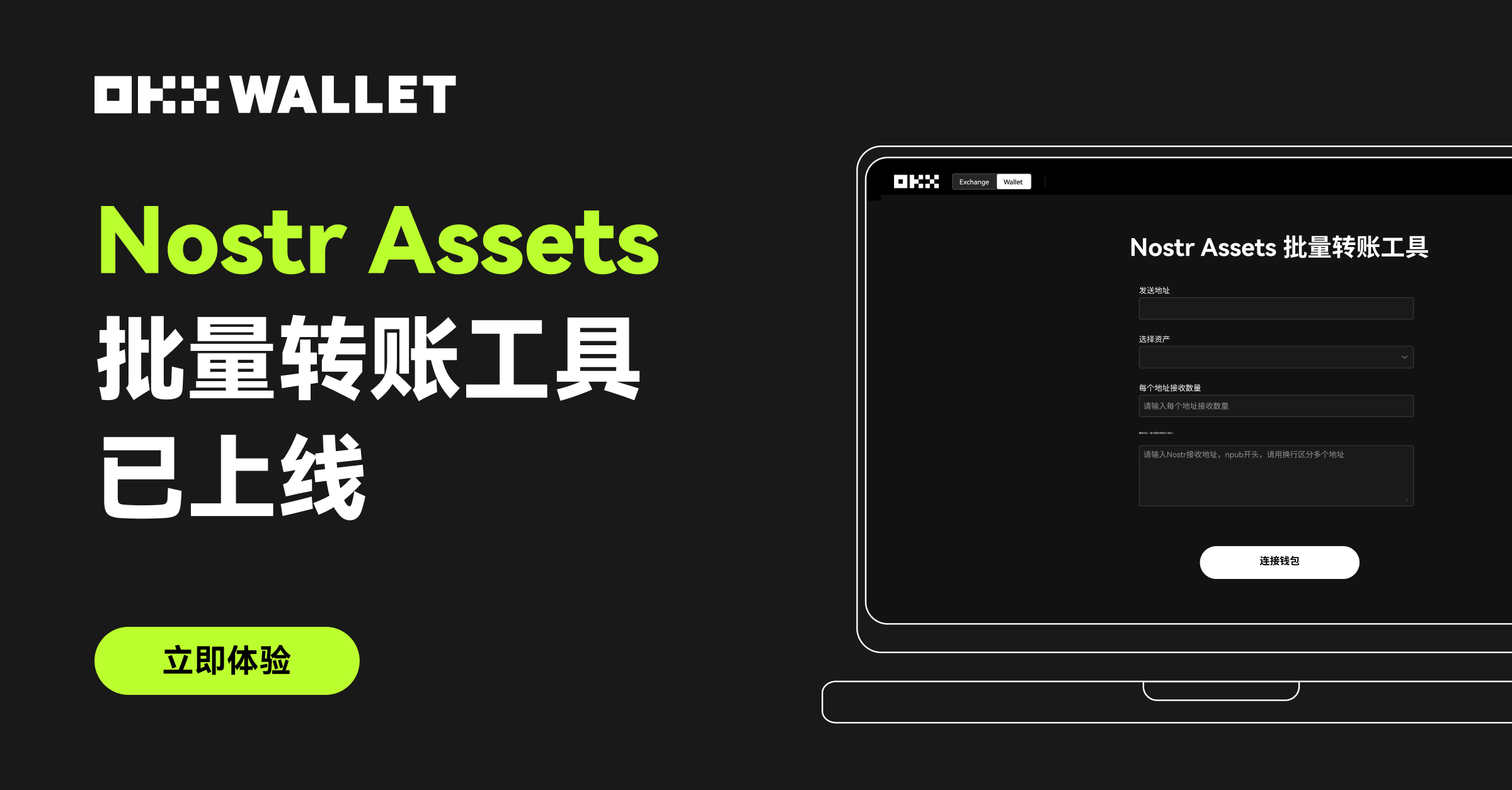
Image source: Twitter @OKXWeb3_CN
Finally, Discover—the one-stop decentralized application aggregation page within OKX Web3 Wallet—serves as a vital window for users exploring the dApp ecosystem. As inscription market热度 continues rising, Discover will integrate inscription market data to help users discover high-potential inscription projects and participate easily.
Beyond the inscription ecosystem, the OKX Web3 team is also monitoring developments in Layer 2 and Lightning Network. Recently, the Lightning Network introduced Taproot Assets, and several projects have begun deploying related services. These advancements bring positive momentum to the entire Bitcoin ecosystem. OKX will continue observing these areas to ensure its products and services deliver the best possible user experience.
Conclusion
Recall the last bull market, when Binance, another top-tier exchange, rose to prominence through its self-developed chain strategy. Recently, during an AMA hosted by Binance Chinese, co-founder He Yi stated:
“Users complain that Binance Web3 Wallet isn’t user-friendly—perhaps because the product and R&D team initially treated BRC-20 as a cyclical, NFT-like novelty with uncertain longevity, so resources allocated were insufficient. We’ll take this seriously moving forward.”
As the new bull cycle unfolds, a quiet battle for supremacy among CEXs has already begun. Whether it’s He Yi’s candid admission or OKX Web3 Wallet’s standout role in filling critical infrastructure gaps in the inscription ecosystem, OKX has clearly seized an early-mover advantage in this inevitable war. Its pragmatic strategy—placing user needs at the center, using applications as traffic levers, and letting products nurture the Web3 ecosystem—offers fresh insights for others in the industry while accelerating the realization of Web3’s long-term vision.
Regardless of whether the intensifying inscription wars or the emergence of new narratives in the next bull market, infrastructure quality directly impacts user Web3 experiences—and will remain a key battleground for industry players. Today, OKX Web3 Wallet has already claimed its place. We look forward to its continued leadership as an industry benchmark, and to witnessing a wave of innovation across the market in the next bull run.
Join TechFlow official community to stay tuned
Telegram:https://t.me/TechFlowDaily
X (Twitter):https://x.com/TechFlowPost
X (Twitter) EN:https://x.com/BlockFlow_News
 深潮TechFlow











