









From Ethereum Idealist to Uniswap Business Realist
TechFlow Selected TechFlow Selected
From Ethereum Idealist to Uniswap Business Realist
The birth of Uniswap is like a movie.
 Navigating Web3 tides with focused insights
Author: Daniel Kuhn
Translation: Block unicorn
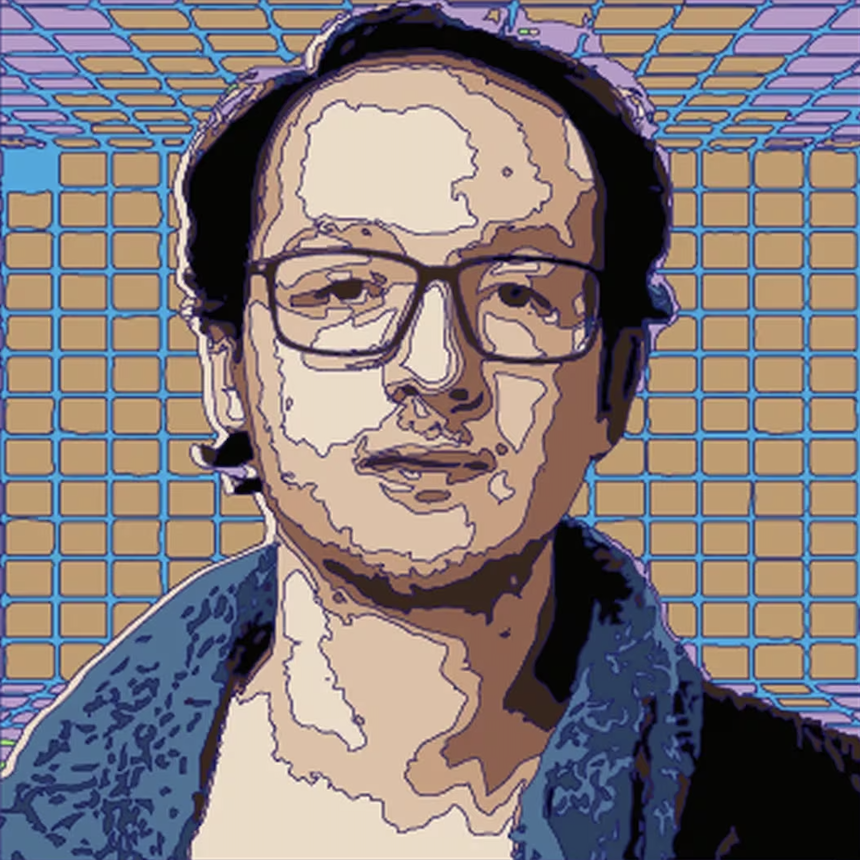
Uniswap, the first decentralized crypto exchange, represents Hayden Adams’ greatest achievement and contribution on Ethereum. The latest V4 version, drawing both praise and criticism, has earned him a spot on the 2023 list of most influential figures.
The Birth of Uniswap Was Like a Movie
In 2018, just months after Karl Floersch introduced him to the world of cryptocurrency (Floersch also made the 2023 list of most influential people), Adams flew to South Korea to attend the Deconomy conference. He had lost his first job after college in mid-2017, when he worked as a mechanical engineer at Siemens, and used that time to learn programming—starting essentially with writing beginner-unfriendly smart contracts.
At just 24 years old and nearly broke, his primary crypto investments—bought during the 2017 boom—had almost entirely lost value. But he did have a working prototype, a website, and a name: Uniswap. His friend Floersch suggested Adams build something called an automated market maker (AMM), a type of permissionless, decentralized protocol for swapping assets, originally proposed by Ethereum co-founder Vitalik Buterin. Driven by faith, he bought a plane ticket but not a conference pass, intending to show Buterin Uniswap’s “version 0.” He sneaked into Deconomy. Then was kicked out. In a twist of fate, he ran into Floersch, who was then working at the Ethereum Foundation. Floersch introduced Adams to Buterin. Within months, Adams was speaking solo at conferences around the world, including Toronto, New York, and Hong Kong.
At the time, there were several important projects on Ethereum, but none quite like Uniswap. When speaking globally or meeting like-minded individuals, Adams didn’t just talk about decentralized exchanges—he discussed their deeper significance. After the 2018 market crash and amid repeated hacks and rampant profiteering at centralized crypto exchanges, the crypto world lacked a tool truly its own, Adams wrote in Uniswap’s history. Reflecting on his thinking back then: “Something felt off in the space. Major projects on Ethereum reflected some of its ideals, but few fully embraced them. Centralized points of failure, censorable applications, and overly complex architectures—DApps designed around token trading didn’t need to be centralized at all.”
Today, Uniswap is one of the largest and most successful DeFi projects, and Adams is reportedly among the wealthiest founders in the industry. It is the largest decentralized exchange (DEX) by total value locked (TVL), with over $3.9 billion currently locked on the platform.
Since launching in October this year, Uniswap Labs has accumulated approximately $1.5 million in trading fees, which will help fund ongoing development. This is separate from protocol fees, which could be enabled through an independent vote among UNI holders—the governance token distributed in one of the earliest DAO governance experiments in 2020. These fees could accrue to UNI holders, but governance has never voted to enable them.
Its daily trading volume rivals—and often exceeds—that of Coinbase, the largest U.S. exchange.
Saying Adams is influential in crypto is an understatement—he inspires both envy and admiration. Uniswap may not be entirely his brainchild (Adams credits the specific swap mechanism to Gnosis’s Alan Lu), but he built it, with significant help along the way. Early on, there were people like Floersch and Buterin, contributors such as Pascal Van Hecke, Callil Capuozzo, and Uciel Vilchis; friends like Philip Daian, Dan Robinson, Andy Milenius, and Jinglan Wang offered advice and encouragement; and supporters like Richard Burton (Vitalik Buterin).
Business Concessions
Adams has also been involved in controversies. After the U.S. Treasury sanctioned Tornado Cash, Uniswap Labs announced that its supported protocol frontend (i.e., entry point) would begin blocking addresses interacting with the cryptocurrency mixer, undermining the “permissionless” and “censorship-resistant” properties that initially drew Adams to Ethereum. In June this year, Uniswap also announced it would soon launch its latest version, V4. This upgrade brings many new features and changes, including a single contract address called “Singleton,” which will house all pools needed to swap different crypto assets, thereby reducing gas fees for all users. Additionally, a new feature called “hooks” will allow developers to add code that alters the protocol’s behavior under certain conditions.
Uniswap’s hook functionality has critics, who argue it sacrifices decentralization for greater customizability. But the most controversial aspect of Uniswap V4 is its planned release under a “Business Source License” (BSL). This license restricts the use of source code in commercial environments, meaning it isn’t fully open-source—at least not until the license expires, which could take up to four years.
Indeed, while Uniswap is a revenue-generating project, it also has financial backers. And with financial backers come incentives to protect profits and limit risks. Ethereum has changed since Adams discovered it—partly due to Adams’ own influence.
However, the Uniswap team is building the application openly and soliciting feedback. The app has no official release date yet and will require “Ethereum Improvement Proposal 1153” to run—an update expected to be part of the Ethereum Cancun upgrade by year’s end. That’s the reality of open-source development.
Join TechFlow official community to stay tuned
Telegram:https://t.me/TechFlowDaily
X (Twitter):https://x.com/TechFlowPost
X (Twitter) EN:https://x.com/BlockFlow_News
 CoinDesk






