








Countdown to Approval of BTC Spot ETF, 401k Pension Funds Poised to Participate
TechFlow Selected TechFlow Selected
Countdown to Approval of BTC Spot ETF, 401k Pension Funds Poised to Participate
Understanding the potential use cases of spot Bitcoin ETFs.
 Navigating Web3 tides with focused insights
By Cheryl Winokur Munk, CNBC
Translated by Qin Jin, Carbon Value
Retirement savers who want a taste of bitcoin without directly holding the cryptocurrency may soon get their long-awaited chance.
January 10 is the deadline for U.S. regulators to decide whether to allow a spot bitcoin exchange-traded fund (ETF), which would aim to track bitcoin’s real-time price.
The popularity of such ETFs among retail investors remains to be seen, but more than 10 asset management firms—including BlackRock, the world's largest—are pushing to get their spot bitcoin ETF applications approved. Industry insiders expect that once these products launch, not only high-risk traders but also retirement savers will have greater opportunities to invest in cryptocurrency as an asset class through company 401(k) plans or individual 401(k)s (if applicable), as well as self-directed individual retirement accounts (IRAs).
This marks a major step toward mainstream adoption of bitcoin and crypto. Investors will have more options, said Chris Kline, chief tax officer at Bitcoin IRA. “Bitcoin IRA allows retirement savers to invest in over 60 different cryptocurrencies within retirement accounts.”
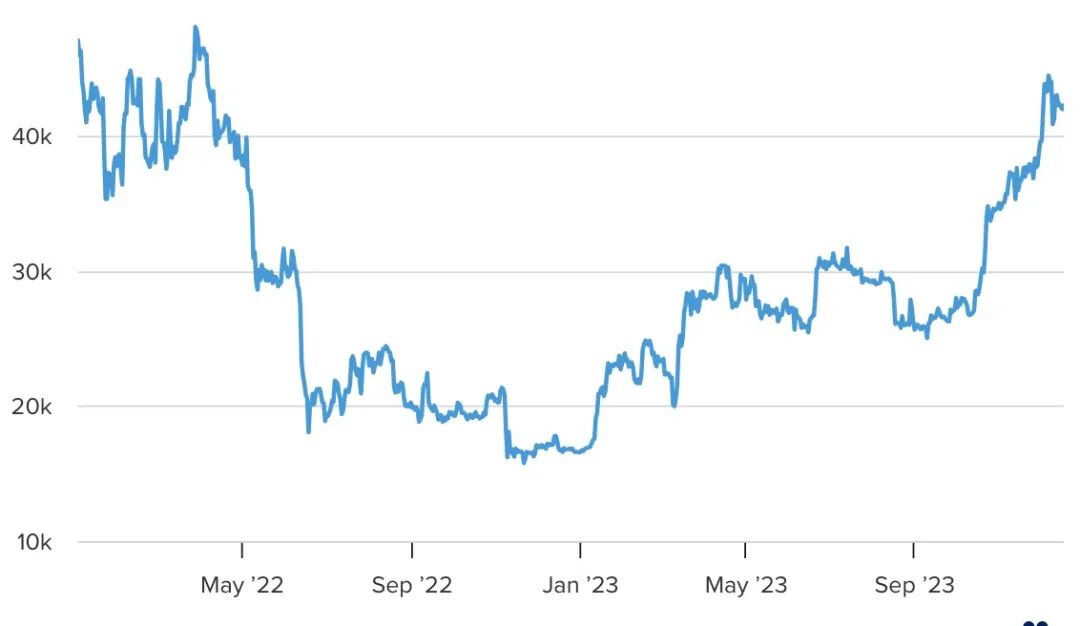
Interest in bitcoin is currently high. After a dismal 2022, the cryptocurrency has surged more than 150% this year, with competition over spot bitcoin ETF approvals helping boost its value. Yet bitcoin remains an extremely volatile asset class, attracting both fierce critics and devoted believers.
In recent years, many large pension funds have already embraced cryptocurrency as an asset class. According to the CFA Institute's 2022 Investor Trust Study, 94% of state and local pension plans have some exposure to crypto. Fidelity Investments, the largest administrator of 401(k) plans in the U.S., first added a bitcoin fund option in the fall of 2022, allowing employees comfortable with crypto risk and volatility to invest in bitcoin through employer-sponsored 401(k) plans.
Below are potential use cases for spot bitcoin ETFs that retirement savers—those who believe crypto holds long-term potential as an asset class—should understand.
Limited Options for Holding Crypto in Retirement Accounts
According to industry experts, many employers have been hesitant to offer cryptocurrency in 401(k) plans due to U.S. Department of Labor guidance issued in 2022.
Because options for holding cryptocurrency in retirement accounts like 401(k)s and IRAs are limited, most people today hold crypto outside of retirement accounts. Many opt for self-custody or use exchanges like Coinbase or Gemini. Non-retirement accounts from providers such as Fidelity and Betterment also offer access.
As a result, retirement savers seeking to hold crypto assets within retirement accounts typically need to find a custodian that permits crypto investments—and those providers are few in number. However, industry experts say that once spot bitcoin ETFs are approved, more custodians are expected to allow them, giving retirement savers more investment choices via this route.
So what happens if the SEC addresses the Department of Labor’s concerns?
Steven T. Larsen, founder of Columbia Advisory Partners in Spokane, Washington, and a certified financial planner, said that if the SEC gives the green light to spot bitcoin ETFs as expected, more companies may decide to include bitcoin ETFs in their 401(k) offerings.
The question is how many.
The U.S. Department of Labor does not prohibit the use of cryptocurrency in company retirement plans, but in March 2022 guidance, it "placed fairly stringent requirements on plan sponsors considering offering crypto," said Joshua Rubin, vice president of legal at Betterment.
“In the early stages of cryptocurrency, the Department expresses serious concerns about whether a fiduciary decision to allow participants in 401(k) plans to directly invest in cryptocurrency or other products whose value is tied to cryptocurrency would be prudent,” the Department wrote in a compliance assistance release.
Rubin said spot bitcoin ETFs could address some of the concerns outlined by the Department of Labor, including issues related to custody, recordkeeping, and valuation. Still, some industry observers say employers may hesitate—at least initially.
“Employers will be very cautious about being the first to allow this,” said Tim Picciott, CFP at Innovative Advisory Group in Lexington, Massachusetts. “I don’t think most HR departments and plan trustees will sign off right away—I think it has to come from employee demand.”
Spot Bitcoin ETFs Could Become 'Ubiquitous'
While market-leading custodians like Schwab and Fidelity do not allow investors to directly invest in cryptocurrency within individual retirement accounts, they have increasingly engaged with the crypto market in other ways—from venture investments in crypto trading infrastructure firms by both financial giants to Schwab launching its own crypto fund.
However, retirement investors currently need to work with alternative providers such as Bitcoin IRA, BitIRA, and iTrustCapital to make direct investments.
Market observers expect that once spot bitcoin ETFs launch, more mainstream custodians will begin offering them. “Once these products hit the market, they’ll be everywhere,” said Larsen, who is also founder of Defi Steward, a firm that helps investment advisors manage digital assets for clients. “That’s good news for anyone looking to invest in bitcoin as an asset class.”
Tax Advantages for Long-Term Crypto Investors
There are many factors to consider when deciding whether bitcoin belongs in your retirement portfolio. First, bitcoin is highly volatile, and many investors lack the risk tolerance needed to allocate part of their retirement savings to this emerging asset class. Investors must also weigh whether to hold bitcoin directly in a self-directed IRA or individual 401(k) (if eligible), or to gain exposure through an ETF.
Mark Parthemer, chief wealth strategist at Glenmede, a wealth management firm, said that investing via a spot bitcoin ETF—where professional managers diversify holdings across crypto—can reduce risk, though not eliminate it entirely.
Bitcoin Market Performance
Over the past two years, cryptocurrency volatility has cut both ways.
On the other hand, Kline noted, holding bitcoin directly in a self-directed retirement account has benefits. For example, after age 59½, you may receive distributions in the form of the crypto asset itself rather than cash. But when you sell a spot bitcoin ETF, you typically receive cash proceeds. The SEC views the latter approach as safer.
Parthemer said that in either case, there are tax advantages for long-term investors who hold crypto in retirement accounts rather than brokerage accounts. Assuming significant appreciation, retirement accounts allow investors to defer taxes upon sale. If held in a Roth IRA and meeting holding requirements, withdrawals can be tax-free. In contrast, holding and selling in a regular brokerage account may trigger capital gains taxes upon sale.
If Your Employer Doesn't Offer Spot Bitcoin ETFs
If your employer is unwilling to offer a spot bitcoin ETF in its 401(k) plan, you can ask them to reconsider. If the answer is no, you can still open an IRA with a provider that offers spot bitcoin ETFs.
Ric Edelman, founder of Edelman Financial Services, said in an email that the new spot bitcoin ETFs will be available for all types of IRA accounts—deductible, non-deductible, Roth, SEP—as well as individual 401(k) plans.
“Given that many anticipate these ETFs will generate outsized returns over time, purchasing them within an IRA will likely become common advice from financial advisors,” said Edelman, who authored *The Truth About Crypto* in 2022 to educate advisors about the asset class, describing it as a generational wealth opportunity.
Larsen said ether ETFs already have pending applications, but those are likely to receive SEC approval later. “The spot bitcoin ETF will be the test case.”
Join TechFlow official community to stay tuned
Telegram:https://t.me/TechFlowDaily
X (Twitter):https://x.com/TechFlowPost
X (Twitter) EN:https://x.com/BlockFlow_News












