








MT Capital Research Report: Fair Launch, A Profound Transformation in Token Issuance
TechFlow Selected TechFlow Selected
MT Capital Research Report: Fair Launch, A Profound Transformation in Token Issuance
Without relying on platform tokens or investors, the earliest participants completed the project's investment, distribution, marketing, and evangelism.
 Navigating Web3 tides with focused insights
Author: Xinwei, Ian
TL;DR
Over the past few years, the blockchain industry has undergone dramatic changes, particularly in token distribution methods. From early simple ICOs to complex DeFi structures, and now to today's fair launches and community-driven models, these transformations have not only reshaped asset allocation but also drawn significant attention from market participants. Below, we will explore several representative projects that exemplify innovation in this space through their unique token issuance approaches.
This article provides an in-depth analysis of key projects—from the retail-driven model of Ordinals, Blast’s incentive innovations, ZKFair’s emphasis on fairness, Analysoor’s novel distribution mechanism, to Binance redefining tokenomics with Fair Mode—demonstrating the diversity of the cryptocurrency ecosystem and reflecting growing market demand for transparency and equity.
Ian, Investment Director at MT Capital: “In experiments like #BRC20, #Blast, #ZERO, and #ZKFair, we are witnessing a powerful innovation—fair distribution for everyone. These projects do not rely on platform tokens or investors; the earliest participants collectively fund, distribute, promote, and evangelize the project. This resembles liquidity mining during DeFi Summer, where protocol-generated incentives fueled on-chain prosperity. Fair distribution has dramatically increased community engagement to unprecedented levels.”
Ordinals
The rise of Ordinals mirrors the earlier DeFi Summer, centered around the concept of fair launch. This idea was highly popular during DeFi Summer, referring to projects distributing initial tokens without reserving any portion for themselves. For example, Yearn (YFI) founder Andre Cronje claimed he conducted no pre-mine, reserved no tokens, and gave no insider advantages—an approach that greatly boosted his reputation and brought massive TVL to Yearn.
However, as DeFi Summer gradually faded, the market saw an influx of new projects and a maturing crypto ecosystem. During this period, capital began flowing in, ushering in a VC-driven project launch model. In this paradigm, projects with large funding rounds and prestigious backers gained more visibility. This also gave rise to users focused solely on "farming" and retail investors chasing celebrity airdrops.
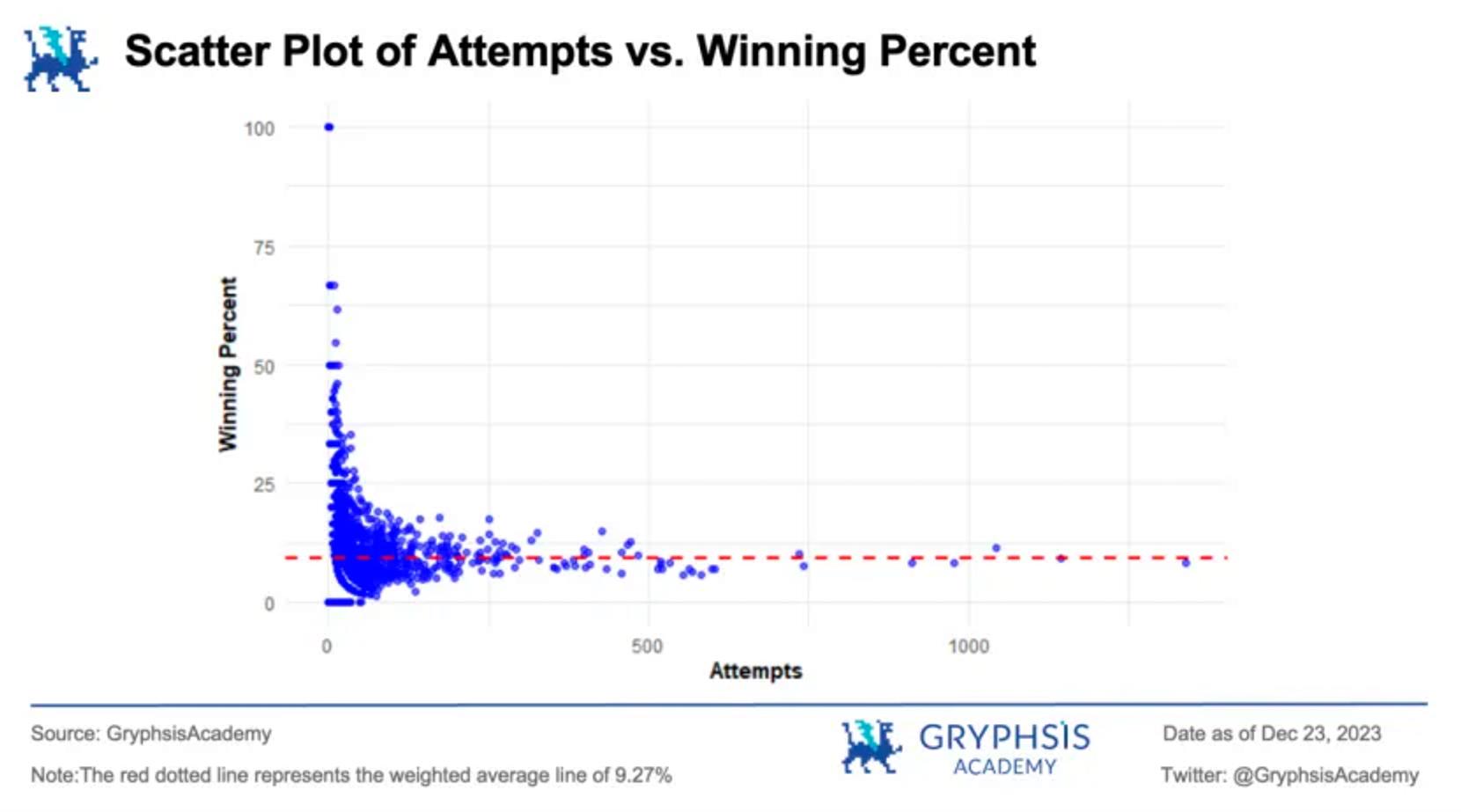
Against this backdrop, Ordinals introduced a fresh transformation. Seen by some as a "retail investor's paradise," all tokens are entirely minted by individual users. While critics dismiss many Ordinal projects as mere meme coins lacking long-term utility, they offer greater opportunities for retail participants. As more Ordinal projects complete their issuance phases, the Bitcoin ecosystem is expected to enter a new stage of application development.
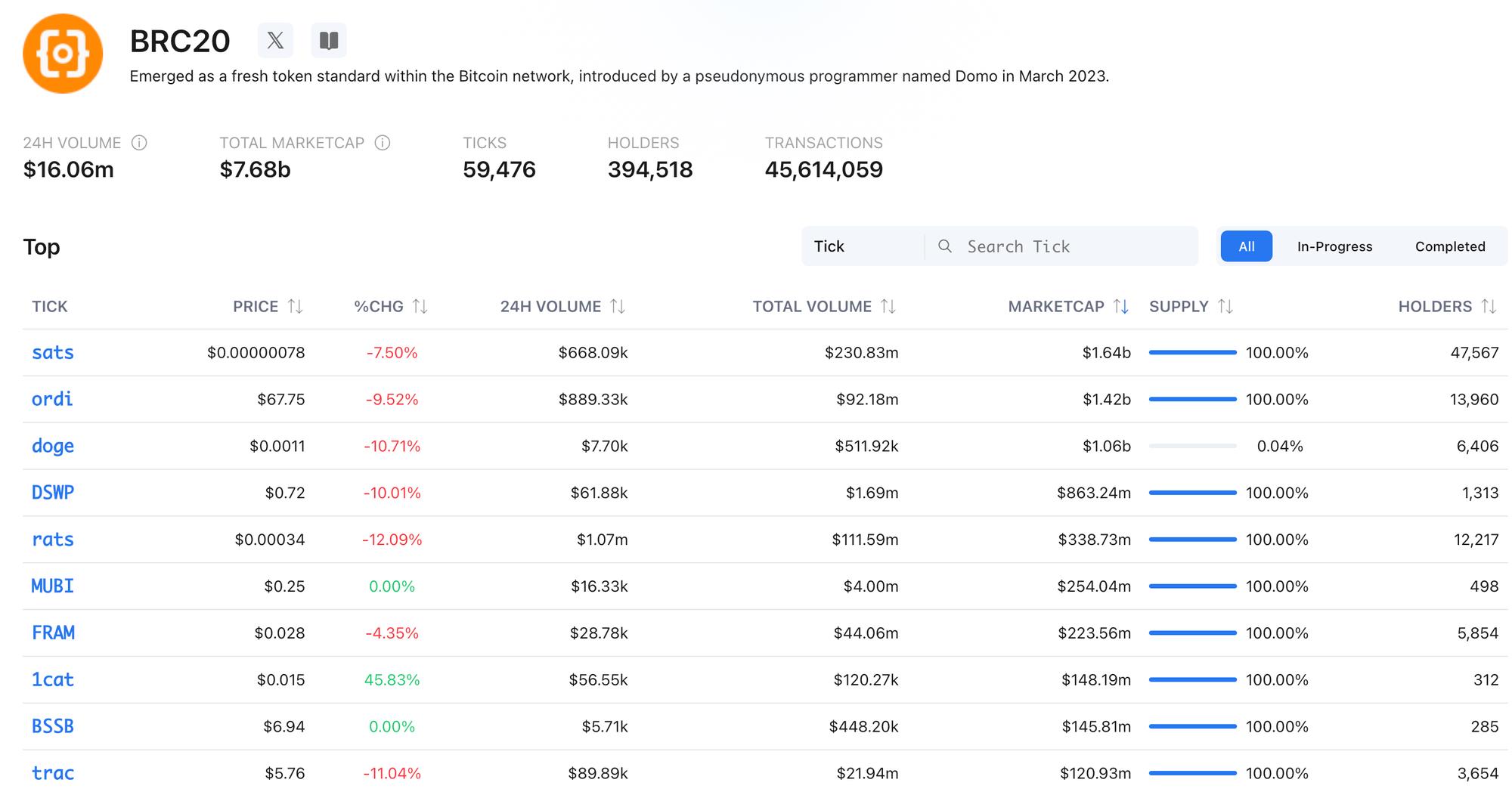
https://geniidata.com/ordinals/index/brc20
Blast
Since its launch on November 21, Blast has quickly become a focal point in the crypto market, showcasing innovation and appeal within the Layer2 landscape.
Blast is a Layer2 network launched by Pacman, founder of Blur. Built on Optimistic Rollups technology and Ethereum-compatible, it offers seamless integration for developers and dApps. Its rapid growth in TVL and user count is remarkable—Blast’s TVL has already reached $1 billion.
Additionally, Blast has secured $20 million in funding led by Paradigm and Standard Crypto.
One of Blast’s primary strategies to attract users and developers is its airdrop and incentive program. An airdrop is scheduled for May 2024, aimed at rewarding early contributors and developers. Users can earn points by depositing assets and inviting others to join the Blast L2 network, with these points directly influencing their eventual airdrop size—an effective mechanism driving participation and promotion.
Blast’s core appeal lies in combining staking rewards with additional incentives. By depositing funds into Blast and using Lido to stake on Ethereum’s mainnet, users earn both staking yields and extra Blast rewards. The fundamental goal is to boost TVL and encourage broader participation for additional Blast incentives. Blast’s success hinges on its innovative Layer2 solution and compelling incentive design for users and developers alike.
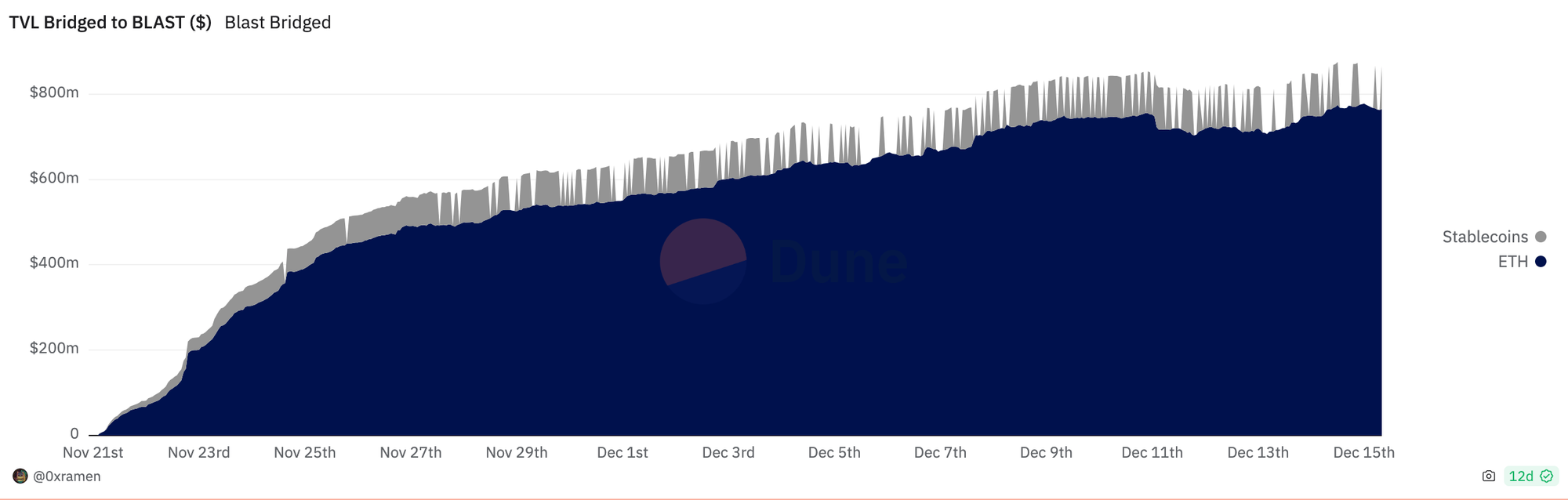
https://dune.com/0xramen/blast-stats
ZKFair
ZKFair (ZKF) is an innovative Ethereum-based project focused on building a fair, community-driven Layer2 network. As the first ZK-Rollup on Ethereum leveraging Polygon CDK and Celestia DA technologies, ZKFair aims to lower the high entry barriers currently faced by users in existing Layer2 ecosystems. In today’s market, many ZK-L2 projects are VC-dominated, highly valued, and offer little tangible return to average users. They often require users to pay high transaction fees while distributing token incentives slowly, making them unfriendly to retail participants.
ZKFair seeks to change this by creating a fairly launched, community-driven network. Technologically advanced and supported by Lumoz RaaS, its native token $ZKF follows a 100% fair launch—no allocations for investors, pre-bookers, or early miners. All tokens will be airdropped to the community after mainnet launch, with a total supply of 10 billion: 7.5 billion allocated for Gas fee airdrops and 2.5 billion for community users.
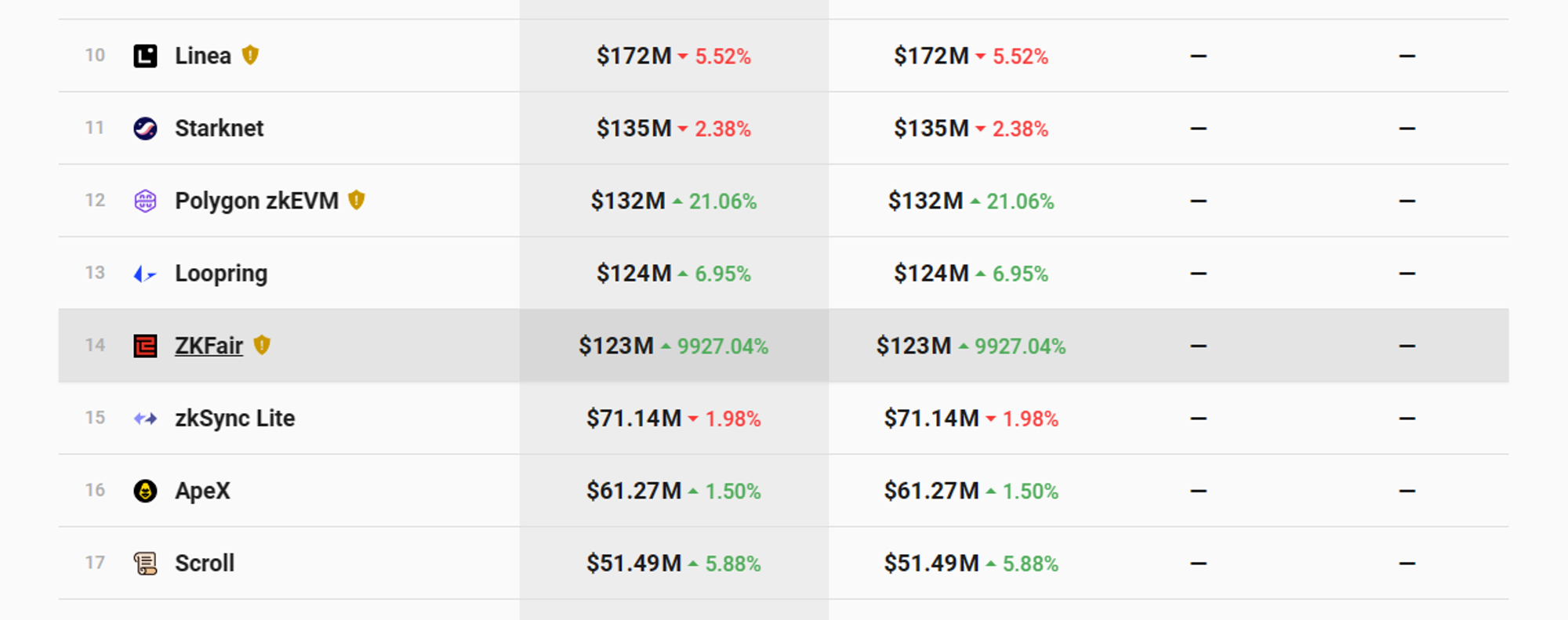
ZKFair stands out due to its unique market positioning and distribution strategy. Market analysts are optimistic about its listing potential, forecasting 5–10x appreciation. By using stablecoin USDC as Gas, combined with low market cap and a novel token distribution model, ZKFair presents an attractive narrative and equitable distribution framework. To qualify for the airdrop, addresses must have interacted with platforms such as zkSync, Scroll, ZKSpace, Polygon EVM, or Linea within specified periods. The project also outlines detailed rules for burning Gas to claim $ZKF tokens and strategies for efficiently consuming Gas via DApp interactions.
Analysoor
Analysoor is the first Meta Protocol on Solana, introducing an innovative method for NFT and token creation and distribution. At its core, it uses block hash values as a random number generator, selecting one winner per block—effectively neutralizing bot dominance during the minting of $ZERO and Index ONE NFTs.
Analysoor’s fair launch mechanism emphasizes fairness and liquidity orientation—no private sales, whitelists, team allocations, or gas wars. This ensures all participants start on equal footing, eliminating advantages based on capital size. Minting fees do not go to the project team or miners but are instead used to enhance liquidity and support the ecosystem and community.
Analysoor is building strong community consensus, with its value and potential increasingly recognized. Developers are actively implementing further innovations to combat bots, ensuring long-term fairness—AI algorithms and machine learning will play crucial roles in this effort.
Compared to mainstream Launchpad projects on other chains, Analysoor may currently be undervalued. Given that Solana lacks a leading Launchpad protocol, Analysoor has the potential to fill this role and achieve substantial value growth.
Demand for fairness and transparency is rising, and fair launch mechanisms are becoming a trend. Especially on high-performance blockchains like Solana, 2024 could be the year of Meta Protocol breakout. As a pioneer of fair launches on Solana, Analysoor holds immense potential and a bold vision, possibly evolving into a multifunctional Launchpad in the future.
Fair Mode
Binance’s recently launched “Fair Mode” on its Launchpool represents a significant innovation in token economics. The essence of this model goes beyond the project itself—it rethinks the entire token economic system to foster sustainable, long-term development. Fair Mode introduces a 27% long-term development fund: these tokens cannot be spent or sold, nor enter market circulation. Instead, they are staked and used within the ecosystem to support ongoing growth. Additionally, among the initial 25% circulating supply, up to 21% is fairly distributed to retail users via Binance Launchpool and airdrops—increasing community influence in governance and strengthening collaboration between users and the project team.
By increasing initial circulation and reducing future unlock volumes, Fair Mode mitigates selling pressure, laying the foundation for long-term token stability. Simultaneously, by reducing allocations to teams and investors, the model limits their ability to manipulate the market, helping maintain healthy token valuation. Through Fair Mode, Binance demonstrates deep industry insight and may set a new trend in tokenomic innovation. Emphasizing rational and fair token distribution, this model could become a key driver advancing blockchain technology and token economies forward.
https://twitter.com/heyibinance/status/1737813180141666324
Conclusion
In summary, this brief insight reveals the significant evolution and innovation in blockchain token issuance. From early ICOs to DeFi, and now to fair launches and community-driven models, these shifts have redefined asset distribution and captured widespread market attention. Projects like Ordinals, Blast, ZKFair, Analysoor, and Binance’s Fair Mode—all embracing fair distribution—have received strong market and institutional feedback. Their successful experiments showcase the diversity and maturity of the crypto ecosystem, underscoring the importance of community involvement and equitable token launches in the future of blockchain technology. As these innovations progress, the blockchain industry is poised to continue playing a pivotal role in global finance and technology, opening new possibilities for the future.
Join TechFlow official community to stay tuned
Telegram:https://t.me/TechFlowDaily
X (Twitter):https://x.com/TechFlowPost
X (Twitter) EN:https://x.com/BlockFlow_News
 @mtcap_crypto











