









MT Capital Research Report: Analysis of Messari Crypto Theses 2024 – Focusing on Solana and the AI + DePIN Sectors
TechFlow Selected TechFlow Selected
MT Capital Research Report: Analysis of Messari Crypto Theses 2024 – Focusing on Solana and the AI + DePIN Sectors
Cryptocurrencies, represented by Bitcoin, are naturally suited to serve as payment currencies for AI.
 Navigating Web3 tides with focused insights
Author: By Severin, MT Capital
TL;DR
-
Messari’s report shows strong conviction in Solana, DePIN, AI + Crypto, and Perps sectors.
-
Based on analyst portfolio distributions, Messari's internal focus remains strongest on Solana and the AI + DePIN narratives.
Key Investment Themes
Solana:
The rapid launch of new products on Solana, surging on-chain liquidity, and continuously expanding availability of developer tools have long been anticipated.
From a technical standpoint, upgrades such as Local Fee Markets, QUIC, and Stake-Weighted QoS have significantly reduced Solana outages, making its network more robust. Technologies like cNFTs have drastically cut NFT minting and management costs on Solana, enabling protocols such as Helium and Render to substantially reduce expenses and fueling growth in Solana’s DePIN ecosystem.
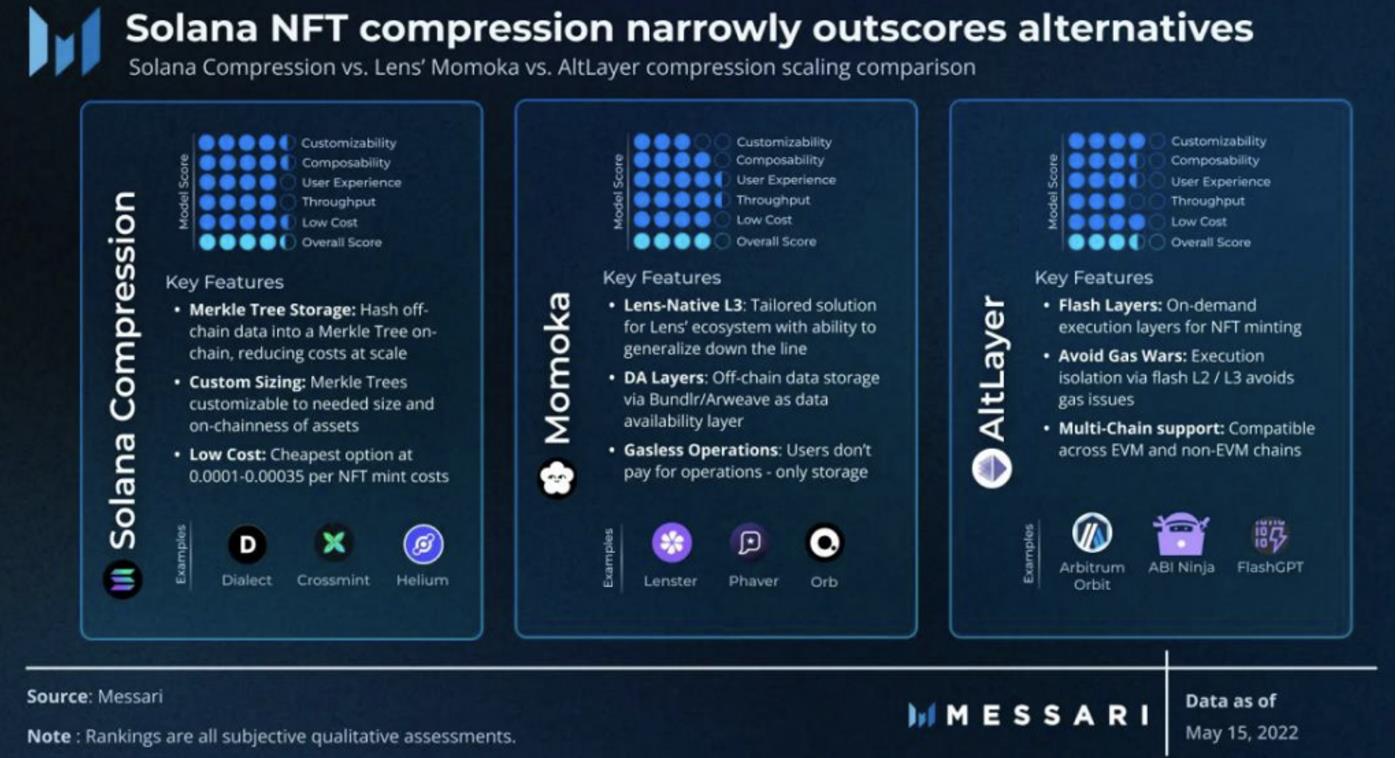
Market expectations for Solana in 2024 center around the following areas:
-
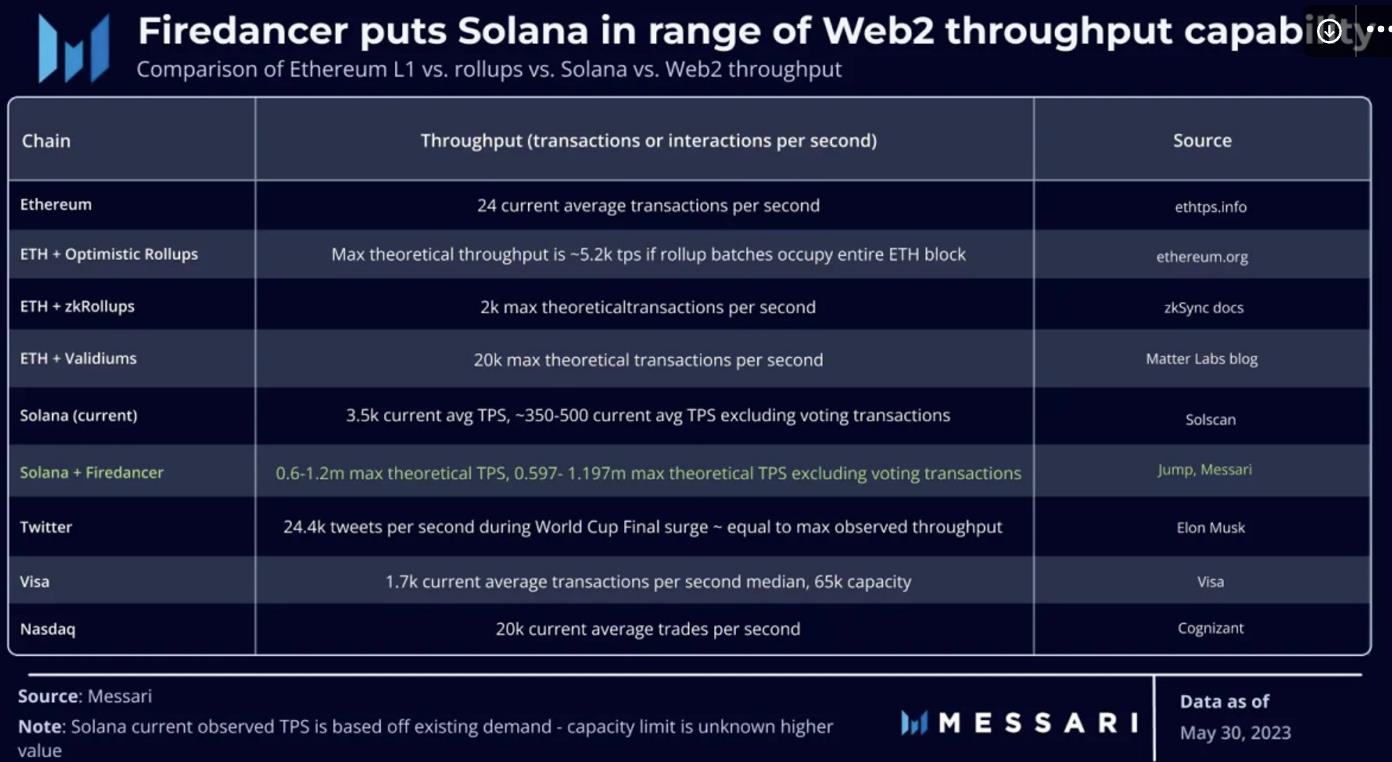
Achieving over 10x throughput and performance improvements through Firedancer and Sig clients. Firedancer will enable Solana to process one million transactions per second. Enhanced user experience will attract more developers to build on and use Solana, enriching its thriving ecosystem.
-
Developing lightweight clients via Tinydancer, allowing validators to verify at lower cost and achieve greater decentralization.
-
Deploying the Token-22 standard to expand Solana’s token functionalities. For example, Token-22 will support interest-bearing tokens and allow complex contract logic to be triggered during token transfers.
Solana’s Local Fee Markets and state compression technologies make the following applications “only possible on Solana.”
-
DePIN: Projects such as Helium, Hivemapper, and Render have migrated to Solana. Render abandoned its own blockchain and moved to Solana for compressible cNFTs, faster transaction speeds, and composable on-chain order books.
-
Payments: Solana has partnered with Visa, enabling users to transact with Solana USDC on Shopify via the Solana Pay plugin at lower cost and higher speed.
-
Consumer apps: Extremely low-cost cNFTs can drive emerging consumer-facing applications centered on NFTs. DRiP, for example, collaborates with artists to distribute NFTs for free to subscribers. Since late March, it has minted over 78 million cNFTs to 1.6 million wallets, with each NFT costing approximately $0.00036.
-
DeFi: Ultra-low transaction fees and faster finality allow Solana-based DeFi protocols to implement fully on-chain order book models, delivering a smoother user experience than other blockchain networks can support.
DePIN, DeSoc, DeSci
Beyond finance, Messari is increasingly focused on future developments in DePIN, DeSoc, and DeSci. These three sectors represent massive potential market sizes and offer tangible improvements over inefficiencies in real-world business processes.
Messari pays particular attention to the following four细分 DePIN sub-sectors:
-
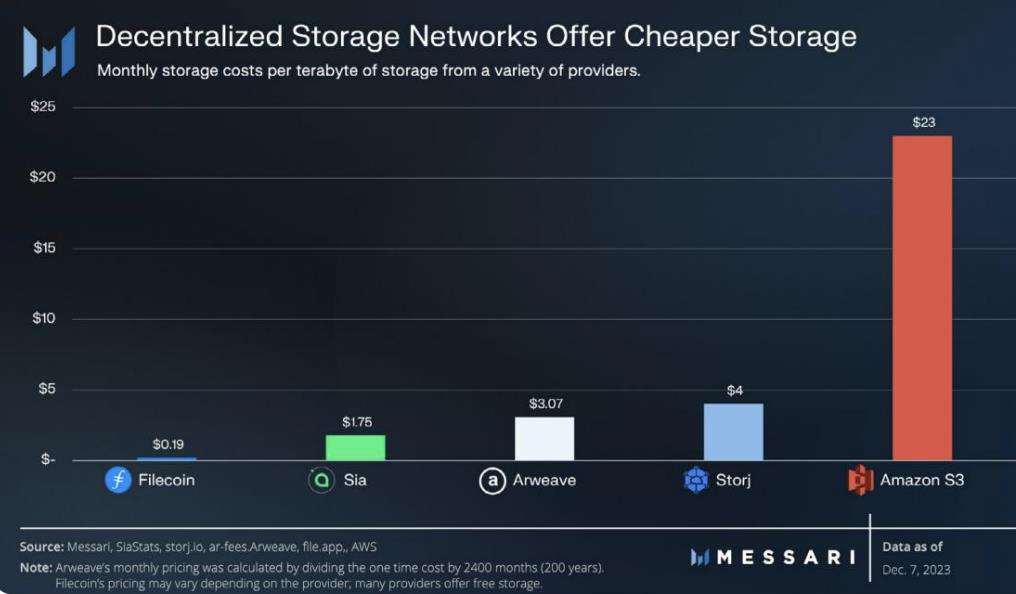
Decentralized Storage: The current cloud storage market is valued at $80 billion and growing at 25% annually. Despite decentralized storage services being 70% cheaper than providers like Amazon S3, their market share remains under 1%, indicating significant untapped opportunity.
-
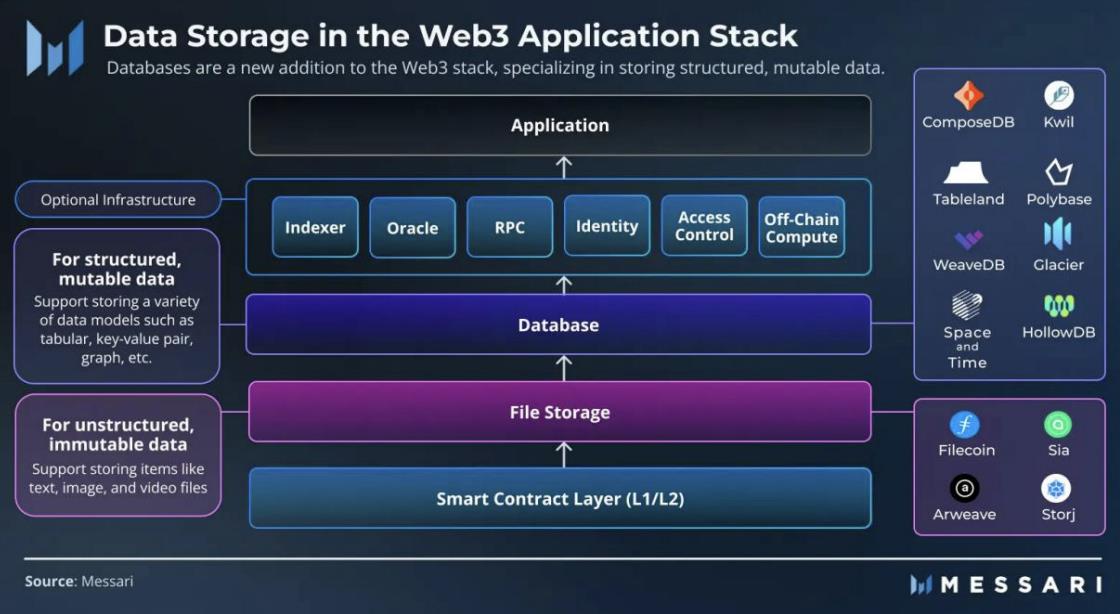
Decentralized Databases: Historically plagued by performance and latency issues, these problems are expected to be resolved in 2024. Applications in DeSoc, gaming, dynamic NFTs, ML, and AI will greatly increase demand for decentralized databases.
-
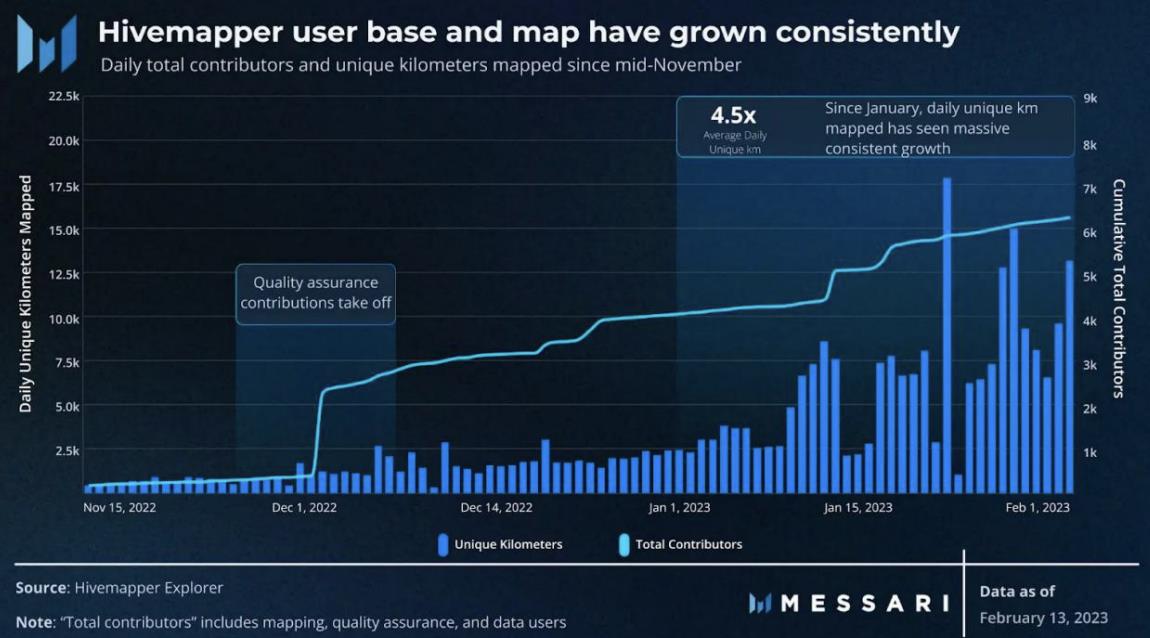
Decentralized Wireless Networks: DePIN projects like Helium Mobile are gradually achieving product-market fit, driving increasing user adoption. For instance, Helium Mobile initially attracted users with low-cost services and token incentives. User growth then fuels token price appreciation, attracting even more users and payments—spinning a positive growth flywheel.
-
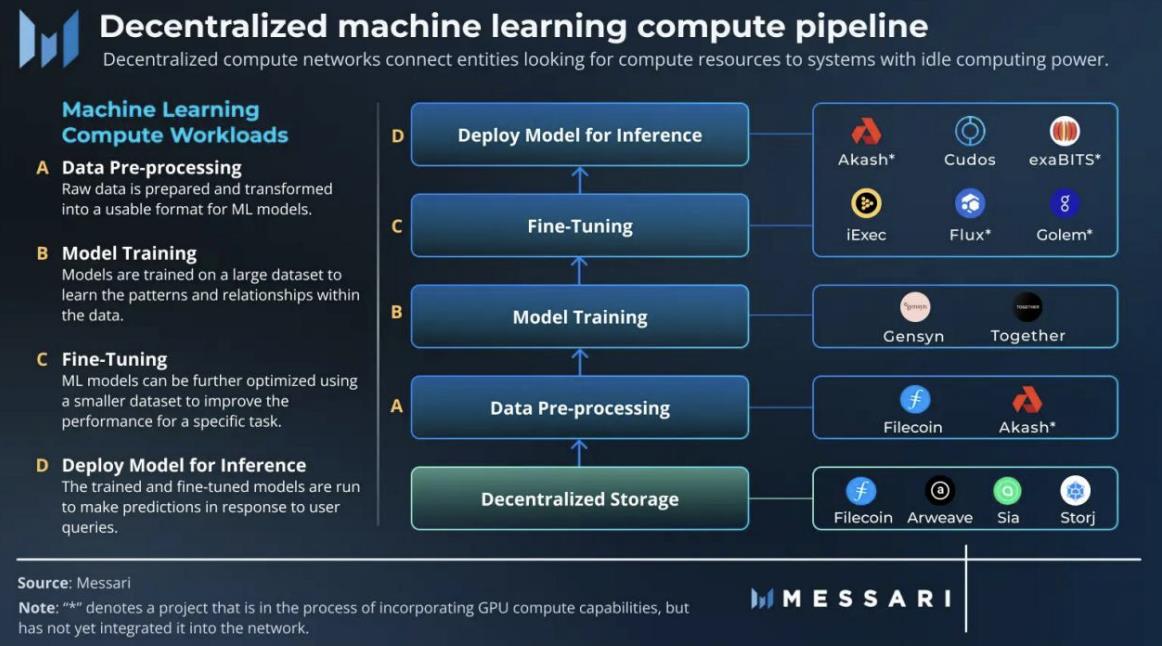
Decentralized AI Machines: AI development currently faces computational bottlenecks and lack of collaboration. DePIN projects focused on AI can effectively address both challenges. Gensyn provides ample decentralized compute power for training AI models, while Bittensor enables individuals to participate in open-source AI model training. DePIN and AI are naturally synergistic.
Beyond DePIN, Messari also closely watches DeSoc and DeSci. Similarly, creators generate $230 billion in revenue across social media platforms, yet only a small fraction receive meaningful income shares. In contrast, Friend.tech shared $50 million in revenue with creators within just months of launch. Messari believes DeSoc could replicate the DeFi Summer wave of 2020.
Regarding DeSci, blockchain can efficiently optimize critical scientific workflows such as peer review and funding allocation, advancing key research fields through DAOs and token sales.
While DeSoc and DeSci have not yet achieved breakout success comparable to DePIN, Messari remains bullish and anticipates mass-adoption applications emerging from these domains.
AI & Crypto:
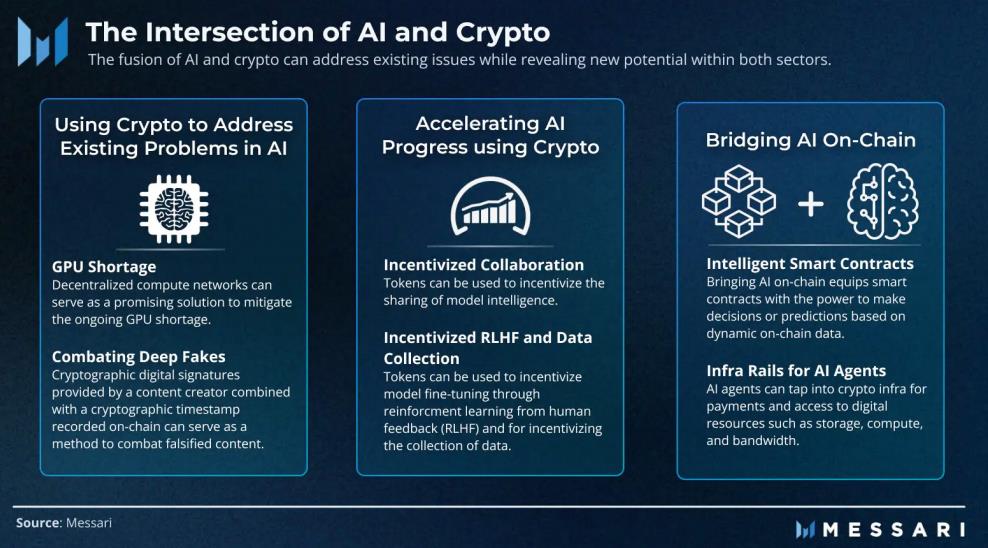
Messari believes advances in AI will increase demand for cryptocurrency solutions, and cryptocurrencies like Bitcoin are naturally suited as payment rails for AI systems.
Key convergence points between AI and Crypto include:
-
AI Agents can leverage crypto infrastructure for autonomous payments and digital resource access.
-
Innovations like zkML enable smart contracts to securely invoke AI models, supporting more complex application logic.
-
Tokens provide a natural mechanism to reward individuals for fine-tuning models and collecting valuable real-world data, making them ideal for integration with DePIN.
Perps
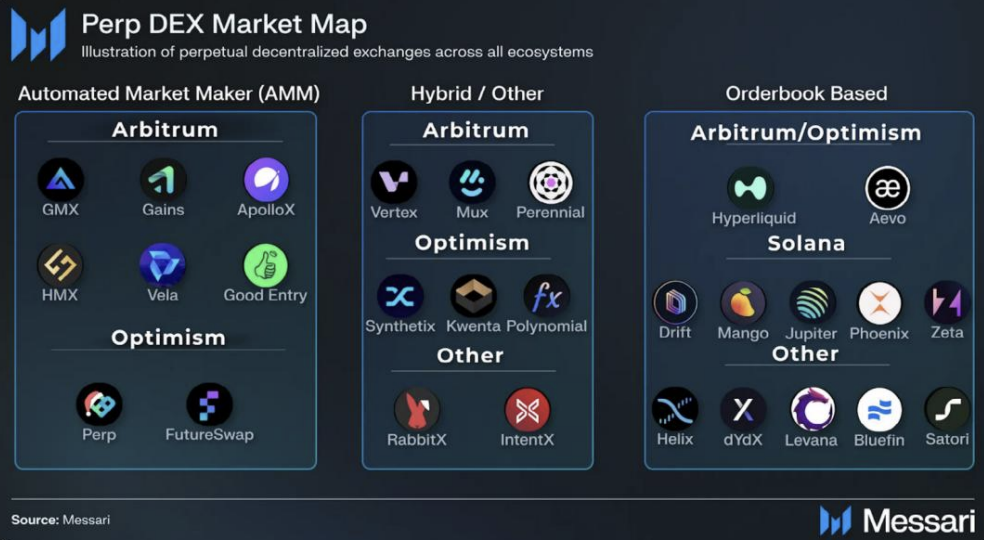
Messari explicitly states in its report that if you're going to focus on one DeFi sub-sector this year, it should be Perp DEXs.
With dYdX migrating to a customized Cosmos app chain, its centralized limit order book can now deliver a trading experience closer to that of CEXs. Given increasing regulatory pressure on CEXs, the gap between dYdX and traditional exchanges may narrow further.
Beyond Solana-based Perp DEXs (Drift and Jupiter), Synthetix deserves special attention. With the rollout of Synthetix Andromeda, the protocol introduces cross-margin functionality, supports new collateral types, and implements various improvements in trading and liquidation mechanisms. Synthetix has also ended years of token inflation and may transition into deflation. In terms of price performance, Synthetix ranks fourth among all DEXs year-to-date.
ETH
ETH finds itself in a difficult position. It lacks BTC’s compelling "digital gold" narrative for institutional investors, while competing L0s, L1s, and L2s continue to erode Ethereum’s transaction volume. Although ETH currently appears less attractive from a valuation perspective, its upcoming Cancun upgrade remains noteworthy. The upgrade will reduce Rollup transaction costs by 90–99%, making Rollups as cost-effective as alternative L1s. The delivery date of the Cancun upgrade is one of the most important dates to watch.
Analyst Holdings
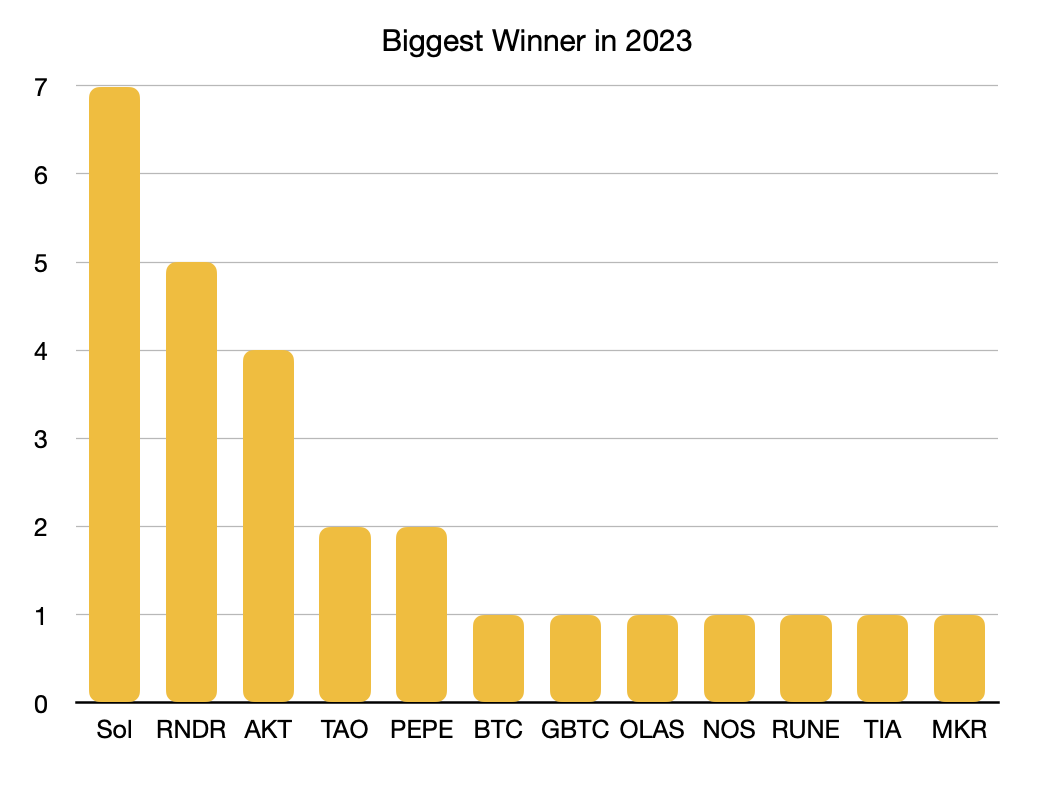
Perhaps the most interesting aspect is Messari’s public disclosure of analyst holdings. The chart below shows the distribution of coins held by Messari analysts that achieved the highest gains in 2023. As shown, analysts primarily profited from exposure to the Solana ecosystem and the AI + DePIN themes—indicating they successfully captured the leading narratives of this bull cycle.
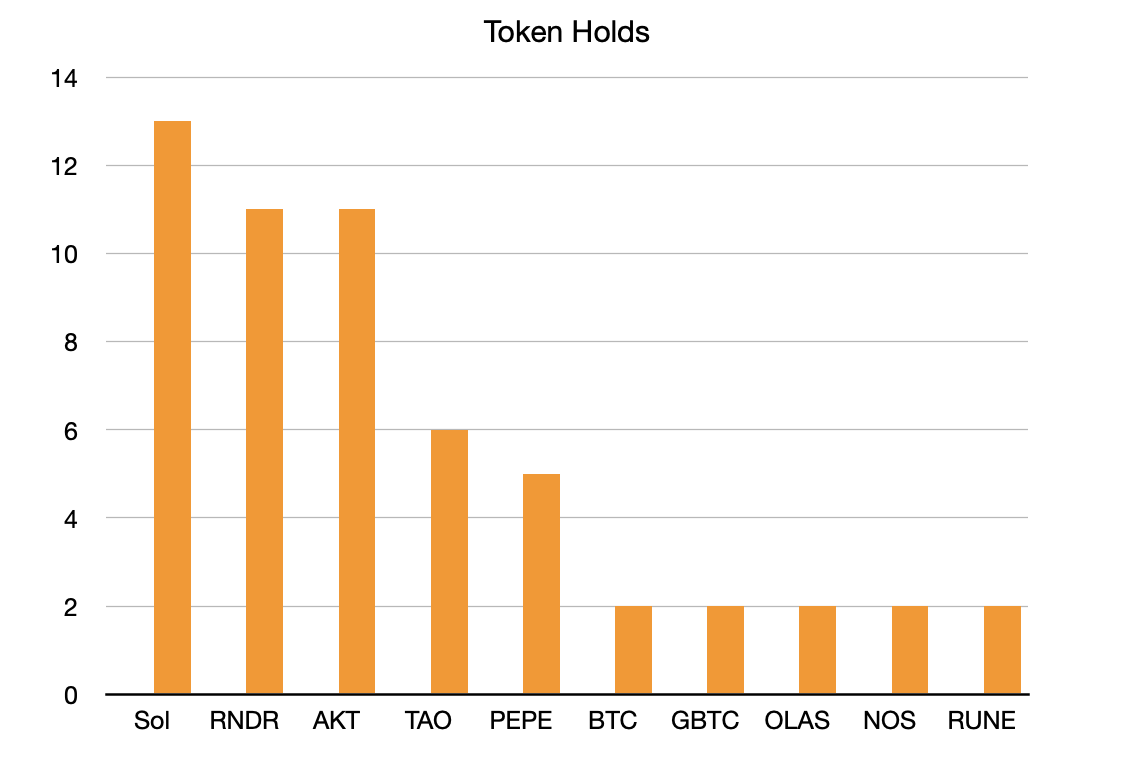
The chart below displays the current distribution of tokens held by Messari analysts (excluding tokens mentioned only once). Analysts’ main holdings remain similar to their top-performing positions in 2023, still concentrated in Solana and AI + DePIN concepts. Interestingly, despite strong convictions in other sectors such as DeSoc, DeSci, and Perps, analysts hold no tokens related to these areas.
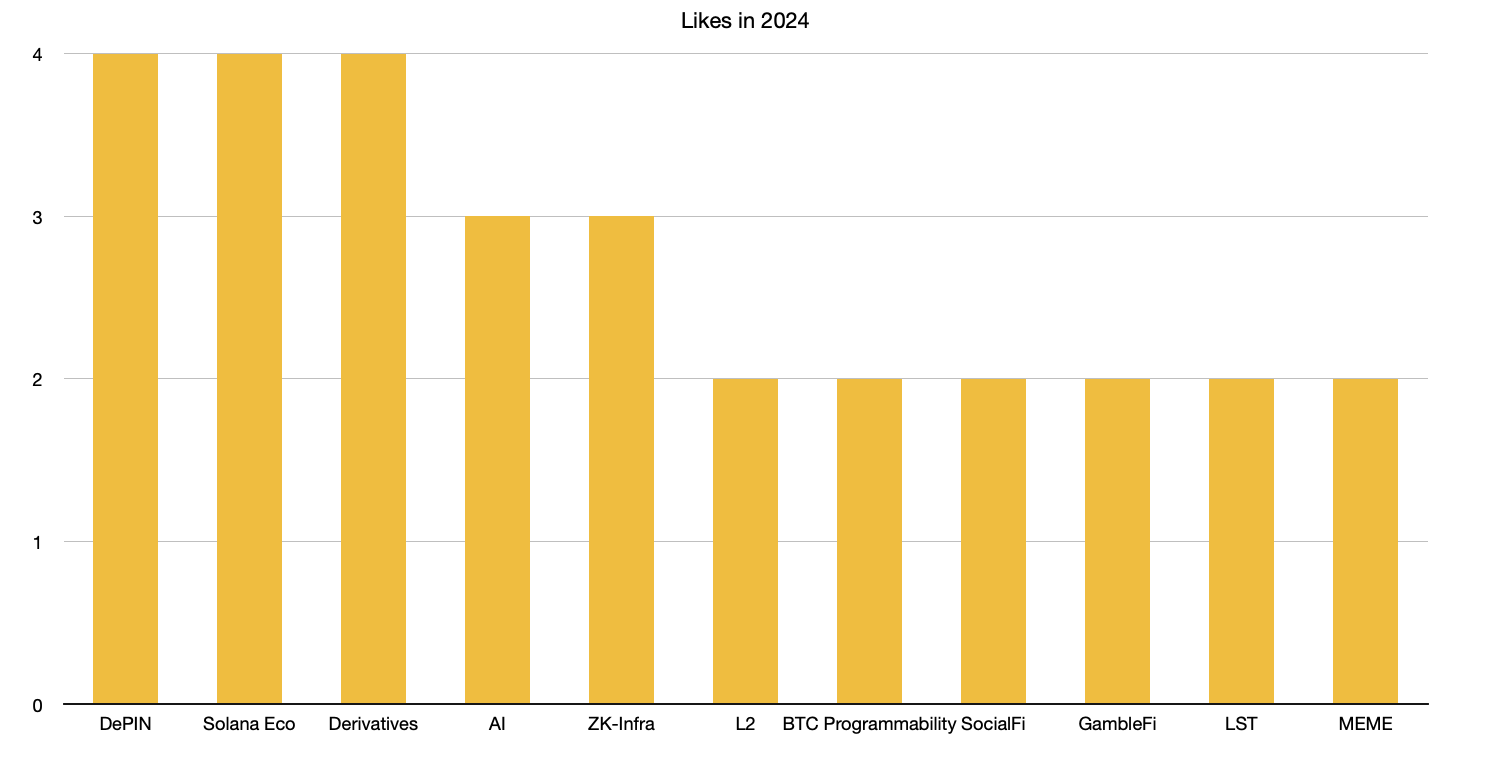
The chart below shows the favorite sectors among Messari analysts (excluding sectors mentioned only once). Similar to previous trends, Solana and DePIN dominate. However, decentralized derivatives have surpassed AI to become one of the analysts’ top preferred sectors, while ZK has risen to equal prominence with AI.
Join TechFlow official community to stay tuned
Telegram:https://t.me/TechFlowDaily
X (Twitter):https://x.com/TechFlowPost
X (Twitter) EN:https://x.com/BlockFlow_News
 @mtcap_crypto











