









In the second half for exchanges, why should we look toward Hong Kong?
TechFlow Selected TechFlow Selected
In the second half for exchanges, why should we look toward Hong Kong?
A new contender among virtual asset exchanges is sprouting in Hong Kong's regulated environment.
 Navigating Web3 tides with focused insights
Author: kayle
After U.S. regulators imposed a $4.3 billion fine on Binance, this protracted legal battle has temporarily come to an end. Over the past several years, regulatory scrutiny of the cryptocurrency industry has significantly increased. Before Binance, crypto giants such as Bitfinex, BitMEX, Bittrex, Ripple, and FTX have all faced off against regulators, signaling the definitive end of the industry's wild-west era.
With the arrival of a stringent regulatory era, the old order of the crypto industry is being dismantled, and a compliant environment will give rise to a new generation of industry leaders. Amidst this transformation and opportunity, attention naturally turns to Hong Kong. Since the release of the "Policy Statement on the Development of Virtual Assets in Hong Kong" last October, this historic international financial hub has provided a stage for the crypto industry to thrive.
In just over a year, two licensed virtual asset trading platforms—OSL and HashKey—have launched, while others, including VDX and PantherTrade, have joined the licensing application queue. Behind these platforms are established financial players such as Victory Securities and Futu Holdings. As traditional financial institutions enter the space, they not only pressure native crypto giants but also drive an unprecedented reshuffling of the exchange industry. A new era for compliant virtual asset exchanges in Hong Kong has officially begun.
The Binance Judgment
"In the early days, compliance wasn’t strong enough—we made mistakes and now we must pay the price," said He Yi, co-founder of Binance, openly acknowledging errors in a community post following the U.S. Department of Justice’s ruling.
According to the plea agreement, Binance admitted to multiple charges, including money laundering, unlicensed money transmission, and violations of U.S. sanctions regulations. As part of the settlement, Binance will forfeit $2.5 billion and pay an $1.8 billion criminal penalty. Former CEO Changpeng Zhao (CZ) also stepped down under regulatory pressure.
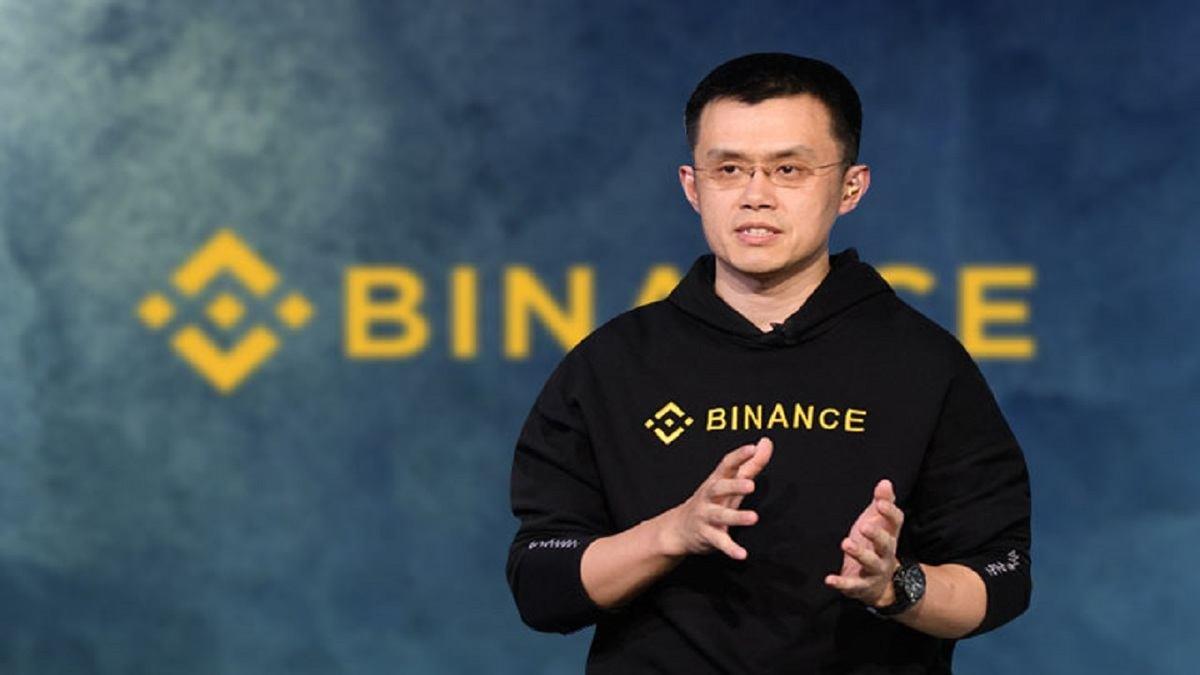
As part of the plea deal, Binance CEO Changpeng Zhao steps down
Regulators’ judgment against Binance exposed the early crypto exchanges’ “original sins” regarding compliance and formally marked the end of the lawless frontier era.
Looking back at Binance’s rise, it was founded in 2017 in China, where regulation was still immature, before moving overseas due to the ICO ban. It gained notoriety for its bold and aggressive approach—listing numerous high-risk altcoins to rapidly attract users and grow into a dominant force in the crypto exchange landscape.
During its six years abroad, Binance repeatedly emphasized the importance of compliance, securing virtual asset licenses in multiple jurisdictions and integrating fiat deposit and withdrawal services across various countries. Despite these efforts, Binance’s early success was largely built on operating in unregulated markets. Incomplete compliance and resistance to oversight became deeply embedded in its DNA.
If even Binance is guilty of such shortcomings, smaller platforms are even less able to escape this legacy. Prior to this, exchanges like BitMEX, Bittrex, and FTX were all penalized for compliance failures, while countless smaller exchanges engaged in fraud or simply disappeared. These early, unchecked platforms revealed the darker side of the crypto industry, deterring many traditional financial institutions and investors interested in virtual assets.
Opportunity in Hong Kong
Fortunately, with Binance’s guilty plea and penalties, regulation is gradually taking hold and catalyzing industry transformation.
Richard Teng, Binance’s new CEO succeeding Zhao, declared compliance as his “gospel” on day one, emphasizing cooperation with regulators and stronger user protections.
However, despite the U.S. regulators issuing multiple fines against crypto exchanges, the SEC has yet to clearly define how trading platforms should operate within a regulatory framework. Even Coinbase, the first U.S.-listed crypto exchange, remains confused about the rules.
Last year, Coinbase submitted a petition to the SEC requesting new rules for digital assets, but received no response. As a result, Coinbase sued the SEC in April this year. Two months later, the SEC replied that it would take approximately four months to respond—but ultimately failed to deliver. Last month, Coinbase publicly accused the SEC of continuing to employ a “delay tactic.”
On social media, Coinbase CEO Brian Armstrong has repeatedly criticized the SEC, accusing it of refusing communication and meetings, implementing intimidation tactics, and declining to provide written guidance on what is permitted and why.
In contrast to the ambiguity of U.S. regulation, Hong Kong has opened its doors to compliant exchanges. On June 1 this year, the Securities and Futures Commission (SFC) of Hong Kong released the “Guidelines for Virtual Asset Trading Platform Operators,” providing detailed and comprehensive regulations covering licensing requirements for financial health, business conduct, competence, operations, market manipulation prevention, custody of client assets, internal controls, and cybersecurity.
Against the backdrop of the SEC’s closed-off stance, Hong Kong’s clear, open policies and guidelines offer a vital compliant foundation for the exchange industry, creating fertile ground for the emergence of new unicorns.
Emerging Newcomers
Since the release of the “Policy Statement on the Development of Virtual Assets in Hong Kong” over a year ago, Hong Kong’s crypto industry has flourished, with several emerging virtual asset exchanges stepping into the spotlight.
According to the latest list from Hong Kong’s SFC, two exchanges—OSL and HashKey—are currently licensed to offer virtual asset trading services, while nine others, including BGE, VDX, and OKX, are in the process of applying for licenses.
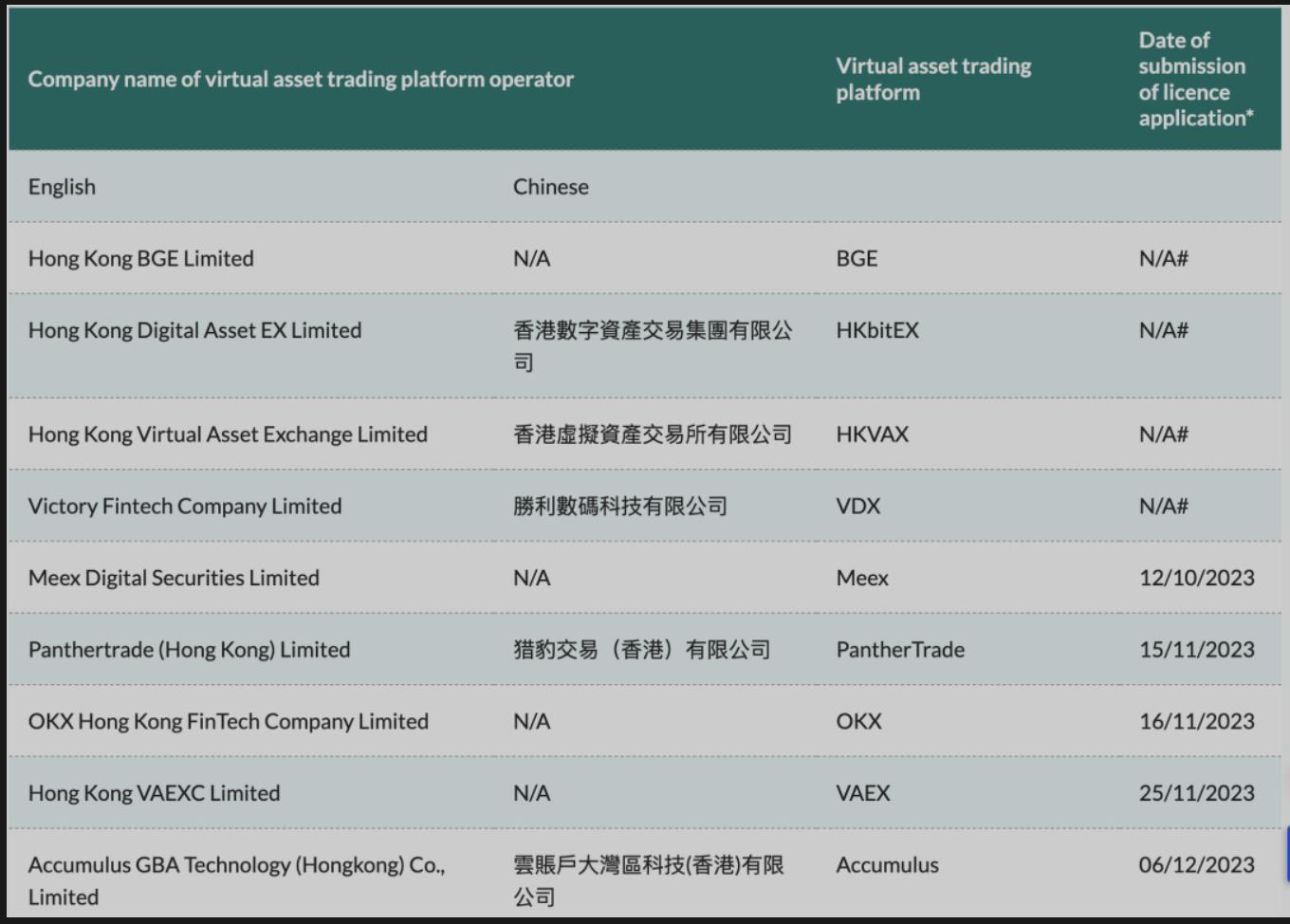
List of exchange license applicants disclosed on the SFC website
Examining the backgrounds of these 11 licensed or applying platforms reveals a clear trend: traditional financial forces are beginning to penetrate the crypto asset industry.
Excluding OKX and VAEX (supported technically by Kucoin), the other nine platforms all have varying degrees of traditional finance experience. For example, Xiao Feng, founder of HashKey, previously worked at the Shenzhen Special Economic Zone Branch of the People’s Bank of China and the Shenzhen Securities Regulatory Office; Hu Zhenbang, CFO of OSL’s parent company BC Technology, held positions at Hong Kong-listed tech firms, investment banks, and Big Four accounting firms; Wu Weiliang, co-founder of HKVAX, formerly served as Managing Director of CITIC Futures International.
Platforms like VDX and PantherTrade, backed by traditional brokers, appear even more like “mainstream forces.” Public records show VDX is partially owned by Victory Securities, a long-established Hong Kong brokerage, while PantherTrade is a wholly-owned subsidiary of Futu Holdings. Notably, Victory Securities recently became the first broker in Hong Kong approved to offer virtual asset trading services to both institutional and retail investors.
The influx of traditional finance professionals and securities firms into the virtual asset sector marks the beginning of a convergence between classical finance and the emerging crypto industry. Under this new compliance-driven era, the rules of the crypto industry are increasingly aligning with those of mature securities markets.
Previously, a single exchange handled everything—from customer acquisition and asset custody to trade matching and fiat on/off-ramps. In contrast, traditional securities markets feature clear role separation: exchanges focus solely on trade matching, customers come through brokers, assets are held by custodians and asset managers, fiat transactions involve banks, and independent auditors conduct regular audits.
Hong Kong’s regulation of the virtual asset industry follows this mature model to a significant extent, giving rise to more specialized roles. As a result, the business focus of these exchanges varies. While most—including OSL and HashKey—serve both institutional (B2B) and retail (B2C) clients, others like VDX focus exclusively on B2B, serving as a bridge for traditional financial institutions entering the crypto space.
These differing strategies reflect divergent visions. Exchange executives note that since Hong Kong’s crypto industry has become formalized, increasing numbers of traditional brokers and financial institutions want to participate—they represent the primary source of new capital and users. The market needs capable, dedicated B2B-focused platforms.
According to KPMG’s “2022 Hong Kong Private Wealth Management Report,” 53% of surveyed clients plan to allocate over 1% of their assets to virtual assets, and 17% of private wealth managers express interest in offering virtual asset services. Additionally, brokers such as Tiger Brokers, Nanhua Securities, and Longbridge Securities have all expressed intentions to enter the virtual asset space.
As regulatory policies deepen, Hong Kong’s virtual asset market is expected to continue expanding, drawing capital from the over $5 trillion Hong Kong Stock Exchange into the virtual asset domain. A new generation of compliant virtual asset exchanges is sprouting in Hong Kong’s fertile regulatory soil.
Join TechFlow official community to stay tuned
Telegram:https://t.me/TechFlowDaily
X (Twitter):https://x.com/TechFlowPost
X (Twitter) EN:https://x.com/BlockFlow_News












