Why Has Solana Been Able to Rise Again, and How Can We Get Involved?
TechFlow Selected TechFlow Selected
Why Has Solana Been Able to Rise Again, and How Can We Get Involved?
Why Solana Was Able to Rise Again After the FTX Collapse
 Navigating Web3 tides with focused insights
Author: Jian Shu
I. The Past and Present of Solana
Background of Solana's emergence: At the time, Ethereum, the "King of Public Chains," was undoubtedly the dominant cryptocurrency operating system, commanding a vast user base and traffic. However, Ethereum suffered from network congestion and high transaction fees. From a user experience perspective, Ethereum delivered poor performance—using DeFi applications alone led to unbearable delays.
-
March 2020: Solana launched its mainnet, officially claiming to be the fastest high-performance public blockchain. With high performance and low gas fees, Solana addressed some of Ethereum’s shortcomings.
-
July 2020: FTX announced it would use Solana as the underlying public chain to build its decentralized exchange—Serum.
-
October 2020: Wormhole launched, enabling cross-chain transfers of assets between Solana and Ethereum.
-
March 2021: Tether issued its token on Solana.
-
June 2021: Solana raised $314 million in funding, with participants including Alameda Research, founded by SBF.
-
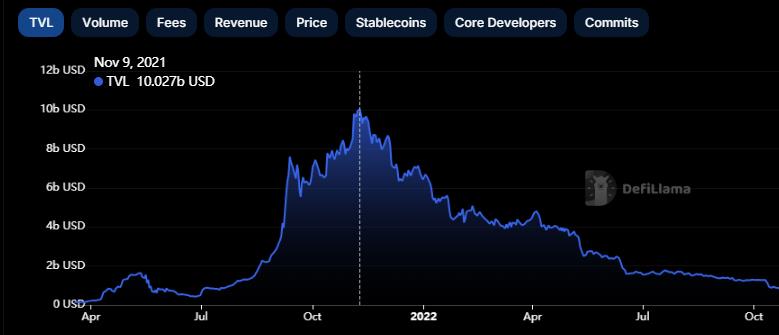
November 2021: Solana’s total value locked (TVL) reached $1 billion—about one-tenth of Ethereum’s and two-thirds of BSC’s at the time.
-
December 2021: StepN launched on Solana; its rapid popularity brought more users into the Solana ecosystem.
-
February 2022: Solana surpassed Ethereum to become the blockchain with the highest number of active developers.
-
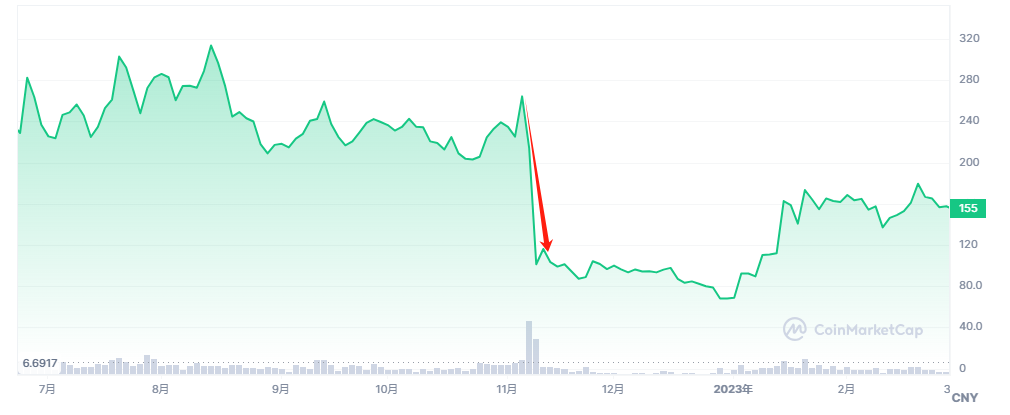
November 9, 2022: FTX collapsed, causing SOL to plunge around 75% within days.
-
Late August to early September 2023: Shopify and Visa successively announced integration with Solana, expanding Solana’s footprint in Web2 payment services.
-
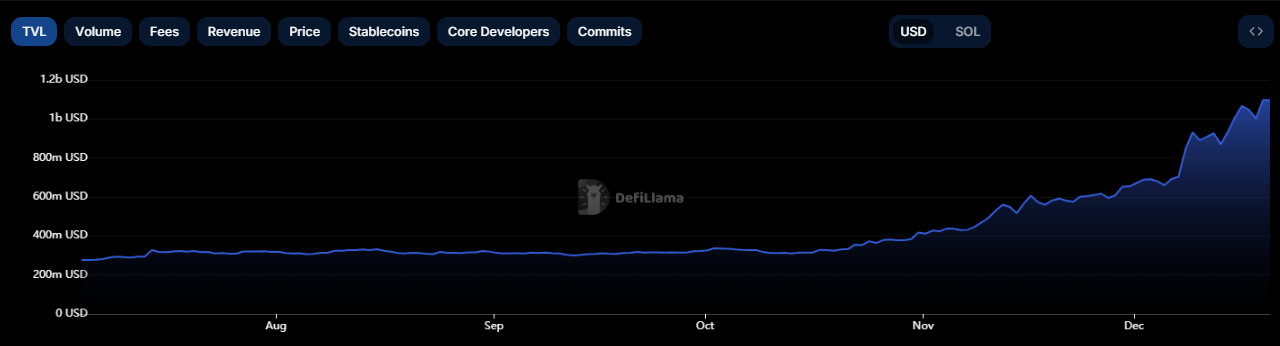
December 2023: The Solana ecosystem recovered, with TVL rising from around $300 million to nearly $1 billion over two months.
II. Will FTX Restart? Is Solana Poised for an Explosion?
1. The Relationship Between FTX and Solana
After FTX’s collapse, Solana immediately found itself at the epicenter—a connection that traces back to DeFi Summer in 2020. At the time, Solana was relatively unknown, just one among many public chains attempting to solve the “impossible trinity.” However, SBF, co-founder and CEO of FTX and founder of Alameda Research, discovered Solana. Beyond participating in multiple funding rounds for Solana, he chose to build Serum—the first decentralized exchange on Solana—on the network, and later invested in numerous Solana-based applications. This substantial financial backing tightly linked SBF and Solana in the public eye, with some even mistakenly believing he was Solana’s founder.
According to recent court filings from FTX, the exchange held approximately 55.8 million SOL—over 10% of SOL’s total supply—valued at around $3.5 billion, making it FTX’s largest crypto holding. Additionally, FTX held about 6.5 million SOL (worth roughly $400 million) in unvested tokens set to unlock linearly over time.
From this, we can see that FTX and Solana were deeply intertwined: FTX was Solana’s biggest supporter, while Solana was FTX’s most heavily backed project.
2. Impact of FTX’s Restart on Solana
As the FTX case temporarily concluded, on November 9 (U.S. time), FTX’s token FTT surged about 90%, climbing from a low of around $1.80 to over $3.00. Meanwhile, SOL also rose sharply from around $40, peaking at $63.95—an increase of approximately 60%.
The surge in FTT was largely due to remarks by Gary Gensler, Chairman of the U.S. SEC. Speaking at the FinTech Week in Washington, D.C., Gensler said: “If Tom [former NYSE president and current head of a leading FTX relaunch bidder] or anyone else wants to enter this space, I’d say go ahead—as long as you do it within the legal framework.”

From a holdings perspective, if FTX undergoes bankruptcy restructuring, SOL—alongside FTT—is poised to benefit the most. If FTX simply liquidates, similar to Mt. Gox, the sale of its massive SOL holdings would create significant downward pressure, suppressing SOL’s price growth. But if FTX restarts, SOL will become one of its most critical crypto assets and resources. FTX’s successor would likely deepen collaboration with Solana, driving Solana’s development. As SOL appreciates in value, it could significantly aid FTX in overcoming its financial crisis.
On October 25, Bloomberg reported that FTX was negotiating with three undisclosed bidders to restart its exchange, including Silicon Valley investment firm Proof Group, fintech and digital asset company Figure, and venture capital firm Tribe Capital. A decision on next steps is expected by mid-December. Options include selling the entire platform—including its valuable list of over 9 million customers—or partnering with another entity to revive operations. FTX is also considering restarting independently.
With the deadline for deciding FTX’s fate—whether sale or revival—rapidly approaching, either outcome bodes well for Solana. As long as a simple liquidation is avoided, SOL will not face severe downward pressure in the future.
III. Strong Foundations Matter: What Are Solana’s Advantages?
During every market cycle shift, countless projects fail—why has Solana maintained strong performance in both TVL and token price? Beyond the potential FTX revival, Solana’s impressive performance this year stems from its inherent strengths.
1. Solana’s Advanced Technical Architecture
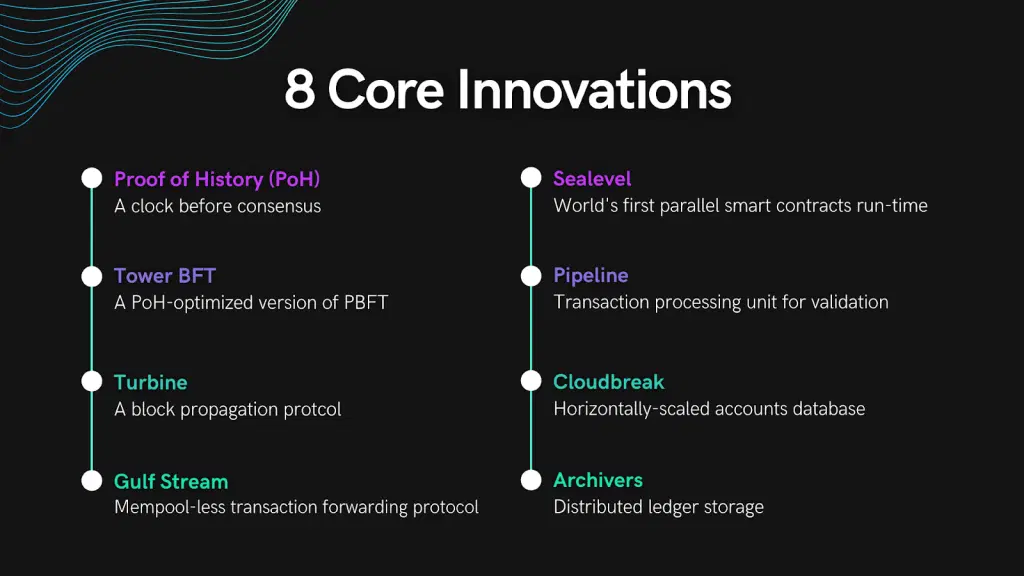
Solana’s key innovation in blockchain technology lies in introducing a novel consensus mechanism based on the Proof of History (PoH) algorithm and a fast synchronization engine. Unlike traditional consensus algorithms relying solely on cryptography, PoH uses a decentralized clock to establish the order of transactions and events across the Solana network. By efficiently tracking transaction sequences, it enhances overall network efficiency—addressing a common issue on other blockchains where transaction ordering may be ambiguous.
Specifically, the PoH algorithm generates a series of verifiable timestamps stored in the blockchain ledger. Each timestamp includes the hash of the previous one, forming a verifiable chain of events. This mechanism enables nodes across the network to reach consensus on the sequence of operations. PoH is not merely theoretical—it functions as a timing system verifying the order and passage of time between events.
Advantages of Solana’s Proof of History (PoH) algorithm:
-
Scalability: PoH allows parallel transaction processing, creating a reliable and verifiable event sequence, enabling Solana to achieve high transaction throughput;
-
Speed: By using a decentralized clock and historical timestamps, Solana eliminates time-consuming processes, achieving low latency and near real-time transaction confirmation;
-
Security: PoH ensures event order within the blockchain network is verifiable, making it harder for attackers to manipulate transaction order or execute double-spending attacks, thereby enhancing overall network security;
-
Efficiency: Parallel transaction processing and high throughput contribute to improved transaction efficiency and lower marginal costs.
2. Solana’s Thriving Developer Ecosystem
Solana’s ability to rise from the ashes after the FTX collapse and grow increasingly popular amid fierce competition among public chains stems not only from its superior underlying technology but also from its exceptional developer ecosystem—an advantage seemingly embedded in Solana’s DNA from the start, evolving into a virtuous cycle.
Solana’s core team comes from high-tech giants like Qualcomm and Google, resulting in high-quality base code and extremely rapid development pace. Compared to Ethereum’s gradual technical progress, Solana launched quickly and is already listed on multiple centralized exchanges.
Leveraging its Silicon Valley roots, Solana is committed to building a high-quality developer ecosystem, attracting core engineers from major tech firms. It cultivates its developer community primarily by recruiting top technical talent and hosting hackathons and similar events—such as the short-term pop-up “Hacker House Series,” featuring investors and founders from around the world as judges.
IV. Opportunities to Engage with the Solana Ecosystem
The Solana airdrop season is here. Recently, multiple protocols on the Solana ecosystem—including Jito, Jupiter, and Pyth—distributed airdrops. Notably, Jito’s token JTO quickly listed on major exchanges like Binance and Coinbase, drawing widespread attention. Many leading native projects on Solana were only launched last year and have yet to issue tokens, which explains the recent surge in Solana’s TVL.
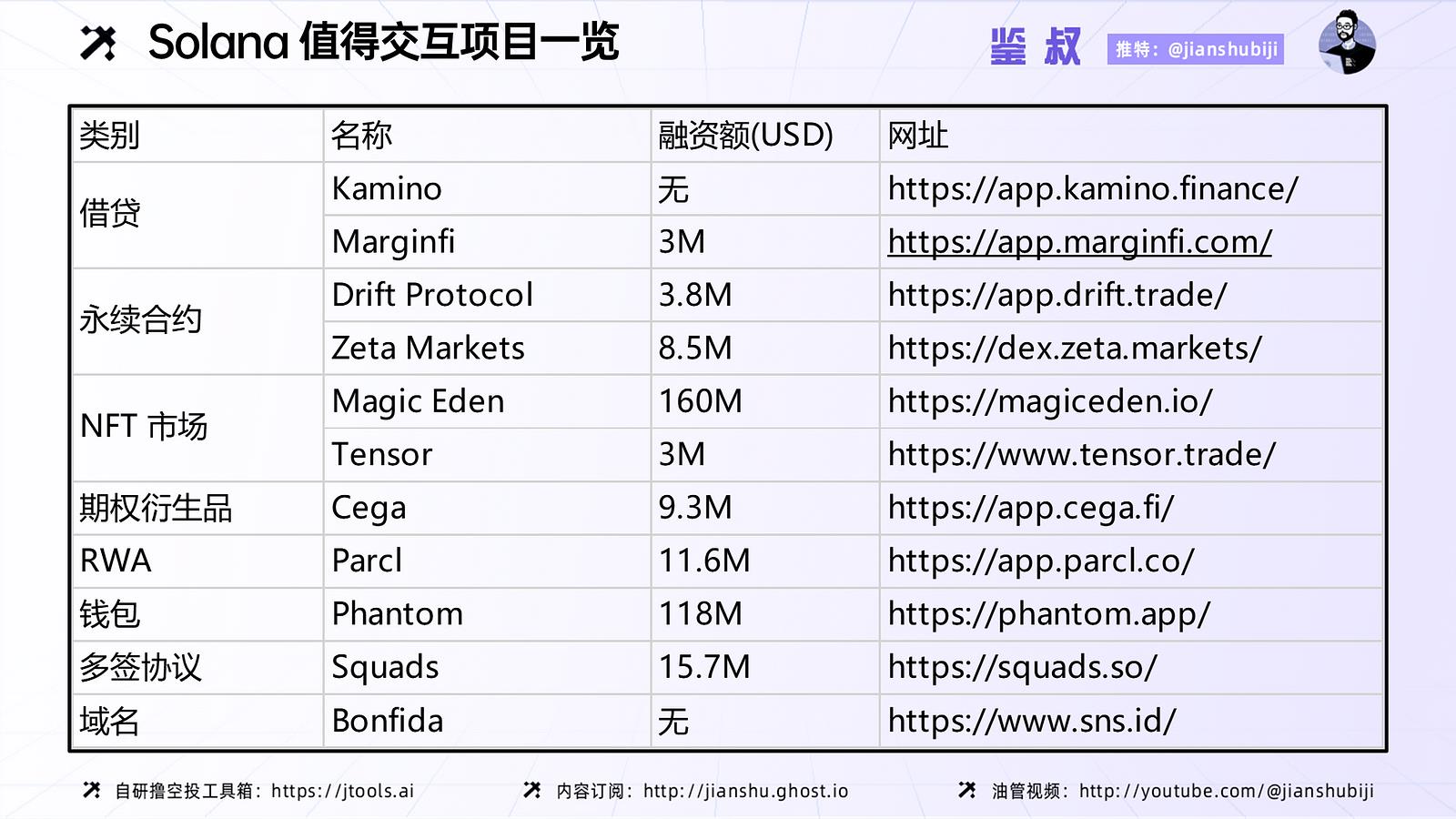
Below are several promising projects within the Solana ecosystem worth interacting with—for reference only, not investment advice.
1. Kamino
Overview: Kamino is an automated compounding concentrated liquidity lending protocol incubated by Hubble Protocol. Its TVL has surged to $75 million.
How to interact:
-
Deposit SOL via Multiply to receive mSOL
-
Provide liquidity with mSOL and SOL
-
Borrow and lend
2. Marginfi
Overview: MarginFi, Solana’s third-largest protocol, recently saw its TVL soar from $25 million to $200 million. The protocol has launched a “loyalty points” program, with a potential airdrop likely distributed based on these points. Additionally, Marinade is running an MNDE incentive program until the end of this year.
How to interact:
-
Borrow and lend. Earn 1 point per dollar borrowed daily, and 4 points per dollar lent daily.
-
Refer others to use MarginFi and earn 10% of their points.
3. Drift Protocol
Overview: Solana’s first derivatives protocol, a cross-margin perpetual futures trading platform on-chain, raised $3.8 million in seed funding led by Multicoin Capital. Due to a flood of users, the protocol has temporarily paused new registrations.
How to interact:
-
Deposit SOL into the protocol
-
Trade on the exchange
-
Provide liquidity to Drift Liquidity Providers (DLP)
-
Stake in the insurance fund
-
Borrow and lend
4. Zeta Markets
Overview: Zeta Markets is an undercollateralized DeFi derivatives trading platform allowing users to effectively hedge against volatility and extreme events in the crypto markets. The protocol has introduced a points system called Z-Score, with token distribution based on points, though exact allocation ratios remain unclear.
How to interact:
-
Trade on the exchange. Higher trading volume earns more reward points.
-
Stay updated on official events. Holding certain NFTs during specific periods may yield extra points.
5. Magic Eden
Overview: Magic Eden is a cross-chain NFT marketplace supporting NFT trading on BTC, Ethereum, Solana, and Polygon. The platform has raised $160 million in funding, valued at $1.6 billion.
How to interact:
-
Buy, sell, and mint NFTs on the platform
-
Play games available on the platform
6. Tensor
Overview: Tensor is an NFT marketplace in the Solana ecosystem and features an official points system (similar to BLUR). SOL-based NFTs had significant influence during the last bull run and are showing signs of resurgence recently.
How to interact:
-
Buy and sell NFTs from the top 100 collections (points depend on quantity traded, not value)
-
Complete loyalty points tasks
-
Purchase and stake Tensorian NFTs
7. Cega
Overview: Cega is a decentralized alternative derivatives protocol building structured products with exotic options for retail investors. It has raised $9.3 million in funding, valued at $60 million.
How to interact:
-
Use Cega’s options products
8. Parcl
Overview: Parcl is a leveraged trading platform built on Solana for real-world assets (RWA), having raised $11.6 million in funding.
How to interact:
-
Deposit funds into the protocol
-
Provide liquidity
-
Leveraged trade RWAs
9. Phantom
Overview: Phantom is the most popular wallet on Solana, with over 3 million users.
How to interact:
-
Download and use the Phantom wallet
-
Use Phantom to trade tokens
-
Complete DRiP Phantom tasks
10. Squads
Overview: Squad is a multi-signature management tool based on Solana, having raised $15.7 million in funding.
How to interact:
-
Create a multisig address
-
Deposit tokens (airdrop criteria may follow models like Gnosis Safe’s multisig wallet, distributing based on amount and duration of deposits)
11. Bonfida
Overview: A domain name service platform on Solana.
How to interact:
-
Trade domain names; eligible for potential airdrops.
Join TechFlow official community to stay tuned
Telegram:https://t.me/TechFlowDaily
X (Twitter):https://x.com/TechFlowPost
X (Twitter) EN:https://x.com/BlockFlow_News
 @jianshubiji