








Earning nearly $10,000 at zero cost: A data review of Nostr Assets' first Fair Mint
TechFlow Selected TechFlow Selected
Earning nearly $10,000 at zero cost: A data review of Nostr Assets' first Fair Mint
This article will review the investment in each pool and the lottery strategies, serving as a reference for similar future events.
 Navigating Web3 tides with focused insights
Author: Nan Zhi, Odaily Planet Daily
On December 18 at 19:03, when the Bitcoin block height reached 821716, the first Fair Mint lottery event of the Nostr Assets Protocol officially began. As the initial dozens of draws unfolded, participants noticed certain prize pools demonstrating extremely high "luck levels," where users could win the top prize of 2,160 NOSTR tokens by investing only about 3,000 lottery tokens (Treat and Trick, collectively referred to as "dual-T" below). Currently, the over-the-counter (OTC) price of NOSTR has exceeded 4 USDT per token, meaning near-zero-cost profits approaching $10,000.
This article by Odaily analyzes the investment distribution across various pools and evaluates lottery strategies, serving as a reference for similar future events.
Overview of Fair Mint Rules
The first Fair Mint of Nostr Assets Protocol consisted of three phases: contribution, lottery draw, and distribution. The details of the first two phases are as follows:
Contribution Phase
The contribution phase started on December 11, 2023. The official team set up 12 prize pools, with the latter four pools having double the winning probability compared to the first eight.
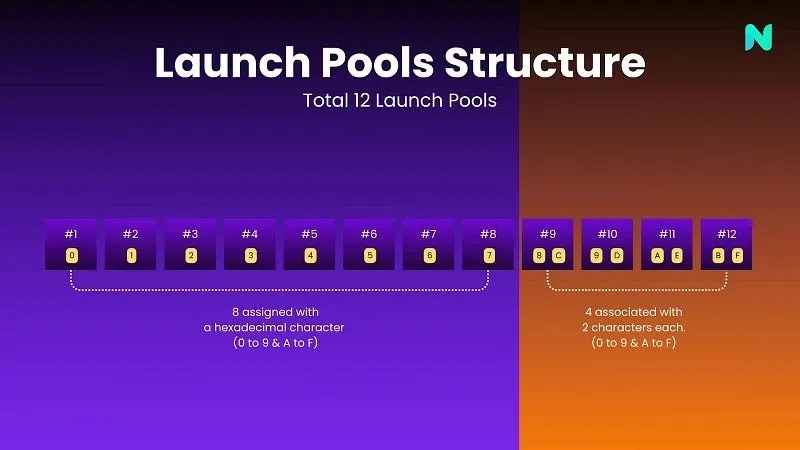
Users selected one of the 12 prize pools and contributed Treat and Trick assets to gain a ranking within that pool. Users could continuously increase their contributions during this phase, with rankings updated in real time until the phase ended.
Lottery Draw Phase
-
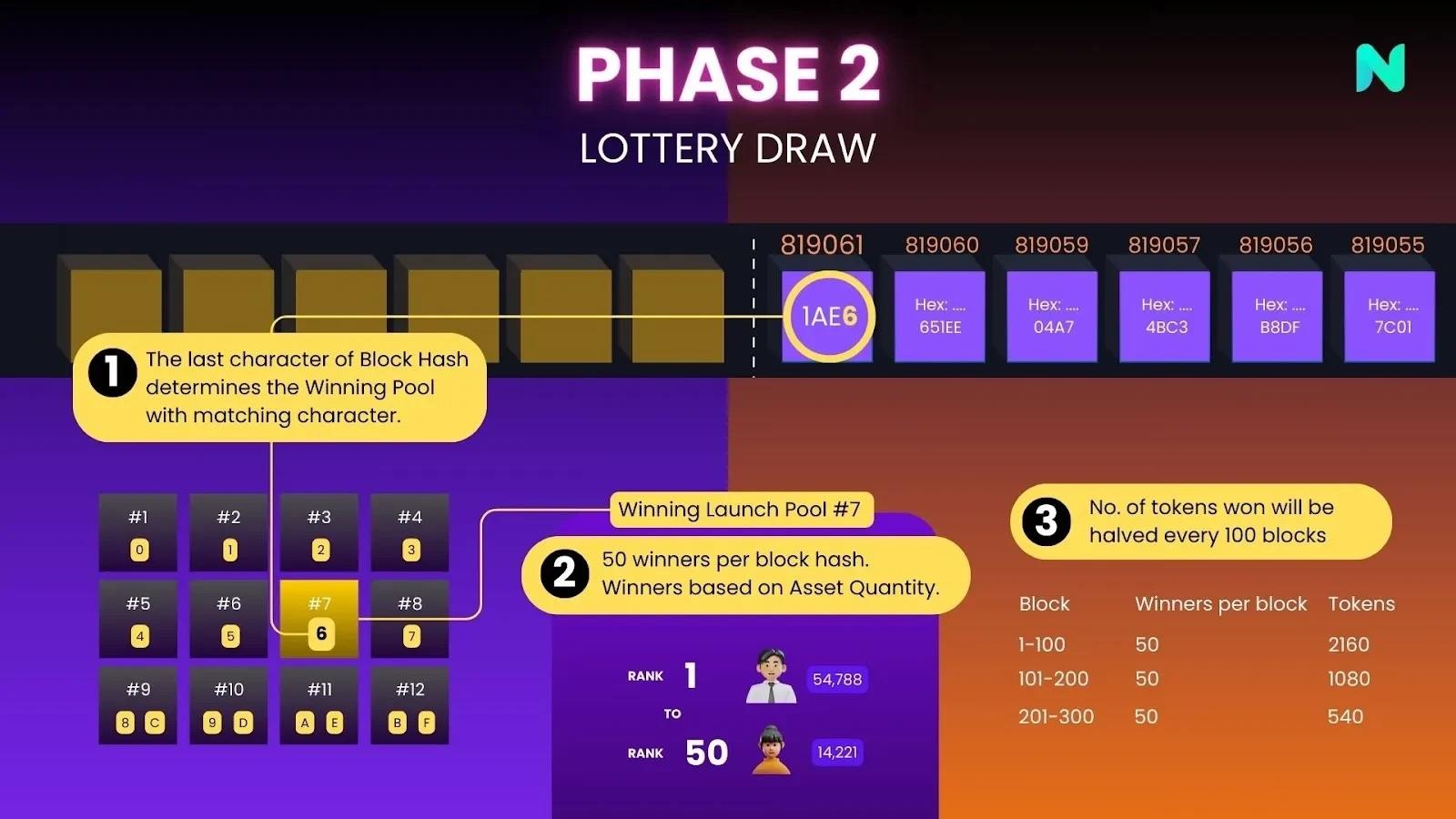
Each block selects one of the 12 prize pools based on the hexadecimal last digit of the block hash;
-
The top 50 contributors in the selected pool receive rewards (if drawn again, positions 51–100 win);
-
A total of 300 draws will be conducted, awarding 15,000 addresses: the first 100 draws grant 2,160 NOSTR each, draws 101–200 grant 1,080 NOSTR each, and draws 201–300 grant 540 NOSTR each.
Theoretical Strategy vs. Actual Results
According to official data, the current circulating supply of dual-T tokens is approximately 87 million (total supply 420 million). If evenly distributed, each address would need to contribute around 5,600 tokens (purely random chance—rarely happens in reality). Assuming proportional returns relative to input, the three-tiered contribution ratios are 4:2:1. Therefore, the minimum required contribution is calculated as 87,000,000 / 15,000 / 7 × 3 = 2,484 tokens, while the maximum is 2,484 × 4 = 9,936 tokens.
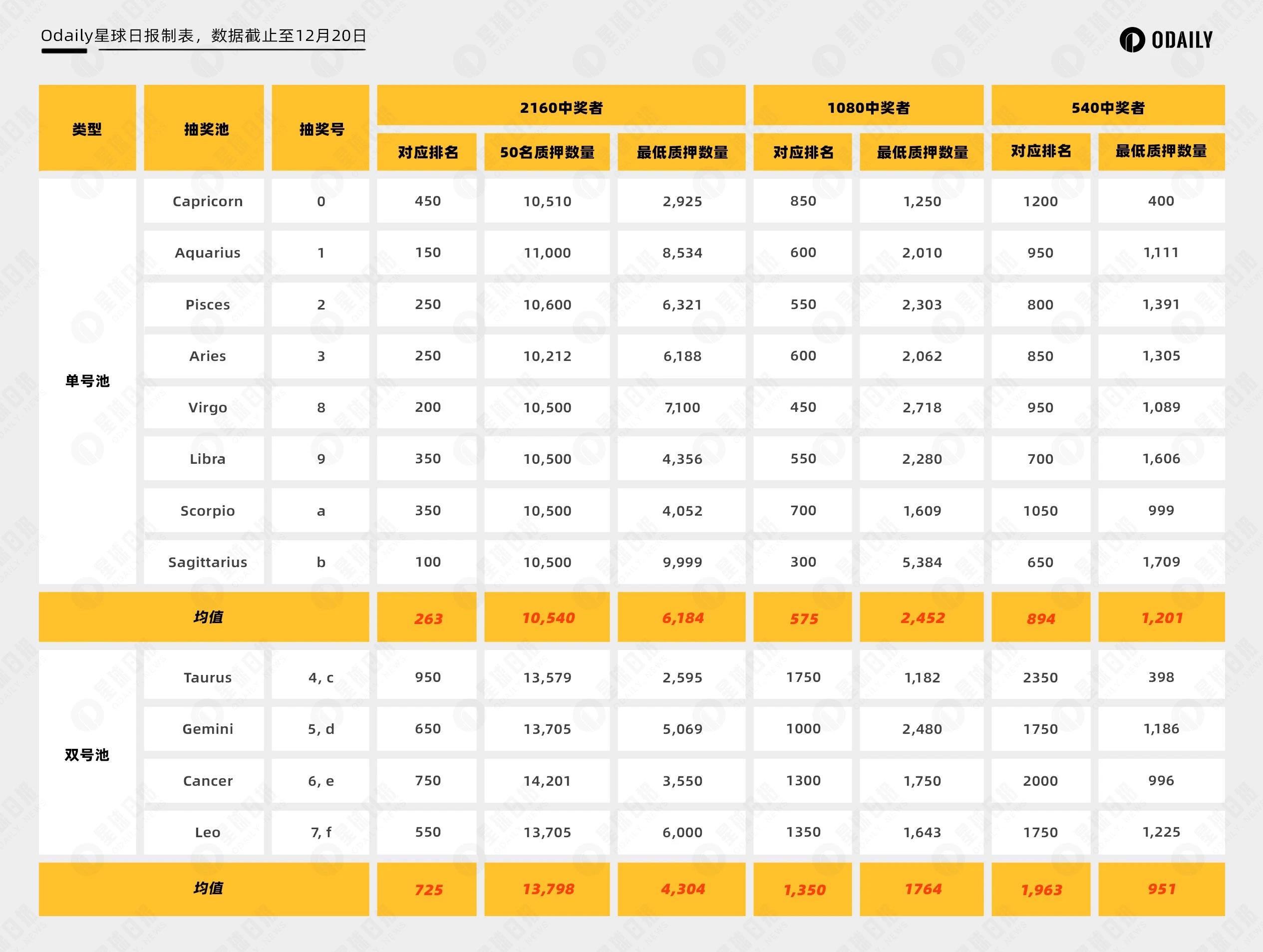
The final lottery results are shown in the figure below, leading to several conclusions:
-
Even-numbered pools had higher average luck than odd-numbered ones, gradually reverting toward normal probabilities over time (though full equilibrium was not achieved);
-
Both even- and odd-numbered pools featured one exceptionally lucky pool—Capricorn and Taurus (i.e., Capricornus and Taurus), corresponding to draw numbers "0" and "4, c". These two pools maintained unusually high luck throughout without regressing to average odds;
-
Additionally, the odd-numbered pool Sagittarius (Sagittarius) proved particularly unlucky, with draw number "b", maintaining consistently poor performance throughout.
Why Was the Required Winning Contribution Significantly Lower Than Theoretical?
For example, in the Gemini pool, 766 users contributed fewer than 400 dual-T tokens—insufficient to win even under favorable conditions—resulting in an estimated waste of at least 150,000 dual-T tokens. Sampling other pools reveals similar patterns:
-
In the even-numbered Taurus pool, 785 users contributed less than 400 tokens;
-
In the even-numbered Leo pool, 684 users contributed less than 400 tokens;
-
In the odd-numbered Scorpio pool, 511 users contributed less than 400 tokens;
-
In the odd-numbered Aries pool, 517 users contributed less than 400 tokens;
Based on this data, at least one million dual-T tokens were invested with near-zero chance of winning. Further analysis shows approximately 800 users in odd-numbered pools contributed less than 1,200 tokens, and about 1,100 users in even-numbered pools contributed less than 950 tokens—indicating nearly ten million dual-T tokens faced very low winning odds. Thus, we conclude:
-
Many users adopted ultra-low contribution strategies hoping for rare luck, but such minimal inputs increased others' winning probabilities;
-
Total contributions amounted to roughly 72 million, representing 82.7% of circulating supply, thereby increasing overall odds;
-
Numerous users contributed over 50,000 dual-T tokens at once, with the largest single contribution reaching 250,000 tokens in one account—causing massive inefficiency and boosting others' chances.
Theoretical Analysis: Extraordinary Luck Equals Extraordinary Misfortune
For even-numbered pools, the expected probability per draw is 12.5%, implying a theoretical 37.5 hits over 300 draws. However, Taurus hit 47 times. In a standard 300-trial "with-replacement" sampling model (where outcomes range from 0 to 300 hits with varying probabilities), hitting exactly 37 or 38 times occurs at rates of 6.96% and 6.88% respectively, whereas hitting 47 times has only a 1.74% probability—meaning Taurus enjoyed roughly four times the expected luck.
Conversely, the unlucky Sagittarius was expected to hit 18.75 times but only hit 13 times. In the same 300-trial model, hitting 19 times has a 9.4% probability, while hitting 13 times drops to 3.9%—indicating Sagittarius experienced twice the expected misfortune.
What Were the Event Returns?
Before Nostr announced the use of dual-T tokens for the lottery, dual-T traded above 0.2 USDT. After the announcement, prices surged into a primary range of 0.35–0.5 USDT, peaking at 0.7 USDT just before the draw due to users rushing to improve their rankings.
At the time of writing, the OTC price of NOSTR is approximately 4 USDT per token, yielding a maximum return of about 8,000 USDT for single-pool winners.
As of publication, dual-T trades at around 0.39 USDT, close to its average transaction price. Returns vary significantly depending on individual acquisition costs, but most participants effectively achieved near-zero net cost. Early adopters and airdrop recipients realized substantial gains.
Summary
The Nostr Assets Protocol's use of block hash values for lottery draws is theoretically fair. However, due to the limited number of draws, actual results did not fully conform to the law of large numbers. If future Nostr Assets lotteries continue using dual-T tokens, it is recommended that users with sufficient holdings distribute their stakes across multiple accounts to average out probabilities and mitigate extreme outcomes.
Join TechFlow official community to stay tuned
Telegram:https://t.me/TechFlowDaily
X (Twitter):https://x.com/TechFlowPost
X (Twitter) EN:https://x.com/BlockFlow_News
 Odaily











