








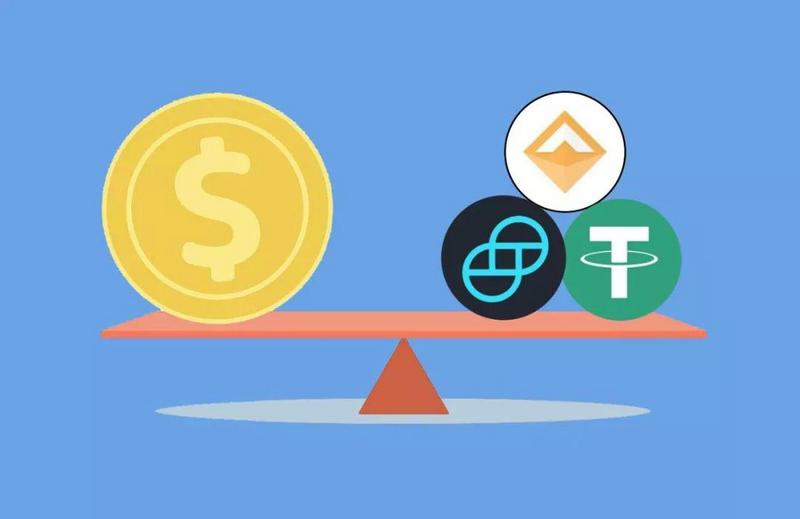
How does S&P evaluate stablecoins?
TechFlow Selected TechFlow Selected
How does S&P evaluate stablecoins?
In assessing the relative ability of eight stablecoins to exchange for one U.S. dollar, S&P also indirectly affirmed that stablecoins are unlikely to disappear.
 Navigating Web3 tides with focused insights
By: Daniel Kuhn
Translation: Qin Jin, Carbon Value
S&P Global Ratings, a well-known agency famous for assessing the stability of banks, credit companies, and other financial institutions and products, has now turned its attention to stablecoins, conducting its first broad evaluation of these so-called blockchain-based assets. In its assessment of eight stablecoins’ ability to maintain parity with the U.S. dollar, S&P also indirectly affirmed that stablecoins are unlikely to disappear.
Lapo Guadagnuolo, senior analyst at S&P Global Ratings, said in an interview with CoinDesk, "We always say our role is to evaluate whether there are methods we believe can reduce information asymmetry in markets — that’s how I see our role in the market." He added, "Cryptocurrencies are an area where we are investing significant resources because we know it's a growing field, both in traditional finance and in emerging finance."
Nevertheless, among the eight stablecoins evaluated by S&P, several received unimpressive scores. Most notably, Tether’s USDT — the largest stablecoin by market capitalization and one of the most traded crypto assets — was rated fourth lowest on a 1-to-5 scale. Meanwhile, MakerDAO’s DAI, popular in the DeFi space, and Justin Sun-backed TrueUSD were ranked fourth and fifth respectively, also receiving low scores.
By the end of 2023, the fact that cryptocurrencies had drawn any attention from an institution like S&P — whether positive or negative — was seen as a form of validation. A similar phenomenon occurred two years ago when Janet Yellen-led U.S. Treasury convened a working group to determine whether Tether’s stablecoin posed risks to the U.S. economy.
Likewise, the S&P report serves as a signal that these tools are important — regardless of whether they truly represent technological advancement.
"Ratings are a very positive development in the formalization process of stablecoins," said Nic Carter, co-founder of venture capital firm Castle Island Ventures. "I have some disagreements with the methodologies used, but the mere fact that major rating agencies are focusing on stablecoins and developing tailored approaches is quite compelling for the industry," he said in a private message.
Indeed, S&P’s mixed report may be exactly the kind of analysis the stablecoin industry needs — an independent review of one of the few tools in the crypto industry that could arguably claim product-market fit. Stablecoins have flourished and grown because they offer people around the world access to dollar-denominated mainstream financial systems. They’re also useful within the U.S., where they effectively function as wire transfers without any barriers.
While many Wall Street institutions looking to dip their toes into stablecoins may cite this report (and many are indeed testing the waters), not everyone in the crypto space accepts S&P’s work. Perhaps there’s good reason for that.
Austen Campbell, professor at Columbia Business School and former portfolio manager at Paxos, said directly: "Efforts by S&P or Moody’s in this domain haven’t impressed me." They seem genuinely out of their depth when launching new products. Frankly, beyond conventional debt, they don’t bring much value to emerging areas.
Carter agrees: "Ultimately, I think crypto-native users of stablecoins won’t care much about ratings — traders love Tether because it’s convenient, flexible, and perceived as being outside the reach of U.S. regulators."
He added: "But from the perspective of institutional entities feeling comfortable engaging with the industry, ratings are positive."
Although Circle’s USDC, Gemini’s Gemini Dollar, and Paxos’ flagship Pax Dollar were all rated “2s,” representing “strong,” none of the stablecoins assessed by S&P received the highest rating. Earlier this year, BUSD branded by Binance and issued by Paxos — then the third-largest stablecoin — came under scrutiny by U.S. authorities; it was not rated by S&P.
Guadagnuolo explained that S&P’s ratings are neither endorsements nor condemnations of any specific product. Even a “weak” assessment of stablecoins like TUSD or FRAX should not be seen as “financial advice,” Guadagnuolo said. Both TUSD and FRAX are “algorithmic stablecoins” that use cryptographic mechanisms rather than assets held in reserve to maintain their dollar peg.
"Sometimes people forget to keep this in mind," Guadagnuolo said. "Ratings are relative rankings. We express opinions that neither endorse nor condemn." He clarified that the rankings are "forward-looking," aimed at determining the likelihood of a stablecoin maintaining its peg. (For a financial instrument promising to return every deposited dollar — and unlike banks, retaining accumulated interest instead of paying yields back to users — this is a crucial quality. It’s a lucrative business: Tether earned over $1 billion in profit in Q3 alone.)
Notably, S&P did not use its traditional rating scale typically applied to government and corporate debt or assets like credit default swaps (CDOs), which range from AAA to D. Guadagnuolo said this wasn’t unusual, and the specific terminology used “isn’t new to us.”
"A five-point scale is sufficient for differentiation," he said. "We believe that, at least at this stage, using more granular scores might imply a level of precision or specificity that currently doesn’t exist."
Guadagnuolo, who leads the "Stablecoin Stability Assessment" project, also noted that the ratings rely solely on publicly available data. For example, he did not speak with Tether or Circle, nor did he receive snapshots of assets held by stablecoin issuers in banks — information that auditors might have privileged access to. He said he was among the earliest employees at S&P to focus on the emerging field of cryptocurrency. The New York-based company has hosted crash courses on sub-sectors of the market such as DeFi.
Due to competitive reasons, an S&P spokesperson declined to disclose how many individuals contributed to the assessment or how many S&P employees focus on cryptocurrency full-time or part-time.
In a sense, stablecoins are privately issued money. For instance, Michael Hsu, Comptroller of the Currency and top federal banking regulator, recently compared stablecoins to the “wildcat” era of banking, when individual savings institutions printed their own unique versions of the dollar. This form of monetary expansion carries theoretical risks (the late 19th century saw multiple cycles of credit booms and busts) but also offers benefits, such as blockchain transparency and settlement finality.
When asked whether reviewing on-chain assets was easier than traditional credit ratings, Guadagnuolo said “yes,” with caveats. "There is definitely more information available on stablecoins compared to other 'exotic' products, which might have minimal documentation," he said. "And if you know where to look, there’s a certain degree of transparency — you can instantly see how a smart contract works or what the transaction volume is."
However, blockchains often obscure many things. "Investors and users often don’t know who built a protocol, whether it’s been properly audited, or other information they might expect in a 'regulated space,'" Guadagnuolo said. Ironically, while cryptocurrencies emerged to reduce trust and reliance on intermediaries in online transactions compared to using credit cards or opening bank accounts, users often end up needing to blindly trust strangers even more.
There were many other questions Guadagnuolo either couldn’t answer or that an S&P communications representative interjected to say he couldn’t address — including whether he would personally use any specific stablecoin, whether he himself was interested in any DeFi mechanisms, or whether he felt a heavy responsibility in publishing information that, intentionally or not, would likely be treated as financial advice. Guadagnuolo also failed to directly answer why S&P, among all institutions, is uniquely qualified to assess the credibility of stablecoins.
"We have a long history. I don’t think we need to… this is a benefit for you," Guadagnuolo said.
Whether intentional or not, S&P has validated cryptocurrency. The stablecoin industry is now large enough, profitable enough, and prominent enough that a company like S&P cannot afford to stay on the sidelines. No matter how much S&P insists its assessments are merely “opinions,” there’s no doubt these evaluations will be treated as informed factual statements that influence trading and investment decisions.
At the “DeFi degen” level, this may not hold entirely true — after all, “DeFi degens” may already be accustomed to criticism of Tether or may simply choose USDT, FRAX, or TUSD for convenience. But when it comes to publicly listed companies or respected institutions that must be accountable for their decisions and actions, S&P’s commentary will carry weight. If Tether were to collapse, Cantor Fitzgerald — the Wall Street brokerage that recently placed substantial public trust in this offshore firm — would face consequences far beyond financial loss.
Join TechFlow official community to stay tuned
Telegram:https://t.me/TechFlowDaily
X (Twitter):https://x.com/TechFlowPost
X (Twitter) EN:https://x.com/BlockFlow_News












