








The Battle for the Throne of Bitcoin Inscriptions: A Three-Way Game Among Developers, Miners, and Exchanges
TechFlow Selected TechFlow Selected
The Battle for the Throne of Bitcoin Inscriptions: A Three-Way Game Among Developers, Miners, and Exchanges
This article will deeply explore how developers, miners, and exchanges—key beneficiaries in this battle for interests—respond to the conflict.
 Navigating Web3 tides with focused insights
Author: 0xShinChan, Guest Writer at Meta Era
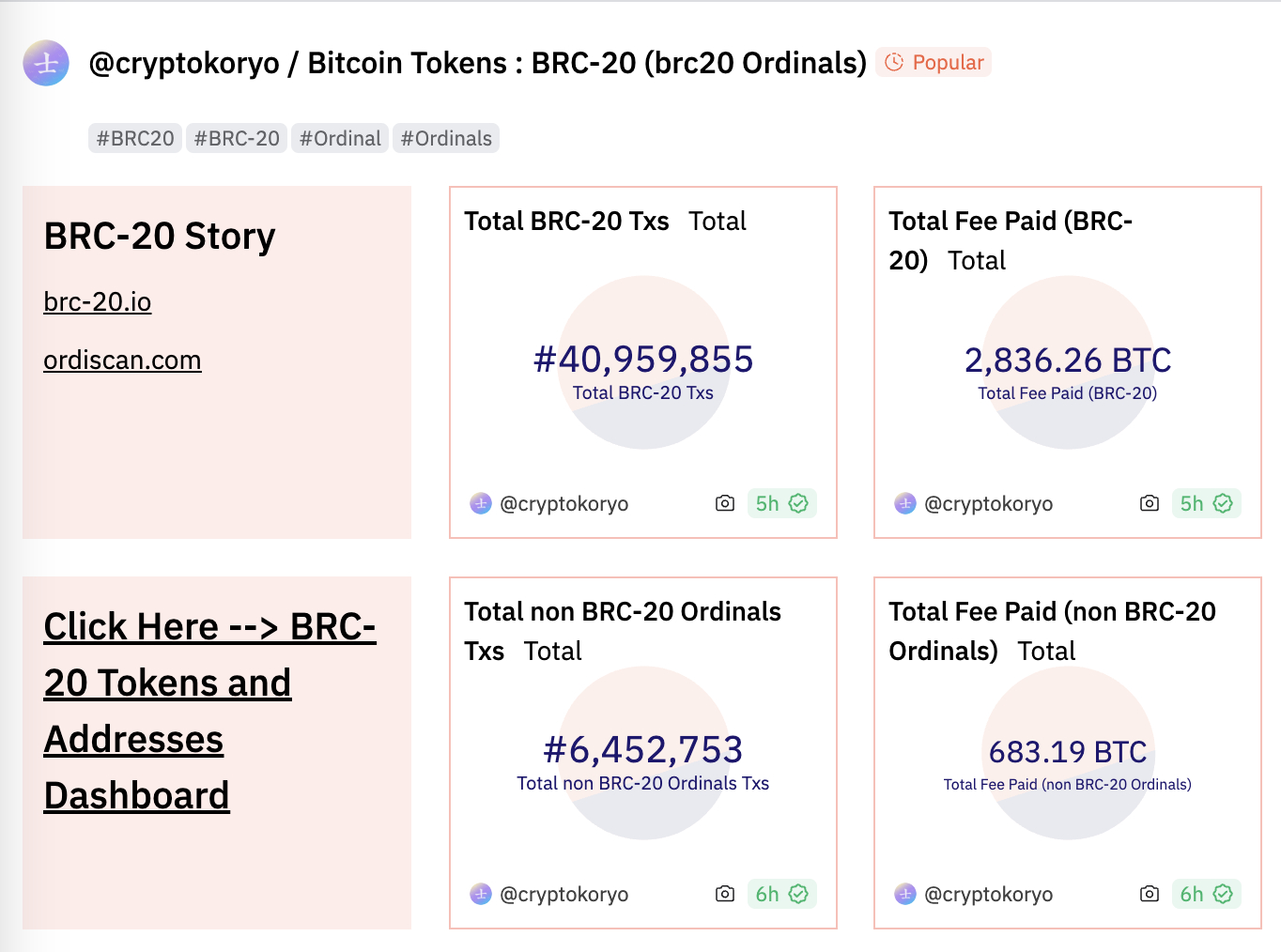
As 2023 draws to a close, the crypto world's attention once again turns to the mysterious realm of Bitcoin inscriptions. According to data from Dune Analytics, by mid-December, BRC-20 transaction volume had surged past $40 million, with accumulated fees reaching 2,800 BTC and a total market valuation exceeding $115 million.
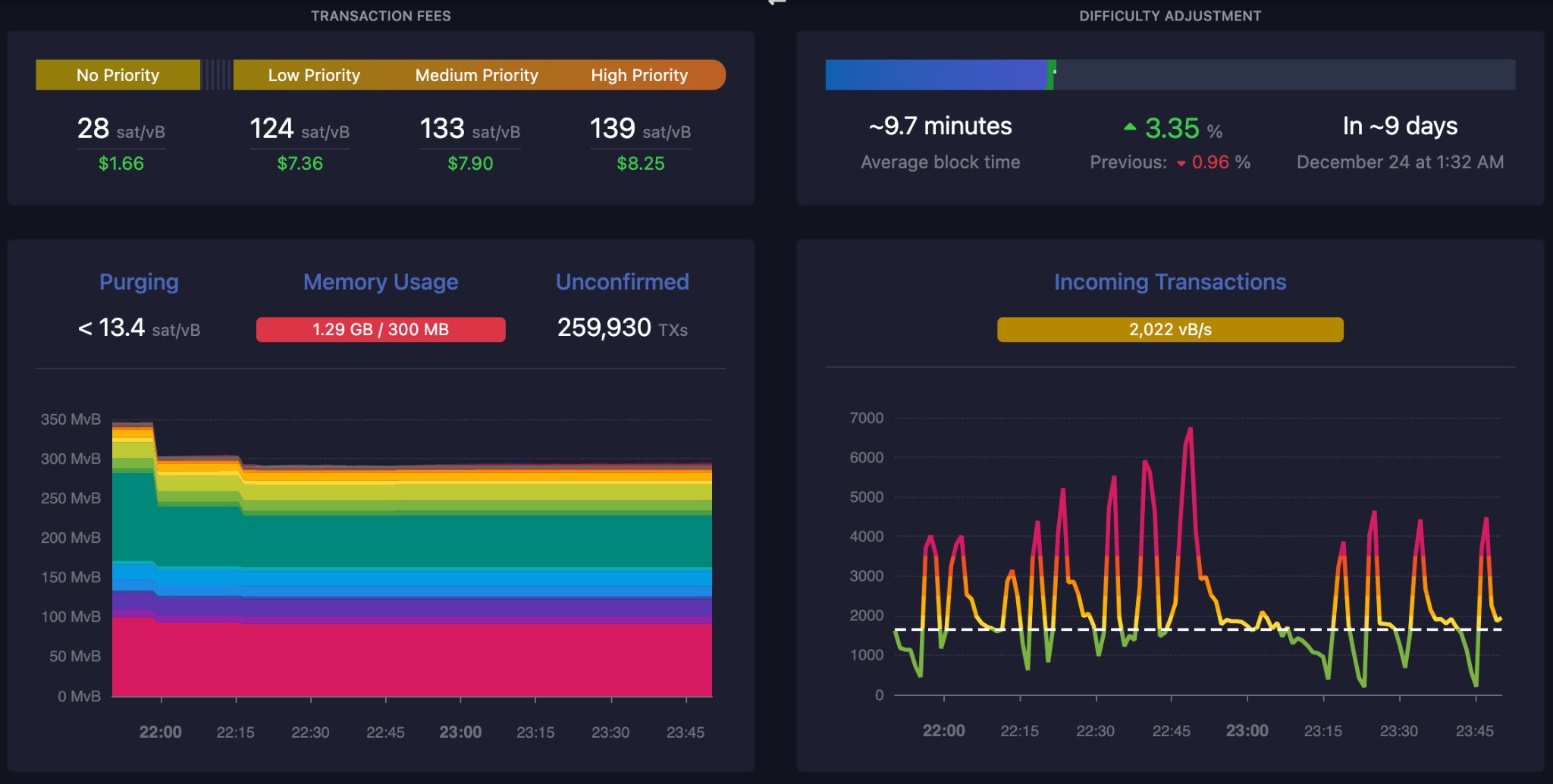
As of December 14, the Bitcoin network faced nearly 260,000 unconfirmed transactions, struggling under growing congestion and rising medium-priority transaction costs. Data from mempool.space shows these costs have spiked from approximately $1.60 to around $8.19.
The resonance of Bitcoin inscriptions grows stronger, especially after Binance officially announced on December 12 its inclusion of BRC-20 Sats (1000SATS) for trading. This move triggered a significant surge in inscription market activity, with trading volumes surpassing $36 million. Meanwhile, the price of $SATS has risen approximately 120% since Binance’s announcement. The inscription craze highlights the explosive potential within the Bitcoin ecosystem.
Where do inscriptions and tokens based on inscription protocols (BRC-20) stand today? This article delves into how developers, miners, and exchanges—key beneficiaries in this battle for interests—are responding.
Bitcoin Core Developer Warning: Inscriptions and BRC-20 Are "Spam" on the Bitcoin Blockchain
Luke Dashjr, one of Bitcoin’s early core developers who has been working on Bitcoin since 2011, is among those opposed to the Ordinals NFT protocol on Bitcoin. He has consistently stated that the protocol constitutes an “attack” on Bitcoin and opposes the minting of NFTs on Bitcoin. He even claims to have developed a simple “spam filter” that miners can use to screen out inscriptions and prevent them from propagating across the Bitcoin network.
On December 6, Luke Dashjr, a Bitcoin core developer and co-founder of Ocean mining pool, published a lengthy post asserting that inscriptions are exploiting a vulnerability in Bitcoin Core to launch dust attacks on the blockchain. Furthermore, he revealed that before next year’s v27 update, developers are attempting to eliminate Bitcoin inscriptions—implying that inscriptions and BRC-20 tokens may soon cease to exist.
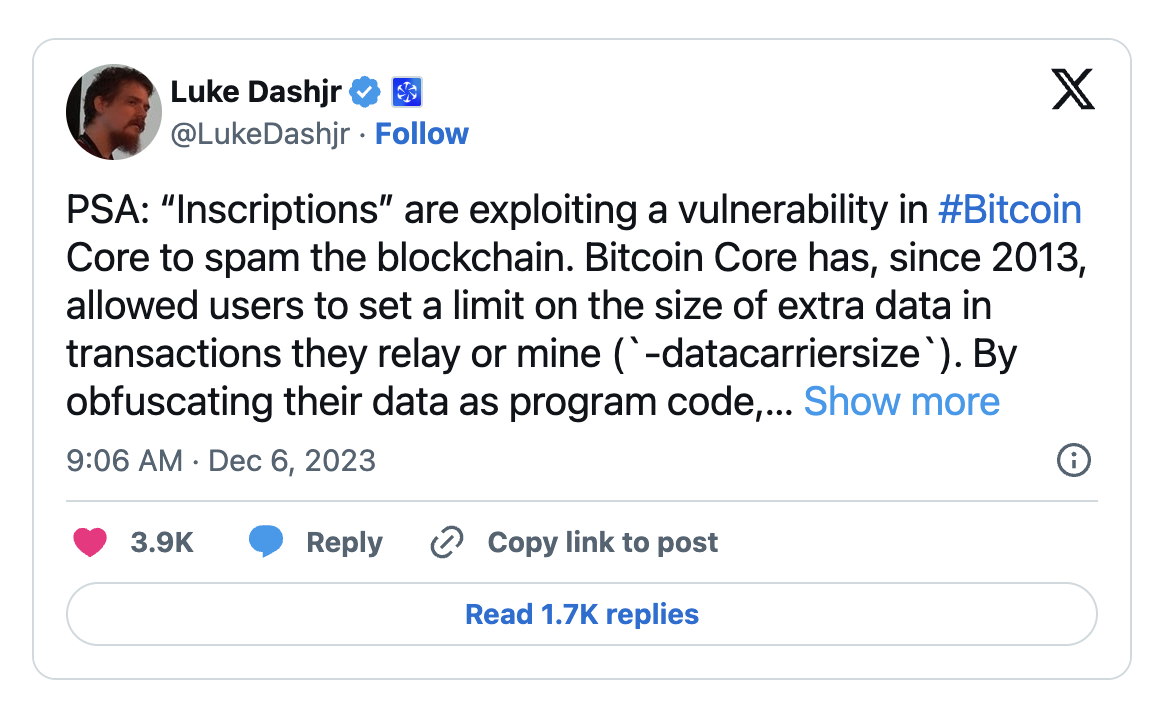
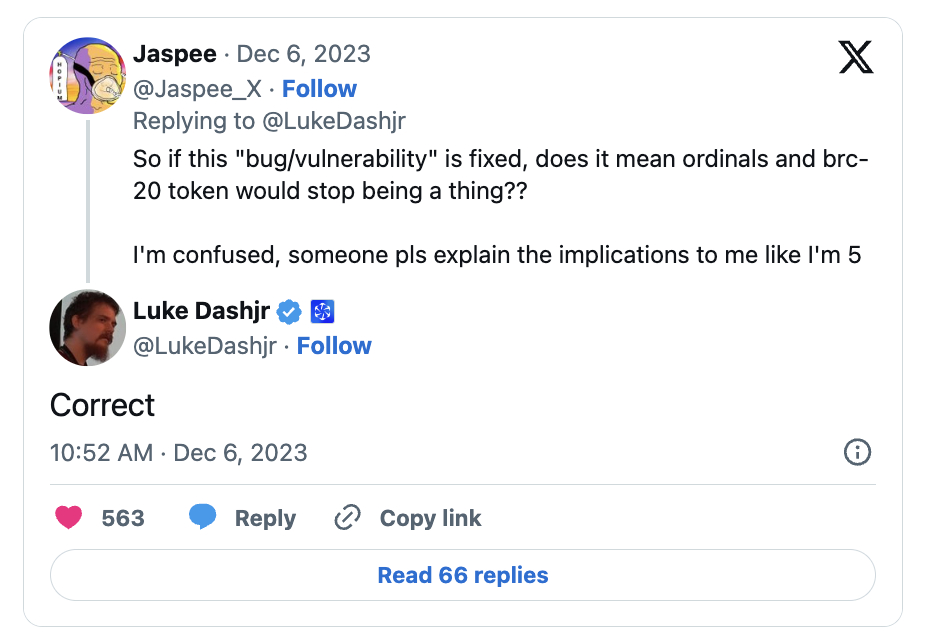
Dashjr clarified that since 2013, Bitcoin Core has allowed users to limit the size of extra data in transactions via the "-datacarriersize" setting. However, inscriptions bypass this restriction by disguising data as program code. When asked about the fate of Ordinals and BRC-20 tokens after the bug fix, Dashjr confirmed it would end their journey.
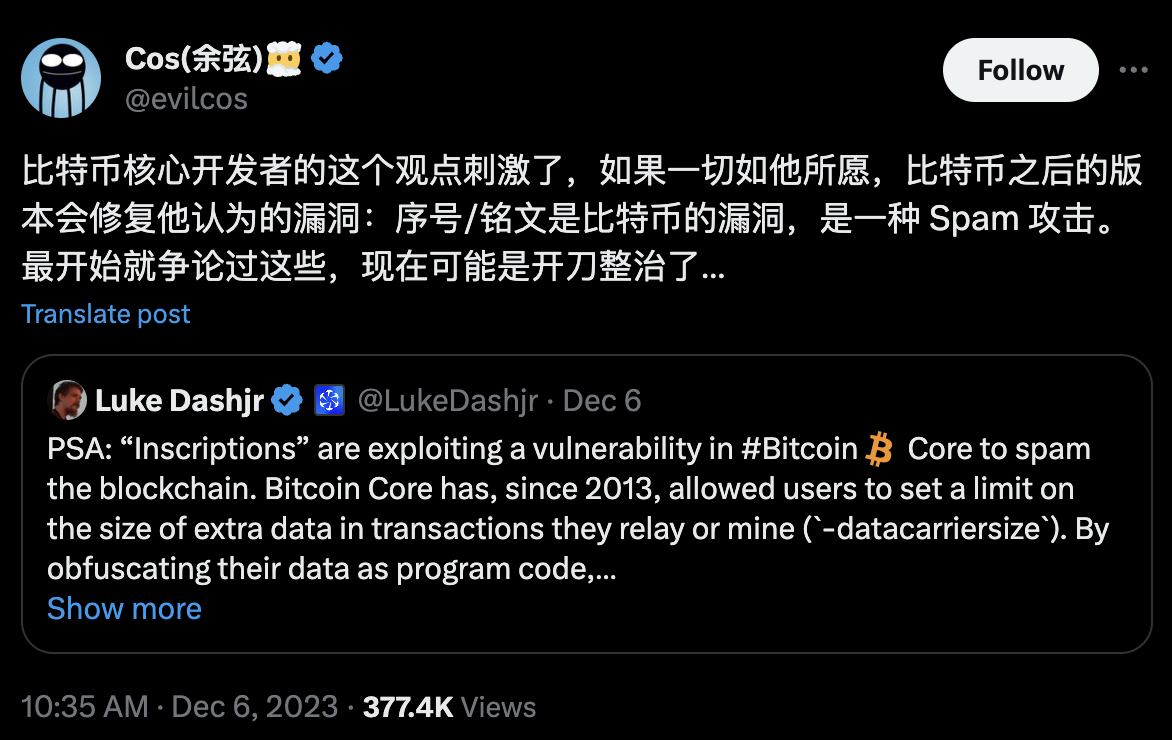
Regarding this issue, Yu Xian, founder of security firm SlowMist, pointed out that these controversies have existed from the beginning and adjustments might now be made accordingly.
Ocean Mining Pool Filters Out Ordinal Inscription Transactions
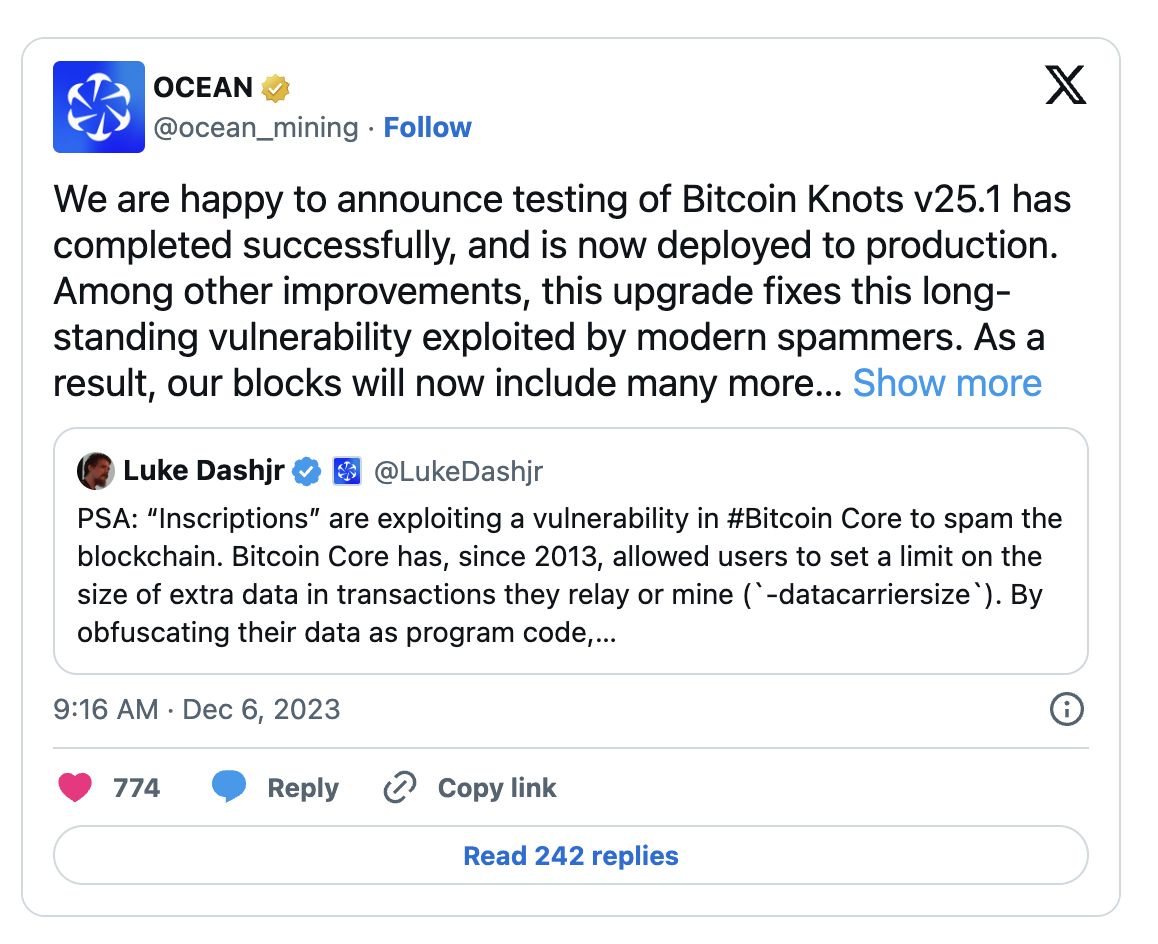
On December 6, Ocean Mining Pool, founded by Luke Dashjr, secured $6.2 million in seed funding led by Block CEO Jack Dorsey to support the launch of Ocean Mining Pool and other decentralized mining initiatives.
Ocean Mining Pool uses a “fixed” version of Bitcoin Knots to filter inscription transactions. According to its official announcement, in addition to other improvements, this upgrade fixes a long-standing vulnerability exploited by spammers. As a result, Ocean’s memory pool will now include more legitimate transactions and help mitigate DoS attacks on the Bitcoin network.
Controversy Surrounding Inscriptions: Conflicting Perspectives
The existence of inscriptions continues to spark controversy, with diverse viewpoints across the community. Peter McCormack, founder of the prominent podcast WhatBitcoinDid, offered a deep analysis of the essence of this controversy. He emphasized that these assets do not benefit those using Bitcoin for payments, as they only contribute to an environment of high fees.
Peter McCormack stated: “People need money, so in the short term, the high-fee environment introduced by Ordinals has an extremely negative impact on Bitcoin’s use as currency, because high fees reduce the number of people who can afford to store Bitcoin on-chain and complicate channel openings on Lightning.”
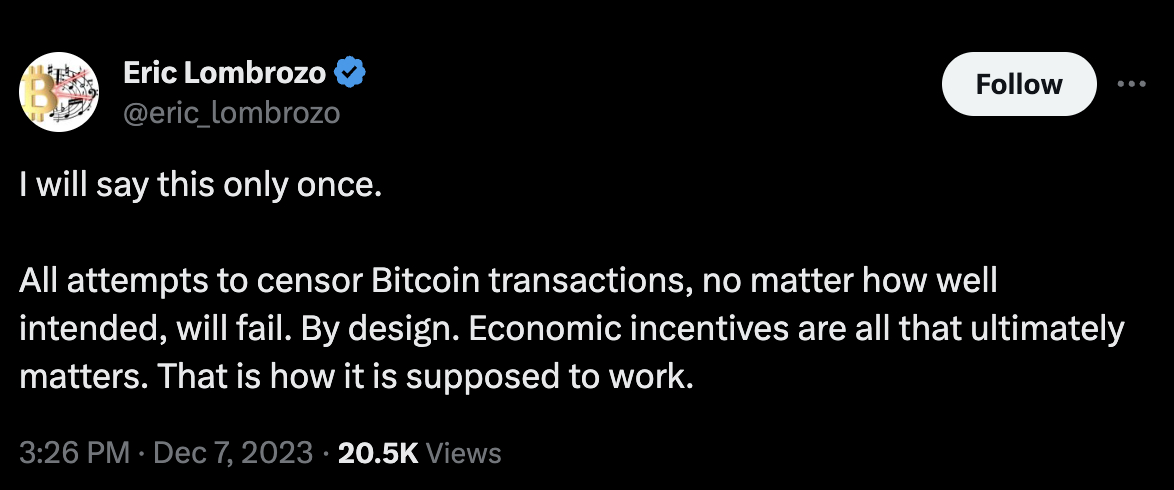
However, supporters of inscriptions, including Eric Lombrozo, stress that any attempt to censor Bitcoin transactions will ultimately fail. Lombrozo said: “All attempts to censor Bitcoin transactions, no matter how well-intentioned, will fail. By design, economic incentives are what ultimately matter. That’s how it should work. If someone actually succeeds, it means Bitcoin has been fundamentally broken—we might as well abandon it and start over.” The debate over inscriptions echoes like voices on a stage, rising and falling.
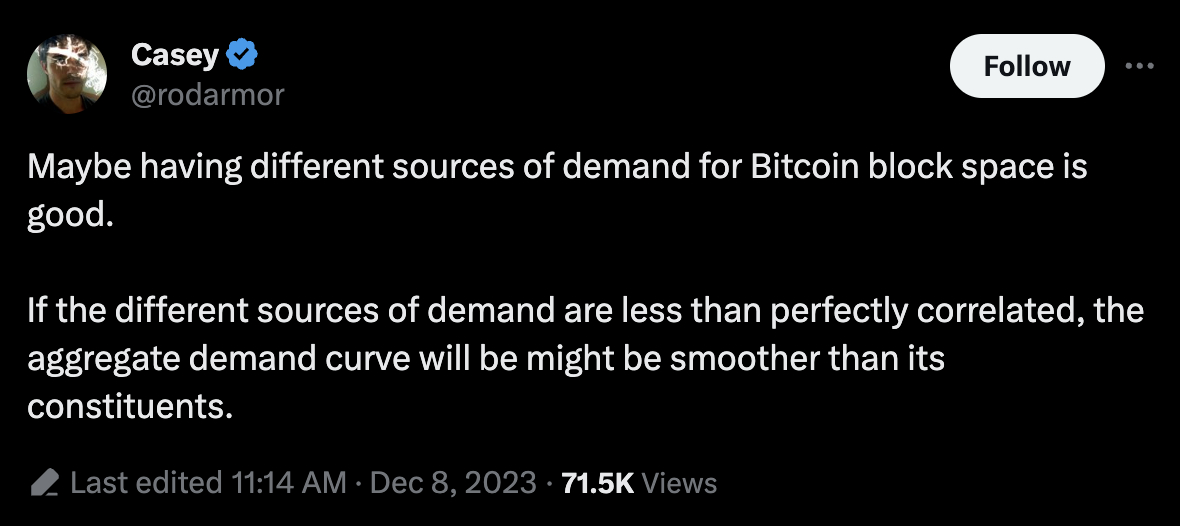
Casey Rodarmor, developer of inscriptions, also sees Bitcoin inscription assets as a solution to Bitcoin’s security challenges by incentivizing miners. He believes diversity in demand for Bitcoin block space is beneficial. Rodarmor tweeted: “Maybe diverse sources of demand for Bitcoin block space are good. If different sources of demand aren’t perfectly correlated, the aggregate demand curve could be smoother than its components.”
Inscription developer Casey Rodarmor views Bitcoin inscription assets as a way to address Bitcoin’s security challenges through miner incentives. He believes diverse demand for Bitcoin block space is advantageous. Rodarmor stated on Twitter: “Perhaps having different sources of demand for Bitcoin block space is a good thing. If different demand sources aren't perfectly correlated, the total demand curve may be smoother than its individual parts.”
A Resurgence of Brilliance: The Forbidden Zone of Inscriptions
Amidst the turbulence surrounding the potential banning of inscriptions, a new drama unfolds on Bitcoin’s stage—one where developers, miners, and exchanges engage in a complex博弈 (strategic game).
The emergence of Ordinals thrust Bitcoin inscriptions into the spotlight, with exchanges playing a pivotal role in this strategic game. Take ORDI, the leading BRC-20 token, as an example. According to CoinGecko data, its global spot trading volume has exceeded $900 million, approaching its market cap.
Although miners, exchanges, and users lack authority over Bitcoin’s core code, as key beneficiaries in this arena, they are unlikely to remain passive observers. Instead, they actively participate in this high-stakes contest. A resurgence of brilliance—the forbidden zone of inscriptions—marks a new chapter in Bitcoin’s ongoing saga.
Join TechFlow official community to stay tuned
Telegram:https://t.me/TechFlowDaily
X (Twitter):https://x.com/TechFlowPost
X (Twitter) EN:https://x.com/BlockFlow_News












