








Bitget Research: In-depth Analysis of the Bitcoin Ecosystem, the Engine of the Next Bull Market
TechFlow Selected TechFlow Selected
Bitget Research: In-depth Analysis of the Bitcoin Ecosystem, the Engine of the Next Bull Market
Bitcoin's ecosystem will have a promising development outlook based on future macroeconomic environments and market conditions.
 Navigating Web3 tides with focused insights
Author: Bitget Research
Executive Summary
-
Bitcoin's wealth effect has been significant in 2023, rising from $16,500 at the beginning of the year to $42,000. Beyond Bitcoin itself, market capital has also spilled over into its ecosystem.
-
The most notable case is the explosive growth of the BRC20 sector under the Ordinals protocol. The BRC20 token market cap now exceeds $4 billion, a nearly 40-fold increase from $100 million in March this year, driving continuous innovation and development across the entire Bitcoin ecosystem.
-
Currently, market attention on the Bitcoin ecosystem focuses on two aspects: first, asset issuance protocols, primarily including Ordinals, Atomicals, Runes, PIPE, and Taproot Assets; second, scaling solutions, mainly Lightning Network, RSK, Stacks, RGB, and BitVM.
-
Currently prominent wealth-generating sectors within the Bitcoin ecosystem include: BRC-20 assets under the Ordinals protocol, ARC-20 and Realm under the Atomicals protocol, PIPE under the PIPE protocol, and tokens from Bitcoin scaling projects (RIF, STX). This article analyzes why these assets generate wealth effects and introduces investment pathways for investors.
-
Beyond technological innovation, the prosperity of the Bitcoin ecosystem relies on various market participants, including individual investors, exchanges, project teams, miners, and investment institutions. This article analyzes opportunities and risks for these five groups regarding Bitcoin ecosystem development, providing reference for investment and business expansion.
-
Given future macroeconomic conditions and market dynamics, the Bitcoin ecosystem holds strong development potential. Not only will popular cryptocurrencies like BTC and ORDI have substantial appreciation room, but new hundred-bagger opportunities will emerge within the Bitcoin ecosystem.
-
Bitcoin NFT market trading volume has surged, but its current scale remains small. Therefore, it is expected to grow more than 100-fold in the future. Meanwhile, the Lightning Network represents the key technical support enabling broader adoption of Bitcoin payments in the short to medium term.
-
Based on the above analysis, Bitget Research offers six predictions about the future trajectory of the Bitcoin ecosystem.
Since the second half of 2023, not only has the U.S. Federal Reserve’s rate hike cycle neared its end, but approval of spot Bitcoin ETFs by the U.S. SEC has become a widely accepted market expectation. Once spot Bitcoin ETFs are approved, massive traditional financial capital could flow compliantly into the Bitcoin ecosystem. Under such high expectations, Bitcoin continues its bullish trend while simultaneously driving growth in related Bitcoin ecosystem projects.
The clearest example is the resurgence of the BRC20 sector within the Bitcoin ecosystem starting in November, with major wealth effects generated by BRC20 tokens such as ORDI, SATS, and RATS, drawing intense market focus on the Bitcoin ecosystem. But what exactly is the Bitcoin ecosystem, and which projects are worth watching? Understanding these questions may be the golden key to capturing the next bull market opportunity.
I. What Is the Bitcoin Ecosystem?
1. Definition of the Bitcoin Ecosystem
The Bitcoin ecosystem refers to an interconnected system composed of solutions, protocols, applications, and digital assets designed to enhance the utility and efficiency of the Bitcoin blockchain network. Current discussions around the Bitcoin ecosystem center on two primary areas: asset issuance protocols and scaling solutions.
-
Asset Issuance Protocols: These define technical standards for issuing digital assets. Current examples include Ordinals, Atomicals, Runes, PIPE, and Taproot Assets.
-
Scaling Solutions: These aim to improve the base-layer performance of the Bitcoin network. Representative approaches include Lightning, RSK, Stacks, RGB, and BitVM.
2. How the Bitcoin Ecosystem Evolved from Zero to One
Understanding how the Bitcoin ecosystem evolved from zero to one requires examining several key milestones in Bitcoin's history.
On October 31, 2008, Satoshi Nakamoto published a whitepaper titled "Bitcoin: A Peer-to-Peer Electronic Cash System," detailing the philosophy and technical framework behind Bitcoin. Then, on January 3, 2009, Nakamoto mined the genesis block of the Bitcoin network, marking Bitcoin's official birth.
After its inception, Bitcoin attracted numerous experts in cryptography and computer science. As awareness spread, increasing numbers of people began accepting Bitcoin and building ecosystem applications around it, gradually forming an industrial landscape comprising mining chips, integrated circuits, exchanges, wallets, and application software. This brought Bitcoin and other cryptocurrencies into mainstream public view.
Beyond production and trading, people began attempting to develop practical real-world applications on the Bitcoin network but encountered inherent technical limitations. Blockchain technology faces an impossible trilemma—difficulty achieving decentralization, security, and scalability simultaneously.
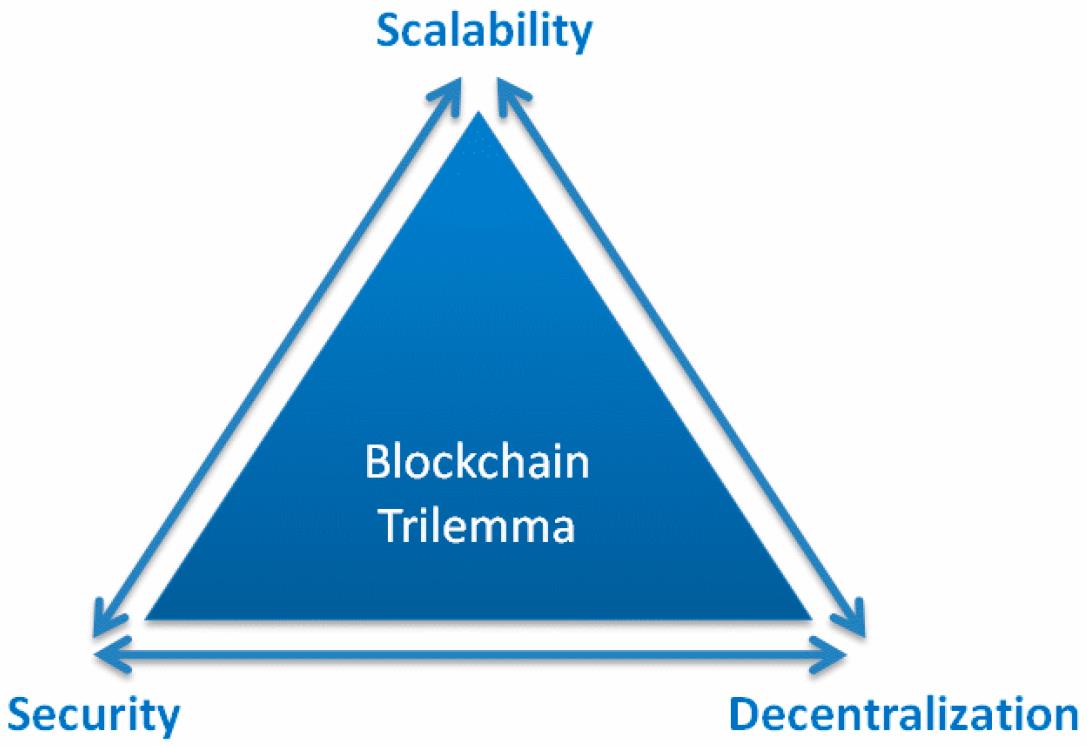
Blockchain Trilemma
Compared to scalability, decentralization and security are generally considered more critical features. Thus, enhancing scalability without compromising Bitcoin’s decentralization and security became a central goal for technological breakthroughs.
Throughout its evolution, Bitcoin has undergone two major technical upgrades, both laying crucial foundations for today’s flourishing ecosystem.
First Major Upgrade: Segregated Witness (SegWit)
SegWit was a significant protocol upgrade that increased Bitcoin's block size limit from 1MB to 1MB + 3MB and improved transaction malleability, enhancing the extensibility of the Bitcoin protocol.
Bitcoin transaction structure before the SegWit upgrade:
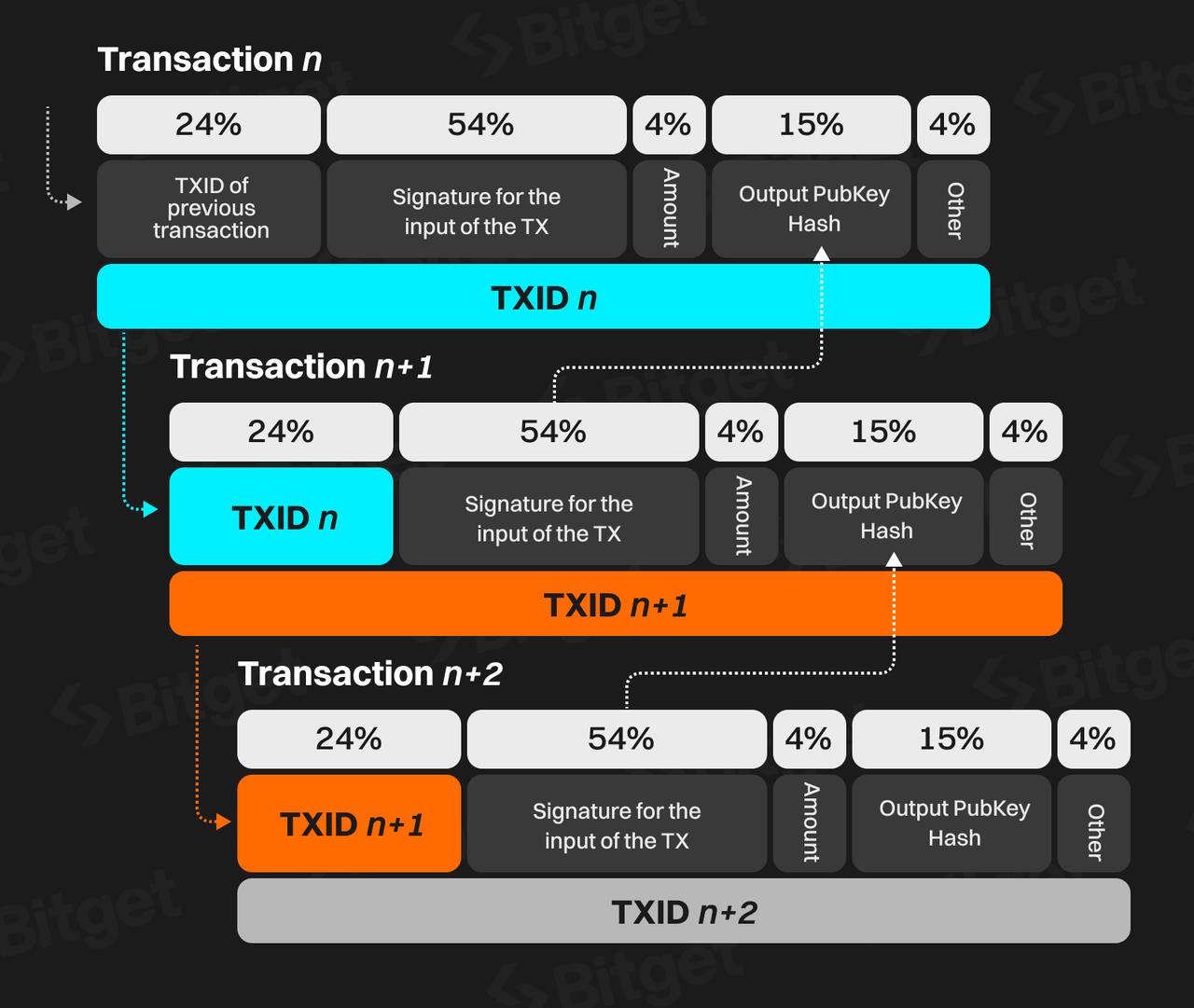
Bitcoin Transaction Structure Before SegWit (Source: The SegWit Transaction Capacity Increase)
Bitcoin transaction structure after the SegWit upgrade:
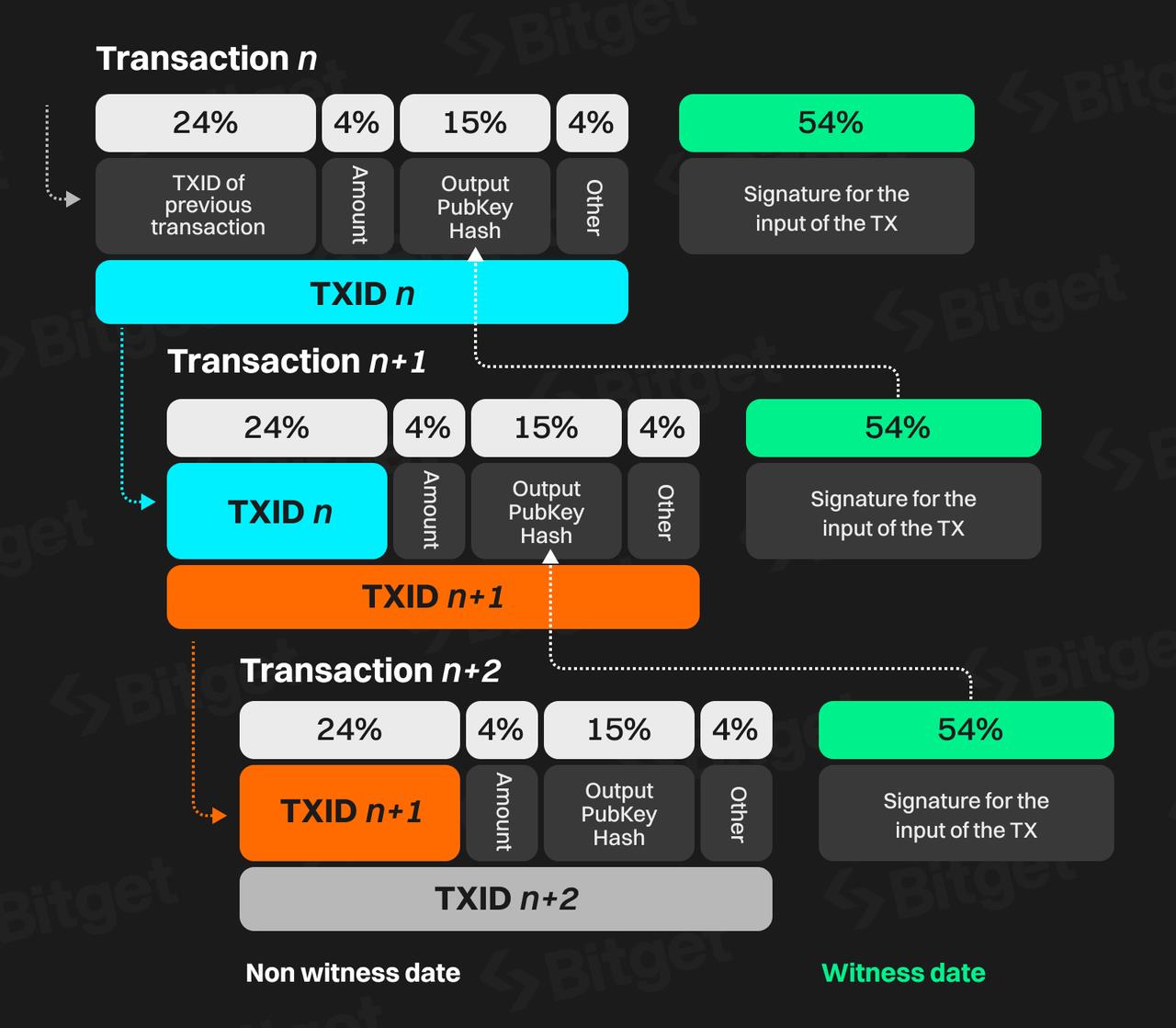
Bitcoin Transaction Structure After SegWit (Source: The SegWit Transaction Capacity Increase)
Second Major Upgrade: Taproot
Bitcoin’s Taproot upgrade involved three core Bitcoin Improvement Proposals (BIPs):
1) BIP 340 - Schnorr Signatures: Introduced the Schnorr signature algorithm, offering better efficiency, smaller signatures, enhanced security, and support for signature aggregation—particularly useful for multi-signature transactions.
2) BIP 341 - Segregated Witness v1 (SegWit v1) and Taproot: Described improvements to Bitcoin’s transaction structure using Taproot and SegWit v1, allowing smart contracts to appear indistinguishable from regular transactions, improving privacy, reducing transaction sizes, and lowering fees.
3) BIP 342 - Tapscript: Updated Bitcoin’s scripting language to work with Schnorr signatures and Taproot, making smart contract creation and execution more flexible and efficient.
Together, these BIPs significantly improved Bitcoin’s network efficiency, privacy, and smart contract capabilities—critical advancements supporting ecosystem development and decentralized finance.
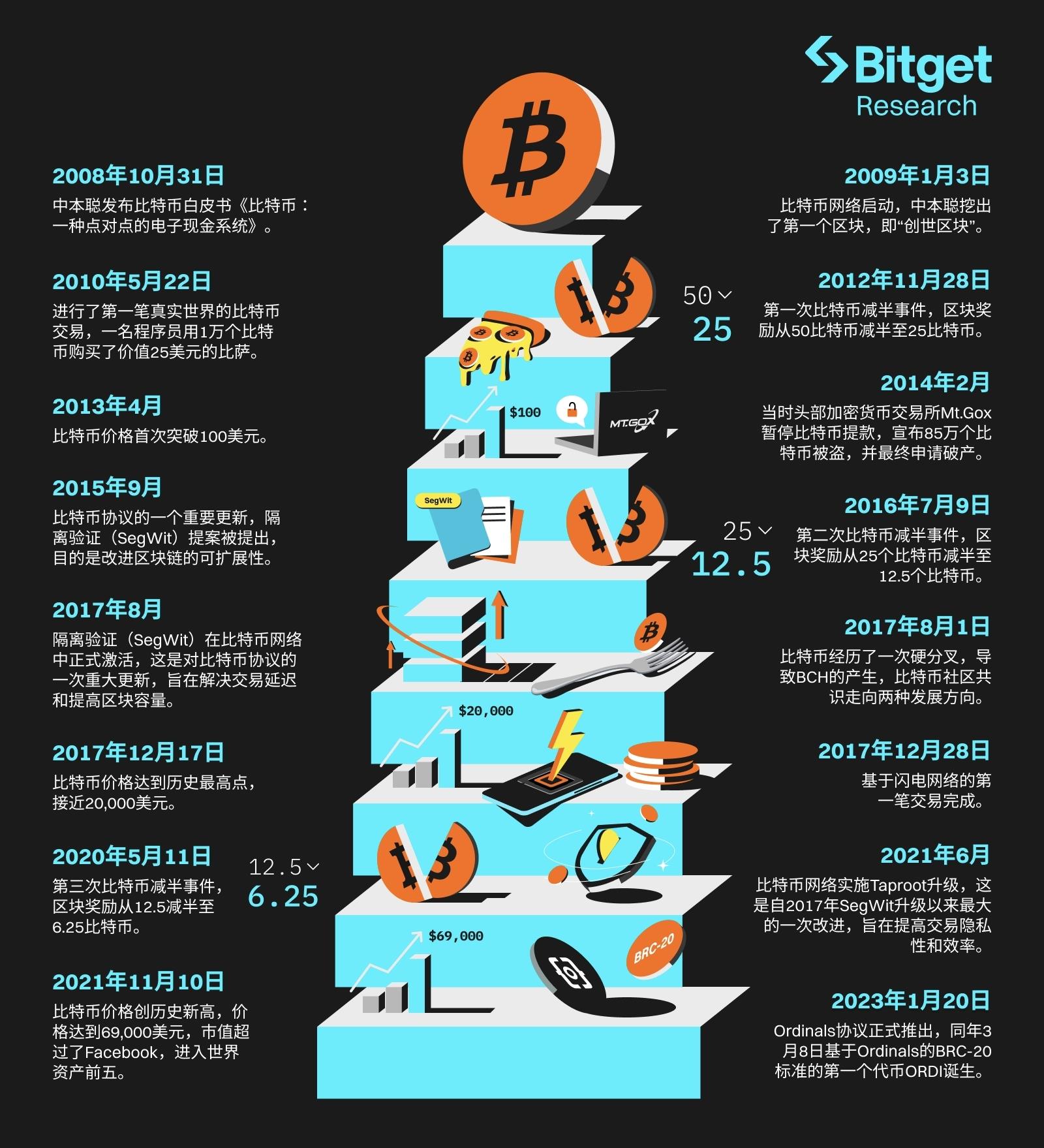
Bitcoin Development History and Key Events
Following these foundational upgrades, the Bitcoin ecosystem focused on two directions: scaling solutions aiming to further enhance scalability via technologies like the Lightning Network, sidechains, and BitVM; and asset issuance protocols enabling asset creation and application deployment similar to Ethereum, such as the Ordinals, Atomicals, and Runes protocols.
Under this trend, the emergence of ORDI—the first token based on the BRC-20 standard under the Ordinals protocol in March 2023—sparked a massive wave of ecosystem construction through its extraordinary wealth-generation effect.
3. Current Focus Areas of the Bitcoin Ecosystem
Note: For easier expression and understanding, we use “gas” to represent BTC network transaction fees in the following sections.
While the Bitcoin ecosystem encompasses many components, current market focus centers on two main areas: asset issuance protocols and scaling solutions.
3.1 Asset Issuance Protocols
In 2023, asset issuance protocols on Bitcoin experienced explosive growth. Following the success of BRC20 tokens under the Ordinals protocol, multiple new protocols emerged: Ordinals, Atomicals, Taproot Assets, Runes, and PIPE.
3.1.1 Ordinals Protocol
What Is the Ordinals Protocol?
The Ordinals protocol, launched in January 2023 by Bitcoin developer Casey Rodarmor, is an asset issuance protocol built on Bitcoin. It consists of two parts: the Ordinal numbering theory and Inscriptions. The numbering theory assigns unique identifiers to all 21 quadrillion Satoshis (the smallest unit of Bitcoin), while inscriptions associate content with UTXOs.
In simple terms, the Ordinals protocol works like writing data into a designated space (witness data). For instance, BRC20 writes token information (in JSON format) into this space, while NFTs store image data—an action known as inscription.
Why Did the Ordinals Protocol Emerge?
There was previously no simple, secure way to issue assets on the Bitcoin network. Casey leveraged Taproot’s enhanced extensibility to embed content directly onto UTXOs, combining Bitcoin’s robust security with practical asset issuance capabilities.
Current State of the Ordinals Protocol
Two primary asset types have emerged under the Ordinals protocol: BRC-20 tokens and Ordinals NFTs.
1. BRC-20 Tokens
BRC-20 is an experimental token standard created on March 8, 2023, by Twitter user @domodata. Using JSON data within Ordinal inscriptions, BRC-20 enables three core functions: token deployment, minting, and transfers.
As of December 4, 2023, daily on-chain trading volume for BRC-20 tokens reached approximately $22 million, while centralized exchange volumes ranged between $800 million and $900 million. The total market cap fluctuated between $3.5 billion and $4 billion.
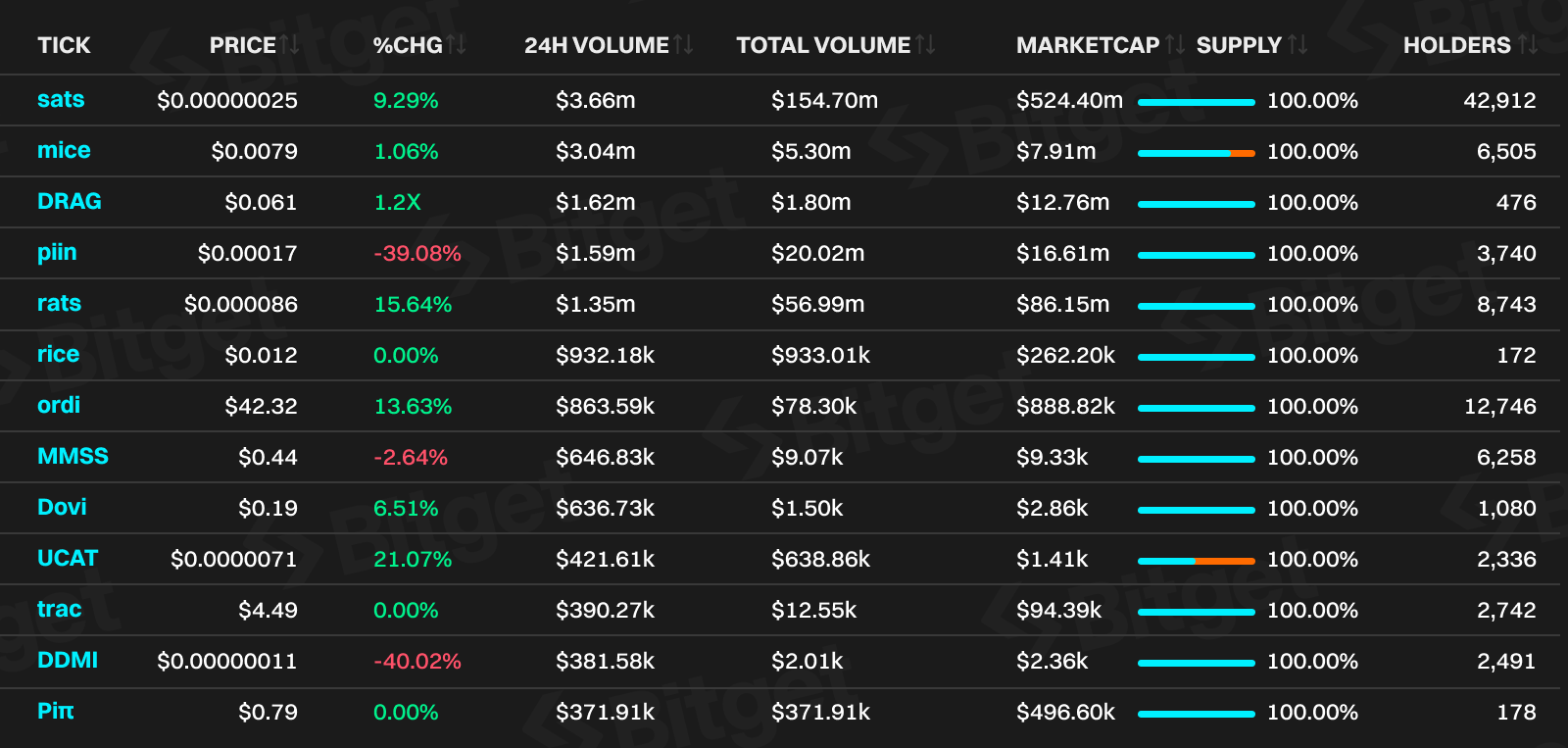
BRC-20 Token 24-Hour Trading Volume Ranking (Source: GENIIDATA, Date: December 4, 2023)
2. Ordinals NFTs
Ordinals NFTs are digital assets on the Bitcoin mainnet using the Ordinal protocol, represented by individual Satoshis—the smallest units of Bitcoin.
As of December 4, 2023, Bitcoin NFT trading volume over the past 30 days reached $371 million, nearly matching Ethereum’s $387 million in NFT volume during the same period.
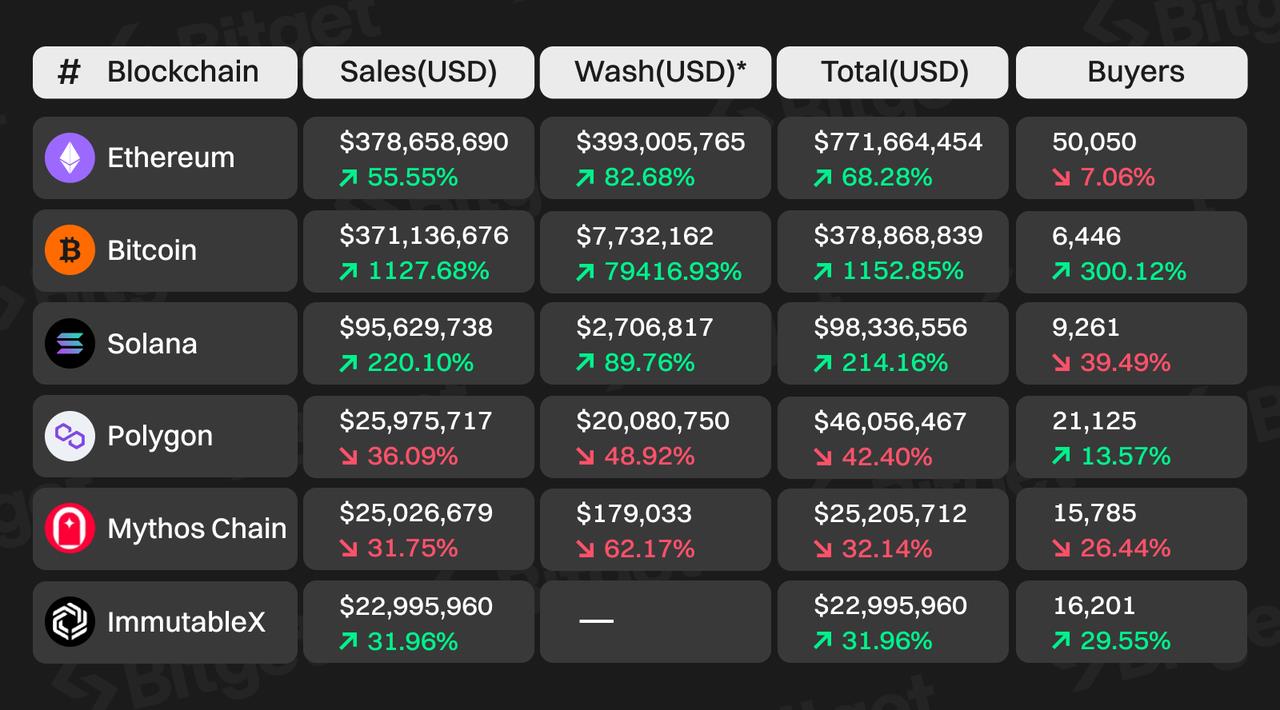
Source: CryptoSlam, Date: December 4, 2023
Unique Advantages of the Ordinals Protocol
BRC-20 Tokens
Despite being in early stages, BRC-20 has gained increasing attention:
-
High Security: Built on Bitcoin’s secure protocol, BRC-20 tokens are resistant to hacking. Since they are inscriptions rather than smart contracts, they avoid common vulnerabilities found in ERC-20 tokens.
-
Fair Distribution: Any Bitcoin wallet holder can participate in fair minting, paying gas fees to obtain tokens—providing equitable access to early-stage investments.
Ordinals BTC NFTs
BTC NFTs under the Ordinals protocol share immutability and uniqueness but differ technically from Ethereum NFTs:
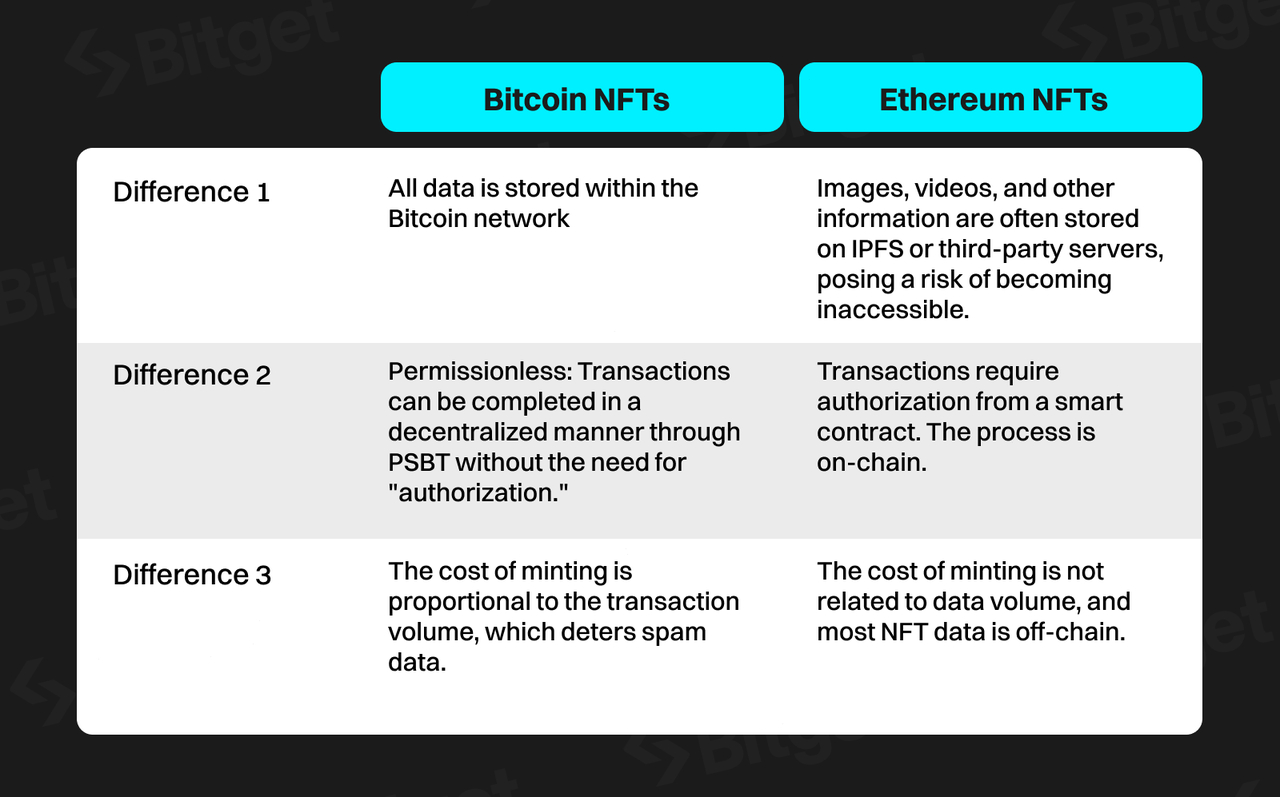
Overall, Ordinals represent a technical advancement in NFTs by storing all data directly on the Bitcoin blockchain, offering a more complete and reliable form of digital art.
Potential Issues with the Ordinals Protocol
Despite its benefits, the Ordinals protocol presents challenges:
-
Reduced Block Space Efficiency: Embedding large amounts of data consumes significant block space, potentially slowing network processing and increasing transaction costs.
-
Higher User Complexity: Mapping assets to specific Satoshis increases usage complexity, requiring dedicated wallets and raising barriers for users and infrastructure developers.
3.1.2 Atomicals Protocol
What Is the Atomicals Protocol?
Atomicals is an asset issuance protocol operating on UTXO-based blockchains. It supports diverse asset types: fungible tokens (ARC20), NFTs, Realms, and Collection Containers. ARC20 uses the Satoshi as the base unit, ensuring full traceability of transfer history without relying on third-party sorters.
Why Was Atomicals Created?
Atomicals aims to build a more robust alternative to the Ordinals protocol. Its decentralized minting mechanism, incorporating Bitwork Mining (a PoW model), promotes fairer distribution compared to Ordinals.
Current State of the Atomicals Protocol
Atomicals includes four main asset types:
-
ARC20: Similar to BRC20, with leading projects including $ATOM, $PEPE, and $REALM;
-
NFTs: Top projects include PUNK, XCSS (first original collection), and Atommap (bitmap counterpart);
-
Realm: A concept redefining domain names by using prefixes;
-
Collection Containers: Data structures for storing readable NFT collections and metadata.
Data Overview:
As of December 4, 2023, Atomicals recorded 366,879 total mints, costing 55.8 BTC—representing 2.69% of Ordinals' total mint count. Daily mint activity is shown below:
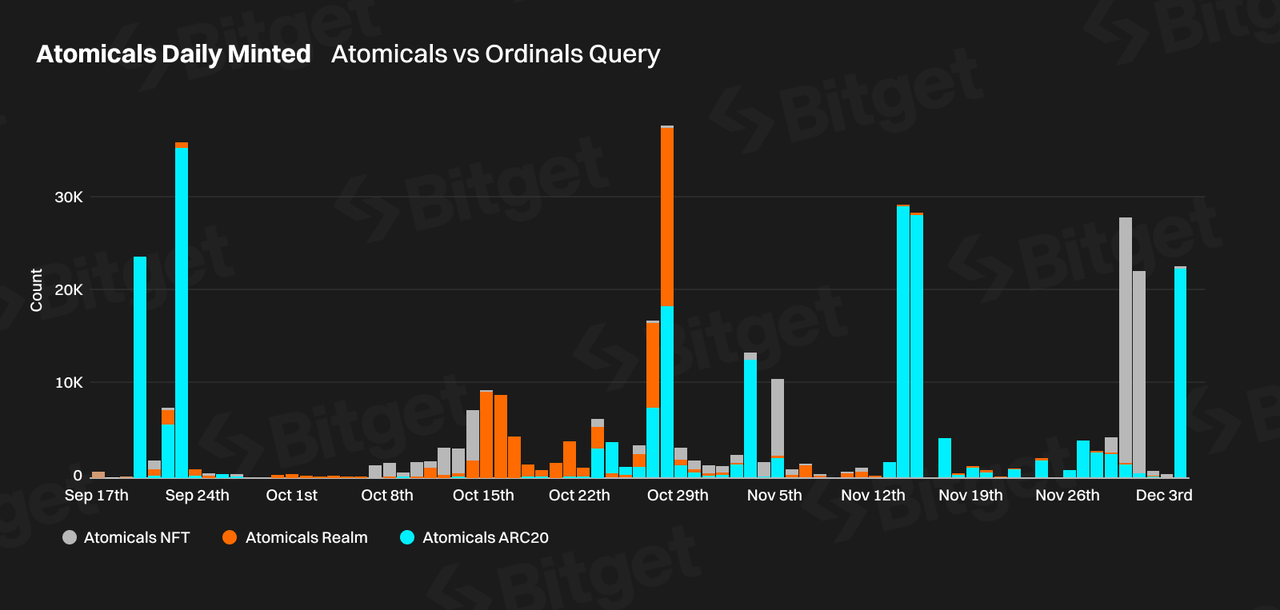
Number of Atomicals Assets (Source: Dune)
Compared to Ordinals, Atomicals remains in early stages, with peak daily mints less than one-tenth of Ordinals’ peaks.
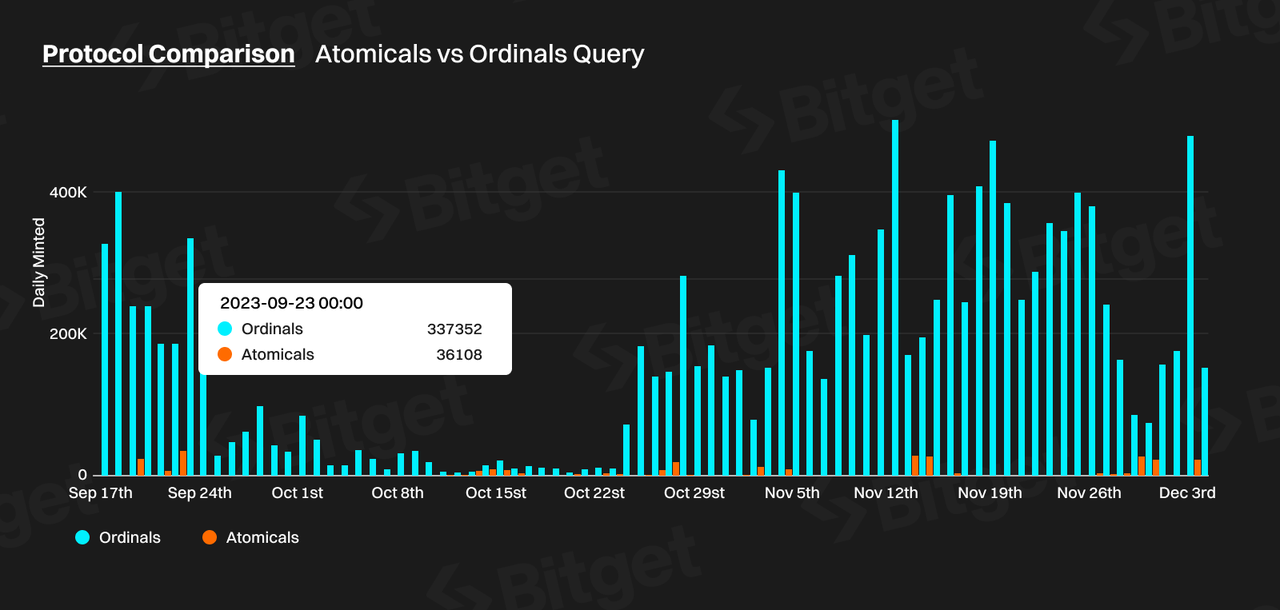
Comparison of Minting Volumes Between Ordinals and Atomicals (Source: Dune)
Unique Advantages of the Atomicals Protocol
-
Lower Risk of Errors: The splat operation allows selective separation of combined assets within a single UTXO, preventing accidental loss when used as transaction fees.
-
Diverse Distribution Methods: Offers both decentralized and direct minting options, supporting fairness and special use cases.
-
Broad Application Potential: Enables complex and diverse asset representations beyond basic payments.
Potential Issues with the Atomicals Protocol
-
Technical Complexity: Implementation requires deep understanding of Bitcoin scripts, limiting accessibility for average users.
-
Slow Infrastructure Development: No mature trading markets exist currently. Two major platforms have suffered repeated security incidents, including a recent "zero-cost purchase" exploit on Atomicals Market. Most trades occur peer-to-peer. Only three public node services exist (official Atomicals, Atomical Market, nextdao), often experiencing instability affecting minting success rates.
3.1.3 Runes Protocol
What Is the Runes Protocol?
Runes Protocol is a fungible token protocol based on Bitcoin’s UTXO model, using simple tuples (ID, OUTPUT, AMOUNT) and OP_RETURN operations. Key features include simplicity, no need for off-chain data or native tokens, optimized on-chain data usage, and improved user experience.
Why Was Runes Created?
Developed by Casey due to dissatisfaction with BRC20 generating excessive "junk" UTXOs, Runes aims to solve usability issues while preserving Bitcoin block space.
Current State of the Runes Protocol
Runes remains a conceptual proposal without complete clients or development tools.
Unique Advantages of the Runes Protocol
-
UTXO Model Integration: Seamlessly integrates with Bitcoin’s existing UTXO architecture.
-
Simplified Operations: Intuitive (ID, OUTPUT, AMOUNT) tuple mechanism simplifies token creation and transfer.
-
User-Friendly Design: Minimizes reliance on complex operations, easing user adoption.
-
Transparency and Security: All operations are on-chain visible, enhancing transparency. Rune burning mechanisms ensure protocol safety.
Potential Issues with the Runes Protocol
-
Symbol Sniping: Lacks anti-sniping mechanisms, risking early occupation of short, valuable symbols.
-
No Fair Minting: Unlike BRC-20, Runes lacks a fair minting function.
-
Slow Development: Still in conceptual phase without finalized tools.
3.1.4 PIPE Protocol
What Is the PIPE Protocol?
Inspired by Casey’s Runes and Domo’s BRC-20, developer Benny fused their strengths into the PIPE protocol—a comprehensive asset issuance solution featuring Deploy, Mint, Transfer (DMT) functions for both fungible and non-fungible tokens.
Why Was PIPE Created?
To address limitations in current Bitcoin asset issuance protocols by combining advantages of Runes and BRC-20 into a novel framework.
Current State of the PIPE Protocol
Designed as part of Benny’s Trac System for a holistic BTC ecosystem:
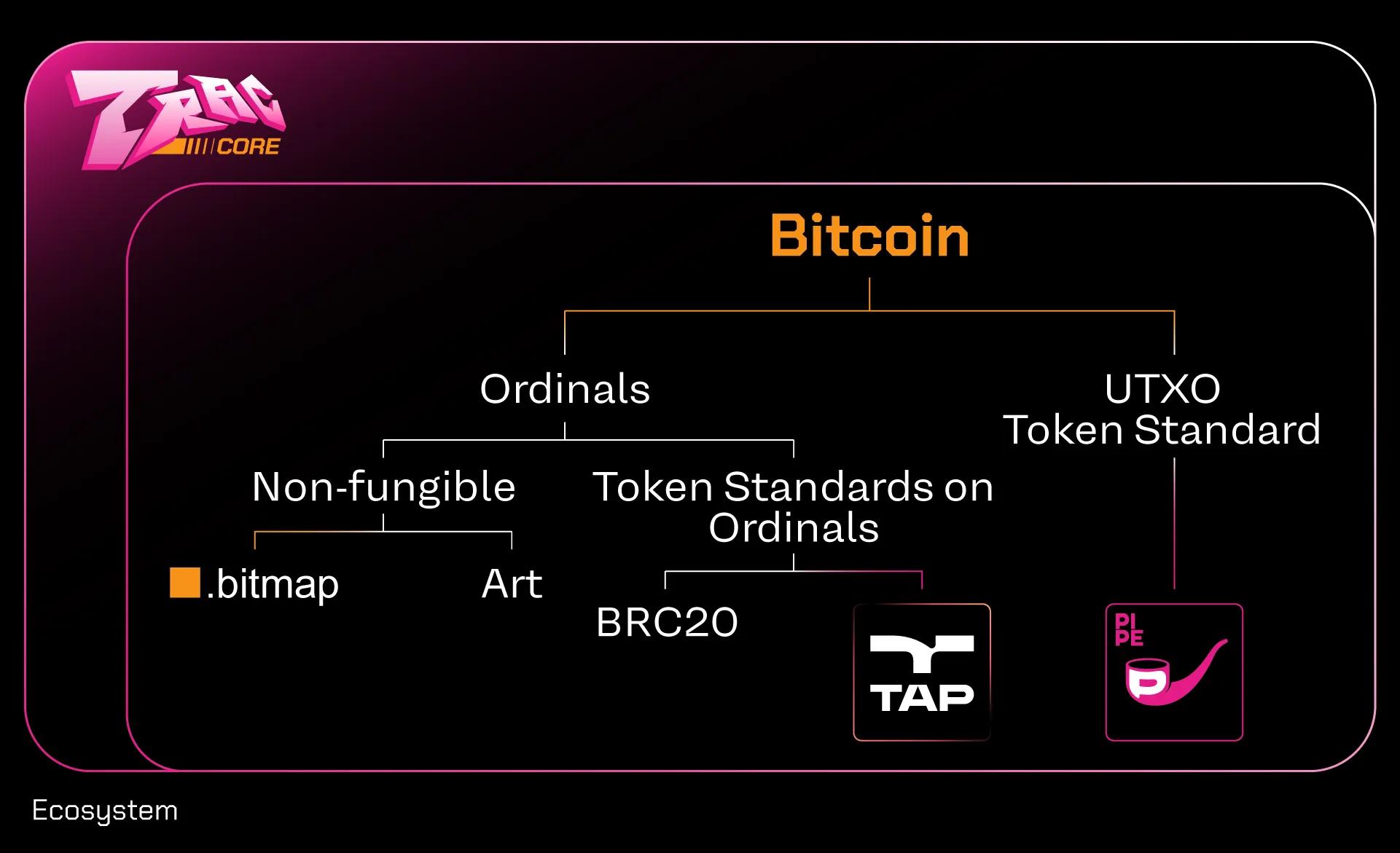
PIPE Protocol Affiliation (Source: Trac Documentation)
As of November 16, 2023, 16,976 tokens have been issued under PIPE, with flagship token $PIPE achieving hundreds-of-times returns.
Unique Advantages of the PIPE Protocol
-
UTXO Compatibility: Inherits seamless integration with Bitcoin’s native UTXO model.
-
Streamlined Workflow: Adopts simplified interaction methods similar to Runes.
-
Fair Minting Mechanism: Incorporates BRC-20-style equitable distribution.
Potential Issues with the PIPE Protocol
-
Technical Complexity: Requires adding layers within Bitcoin’s framework, posing challenges for general users and developers.
3.1.5 Taproot Assets Protocol
What Is the Taproot Assets Protocol?
Taproot Assets Protocol is a native asset overlay layer on the Bitcoin blockchain enabling asset issuance and transfers.
Why Was Taproot Assets Created?
To efficiently issue and transfer arbitrary assets on Bitcoin without bloating the blockchain. By keeping operations off-chain, it reduces mainchain load while improving programmability and privacy.
Key Technologies:
-
Merkle-Sum Sparse Merkle Trees (MS-SMTs): Efficiently prove asset existence, non-existence, splitting, and merging.
-
Taproot Asset Trees: Embedded in Taproot script trees, each asset ID corresponds to an MS-SMT.
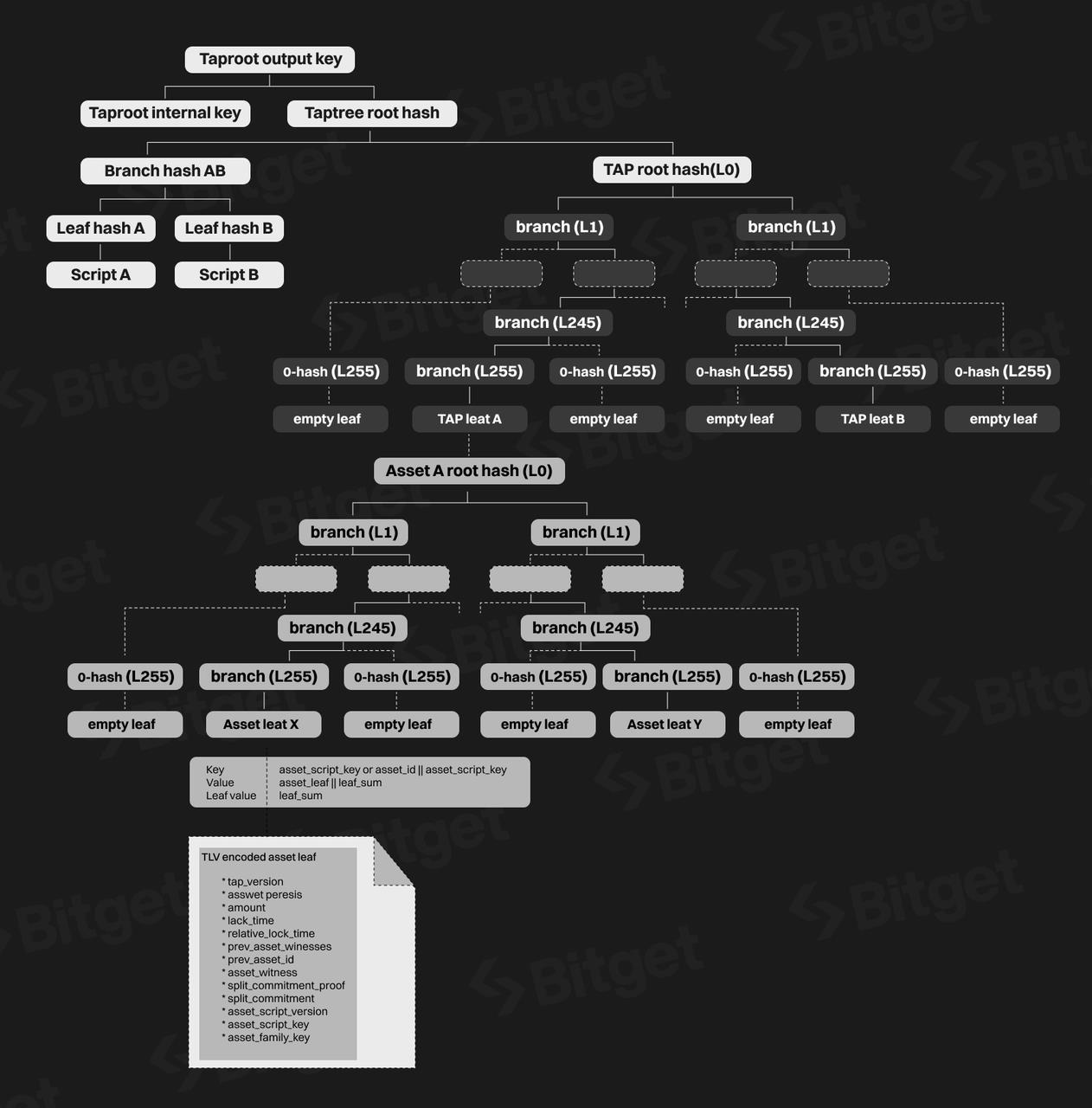
MS-SMT Structure Diagram (Source: Taproot Assets on Lightning)
Current State of the Taproot Assets Protocol
Asset Status
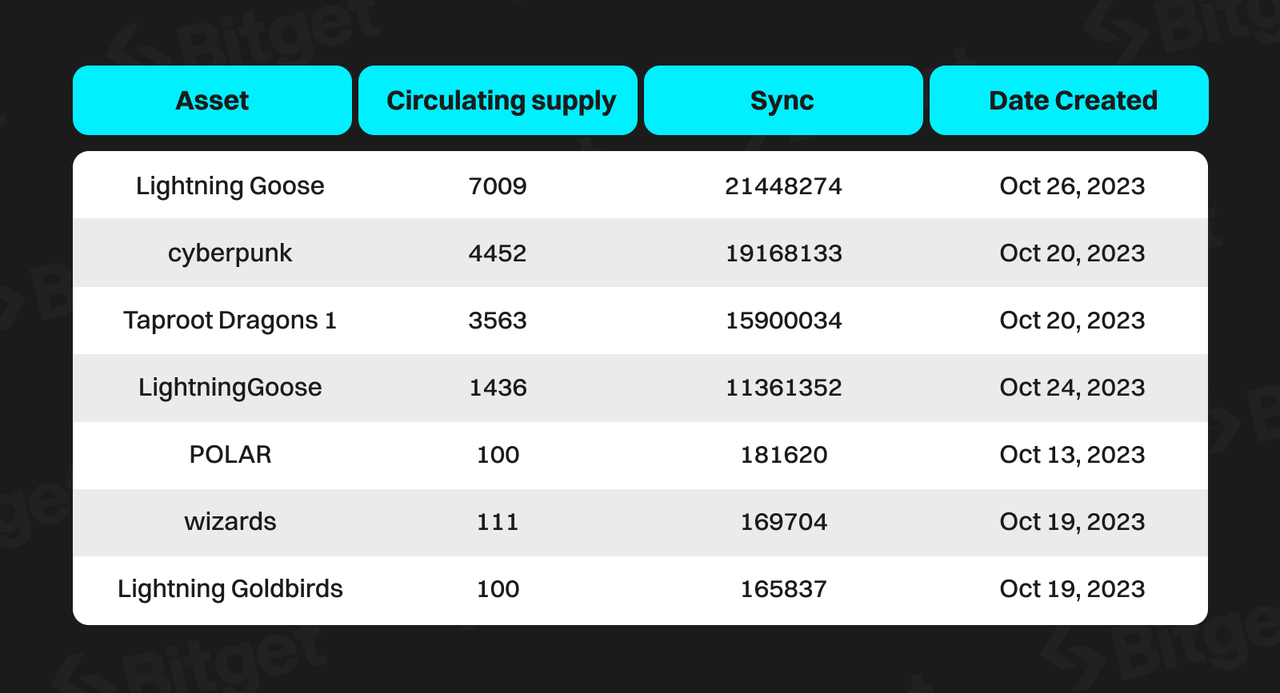
Ecosystem Status
The Taproot Assets ecosystem remains nascent, with few mature projects or active participants. The most notable project is Nostr Assets.
Nostr Assets has created two tokens: Trick and Treat. Over 7,900 Nostr addresses received airdrops of ~10,000 each, resulting in near-zero cost and up to 1,000x profit per account.
NostrAssets Product Features:
-
Zero Gas Fees: Transfers via NostrAsset web client or other Nostr-based social apps incur no gas fees.
-
Fair Launch: Supports fair launches similar to Ethereum, allowing customizable token name, symbol, supply, progress bar, avatar, and social info.
Unique Advantages of the Taproot Assets Protocol
-
High Adaptability: Fully UTXO-based, integrating well with native Bitcoin technologies like RGB, Lightning, DLC.
-
Low Transaction Costs: Direct integration with Lightning Network allows launching channels and depositing BTC and Taproot Assets in a single transaction.
-
Minimal On-Chain Footprint: Data stored in root trees; metadata defaults to creator devices or optional off-chain "Universe" indexers.
-
High Efficiency: Users can mint three different categories of assets once, paying only one miner fee, then sell them all via a single vPSBT without additional transfer fees.
Potential Issues with the Taproot Assets Protocol
-
High Centralization: Relies on third-party storage indexers. Without them, tokens risk permanent loss. Users must either run full nodes or rely entirely on centralized servers.
-
Unfair Allocation: Users cannot self-mint directly on the BTC mainnet. Instead, a project address issues all tokens at once before transferring them to Lightning Network—centralizing control with issuers.
3.2 Scaling Solutions
Bitcoin scaling solutions fall into two categories: on-chain and off-chain. On-chain scaling involves modifying block size or data structures (e.g., forks like BCH and BSV). Off-chain scaling builds secondary networks atop Bitcoin, such as the Lightning Network and sidechains.
Due to technical difficulty and community fragmentation risks, off-chain scaling has become dominant. Current off-chain approaches include:
-
State Channels: e.g., Lightning Network, enabling high-frequency off-chain transactions
-
Sidechain Technologies: e.g., Liquid, Stacks, Rootstock
-
Others: Rollup-like techniques and fraud proofs via BitVM
3.2.1 Lightning Network
What Is the Lightning Network?
The Bitcoin Lightning Network is a Layer-2 protocol designed to accelerate transaction speeds and reduce costs. Proposed in 2015 by Joseph Poon and Thaddeus Dryja, it officially launched in 2018 with Lightning Labs releasing LND (Lightning Network Daemon).
Why Was the Lightning Network Created?
With growing Bitcoin adoption came congestion, longer confirmation times, and higher fees. The Lightning Network solves this by enabling off-chain micropayments through payment channels, settling only final states on-chain.
Current State of the Lightning Network
As of November 22, 2023, the Lightning Network holds approximately 5,341.2 BTC (~$197.6 million USD).
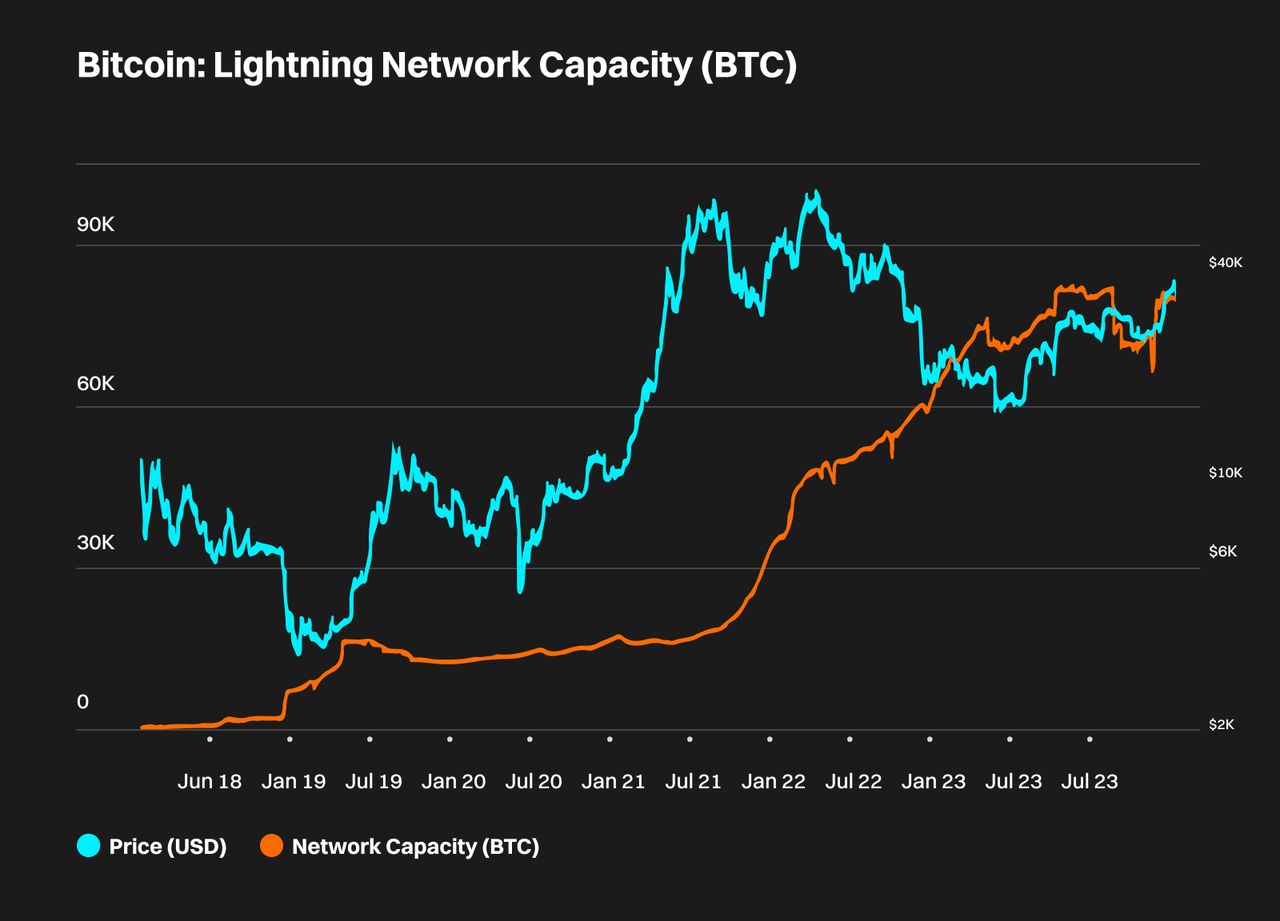
Bitcoin Lightning Network Capacity (Source: Glassnode)
The network currently has 62,385 channels, concentrated in the U.S., Canada, and Germany.
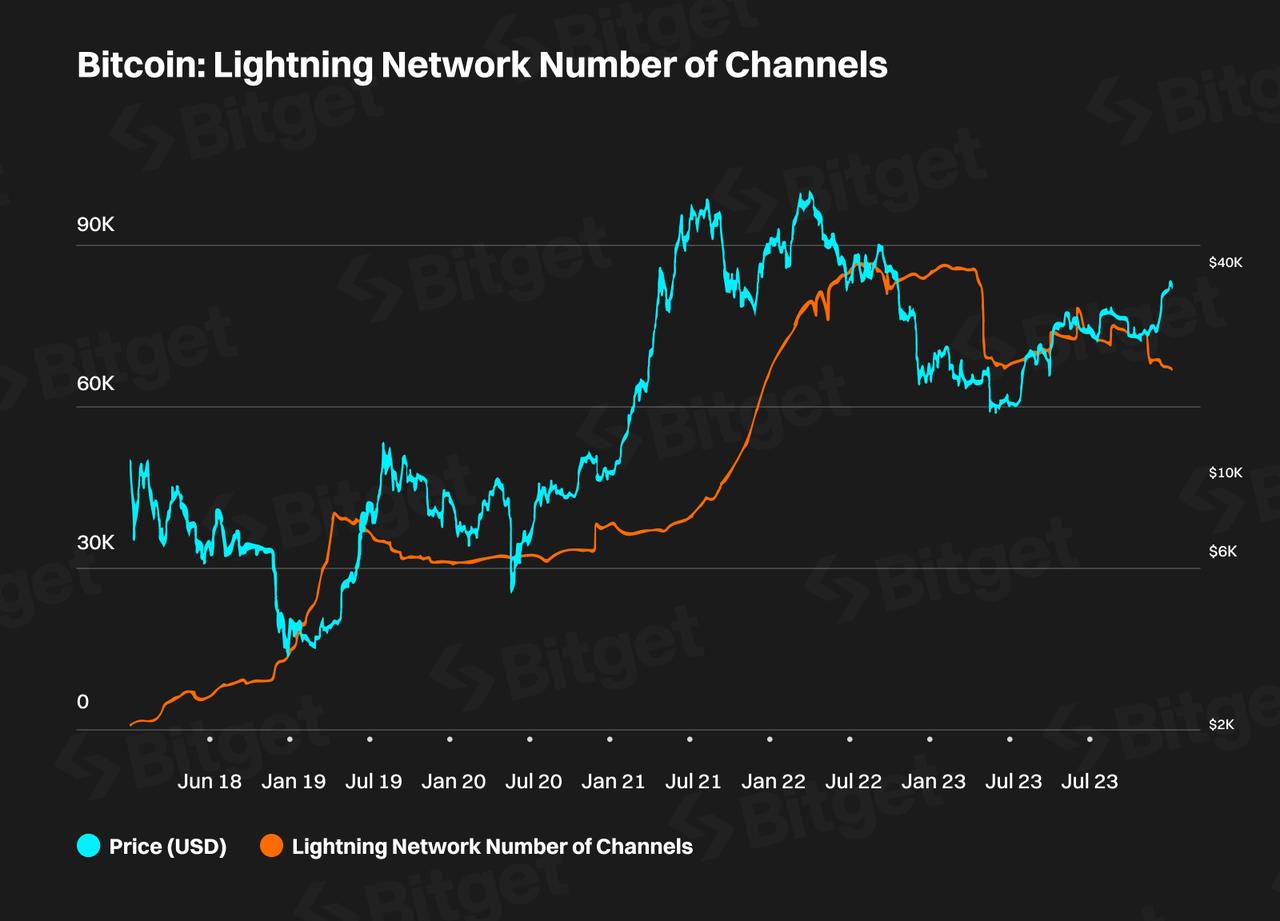
Bitcoin Lightning Network Node Count (Source: Glassnode)
Unique Advantages of the Lightning Network
-
Fast Transactions: Near-instant settlements, typically completing within 1–5 seconds if within established channels.
-
Low Cost: Drastically reduced fees, ideal for microtransactions.
-
Reduced Mainchain Load: Offloads transactions from the main blockchain, alleviating congestion.
-
Micropayment Support: Enables economic models involving tiny-value transactions.
Potential Issues with the Lightning Network
-
Complexity: Setting up and managing channels is more complex than standard Bitcoin transactions.
-
Capital Lock-Up: Participants must lock funds in channels, limiting liquidity.
-
Routing Challenges: Finding viable paths across the channel network depends on capacity and fees; inefficient routing can lead to failed or costly transactions.
3.2.2 Rootstock
What Is Rootstock?
Rootstock (RSK) is a smart contract sidechain built on Bitcoin. The Rootstock Virtual Machine (RVM) is a fork of Ethereum’s EVM, ensuring compatibility with Ethereum smart contracts and tooling. RBTC is RSK’s native currency, pegged 1:1 with BTC via the PowPeg two-way peg mechanism. RSK shares Bitcoin’s security through merged mining and cryptographic safeguards.
Developed by Argentinian RSK Labs, the company secured seed funding from Coinbase Ventures and others in 2016. In 2018, RSK Labs merged with IOV Labs, raising $35 million from Bitmain, Coinbase Ventures, and others. A private round raised $20 million in 2019.
Why Was Rootstock Created?
To extend Bitcoin’s functionality with smart contracts without fragmenting the community, enabling decentralized applications while preserving Bitcoin’s security.
Current State of Rootstock
Rootstock has a market cap of $108 million (peaked at $300 million), with lows around $39 million recently. Approximately 3,254 BTC ($120 million) are locked cross-chain into RSK. According to DefiLlama, total value locked (TVL) stands at $106 million (peak: $230 million). Notable projects include:
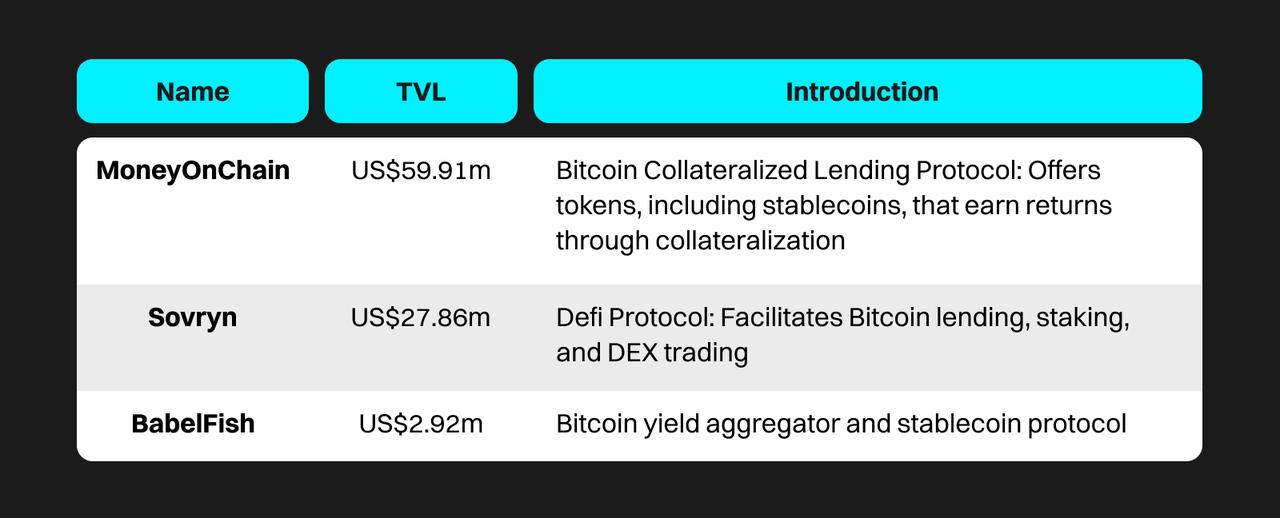
Source: https://defillama.com/chain/Rootstock, Date: November 16
Unique Advantages of Rootstock
-
Merged Mining: Uses DECOR+, a variant of Nakamoto consensus, allowing miners to earn rewards from both Bitcoin and RSK simultaneously.
-
BTC Two-Way Peg: RBTC facilitates gas payments and enables seamless BTC movement between chains via PowPeg.
-
EVM Compatibility: RVM ensures interoperability with Ethereum dApps and developer tools.
Potential Issues with Rootstock
-
Limited Scalability: Capable of ~100 TPS—20x Bitcoin—but insufficient for high-throughput applications.
-
Centralized PowPeg: The federation responsible for securing cross-chain BTC locks consists of trusted entities, introducing centralization risks.
-
Weak Value Capture & Slow Growth: Despite Bitcoin’s $700B+ market cap, RSK captures only ~$100M in assets. Fewer than 20 DeFi projects exist, TVL lags behind 2021 peaks.
3.2.3 Stacks
What Is Stacks?
Stacks is a Bitcoin Layer-2 project enhancing functionality and scalability. Developers can build smart contracts and dApps leveraging Bitcoin’s security. Founded in 2013, it enjoys recognition within Bitcoin’s core community.
Note: As Stacks hasn’t completed its Nakamoto upgrade, it currently links to Bitcoin via Proof of Transfer (PoX), not full security dependency—leading some to classify it as “Layer 1.5.” Full Layer-2 status awaits post-upgrade.
Why Was Stacks Created?
To overcome Bitcoin’s lack of smart contract support while maintaining high security, enabling broader application scenarios.
Current State of Stacks
Stacks’ ecosystem development has been slow. Per DefiLlama, TVL is ~$20 million (historical peak: $45 million), lacking major projects:
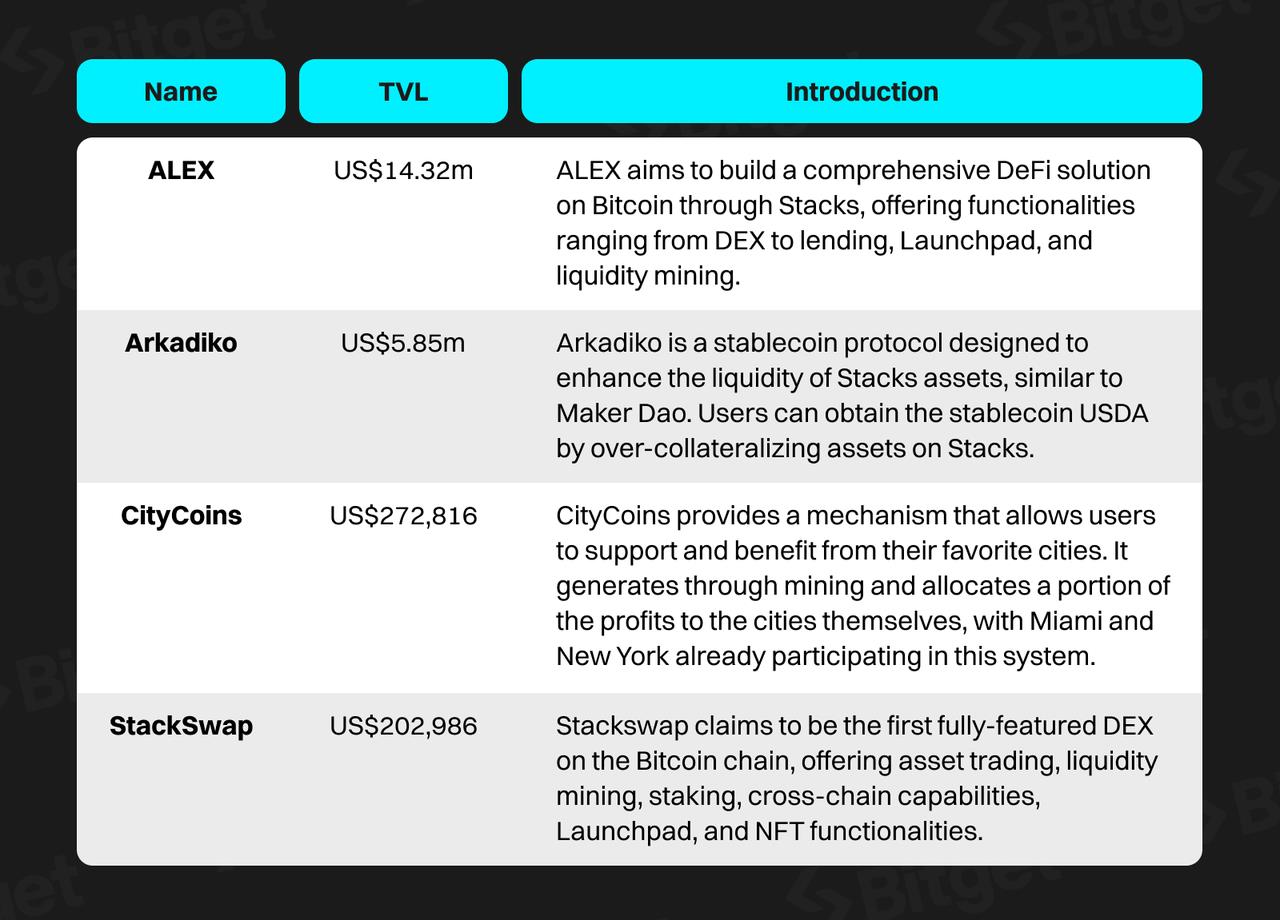
Source: https://defillama.com/chain/Stacks, Date: November 16
Unique Characteristics of Stacks
-
Primary Bitcoin L2 Speculative Asset: STX is currently the most prominent Bitcoin L2 speculation vehicle available to retail traders.
-
Regulatory Narrative: Became the first publicly funded project to receive SEC compliance approval in Q3 2019, avoiding potential securities classification risks.
-
Nakamoto Upgrade: Expected Q1 2024, bringing four key improvements: shared security with Bitcoin settlement, faster blocks (from 10 min to 4–5 sec), introduction of sBTC for cheaper smart contract execution, and subnet support for Solidity/EVM, facilitating migration of existing DeFi protocols.
Potential Issues with Stacks
-
Technical Challenges: High development difficulty and niche Clarity language hinder developer engagement (may improve post-Nakamoto).
-
Slow Developer & User Growth: Historically struggled to attract developers and users.
Join TechFlow official community to stay tuned
Telegram:https://t.me/TechFlowDaily
X (Twitter):https://x.com/TechFlowPost
X (Twitter) EN:https://x.com/BlockFlow_News












