









Gemini 2024 Crypto Trends Report: Industry Experts on ETFs, Halving, AI...
TechFlow Selected TechFlow Selected
Gemini 2024 Crypto Trends Report: Industry Experts on ETFs, Halving, AI...
Whether the U.S. will advance proactive cryptocurrency policy development is more a matter of time than a question of if.
 Navigating Web3 tides with focused insights
Source: Gemini
Compiled by: Bitpush News Mary Liu
2024 will be a watershed year for cryptocurrency.
I. Bitcoin ETFs
Within one year of the approval of spot Bitcoin ETFs, Bitcoin's price could rise by 123%. Based on historical relationships between gold holdings and returns, increased Bitcoin holdings following approval may drive price activity.
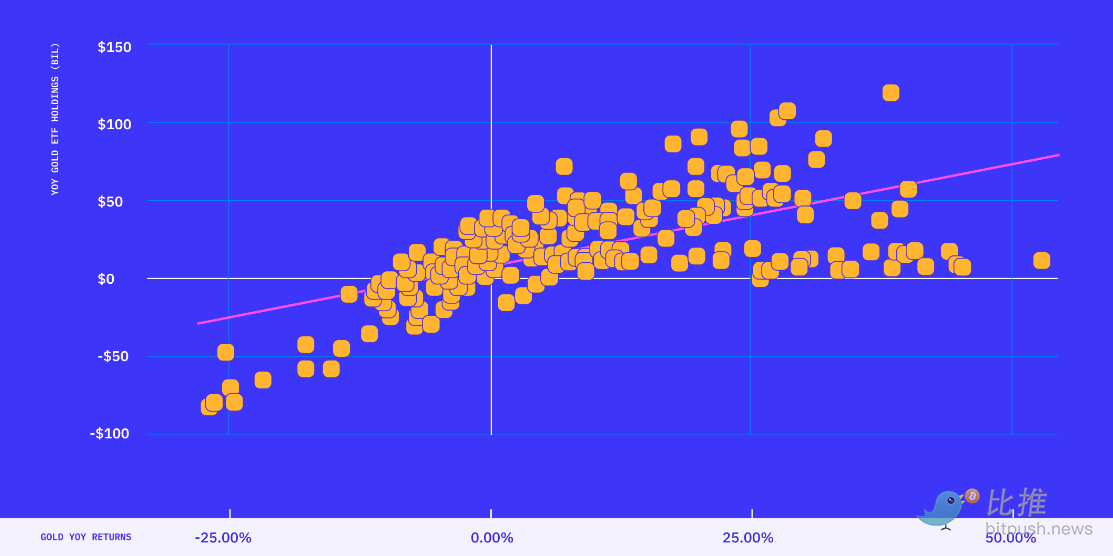
The approval of spot Bitcoin ETFs marks a significant milestone in legitimizing Bitcoin as an institutional-grade investment. It proves that Bitcoin is real, resilient, and here to stay.
Approval of spot Bitcoin ETFs would allow U.S. investment funds access to Bitcoin, thereby propelling the crypto asset class into the $36.7 trillion retirement fund market.
What do you think is the most impactful outcome of ETF approval?
James Seyffart, ETF Research Analyst at Bloomberg Intelligence:
The biggest impact will be opening up efficient exposure to spot Bitcoin on traditional financial rails. I believe this is the easiest way for advisors and some institutions to gain exposure to spot Bitcoin. It could also become the preferred tool for individuals seeking Bitcoin investments within tax-advantaged accounts like IRAs. Don't underestimate the impact of convenience and efficiency offered by ETF products.
The biggest potential hurdle (which we consider unlikely) is that technically, the SEC could still deny or delay if they really wanted to. Beyond that, we can't know what issues or topics the SEC and potential issuers are discussing, but likely focus areas involve back-end processing of spot Bitcoin ETFs—specifically, who will handle the actual Bitcoin when funds or Bitcoin flow into or out of the ETF. There are currently 12 pending spot Bitcoin ETF filings, and there are many differences in how each fund plans to manage this step.
Jan van Eck, CEO of VanEck:
ETF approval has become a symbolic step toward mainstream acceptance of Bitcoin. It's unusual for asset prices to rise due to regulatory approval from U.S. authorities, but this represents a major, previously insurmountable political barrier—one that Bitcoin has long faced.
Amanda Cassatt, CEO of Serotonin and Web3 Marketing Writer:
I foresee a surge in institutional adoption, driven by ETFs and growing numbers of financial institutions launching stablecoins. The catalyst? Trusted wealth management firms quietly engaging existing clients about the benefits of investing in crypto.
Peter McCormack, Host of the What Bitcoin Did Podcast and Chairman of Real Bedford Football Club:
This year saw rampant ETF speculation, with increasing signs that the SEC will ultimately approve not just one but multiple ETFs, including those from some of the world’s largest financial institutions. If approved, we might see a substantial rise in Bitcoin’s price as institutional capital seeks exposure. ETFs will also spark debate—some viewing the heightened institutional awareness and validation as necessary for Bitcoin’s growth, while others worry these institutions may exert influence over Bitcoin’s future direction amid high centralization of capital. The most important thing Bitcoin enthusiasts can do is ensure Bitcoin’s core principles remain intact.
II. AI and Cryptocurrency
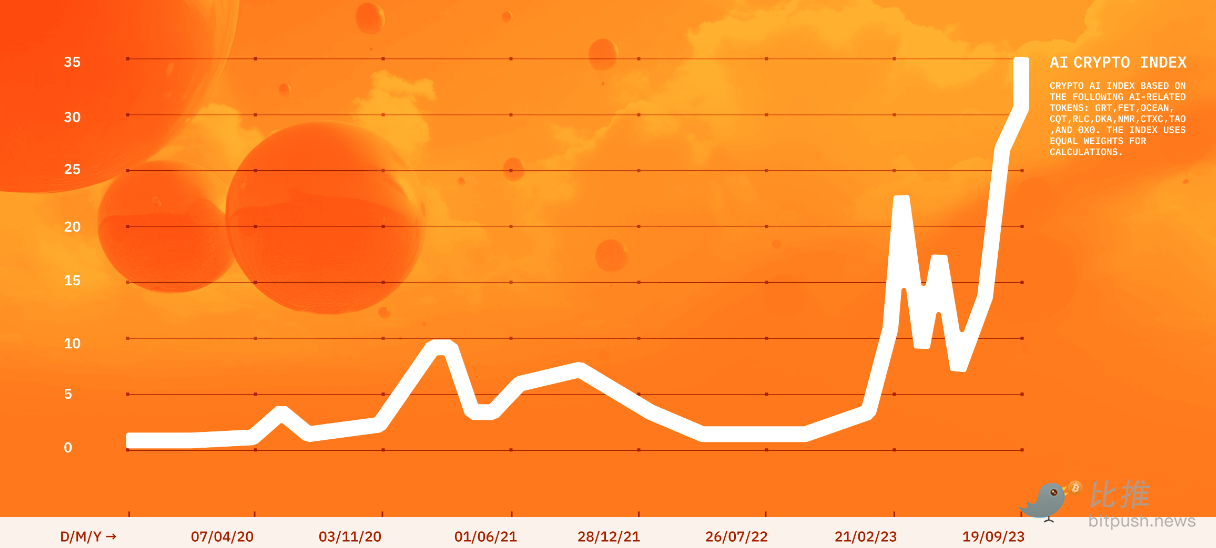
Prices of AI-related tokens have risen significantly, indicating growing market interest and confidence.
The convergence of AI and cryptocurrency ushers in a new era of possibilities, poised to redefine the entire crypto ecosystem.
Both AI and cryptocurrency represent extremely powerful technological paradigms, yet both also have unresolved shortcomings. A thoughtful integration of these two revolutionary technologies can create a path where they complement each other’s strengths and mitigate weaknesses.
AI innovation is transforming smart contracts, enabling secure data solutions, transparent large language models, and combating misinformation.
Which advancements in the intersection of AI and cryptocurrency do you find most interesting?
Amanda Cassatt, CEO of Serotonin and Web3 Marketing Writer:
We’re seeing more projects merging AI and web3 technologies into usable forms—combining web3-style monetization, provenance tracking, digital content ownership, or payment-enabled agents. AI’s ability to generate content beyond human processing capacity means we’ll soon assume content is fake by default, relying instead on on-chain proof for verification. In the near future, most payments will be conducted on-chain by AI agents acting on behalf of people. These agents will interact with blockchain user experiences, bundle transactions, and present them to humans in digestible formats. We also anticipate code auditing firms developing copilot versions for smart contract writers, so AI can assist in verifying code quality during creation—not just afterward. (Post-creation AI code audits are also useful.) The argument that DeFi protocols are more prone to bugs, hacks, and errors—often cited as the final case for CeFi over DeFi—will soon become obsolete thanks to AI assistance!
Jack Inabinet, Analyst at Bankless:
Crypto + AI could be an explosive combination. While early activity was largely about promoting worthless projects riding the hype wave, the potential remains enormous. From AI agents leveraging crypto markets to access financial networks, to decentralized computing protocols opening GPU access to everyone, to projects reimagining blockchains as markets for AI outputs—there’s much to be excited about. Which use case will ignite initial adoption remains to be seen, but the fusion of crypto’s boundless freedom with AI’s unknown capabilities presents a powerful opportunity for 2024.
III. Bitcoin Halving
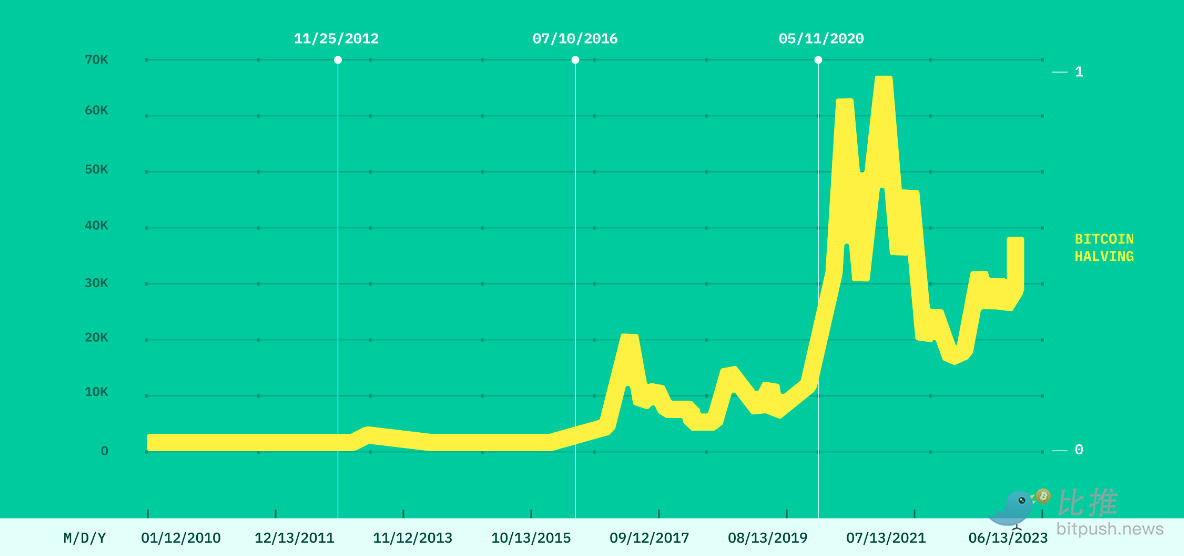
Bitcoin’s price experienced parabolic growth in every period following the first three halvings. Bitcoin’s fourth halving is expected in April 2024. The upcoming halving will reduce mining rewards from 6.25 BTC to 3.125 BTC per block, decreasing the supply of newly minted Bitcoin entering the market.
The halving reaffirms one of Bitcoin’s foundational truths and greatest value propositions: Bitcoin is predictable, reliable, and trustworthy.
In April 2024, we will witness another great milestone in Bitcoin’s lifecycle.
How will technological advances and global economic changes affect market reactions to the 2024 Bitcoin halving? Do you expect it to differ from past cycles, thereby indirectly impacting the broader crypto industry and global economy?
Jason Williams, Investor and Author of "Bitcoin: Hard Money You Can’t F*ck With":
The potential approval of spot Bitcoin ETFs aligns perfectly with the halving event. Typically, Bitcoin’s price sees significant movement around 180 days post-halving. This timing closely matches the possible January 6, 2024 approval of spot Bitcoin ETFs and mirrors the historical price trajectory of gold ETFs. After approval, gold took roughly two years to enter its parabolic phase. I believe this event creates genuine potential for a massive upward swing. When BlackRock’s Bitcoin ETF gets approved, they’ll need to acquire hundreds of thousands of Bitcoin to meet end-customer demand. Accumulating such volumes without causing substantial price volatility is impossible. This is a core issue they're actively studying now—and part of my thesis on why Bitcoin’s price will rise. A 20.76x increase would bring Bitcoin’s value to $789,000.
Peter McCormack, Host of the What Bitcoin Did Podcast and Chairman of Real Bedford Football Club:
As we approach Bitcoin’s fourth halving, all eyes are on mining, given the significant increase in hash rate this year. The upcoming halving will cut block subsidies to 3.125 BTC per block, potentially pressuring miners’ financial sustainability. However, rising Bitcoin prices fueled by ETF speculation and other macroeconomic factors, combined with growing demand for block space, are driving mining revenues upward. If this trend continues, miners may successfully navigate the halving while maintaining strong profit margins.
IV. Regulation
Although many global regulators have made significant progress in regulating cryptocurrency over the past year, the European Union stands out due to its influence in traditional global markets and the quality and thoughtfulness of its approach.

In April 2023, the EU passed MiCA, hailed as the most significant crypto regulation to date.
Hostile regulatory regimes toward cryptocurrency not only risk driving top innovators offshore but could also pose an existential threat to economies as the AI revolution unfolds and the next wave of value creation emerges in Web3 innovation.
The U.S. stands at a crossroads regarding crypto regulation. Enforcement-driven oversight has failed to provide needed clarity or consumer protection while stifling innovation.
How do you expect the regulatory environment for cryptocurrency to evolve in 2024?
Ji Kim, General Counsel and Global Policy Lead at the Crypto Council for Innovation (CCI):
One of the bigger stories in 2024 will be jurisdictions continuing to compete for top status, racing to become key hubs for digital assets and future financial systems. We’re already seeing this in the UK, EU, UAE, Japan, Hong Kong, Singapore—the ongoing competition among leading nations to establish the most credible regulatory frameworks to attract business growth and innovation. Governments worldwide now clearly recognize that cryptocurrency and its underlying infrastructure are here to stay. The question now is which countries will solidify their positions as critical hubs.
These international developments will naturally begin influencing U.S. crypto policy positively. Last year, we saw growing bipartisan support in Congress for establishing a regulatory framework that fosters responsible crypto innovation. Overall, while the U.S. may be a few steps behind, global progress is underway—and it’s increasingly a matter of when, not if, the U.S. will advance proactive crypto policy development. Given the SEC’s ongoing judicial losses, the limitations of enforcement-only regulation will become increasingly evident over time.
Gillian Lynch, Head of EU at Gemini:
The industry has been battle-tested over the past year, yet crypto hasn’t disappeared. In fact, as history shows, the industry is most likely to emerge stronger—with some much-needed guardrails in place to protect all participants. While opinions on crypto and blockchain technology may still differ, I believe most would agree that the crypto industry needs a regulatory framework centered on customer protection, balanced with clear, consistent rulebooks that ultimately help foster innovation.
V. Security
Hackers and scammers target wherever money can be found. Crypto and web3 are no exception.
Attackers will find new and escalating ways to access wallets and accounts. Unphishable multi-factor authentication (MFA), such as security keys and Yubikeys, will become essential for Web3 companies and users to secure their assets.
The security industry will shift greater attention toward Web3 security tools and protections. Some of these will become tools for security professionals, such as Web3-focused SOAR (Security Orchestration, Automation, and Response) and detection platforms. Consumers will also see new tools and technologies to safeguard their Web3 accounts and assets, bringing decades of Web2 security advances into Web3.
More resilient security measures—such as advances in phishing detection—represent some of the industry’s greatest opportunities. Careers in crypto security will be among the fastest-growing fields in the coming years.
The Web3 industry is working to develop security frameworks, guidelines, and best practices. Last year, Gemini collaborated with other industry leaders to create the REKT audit, a tool blockchain companies can use to assess whether their projects include basic safeguards and comply with best practices for access control, key management, and security against other hacking vectors.
What are the most prevalent threats? What’s your outlook for 2024?
Khaja Ahmed, Chief Security Officer at Gemini:
In recent years, vast amounts of consumers’ sensitive personal information have been stolen through countless breaches at large organizations. Criminals are trading Social Security numbers, email addresses, physical addresses, credit card numbers, credit files, medical histories, and more. This enables scammers to launch more targeted and sophisticated attacks, increasing the challenge of protecting consumers from financial loss. Consumers must become more aware of emerging scam types, and service providers must remain vigilant in detecting account takeovers.
Shaun Blackburn, Director of Cloud Security at Gemini:
We’re beginning to see classic impersonation attacks escalate, as generative AI tools like ChatGPT make crafting phishing emails—or even generating realistic videos impersonating anyone—easier than ever before. New scams will emerge where attackers use readily available tools to trick users into surrendering access. Even so, I’m very excited about industry progress in passkeys, which offer a simple, accessible security solution for everyone. This straightforward protection can dramatically improve security.
VI. Emerging Trends

Which trends do you expect to dominate in 2024?
Balaji, Angel Investor and Author of The Network State:
A sovereign debt crisis is unfolding, though not yet widely recognized. Without a 2008-style “parachute,” the importance of parallel global financial systems becomes even greater.
Will Clemente, Co-founder of Reflexivity Research:
Bitcoin will be cemented as an institutional-grade global macro asset.
Luca Netz, CEO of Pudgy Penguins:
I believe 2024 and beyond will be the year of consumer-facing crypto brands, as I see this as the next necessary step for mass adoption. The industry needs to shift its narrative from financial gains to one centered on digital ownership and accessibility. I believe consumers confronting the crypto revolution will be key to reshaping this narrative.
Lady of Crypto, Crypto Investment KOL:
The past 15 years were just a warm-up; now, the main event has begun. Mass adoption is here, and with it, we’ll see major Web2 giants entering the crypto space. I believe gaming will be the first breakout sector decoupled from Bitcoin. Games already had basic digital currencies and collectibles before crypto existed; the integration of blockchain and gaming is inevitable.
Wale Swoosh, Researcher at Azuki:
I believe gaming will be one of the defining trends of 2024. In terms of crypto adoption, gaming has always been and will remain the ultimate Trojan horse. Gaming is where the advantages of crypto are most easily understood and clearly demonstrated. I firmly believe the Web3 gaming trends we saw at the end of 2023 will not only continue next year but become even more pronounced.
Alex Finn, Founder of 1% Better:
I believe crypto that unlocks real experiences will create value in 2024. People will be less willing to spend money purely on speculative assets. They’ll first ask, “What does this token unlock for me? Does it give me an advantage in an online game? Does it grant me access to an elite community? How will this token improve my life?” After ten years of crypto development, the actual products behind these tokens will finally emerge.
Wendy O, Host of O Show:
I’m incredibly excited about crypto in 2024. I truly believe emerging trends will include Bitcoin, Bitcoin ordinals, BRC-20 tokens, and GameFi (where you can truly own assets purchased in games), along with RWA. I think owning real-world assets via NFTs is crucial—ordinals solve this problem. An NFT is an ordinal that allows people to own their own assets, just as Bitcoin allows people to control their own money.
Join TechFlow official community to stay tuned
Telegram:https://t.me/TechFlowDaily
X (Twitter):https://x.com/TechFlowPost
X (Twitter) EN:https://x.com/BlockFlow_News
 比推 BitpushNews











