Who Is the Mastermind Behind Bullish, Acquiring CoinDesk and Bidding for FTX Assets?
TechFlow Selected TechFlow Selected
Who Is the Mastermind Behind Bullish, Acquiring CoinDesk and Bidding for FTX Assets?
He left the New York Stock Exchange to hunt for gold in SPACs, then shifted to cryptocurrencies before the market peaked.
 Navigating Web3 tides with focused insights
By Mitchell Martin, Forbes Staff
Translated by Luffy, Foresight News
After working at the New York Stock Exchange for five years, what would you do next? For Tom Farley, the answer was diving headfirst into the world of cryptocurrency.
Last month, CoinDesk, a news website focused on cryptocurrency, revealed it had been acquired by Bullish, a crypto exchange where Tom Farley currently serves as CEO. The following day, Farley confirmed on CNBC that his emerging exchange is also a potential buyer of FTX’s assets. When asked what might happen if Bullish were to acquire the bankrupt FTX, Farley said: "I can say very little. But look—we’re hovering around the edge with FTX."
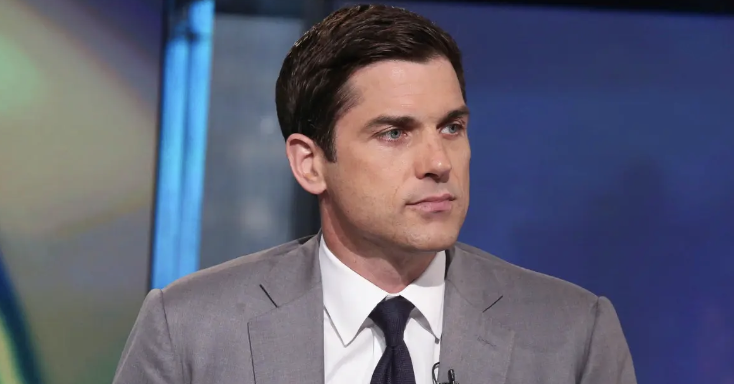
Tom Farley, CEO of cryptocurrency exchange Bullish
Farley declined an interview request from Forbes, clearly favoring a more secretive approach when it comes to company disclosures. In 2022, Farley attempted to take Bullish public via a $600 million special purpose acquisition company (SPAC) called Far Peak Acquisition, but the effort ultimately failed. Then in May 2023, Farley became CEO of Bullish without any public announcement. Bullish did not respond to requests for information about how Farley was hired or the terms of his appointment, but a person familiar with the matter confirmed that his hiring was not publicly disclosed. It wasn’t until May 2 that he was officially identified as CEO in a Bullish press release, and his LinkedIn profile reflects his Bullish role starting that same month.
The failed SPAC deal with Far Peak Acquisition would have provided Bullish with approximately $840 million in new capital and made Farley its new chief executive. SPAC shareholders and related investors would have received about 9% equity in the expanded company, but less than 3% voting power—so while Farley eventually became CEO, Far Peak itself came up short.
Two executives from the SPAC also joined Bullish: David Bonanno (former CFO of Far Peak, now Chief Strategy Officer at Bullish) and Sara Stratoberdha (formerly VP and Head of Business Development at Far Peak).
Kristi Marvin, founder of SpacInsider.com, said that while the details of Farley’s ascent to top management remain mysterious, the failure of his SPAC deal certainly isn’t.
Despite having respected supporters like Farley, Marvin believes SEC Chair Gary Gensler approved the transaction. "Gensler has several key focus areas," she said, one being "the crypto markets, another SPACs."
After taking control of Bullish without the help of a SPAC, Farley began promoting the successes of his fledgling exchange. In September, Bullish ran a glowing profile of Farley in The Wall Street Journal.
"Driven by a strong commitment to regulatory and compliance standards, Bullish aims to strengthen the integrity of the crypto market," read the piece. "The digital asset exchange has achieved significant milestones, reflecting a more mature model for institutional crypto trading."
Bullish claims that since launching operations in November 2021, it has processed over $300 billion in trading volume and has consistently ranked among the top three globally in spot trading volumes for Bitcoin and Ethereum, according to Coin Metrics. However, Jamie Lovegrove of Coin Metrics noted that this volume data is self-reported through the exchange’s own software. In reality, according to CoinGecko, Bullish’s “normalized trading volume”—stripped of the suspicious wash trades common across crypto exchanges—was only about $40 million over the past 24 hours, compared to Bullish’s own reported figure of $1.2 billion. Over the past three months, Bullish has reported average daily trading volumes exceeding $700 million, yet CoinGecko data shows its actual volume rarely surpasses $40 million.
Like Bankman-Fried’s FTX, Bullish insists it is “regulated and compliant.” Bullish does not operate in the U.S. and is regulated by the Gibraltar Financial Services Commission, whereas FTX was overseen by the Securities Commission of the Bahamas.
In a paid feature article published in The Wall Street Journal, Bullish claimed that unlike other digital asset exchanges, it is “audited by Deloitte, one of the Big Four accounting firms.” Yet on the exchange’s website, under the Trust & Transparency section, there is no link to the promised audited financial statements.
Bullish has a brief history. Founded in 2021 as a subsidiary of Block.one, a blockchain software company backed by a group of billionaire investors including PayPal co-founder Peter Thiel, hedge fund managers Alan Howard and Louis Bacon, and Hong Kong tycoon Richard Li.
Before launching operations, Bullish entered into an agreement in July 2021 with Farley’s Far Peak and others to raise about $840 million for a 9% stake, valuing the company at $9 billion. This strategy was intended to make going public easier compared to the traditional IPO route, which is costlier and subject to stricter scrutiny by the U.S. Securities and Exchange Commission.
Unlike CoinDesk and Binance, Bullish focuses exclusively on offering trading of around two dozen major cryptocurrencies to institutional investors. According to its website, most listings are paired only with the USDC stablecoin. The exchange offers spot and margin trading, and since December 7 has offered perpetual contracts for Bitcoin and Ethereum. Perpetual contracts allow investors to take leveraged positions on future prices without setting an expiration date, unlike traditional commodity futures. Undoubtedly, Farley hopes to benefit from the SEC's approval of spot Bitcoin ETFs, which could open the floodgates for institutional investment in digital assets.
The terms of Bullish’s purchase of CoinDesk from Digital Currency Group have not been disclosed. A July report in The Wall Street Journal stated that CoinDesk was earlier sold to an investor group led by Matthew Roszak of Tally Capital and Peter Vessenes of Capital6 for a valuation of $125 million, and that CoinDesk generated $50 million in revenue in 2022.
When announcing the new deal, 48-year-old Farley said, “Bullish will immediately fund several of CoinDesk’s most exciting growth initiatives, driving the launch of new services, events, and products.” Specific details were not revealed, but the company said current CoinDesk management would remain in place.
One of the assets Farley brings to Bullish is blue-chip credibility. The son of a prominent U.S. appeals court judge, Farley attended Gonzaga College High School in Washington, D.C., a prestigious all-boys school where he was a star baseball player before playing for Georgetown University. He earned a degree in political science in 1997. Tall and boyishly handsome, Farley worked in investment banking, private equity, and risk management before joining Intercontinental Exchange (ICE), where he became president of ICE Futures U.S. Prior to that, in May 2012, he was named senior vice president overseeing all financial products at ICE.
In November 2013, ICE acquired NYSE Euronext for $11 billion, and Farley was appointed Chief Operating Officer of the New York Stock Exchange under then-CEO Duncan Niederauer. Six months later, when Niederauer retired, Farley succeeded him as president. During his tenure at the NYSE, Farley excelled at building relationships with CEOs, institutional investors, and Wall Street titans, frequently appearing at high-profile events such as the World Economic Forum in Davos.
One notable initiative during Farley’s time at the NYSE involved cryptocurrency. Under his leadership, the exchange created a Bitcoin index and made a private equity investment in Coinbase, then known primarily as a Bitcoin wallet. NYSE was one of more than 10 investors in a $75 million funding round, and ICE cashed out shares worth over $1.2 billion in 2021.
In the spring of 2018, Farley got swept up in the SPAC boom and decided to go independent. He believed his SPAC would be different: if investors chose to redeem their shares after a target was identified—as they sometimes do—there would still be buyers lined up to purchase stock. Reaching out through his network, Farley told Axios: “So I called Dan Loeb, someone I’ve known for years, asking him to support us with $400 million and his expertise as a partner. He said yes—and we were off.”
With Loeb’s Third Point venture joining in, the new Far Point Acquisition SPAC aimed to raise $400 million to acquire a fintech company. Its initial prospectus highlighted Farley’s background as key to success: “We believe Mr. Farley’s extensive relationships developed as a corporate leader, along with his deep experience in fintech and financial markets, will enable us to identify and complete an attractive business combination.”
The road was rocky due to the Covid-19 pandemic, but the SPAC ultimately succeeded. In August 2020, Far Point invested in Global Blue, a Swiss company that provides services to retailers dealing with foreign tourists. The SPAC and co-investors provided around $1 billion to acquire approximately 58% of Global Blue, with Farley becoming chairman while Jacques Stern remained CEO. According to YCharts, after suffering a series of losses coinciding with the pandemic, the company turned profitable in three of the last four quarters, generating $123.2 million in sales for the quarter ended September, down from $141.5 million in Q3 2019, but a significant rebound from just $14.5 million in Q3 2020 when pandemic restrictions severely limited business.
This gave Farley hands-on experience leading a successful SPAC deal, though he still hadn’t run a company himself. One year after the transaction closed, he returned with a new SPAC—this time named Far Peak Acquisition—and a new target: Bullish.
Although the FTX brand name may hold questionable value for Bullish or anyone else, the once-high-flying crypto exchange does possess a valuable asset: a database of approximately 9 million customers. Other assets include large holdings of cryptocurrencies, which have significantly rebounded alongside the broader crypto market. According to a recent Forbes analysis, FTX’s digital assets—including Solana and Bitcoin—as well as other holdings, could repay much of the $15 billion it owes retail customers.
One asset that showed little life after FTX’s collapse was its native FTT token. According to Arkham Intelligence and Nansen, bankruptcy estates include 260 million FTT tokens. FTT hit an all-time high above $84 in September 2021, with a market cap exceeding $9.3 billion, but fell to around $25 just days before the exchange collapsed, then dropped below $1 by the end of 2022, remaining near that level through mid-2023. However, since reports emerged in August that Bullish and others were eyeing FTX’s assets, FTT has surged to $5, adding roughly $1 billion in value to the fallen exchange.
Farley’s potential revival of FTX has drawn cautious approval from Gary Gensler. On November 8, CNBC quoted the SEC chair saying, "If Tom or anyone else wants to enter this space, I’d say, ‘Do it within the bounds of the law.’" "Build trust with investors in what you’re doing, ensure proper disclosures are made, and make sure you’re not trading against your customers or using their crypto assets for your own purposes."
Join TechFlow official community to stay tuned
Telegram:https://t.me/TechFlowDaily
X (Twitter):https://x.com/TechFlowPost
X (Twitter) EN:https://x.com/BlockFlow_News
 Forbes