








I received an encrypted anti-fraud call from the FBI
TechFlow Selected TechFlow Selected
I received an encrypted anti-fraud call from the FBI
Never install any software from unknown individuals on your computer; if you are targeted by hackers, the FBI might call you.
 Navigating Web3 tides with focused insights
Translation: Frank, Foresight News
Editor's note: Alex Masmej is the founder of Web3 social network Showtime. He recently received a call from someone claiming to be an FBI agent—below is his story.
My experience with the U.S. Federal Bureau of Investigation (FBI) serves as a warning to public figures in the crypto industry.
"Hey, are you Alex Masmej, CEO of Showtime Technologies? This is the Federal Bureau of Investigation, Los Angeles."
Last week, I received a very strange phone call that left me wondering whether I was in trouble or being scammed. As it turned out, both assumptions were wrong.
The caller told me that I had been targeted by cybercriminals in Asia who had installed malware on my computer and demanded that I immediately turn off my WiFi, switch wallets, change all passwords, transfer data to an external hard drive, and completely reset my MacBook.
The two FBI agents on the line sounded serious, but I wasn’t sure if they were real FBI agents or scammers pretending to "protect" me. Either way, I immediately recalled making a mistake three weeks earlier—one that matched the situation described:
About three weeks before the call, a Telegram user named "Chao Deng": @/Chao Deng (Foresight News note: the scammer impersonated Chao Deng, CEO of HashKey Capital), claimed to represent the well-known crypto investment fund Hashkey and expressed interest in investing in Showtime. I had heard of this fund before, so I didn't think twice.
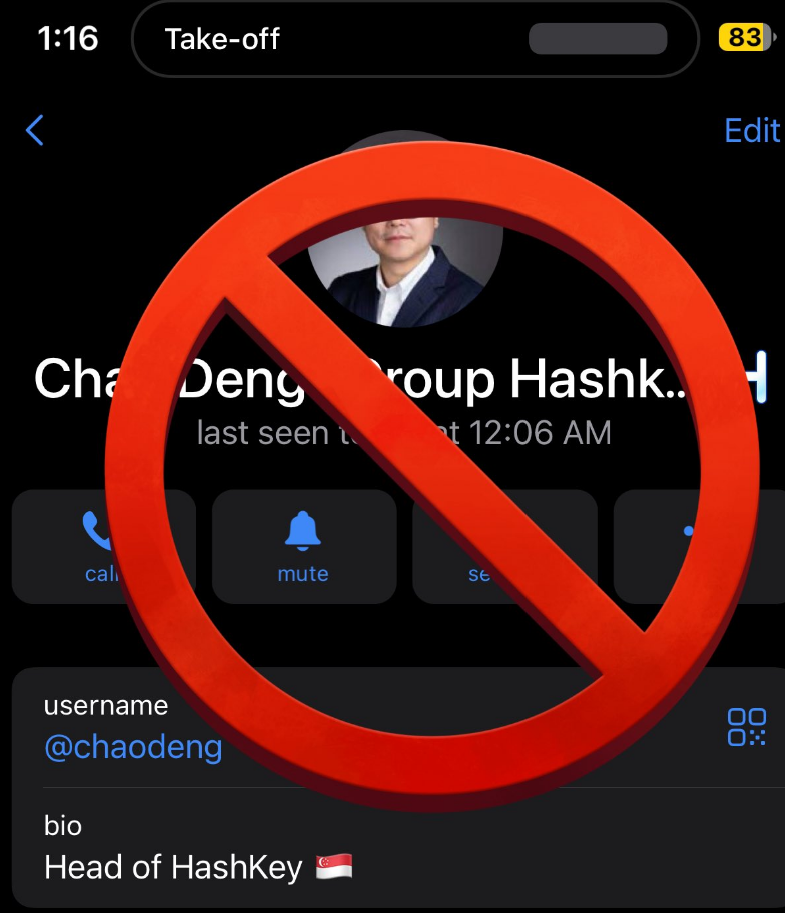
Long story short, this Telegram impersonator refused to join my Google Meet call and instead suggested using an alternative video chat link compatible with VPNs, which contained a script. Like an idiot, I ran the script just to make sure I wouldn’t be late for the meeting.
"That sounds like a classic attack," the FBI said after I recounted the incident. This increased my trust in the caller, and they then asked me to provide the attacker’s Telegram account details.
But my friends in the crypto space were skeptical. "Dude, you’ve been scammed," one friend—who had previously received backing from Paradigm—told me to contact Samczsun (Foresight News note: Samczsun is a white-hat hacker).
I briefly spoke with Samczsun, who said, "If these so-called FBI agents are just calling to help improve your security, there’s no harm done."
I relayed this conversation to the FBI agent, who responded, "We understand," and advised me to call back the official FBI number to verify their legitimacy—which I did. The agent gave me their full name and direct phone number, matching the caller ID.
They instructed me to call the FBI’s Los Angeles office to confirm their identity and even offered to have me transferred directly back to them, which I did.
I then Googled and called the official FBI Los Angeles number and bluntly asked, "Two FBI agents just called me—was that real?" The woman who answered was just as suspicious as I was at first, but after asking for more details, she quickly understood my concern: "Oh yes, they’re working with us on a cybersecurity investigation. The contact information matches—you’ve indeed interacted with our team."
So I didn’t fall for a scam—the Telegram hacker really had breached my computer.
After performing a hard reset on my laptop and rotating all passwords and keys, I’m secure again. Fortunately, most of my funds were stored in hardware wallets, so I lost nothing.
Unfortunately, another crypto professional warned me that aside from money, I should assume all my data has been compromised—that’s how the FBI found me. The FBI agents also mentioned that hackers might reach out to my family, colleagues, and friends, so I need to warn everyone. That’s why I’m writing this article.
Key takeaways:
-
If you're guilty, the FBI shows up unannounced. But if you're a target like me, the FBI might actually call you—it’s not always a scam;
-
Never install any software on your computer from someone you don’t know—I feel stupid typing this;
-
Hardware wallets are safe. My Ledger likely prevented financial losses for both myself and my company;
I hope this serves as a wake-up call to audit or upgrade your risk management processes before the bull market arrives.
With smart protections via account abstraction, ordinary crypto users may become safer. But crypto professionals still use frontier-like outdated tools and hold enough money to attract attackers. Without strict safeguards, security deteriorates rapidly.
The FBI also encouraged me to share this story.
Join TechFlow official community to stay tuned
Telegram:https://t.me/TechFlowDaily
X (Twitter):https://x.com/TechFlowPost
X (Twitter) EN:https://x.com/BlockFlow_News
 @AlexMasmej











